Cefaclor (Monograph)
Drug class: Second Generation Cephalosporins
VA class: AM116
CAS number: 53994-73-3
Introduction
Antibacterial; β-lactam antibiotic; second generation cephalosporin.
Uses for Cefaclor
Acute Otitis Media (AOM)
Treatment of AOM caused by Streptococcus pneumoniae, Haemophilus influenzae, staphylococci, or S. pyogenes (group A β-hemolytic streptococci). (See Haemophilus influenzae Infections under Cautions.)
When anti-infectives indicated, AAP recommends high-dose amoxicillin or amoxicillin and clavulanate as drugs of choice for initial treatment of AOM; certain cephalosporins (cefdinir, cefpodoxime, cefuroxime, ceftriaxone) recommended as alternatives for initial treatment in penicillin-allergic patients without a history of severe and/or recent penicillin-allergic reactions.
Pharyngitis and Tonsillitis
Treatment of pharyngitis and tonsillitis caused by S. pyogenes (group A β-hemolytic streptococci). Generally effective in eradicating S. pyogenes from nasopharynx; efficacy in prevention of subsequent rheumatic fever not established to date.
AAP, IDSA, AHA, and others recommend a penicillin regimen (10 days of oral penicillin V or oral amoxicillin or single dose of IM penicillin G benzathine) as treatment of choice for S. pyogenes pharyngitis and tonsillitis; other anti-infectives (oral cephalosporins, oral macrolides, oral clindamycin) recommended as alternatives in penicillin-allergic patients.
If an oral cephalosporin used, 10 day regimen of first generation cephalosporin (cefadroxil, cephalexin) preferred instead of other cephalosporins with broader spectrums of activity (e.g., cefaclor, cefdinir, cefixime, cefpodoxime, cefuroxime).
Respiratory Tract Infections
Treatment of lower respiratory tract infections, including pneumonia, caused by susceptible H. influenzae, S. pneumoniae, or S. pyogenes (group A β-hemolytic streptococci). (See Haemophilus influenzae Infections under Cautions.)
Treatment of mild to moderate acute bacterial exacerbations of chronic bronchitis caused by susceptible H. influenzae (β-lactamase negative strains only), Moraxella catarrhalis (including β-lactamase producing strains), or S. pneumoniae. (See Haemophilus influenzae Infections under Cautions.)
Treatment of secondary bacterial infections of acute bronchitis caused by susceptible H. influenzae (β-lactamase negative strains only) or M. catarrhalis (including β-lactamase producing strains). (See Haemophilus influenzae Infections under Cautions.)
Skin and Skin Structure Infections
Uncomplicated skin and skin structure infections caused by susceptible Staphylococcus aureus (methicillin-susceptible [oxacillin-susceptible] strains only) or S. pyogenes.
Urinary Tract Infections (UTIs)
Treatment of UTIs (including pyelonephritis and cystitis) caused by susceptible Escherichia coli, Proteus mirabilis, Klebsiella, or coagulase-negative staphylococci.
Cefaclor Dosage and Administration
Administration
Oral Administration
Administer orally.
Conventional capsules or oral suspension: Administer without regard to meals.
Extended-release tablets: Administer with meals or within 1 hour of eating. (See Food under Pharmacokinetics.) Do not cut, crush, or chew.
Reconstitution
Reconstitute oral suspension at time of dispensing by adding amount of water specified on the container in 2 portions; shake well after each addition.
Reconstituted suspension contains 125, 187, 250, or 375 mg of cefaclor/5 mL.
Shake suspension well prior to administration of each dose.
Dosage
Available as cefaclor monohydrate; dosage expressed in terms of anhydrous cefaclor.
Pediatric Patients
General Pediatric Dosage
Oral
Children beyond neonatal period: AAP recommends 20–40 mg/kg daily in 2 or 3 equally divided doses for treatment of mild or moderate infections. AAP states the drug is inappropriate for treatment of severe infections.
Acute Otitis Media (AOM)
Oral
Children ≥1 month of age (capsules or oral suspension): 40 mg/kg daily in divided doses every 8 or 12 hours.
Pharyngitis and Tonsillitis
Oral
Children ≥1 month of age (capsules or oral suspension): 20 mg/kg daily in divided doses every 8 or 12 hours for 10 days. For more severe infections or those caused by less-susceptible organisms, 40 mg/kg daily in divided doses every 8 hours.
Respiratory Tract Infections
Oral
Children ≥1 month of age (capsules or oral suspension): 20 mg/kg daily in divided doses every 8 hours (as capsules or oral suspension) for lower respiratory tract infections. For more severe infections or those caused by less-susceptible organisms, 40 mg/kg daily in divided doses every 8 hours.
Skin and Skin Structure Infections
Oral
Children ≥1 month of age (capsules or oral suspension): 20 mg/kg daily in divided doses every 8 hours (as capsules or oral suspension). For more severe infections or those caused by less susceptible organisms, 40 mg/kg daily in divided doses every 8 hours.
Urinary Tract Infections (UTIs)
Oral
Children ≥1 month of age (capsules or oral suspension): 20 mg/kg daily in divided doses every 8 hours. For more severe infections or those caused by less susceptible organisms, 40 mg/kg daily in divided doses every 8 hours.
Adults
Acute Otitis Media (AOM)
Oral
Capsules or oral suspension: 250 mg every 8 hours. For more severe infections or those caused by less susceptible organisms, 500 mg every 8 hours.
Pharyngitis and Tonsillitis
Oral
Capsules or oral suspension: 250 mg every 8 hours. For more severe infections or those caused by less susceptible organisms, 500 mg every 8 hours for at least 10 days.
Extended-release tablets: 375 mg every 12 hours for 10 days.
Respiratory Tract Infections
Lower Respiratory Tract Infections
OralCapsules or oral suspension: 250 mg every 8 hours. For more severe infections (e.g., pneumonia) or those caused by less susceptible organisms, 500 mg every 8 hours.
Acute Bacterial Exacerbations of Chronic Bronchitis
OralExtended-release tablets: 500 mg every 12 hours for 7 days.
Secondary Bacterial Infections of Acute Bronchitis
OralExtended-release tablets: 500 mg every 12 hours for 7 days.
Skin and Skin Structure Infections
Oral
Capsules or oral suspension: 250 mg every 8 hours. For more severe infections or those caused by less susceptible organisms, 500 mg every 8 hours.
Extended-release tablets: 375 mg every 12 hours for 7–10 days.
Urinary Tract Infections (UTIs)
Oral
Capsules or oral suspension: 250 mg every 8 hours. For more severe infections or those caused by less susceptible organisms, 500 mg every 8 hours.
Prescribing Limits
Pediatric Patients
Oral
Capsules or oral suspension: Maximum 1 g daily.
Special Populations
Renal Impairment
Dosage adjustments not usually required in moderate or severe renal impairment. Use with caution in those with markedly impaired renal function. (See Renal Impairment under Cautions.)
Geriatric Patients
No age-related dosage adjustments required. Select dosage with caution because of age-related decreases in renal function.
Cautions for Cefaclor
Contraindications
-
Known hypersensitivity to cefaclor, any other cephalosporin, or any ingredient in the formulation.
Warnings/Precautions
Warnings
Superinfection/Clostridium difficile-associated Diarrhea and Colitis
Possible emergence and overgrowth of nonsusceptible bacteria or fungi. Careful observation of the patient is essential. Institute appropriate therapy if superinfection occurs.
Treatment with anti-infectives alters normal colon flora and may permit overgrowth of Clostridium difficile. C. difficile infection (CDI) and C. difficile-associated diarrhea and colitis (CDAD; also known as antibiotic-associated diarrhea and colitis or pseudomembranous colitis) reported with nearly all anti-infectives, including cefaclor, and may range in severity from mild diarrhea to fatal colitis. C. difficile produces toxins A and B which contribute to development of CDAD; hypertoxin-producing strains of C. difficile are associated with increased morbidity and mortality since they may be refractory to anti-infectives and colectomy may be required.
Consider CDAD if diarrhea develops during or after therapy and manage accordingly. Obtain careful medical history since CDAD may occur as late as 2 months or longer after anti-infective therapy is discontinued.
If CDAD is suspected or confirmed, discontinue anti-infectives not directed against C. difficile whenever possible. Initiate appropriate supportive therapy (e.g., fluid and electrolyte management, protein supplementation), anti-infective therapy directed against C. difficile (e.g., metronidazole, vancomycin), and surgical evaluation as clinically indicated.
Haemophilus influenza Infections
β-lactamase-negative, ampicillin-resistant (BLNAR) strains of H. influenzae should be considered resistant to cefaclor despite apparent in vitro susceptibility of some BLNAR strains. This should be considered when treating infections that may involve these strains (e.g., respiratory tract infections, AOM).
Efficacy of extended-release tablets in the treatment of bronchitis known, suspected, or potentially caused by β-lactamase-producing H. influenzae has not been established.
Sensitivity Reactions
Hypersensitivity Reactions
Hypersensitivity reactions such as anaphylaxis, angioedema, serum sickness-like reactions, Stevens-Johnson syndrome, and toxic epidermal necrolysis have been reported.
If an allergic reaction occurs, discontinue cefaclor and institute appropriate therapy as indicated (e.g., epinephrine, corticosteroids, and maintenance of an adequate airway and oxygen).
Cross-hypersensitivity
Partial cross-hypersensitivity among cephalosporins and other β-lactam antibiotics, including penicillins and cephamycins.
Prior to initiation of therapy, make careful inquiry concerning previous hypersensitivity reactions to cephalosporins, penicillins, or other drugs. Cautious use recommended in individuals hypersensitive to penicillins: avoid use in those who have had an immediate-type (anaphylactic) hypersensitivity reaction and administer with caution in those who have had a delayed-type (e.g., rash, fever, eosinophilia) reaction.
General Precautions
Selection and Use of Anti-infectives
To reduce development of drug-resistant bacteria and maintain effectiveness of cefaclor and other antibacterials, use only for treatment or prevention of infections proven or strongly suspected to be caused by susceptible bacteria.
When selecting or modifying anti-infective therapy, use results of culture and in vitro susceptibility testing. In the absence of such data, consider local epidemiology and susceptibility patterns when selecting anti-infectives for empiric therapy.
History of GI Disease
Use cephalosporins with caution in patients with a history of GI disease, particularly colitis. (See Superinfection/Clostridium difficile-associated Diarrhea and Colitis under Cautions.)
Specific Populations
Pregnancy
Category B.
Lactation
Distributed into milk; use with caution.
Pediatric Use
Capsules and oral suspension: Safety and efficacy not established in infants <1 month of age.
Extended-release tablets: Safety and efficacy not established in children <16 years of age.
Geriatric Use
Safety and efficacy in geriatric adults similar to that in younger adults.
Substantially eliminated by kidneys; consider monitoring renal function since geriatric patients more likely to have decreased renal function.
Renal Impairment
Close clinical observation and appropriate laboratory tests recommended in patients with moderate or severe renal impairment. Use with caution in those with markedly impaired renal function. (See Renal Impairment under Dosage and Administration.)
Common Adverse Effects
Diarrhea, genital pruritus or vaginitis, headache, nausea, vomiting, rash.
Drug Interactions
Specific Drugs and Laboratory Tests
|
Drug or Test |
Interaction |
Comments |
|---|---|---|
|
Antacids (aluminum- or magnesium-containing) |
Decreased absorption of cefaclor extended-release tablets if taken within 1 hour of antacids |
|
|
Anticoagulants, oral |
Possible enhanced warfarin effects |
|
|
Histamine H2-receptor antagonists |
No effect on rate or extent of absorption of cefaclor extended-release tablets |
|
|
Probenecid |
Decreased renal excretion of cefaclor |
|
|
Tests for glucose |
Possible false-positive reactions in urine glucose tests using Clinitest, Benedict’s solution, or Fehling’s solution |
Use glucose tests based on enzymatic glucose oxidase reactions (e.g., Clinistix, Tes-Tape) |
Cefaclor Pharmacokinetics
Absorption
Bioavailability
Well absorbed from GI tract following oral administration. Peak plasma concentrations attained within 0.5–1 hour with conventional preparations and 1.5–2.7 hours with extended-release tablets.
Food
Peak serum concentrations are lower and attained later when cefaclor capsules are administrated with food, but total amount of drug absorbed is unchanged.
When extended-release tablets are administered with food, the extent of absorption and peak plasma concentrations of the drug are increased.
Distribution
Extent
Cephalosporins are widely distributed into tissues and fluids.
Distributed into milk in low concentrations.
Plasma Protein Binding
25%.
Elimination
Metabolism
Not appreciably metabolized.
Elimination Route
Excreted unchanged in urine. About 60–85% is excreted unchanged in urine within 8 hours; majority is excreted during the first 2 hours.
Half-life
0.6–1 hour in adults with normal renal function.
Special Populations
Renal impairment decreases clearance of cefaclor. Serum half-life is 2.3–2.8 hours in anuric patients.
Stability
Storage
Oral
Capsules
20–25°C; protect from moisture.
For Suspension
20–25°C. After reconstitution, store suspension in tight container in the refrigerator; discard after 14 days.
Extended-release Tablets
20–25°C.
Actions and Spectrum
-
Second generation cephalosporin active against some gram-negative bacteria that generally are resistant to first generation cephalosporins, but has a narrower spectrum of activity than third generation cephalosporins. Less active against gram-negative bacteria than some other second generation cephalosporins.
-
Usually bactericidal.
-
Like other β-lactam antibiotics, antibacterial activity results from inhibition of bacterial cell wall synthesis.
-
In vitro spectrum of activity includes many gram-positive aerobic bacteria, some gram-negative aerobic bacteria, and a few anaerobic bacteria; inactive against fungi and viruses.
-
Gram-positive aerobes: active in vitro and in clinical infections against staphylococci (including coagulase-positive, coagulase-negative, and penicillinase producing strains), Streptococcus pneumoniae, and S. pyogenes (group A β-hemolytic streptococci). Enterococci (e.g., Enterococcus faecalis) and methicillin-resistant (oxacillin-resistant) staphylococci are resistant.
-
Gram-negative aerobes: active in vitro and in clinical infections against H. influenzae (except BLNAR strains), Moraxella catarrhalis (including β-lactamase producing strains), Escherichia coli, Klebsiella, and Proteus mirabilis. Also active in vitro against H. parainfluenzae, Citrobacter diversus, and Neisseria gonorrhoeae. Inactive against Acinetobacter, Enterobacter, Morganella morganii, Proteus vulgaris, Providencia, Pseudomonas, and Serratia.
-
Anaerobes: active in vitro against Bacteroides (excluding B. fragilis), Peptococcus niger, Peptostreptococcus, and Propionibacterium acnes.
-
Strains of staphylococci resistant to penicillinase-resistant penicillins (methicillin-resistant [oxacillin-resistant] staphylococci) should be considered resistant to cefixime, although results of in vitro susceptibility tests may indicate susceptibility. In addition, BLNAR strains of H. influenzae should be considered resistant to cefaclor although results of in vitro susceptibility tests may indicate susceptibility.
Advice to Patients
-
Advise patients that antibacterials (including cefaclor) should only be used to treat bacterial infections and not used to treat viral infections (e.g., the common cold).
-
Importance of completing full course of therapy, even if feeling better after a few days.
-
Advise patients that skipping doses or not completing the full course of therapy may decrease effectiveness and increase the likelihood that bacteria will develop resistance and will not be treatable with cefaclor or other antibacterials in the future.
-
When cefaclor extended-release tablets used, advise patients that the tablets should not be cut, crushed, or chewed and should be taken with a meal or within 1 hour of eating.
-
Advise patients that diarrhea is a common problem caused by anti-infectives and usually ends when the drug is discontinued. Importance of contacting a clinician if watery and bloody stools (with or without stomach cramps and fever) occur during or as late as 2 months or longer after the last dose.
-
Importance of discontinuing cefaclor and informing clinician if an allergic reaction occurs.
-
Importance of informing clinicians of existing or contemplated therapy, including prescription and OTC drugs.
-
Importance of informing patients of other important precautionary information. (See Cautions.)
Preparations
Excipients in commercially available drug preparations may have clinically important effects in some individuals; consult specific product labeling for details.
Please refer to the ASHP Drug Shortages Resource Center for information on shortages of one or more of these preparations.
* available from one or more manufacturer, distributor, and/or repackager by generic (nonproprietary) name
|
Routes |
Dosage Forms |
Strengths |
Brand Names |
Manufacturer |
|---|---|---|---|---|
|
Oral |
Capsules |
equivalent to anhydrous cefaclor 250 mg* |
Cefaclor Capsules |
|
|
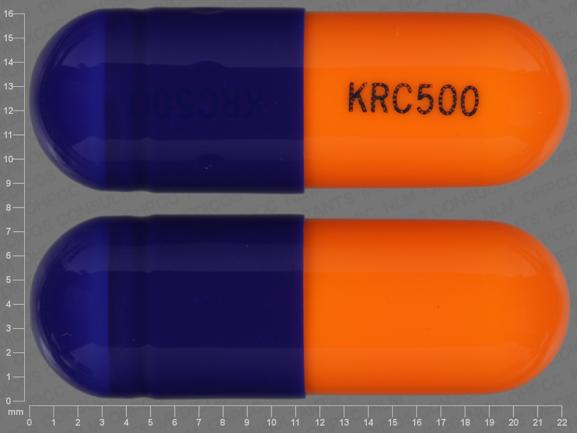
equivalent to anhydrous cefaclor 500 mg* |
Cefaclor Capsules |
|||
|
For suspension |
equivalent to anhydrous cefaclor 125 mg/5 mL* |
Cefaclor for Suspension |
||
|
equivalent to anhydrous cefaclor 187 mg/5 mL* |
Cefaclor for Suspension |
|||
|
equivalent to anhydrous cefaclor 250 mg/5 mL* |
Cefaclor for Suspension |
|||
|
equivalent to anhydrous cefaclor 375 mg/5 mL* |
Cefaclor for Suspension |
|||
|
Tablets, extended-release |
equivalent to anhydrous cefaclor 500 mg* |
Cefaclor Extended-Release Tablets |
AHFS DI Essentials™. © Copyright 2024, Selected Revisions October 8, 2013. American Society of Health-System Pharmacists, Inc., 4500 East-West Highway, Suite 900, Bethesda, Maryland 20814.
Reload page with references included
More about cefaclor
- Check interactions
- Compare alternatives
- Pricing & coupons
- Reviews (2)
- Drug images
- Side effects
- Dosage information
- During pregnancy
- Drug class: second generation cephalosporins
- Breastfeeding
- En español