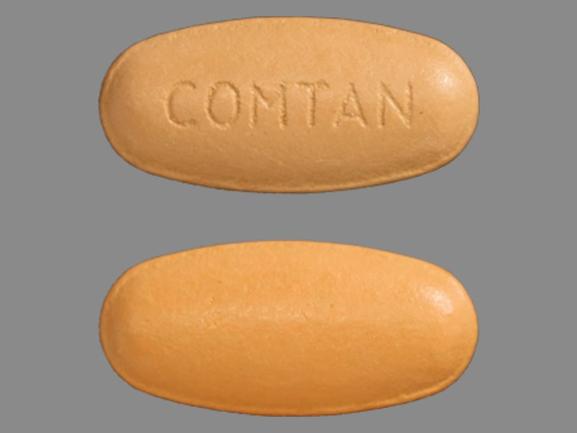
Comtan Dosage
Generic name: ENTACAPONE 200mg
Dosage form: tablet, film coated
Drug class: Dopaminergic antiparkinsonism agents
Medically reviewed by Drugs.com. Last updated on Jul 20, 2023.
The recommended dose of Comtan (entacapone) is one 200 mg tablet administered concomitantly with each levodopa and carbidopa dose to a maximum of 8 times daily (200 mg × 8 = 1,600 mg per day). Clinical experience with daily doses above 1,600 mg is limited.
Comtan should always be administered in association with levodopa and carbidopa. Entacapone has no antiparkinsonian effect of its own.
In clinical studies, the majority of patients required a decrease in daily levodopa dose if their daily dose of levodopa had been greater than or equal to 800 mg or if patients had moderate or severe dyskinesia before beginning treatment.
To optimize an individual patient's response, reductions in daily levodopa dose or extending the interval between doses may be necessary. In clinical studies, the average reduction in daily levodopa dose was about 25% in those patients requiring a levodopa dose reduction (more than 58% of patients with levodopa doses above 800 mg daily required such a reduction).
Comtan can be combined with both the immediate and sustained-release formulations of levodopa and carbidopa.
Comtan may be taken with or without food (see CLINICAL PHARMACOLOGY).
Patients With Impaired Hepatic Function: Patients with hepatic impairment should be treated with caution. The AUC and Cmax of entacapone approximately doubled in patients with documented liver disease, compared to controls. However, these studies were conducted with single-dose entacapone without levodopa and dopa decarboxylase inhibitor coadministration, and therefore the effects of liver disease on the kinetics of chronically administered entacapone have not been evaluated (see CLINICAL PHARMACOLOGY, Pharmacokinetics of Entacapone).
Withdrawing Patients from Comtan: Rapid withdrawal or abrupt reduction in the Comtan dose could lead to emergence of signs and symptoms of Parkinson's disease (see CLINICAL PHARMACOLOGY, Clinical Studies), and may lead to hyperpyrexia and confusion, a symptom complex resembling NMS (see PRECAUTIONS, Other Events Reported With Dopaminergic Therapy). This syndrome should be considered in the differential diagnosis for any patient who develops a high fever or severe rigidity. If a decision is made to discontinue treatment with Comtan, patients should be monitored closely and other dopaminergic treatments should be adjusted as needed. Although tapering Comtan has not been systematically evaluated, it seems prudent to withdraw patients slowly if the decision to discontinue treatment is made.
Frequently asked questions
More about Comtan (entacapone)
- Check interactions
- Compare alternatives
- Pricing & coupons
- Reviews (7)
- Drug images
- Latest FDA alerts (2)
- Side effects
- During pregnancy
- Generic availability
- Drug class: dopaminergic antiparkinsonism agents
- Breastfeeding
- En español
Patient resources
Professional resources
Related treatment guides
Further information
Always consult your healthcare provider to ensure the information displayed on this page applies to your personal circumstances.