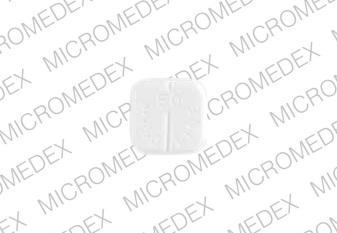
Mysoline Disease Interactions
There are 14 disease interactions with Mysoline (primidone).
- Acute alcohol intoxication
- Drug dependence
- Porphyria
- Rash
- Respiratory depression
- Phenobarbital metabolite 1
- Renal/liver disease
- Suicidal tendency
- Adrenal insufficiency
- Depression
- Hematologic toxicity
- Osteomalacia
- Paradoxical reactions
- Phenobarbital metabolite 2
Barbiturates (applies to Mysoline) acute alcohol intoxication
Major Potential Hazard, High plausibility.
The use of barbiturates is contraindicated in patients with acute alcohol intoxication exhibiting depressed vital signs. The central nervous system depressant effects of barbiturates may be additive with those of alcohol. Severe respiratory depression and death may occur. Therapy with barbiturates should be administered cautiously in patients who might be prone to acute alcohol intake.
References
- Plaa GL (1975) "Acute toxicity of antiepileptic drugs." Epilepsia, 16, p. 183-91
- (2001) "Product Information. Phenobarbital (phenobarbital)." Lilly, Eli and Company
- "Multum Information Services, Inc. Expert Review Panel"
- (2001) "Product Information. Amytal Sodium (amobarbital)." Lilly, Eli and Company
- (2001) "Product Information. Nembutal Sodium (pentobarbital)." Abbott Pharmaceutical
- (2001) "Product Information. Seconal Sodium (secobarbital)." Lilly, Eli and Company
- (2001) "Product Information. Mebaral (mephobarbital)." Sanofi Winthrop Pharmaceuticals
- (2001) "Product Information. Butisol Sodium (butabarbital)." Wallace Laboratories
Barbiturates (applies to Mysoline) drug dependence
Major Potential Hazard, High plausibility. Applicable conditions: Alcoholism, Drug Abuse/Dependence
Barbiturates have the potential to cause dependence and abuse. Tolerance as well as physical and psychological dependence can develop, particularly after prolonged use of excessive dosages. Abrupt cessation and/or a reduction in dosage may precipitate withdrawal symptoms. In patients who have developed tolerance to a barbiturate, overdosage can still produce respiratory depression and death, and cross-tolerance usually will occur with other agents in the class. Addiction-prone individuals, such as those with a history of alcohol or substance abuse, should be under careful surveillance or medical supervision when treated with barbiturates. It may be prudent to refrain from dispensing large quantities of medication to these patients. After prolonged use or if dependency is suspected, withdrawal of barbiturates should be undertaken gradually using a dosage-tapering schedule.
References
- Boisse NR, Okamoto M (1978) "Physical dependence to barbital compared to pentobarbital. II. Tolerance characteristics." J Pharmacol Exp Ther, 204, p. 507-13
- Gersema LM, Alexander B, Kunze KE (1987) "Major withdrawal symptoms after abrupt discontinuation of phenobarbital." Clin Pharm, 6, p. 420-2
- (2001) "Product Information. Phenobarbital (phenobarbital)." Lilly, Eli and Company
- American Medical Association, Division of Drugs and Toxicology (1994) "Drug evaluations annual 1994." Chicago, IL: American Medical Association;
- (2001) "Product Information. Amytal Sodium (amobarbital)." Lilly, Eli and Company
- (2001) "Product Information. Nembutal Sodium (pentobarbital)." Abbott Pharmaceutical
- (2001) "Product Information. Seconal Sodium (secobarbital)." Lilly, Eli and Company
- (2001) "Product Information. Mebaral (mephobarbital)." Sanofi Winthrop Pharmaceuticals
- (2001) "Product Information. Butisol Sodium (butabarbital)." Wallace Laboratories
Barbiturates (applies to Mysoline) porphyria
Major Potential Hazard, High plausibility.
The use of barbiturates is contraindicated in patients with a history of porphyria. Barbiturates may exacerbate acute intermittent porphyria or porphyria variegata by inducing the enzymes responsible for porphyrin synthesis.
References
- (2001) "Product Information. Phenobarbital (phenobarbital)." Lilly, Eli and Company
- American Medical Association, Division of Drugs and Toxicology (1994) "Drug evaluations annual 1994." Chicago, IL: American Medical Association;
- Braunwald E, Hauser SL, Kasper DL, Fauci AS, Isselbacher KJ, Longo DL, Martin JB, eds., Wilson JD (1998) "Harrison's Principles of Internal Medicine." New York, NY: McGraw-Hill Health Professionals Division
- (2001) "Product Information. Amytal Sodium (amobarbital)." Lilly, Eli and Company
- (2001) "Product Information. Nembutal Sodium (pentobarbital)." Abbott Pharmaceutical
- (2001) "Product Information. Seconal Sodium (secobarbital)." Lilly, Eli and Company
- (2001) "Product Information. Mebaral (mephobarbital)." Sanofi Winthrop Pharmaceuticals
- (2001) "Product Information. Butisol Sodium (butabarbital)." Wallace Laboratories
Barbiturates (applies to Mysoline) rash
Major Potential Hazard, High plausibility. Applicable conditions: Dermatitis - Drug-Induced
Skin eruptions may precede rare but potentially fatal barbiturate-induced reactions such as systemic lupus erythematosus and exfoliative dermatitis, the latter of which may be accompanied by hepatitis and jaundice. Therapy with barbiturates should be administered cautiously in patients with preexisting drug-induced dermatitis, since it may delay the recognition of a potential reaction to barbiturates. Barbiturate therapy should be withdrawn promptly at the first sign of a dermatologic adverse effect. However, cutaneous reactions may proceed to an irreversible stage even after cessation of medication due to the slow rate of metabolism and excretion of barbiturates. Patients should be advised to promptly report signs that may indicate impending development of barbiturate-related cutaneous lesions, including high fever, severe headache, stomatitis, conjunctivitis, rhinitis, urethritis, and balanitis. Rashes may be more likely to occur with phenobarbital and mephobarbital.
References
- Pelekanos J, Camfield P, Camfield C, Gordon K (1991) "Allergic rash due to antiepileptic drugs: clinical features and management." Epilepsia, 32, p. 554-9
- Pagliaro L, Campesi G, Aguglia F (1969) "Barbiturate jaundice. Report of a case due to a barbital-containing drug, with positive rechallenge to phenobarbital." Gastroenterology, 56, p. 938-43
- Shear NH, Spielberg SP (1988) "Anticonvulsant hypersensitivity syndrome. In vitro assessment of risk." J Clin Invest, 82, p. 1826-32
- Stuttgen G (1973) "Toxic epidermal necrolysis provoked by barbiturates." Br J Dermatol, 88, p. 291-3
- Fernandez de Corres L, Leanizbarrutia I, Munoz D (1984) "Eczematous drug reaction from phenobarbitone." Contact Dermatitis, 11, p. 319
- Dourmishev AL, Rahman MA (1986) "Phenobarbital-induced pemphigus vulgaris." Dermatologica, 173, p. 256-8
- (2001) "Product Information. Phenobarbital (phenobarbital)." Lilly, Eli and Company
- (2001) "Product Information. Amytal Sodium (amobarbital)." Lilly, Eli and Company
- (2001) "Product Information. Nembutal Sodium (pentobarbital)." Abbott Pharmaceutical
- (2001) "Product Information. Seconal Sodium (secobarbital)." Lilly, Eli and Company
- (2001) "Product Information. Mebaral (mephobarbital)." Sanofi Winthrop Pharmaceuticals
- (2001) "Product Information. Butisol Sodium (butabarbital)." Wallace Laboratories
Barbiturates (applies to Mysoline) respiratory depression
Major Potential Hazard, High plausibility. Applicable conditions: Asphyxia, Pulmonary Impairment, Respiratory Arrest
Barbiturates may produce severe respiratory depression, apnea, laryngospasm, bronchospasm and cough, particularly during rapid intravenous administration. In usual hypnotic dosages, the degree of respiratory depression produced is similar to that which occurs during physiologic sleep, while at higher dosages, the rate, depth and volume of respiration may be markedly decreased. However, some patients may be susceptible at commonly used dosages, including the elderly, debilitated or severely ill patients, those receiving other CNS depressants, and those with limited ventilatory reserve, chronic pulmonary insufficiency or other respiratory disorders. Therapy with barbiturates should be administered cautiously in these patients. Appropriate monitoring and individualization of dosage are particularly important, and equipment for resuscitation should be immediately available if the parenteral route is used. Barbiturates, especially injectable formulations, should generally be avoided in patients with sleep apnea, hypoxia, or severe pulmonary diseases in which dyspnea or obstruction is evident.
References
- Plaa GL (1975) "Acute toxicity of antiepileptic drugs." Epilepsia, 16, p. 183-91
- Lund A, Gormsen H (1985) "The role of antiepileptics in sudden death in epilepsy." Acta Neurol Scand, 72, p. 444-6
- (2001) "Product Information. Phenobarbital (phenobarbital)." Lilly, Eli and Company
- American Medical Association, Division of Drugs and Toxicology (1994) "Drug evaluations annual 1994." Chicago, IL: American Medical Association;
- (2001) "Product Information. Amytal Sodium (amobarbital)." Lilly, Eli and Company
- (2001) "Product Information. Nembutal Sodium (pentobarbital)." Abbott Pharmaceutical
- (2001) "Product Information. Seconal Sodium (secobarbital)." Lilly, Eli and Company
- (2001) "Product Information. Mebaral (mephobarbital)." Sanofi Winthrop Pharmaceuticals
- (2001) "Product Information. Butisol Sodium (butabarbital)." Wallace Laboratories
Primidone (applies to Mysoline) phenobarbital metabolite 1
Major Potential Hazard, High plausibility. Applicable conditions: Porphyria, Dermatitis - Drug-Induced, Alcoholism, Depression, Drug Abuse/Dependence, Asphyxia, Pulmonary Impairment, Respiratory Arrest
Since primidone is structurally related to the barbiturate-derivative anticonvulsants and also partially metabolized to phenobarbital during chronic administration, the usual contraindications, warnings and precautions applicable to barbiturates should be observed with primidone.
References
- (2001) "Product Information. Mysoline (primidone)." Elan Pharmaceuticals
Primidone (applies to Mysoline) renal/liver disease
Major Potential Hazard, High plausibility. Applicable conditions: Renal Dysfunction
During chronic administration, primidone is slowly metabolized by the liver and excreted in the urine as phenylethylmalonamide (PEMA), phenobarbital and p-hydroxyphenobarbital, the latter two of which are pharmacologically active. The plasma clearance of primidone and its metabolites may be decreased and the half-lives prolonged in patients with impaired hepatic and/or renal function. Therapy with primidone should be administered cautiously and initiated at reduced dosages in patients with liver and/or renal disease.
References
- (2001) "Product Information. Mysoline (primidone)." Elan Pharmaceuticals
Antiepileptics (applies to Mysoline) suicidal tendency
Moderate Potential Hazard, Moderate plausibility. Applicable conditions: Depression, Psychosis
Antiepileptic drugs (AEDs) have been associated with an increased risk of suicidal thoughts or behavior in patients taking these drugs for any indication. Pooled analyses of 199 placebo-controlled clinical studies involving the use of 11 different AEDs showed that patients receiving AEDs had approximately twice the risk of suicidal thinking or behavior compared to patients receiving placebo. AEDs should be administered cautiously in patients with depression or other psychiatric disorders; phentermine-topiramate should be avoided in patients with history of suicidal attempts or active suicidal ideation. The risk of suicidal thoughts and behavior should be carefully assessed against the risk of untreated illness, bearing in mind that epilepsy and many other conditions for which AEDs are prescribed are themselves associated with morbidity and mortality and an increased risk of suicidal thoughts and behavior. Patients, caregivers, and families should be alert to the emergence or worsening of signs and symptoms of depression, any unusual changes in mood or behavior, or the emergence of suicidal thoughts or behavior. If patients have symptoms of suicidal ideation or behavior, a dosage reduction or treatment discontinuation should be considered.
References
- (2002) "Product Information. Tegretol (carbamazepine)." Novartis Pharmaceuticals
- (2001) "Product Information. Klonopin (clonazepam)." Roche Laboratories
- (2001) "Product Information. Dilantin (phenytoin)." Parke-Davis
- (2001) "Product Information. Cerebyx (fosphenytoin)." Parke-Davis
- (2001) "Product Information. Mysoline (primidone)." Elan Pharmaceuticals
- (2005) "Product Information. Lyrica (pregabalin)." Pfizer U.S. Pharmaceuticals Group
- (2009) "Product Information. Sabril (vigabatrin)." Lundbeck Inc
- (2011) "Product Information. Potiga (ezogabine)." GlaxoSmithKline
- (2012) "Product Information. Fycompa (perampanel)." Eisai Inc
- (2016) "Product Information. Briviact (brivaracetam)." UCB Pharma Inc
- (2018) "Product Information. Epidiolex (cannabidiol)." Greenwich Biosciences LLC
- (2020) "Product Information. Xcopri (cenobamate)." SK Life Science, Inc.
- (2020) "Product Information. Fintepla (fenfluramine)." Zogenix, Inc
- (2022) "Product Information. Ztalmy (ganaxolone)." Marinus Pharmaceuticals, Inc
- (2022) "Product Information. Diacomit (stiripentol)." Biocodex USA, SUPPL-3
- (2023) "Product Information. Qsymia (phentermine-topiramate)." Vivus Inc, SUPPL-23
- (2023) "Product Information. Topamax (topiramate)." Janssen Pharmaceuticals, SUPPL-65
Barbiturates (applies to Mysoline) adrenal insufficiency
Moderate Potential Hazard, High plausibility. Applicable conditions: Panhypopituitarism
Barbiturates, especially phenobarbital, secobarbital and butabarbital, may diminish the systemic effects of exogenous and endogenous corticosteroids via induction of hepatic microsomal enzymes, thereby accelerating the metabolism of corticosteroids. In addition, barbiturates may interfere with pituitary corticotropin production. Therapy with barbiturates should be administered cautiously in patients with adrenal insufficiency. Patients with borderline hypoadrenalism should be monitored closely, and patients receiving steroid supplementation may require an adjustment in dosage when barbiturates are added to or withdrawn from their medication regimen.
References
- (2001) "Product Information. Phenobarbital (phenobarbital)." Lilly, Eli and Company
- (2001) "Product Information. Amytal Sodium (amobarbital)." Lilly, Eli and Company
- (2001) "Product Information. Nembutal Sodium (pentobarbital)." Abbott Pharmaceutical
- (2001) "Product Information. Seconal Sodium (secobarbital)." Lilly, Eli and Company
- (2001) "Product Information. Mebaral (mephobarbital)." Sanofi Winthrop Pharmaceuticals
- (2001) "Product Information. Butisol Sodium (butabarbital)." Wallace Laboratories
Barbiturates (applies to Mysoline) depression
Moderate Potential Hazard, High plausibility.
Barbiturates depress the central nervous system and may cause or exacerbate mental depression. Therapy with barbiturates should be administered cautiously in patients with a history of depression or suicidal tendencies. It may be prudent to refrain from dispensing large quantities of medication to these patients.
References
- (2001) "Product Information. Phenobarbital (phenobarbital)." Lilly, Eli and Company
- "Multum Information Services, Inc. Expert Review Panel"
- (2001) "Product Information. Amytal Sodium (amobarbital)." Lilly, Eli and Company
- (2001) "Product Information. Nembutal Sodium (pentobarbital)." Abbott Pharmaceutical
- (2001) "Product Information. Seconal Sodium (secobarbital)." Lilly, Eli and Company
- (2001) "Product Information. Mebaral (mephobarbital)." Sanofi Winthrop Pharmaceuticals
- (2001) "Product Information. Butisol Sodium (butabarbital)." Wallace Laboratories
Barbiturates (applies to Mysoline) hematologic toxicity
Moderate Potential Hazard, Low plausibility. Applicable conditions: Bone Marrow Depression/Low Blood Counts
Hematologic toxicity, including agranulocytosis, thrombocytopenic purpura and megaloblastic anemia, has been reported rarely during use of barbiturates. Therapy with barbiturates should be administered cautiously in patients with preexisting blood dyscrasias or bone marrow suppression. Blood counts are recommended prior to and periodically during long-term therapy, and patients should be instructed to immediately report any signs or symptoms suggestive of blood dyscrasia such as fever, sore throat, local infection, easy bruising, petechiae, bleeding, pallor, dizziness, or jaundice. Barbiturate therapy should be discontinued if blood dyscrasias occur.
References
- Van Hoof A, Chamone DA, Vermylen J (1980) "Platelet aggregation and anaesthesia." Lancet, 2, p. 373
- Kiorboe E, Plum CM (1966) "Megaloblastic anaemia developing during treatment of epilepsy." Acta Med Scand Suppl, 445, p. 349-57
- Iivanainen M, Savolainen H (1983) "Side effects of phenobarbital and phenytoin during long-term treatment of epilepsy." Acta Neurol Scand Suppl, 97, p. 49-67
- (2001) "Product Information. Phenobarbital (phenobarbital)." Lilly, Eli and Company
- (2001) "Product Information. Amytal Sodium (amobarbital)." Lilly, Eli and Company
- (2001) "Product Information. Nembutal Sodium (pentobarbital)." Abbott Pharmaceutical
- (2001) "Product Information. Seconal Sodium (secobarbital)." Lilly, Eli and Company
- (2001) "Product Information. Mebaral (mephobarbital)." Sanofi Winthrop Pharmaceuticals
- (2001) "Product Information. Butisol Sodium (butabarbital)." Wallace Laboratories
Barbiturates (applies to Mysoline) osteomalacia
Moderate Potential Hazard, Low plausibility. Applicable conditions: Vitamin D Deficiency
Rickets and osteomalacia have rarely been reported following prolonged use of barbiturates, possibly due to increased metabolism of vitamin D as a result of enzyme induction by barbiturates. Long-term therapy with barbiturates should be administered cautiously in patients with vitamin D deficiency.
References
- Sotaniemi EA, Hakkarainen HK, Puranen JA, Lahti RO (1972) "Radiologic bone changes and hypocalcemia with anticonvulsant therapy in epilepsy." Ann Intern Med, 77, p. 389-94
- Zerwekh JE, Homan R, Tindall R, Pak CY (1982) "Decreased serum 24,25-dihydroxyvitamin D concentration during long- term anticonvulsant therapy in adult epileptics." Ann Neurol, 12, p. 184-6
- Marsden CD, Reynolds EH, Parsons V, Harris R, Duchen L (1973) "Myopathy associated with anticonvulsant osteomalacia." Br Med J, 4, p. 526-7
- Iivanainen M, Savolainen H (1983) "Side effects of phenobarbital and phenytoin during long-term treatment of epilepsy." Acta Neurol Scand Suppl, 97, p. 49-67
- Doriguzzi C, Mongini T, Jeantet A, Monga G (1984) "Tubular aggregates in a case of osteomalacic myopathy due to anticonvulsant drugs." Clin Neuropathol, 3, p. 42-5
- (2001) "Product Information. Phenobarbital (phenobarbital)." Lilly, Eli and Company
Barbiturates (applies to Mysoline) paradoxical reactions
Moderate Potential Hazard, Moderate plausibility. Applicable conditions: Hyperkinetic Syndrome of Childhood
Paradoxical reactions characterized by excitability and restlessness may occur in pediatric patients with hyperactive aggressive disorders. Such patients should be monitored for signs of paradoxical stimulation during therapy with barbiturates.
References
- Mayhew LA, Hanzel TE, Ferron FR, Kalachnik JE, Harder SR (1992) "Phenobarbital exacerbation of self-injurious behavior." J Nerv Ment Dis, 180, p. 732-3
- (2001) "Product Information. Phenobarbital (phenobarbital)." Lilly, Eli and Company
- Sylvester CE, Marchlewski A, Manaligod JM (1994) "Primidone or phenobarbital use complicating disruptive behavior disorders." Clin Pediatr (Phila), 33, p. 252-3
- American Medical Association, Division of Drugs and Toxicology (1994) "Drug evaluations annual 1994." Chicago, IL: American Medical Association;
- (2001) "Product Information. Amytal Sodium (amobarbital)." Lilly, Eli and Company
- (2001) "Product Information. Nembutal Sodium (pentobarbital)." Abbott Pharmaceutical
- (2001) "Product Information. Seconal Sodium (secobarbital)." Lilly, Eli and Company
- (2001) "Product Information. Mebaral (mephobarbital)." Sanofi Winthrop Pharmaceuticals
- (2001) "Product Information. Butisol Sodium (butabarbital)." Wallace Laboratories
Primidone (applies to Mysoline) phenobarbital metabolite 2
Moderate Potential Hazard, Moderate plausibility. Applicable conditions: Hyperkinetic Syndrome of Childhood, Bone Marrow Depression/Low Blood Counts, Adrenal Insufficiency, Panhypopituitarism, Vitamin D Deficiency
Since primidone is structurally related to the barbiturate-derivative anticonvulsants and also partially metabolized to phenobarbital during chronic administration, the usual contraindications, warnings and precautions applicable to barbiturates should be observed with primidone.
References
- (2001) "Product Information. Mysoline (primidone)." Elan Pharmaceuticals
Mysoline drug interactions
There are 658 drug interactions with Mysoline (primidone).
Mysoline alcohol/food interactions
There is 1 alcohol/food interaction with Mysoline (primidone).
Report options

More about Mysoline (primidone)
- Mysoline consumer information
- Check interactions
- Compare alternatives
- Pricing & coupons
- Reviews (11)
- Drug images
- Side effects
- Dosage information
- During pregnancy
- Generic availability
- Drug class: barbiturate anticonvulsants
- Breastfeeding
- En español
Related treatment guides
Drug Interaction Classification
| Highly clinically significant. Avoid combinations; the risk of the interaction outweighs the benefit. | |
| Moderately clinically significant. Usually avoid combinations; use it only under special circumstances. | |
| Minimally clinically significant. Minimize risk; assess risk and consider an alternative drug, take steps to circumvent the interaction risk and/or institute a monitoring plan. | |
| No interaction information available. |
Further information
Always consult your healthcare provider to ensure the information displayed on this page applies to your personal circumstances.