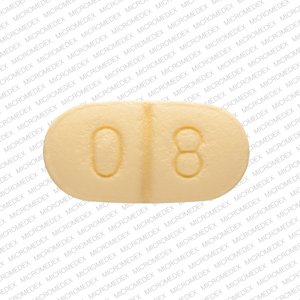
Mirtazapine Disease Interactions
There are 13 disease interactions with mirtazapine.
- Renal/liver disease
- Pheochromocytoma
- Bipolar screening
- Depression
- Hypotension
- Neutropenia
- Mania
- ALT elevations
- Hyperlipidemia
- Hyponatremia
- Mania/hypomania
- Seizures
- Glaucoma
Mirtazapine (applies to mirtazapine) renal/liver disease
Major Potential Hazard, High plausibility. Applicable conditions: Renal Dysfunction
Mirtazapine is extensively metabolized by the liver. Both the parent drug and metabolites, some of which are pharmacologically active, are excreted by the kidney. The clearance of mirtazapine has been shown to decrease in patients with moderate to severe renal or hepatic impairment. Therapy with mirtazapine should be administered cautiously in such patients. Dosage adjustments may be necessary.
References
- (2001) "Product Information. Remeron (mirtazapine)." Organon
- Davis R, Wilde MI (1996) "Mirtazapine: a review of its pharmacology and therapeutic potential in the management of major depression." Cns Drugs, 5, p. 389-402
- Montgomery SA (1995) "Safety of mirtazapine: a review." Int Clin Psychopharmacol, 10(suppl 4, p. 37-45
TCAs (applies to mirtazapine) pheochromocytoma
Major Potential Hazard, Moderate plausibility.
Tricyclic and tetracyclic antidepressants (TCAs) may potentiate the effects of circulating catecholamines. Enhanced sympathetic activity can provoke hypertensive crises in patients with pheochromocytoma or other tumors of the adrenal medulla, such as some neuroblastomas. Therapy with TCAs should be administered cautiously in patients with these tumors.
References
- (2002) "Product Information. Pamelor (nortriptyline)." Sandoz Pharmaceuticals Corporation
- (2002) "Product Information. Elavil (amitriptyline)." Stuart Pharmaceuticals
- (2002) "Product Information. Norpramin (desipramine)." Hoechst Marion Roussel
- (2002) "Product Information. Sinequan (doxepin)." Roerig Division
- (2002) "Product Information. Tofranil (imipramine)." Novartis Pharmaceuticals
- (2001) "Product Information. Anafranil (clomipramine)." Basel Pharmaceuticals
- (2001) "Product Information. Remeron (mirtazapine)." Organon
- (2001) "Product Information. Asendin (amoxapine)." Lederle Laboratories
- (2001) "Product Information. Ludiomil (maprotiline)." Ciba-Geigy Pharmaceuticals
- Braunwald E, Hauser SL, Kasper DL, Fauci AS, Isselbacher KJ, Longo DL, Martin JB, eds., Wilson JD (1998) "Harrison's Principles of Internal Medicine." New York, NY: McGraw-Hill Health Professionals Division
- (2001) "Product Information. Surmontil (trimipramine)." Wyeth-Ayerst Laboratories
- (2001) "Product Information. Vivactil (protriptyline)." Merck & Co., Inc
Tetracyclic antidepressants (applies to mirtazapine) bipolar screening
Major Potential Hazard, Moderate plausibility. Applicable conditions: Bipolar Disorder, Depression
A major depressive episode can be the initial presentation of bipolar disorder. Patients with depressive symptoms should be adequately screened to determine if they are at risk for bipolar disorder prior to initiating treatment with a tetracyclic antidepressant. This screening should include a detailed psychiatric history, including a family history of suicide, bipolar disorder, and depression. It should be noted that tetracyclic antidepressants are not approved for use in bipolar depression.
References
- (2001) "Product Information. Remeron (mirtazapine)." Organon
- (2001) "Product Information. Ludiomil (maprotiline)." Ciba-Geigy Pharmaceuticals
Tetracyclic antidepressants (applies to mirtazapine) depression
Major Potential Hazard, Moderate plausibility.
Adult and pediatric patients with depression and other psychiatric disorders may experience worsening of their symptoms and may have the emergence of suicidal thoughts and behavior. Patients should be monitored appropriately and observed closely for worsening of their symptoms, suicidality or changes in their behavior, especially during the first few months of treatment, and at times of dose changes. Families and caregivers should be advised of the need for close observation and communication with the treating physician. Discontinuing the medication should be considered if symptoms are persistently worse, or abrupt in onset. It may be prudent to refrain from dispensing large quantities of medication to these patients.
References
- (2001) "Product Information. Remeron (mirtazapine)." Organon
- (2001) "Product Information. Ludiomil (maprotiline)." Ciba-Geigy Pharmaceuticals
Tetracyclic antidepressants (applies to mirtazapine) hypotension
Major Potential Hazard, Low plausibility. Applicable conditions: Ischemic Heart Disease, Dehydration, Cerebrovascular Insufficiency, Diarrhea, History - Cerebrovascular Disease, History - Myocardial Infarction, Vomiting
The use of tetracyclic antidepressants (TCAs) has occasionally been associated with significant orthostatic hypotension secondary to the alpha-1 adrenergic blocking effects of these drugs. Therapy with TCAs should be administered cautiously in patients with hypotension or conditions that could be exacerbated by hypotension, such as a history of myocardial infarction, angina, or ischemic stroke. Patients with dehydration (e.g., due to severe diarrhea or vomiting) may be predisposed to hypotension and should also be managed carefully during therapy with TCAs. Blood pressure should be monitored at regular intervals, particularly during dosage escalation or whenever dosage has been altered, and patients should be advised not to rise abruptly from a sitting or recumbent position.
References
- (2001) "Product Information. Remeron (mirtazapine)." Organon
- (2001) "Product Information. Ludiomil (maprotiline)." Ciba-Geigy Pharmaceuticals
Tetracyclic antidepressants (applies to mirtazapine) neutropenia
Major Potential Hazard, Moderate plausibility.
The use of tetracyclic antidepressants has been associated with neutropenia (ANC < 500/mm3) and agranulocytosis (ANC < 500/mm3) with associated signs and symptoms,( e.g., fever, infection, etc.). Patients with preexisting neutropenia or agranulocytosis should be monitored closely during therapy for further decreases in white blood cell (WBC) counts. Treatment should be discontinued in any patient who develops a sore throat, fever, stomatitis, or other signs of infection along with a low WBC count.
References
- (2001) "Product Information. Remeron (mirtazapine)." Organon
- Montgomery SA (1995) "Safety of mirtazapine: a review." Int Clin Psychopharmacol, 10(suppl 4, p. 37-45
- (2001) "Product Information. Ludiomil (maprotiline)." Ciba-Geigy Pharmaceuticals
- Settle EC (1998) "Antidepressant drugs: disturbing and potentially dangerous adverse effects." J Clin Psychiatry, 59 Suppl 16, p. 25-30
Antidepressants (applies to mirtazapine) mania
Moderate Potential Hazard, Moderate plausibility. Applicable conditions: Bipolar Disorder
All antidepressants may occasionally cause mania or hypomania, particularly in patients with bipolar disorder. Therapy with antidepressants should be administered cautiously in patients with a history of mania/hypomania.
References
- (2001) "Product Information. Effexor (venlafaxine)." Wyeth-Ayerst Laboratories
- (2001) "Product Information. Desyrel (trazodone)." Bristol-Myers Squibb
- (2001) "Product Information. Serzone (nefazodone)." Bristol-Myers Squibb
- (2001) "Product Information. Remeron (mirtazapine)." Organon
- (2021) "Product Information. Qelbree (viloxazine)." Supernus Pharmaceuticals Inc
- (2023) "Product Information. Exxua (gepirone)." Mission Pharmacal Company, 1
Mirtazapine (applies to mirtazapine) ALT elevations
Moderate Potential Hazard, Moderate plausibility. Applicable conditions: Liver Disease
The use of mirtazapine has occasionally been associated with ALT (SGPT) elevations greater than three times the upper limit of normal. Although the majority of cases were reversible (some despite continued treatment) and not associated with other signs or symptoms suggestive of hepatic injury, therapy with mirtazapine should be administered cautiously in patients with preexisting liver disease. Periodic monitoring of liver enzyme levels is recommended.
References
- (2001) "Product Information. Remeron (mirtazapine)." Organon
- Montgomery SA (1995) "Safety of mirtazapine: a review." Int Clin Psychopharmacol, 10(suppl 4, p. 37-45
Mirtazapine (applies to mirtazapine) hyperlipidemia
Moderate Potential Hazard, Moderate plausibility.
Mirtazapine may significantly elevate serum triglyceride and total cholesterol levels. Patients with preexisting hyperlipidemia may require closer monitoring during mirtazapine therapy, and adjustments made accordingly in their lipid-lowering regimen.
References
- Smith WT, Glaudin V, Panagides J, Gilvary E (1990) "Mirtazapine vs. amitriptyline vs. placebo in the treatment of major depressive disorder." Psychopharmacol Bull, 26, p. 191-6
- (2001) "Product Information. Remeron (mirtazapine)." Organon
- Davis R, Wilde MI (1996) "Mirtazapine: a review of its pharmacology and therapeutic potential in the management of major depression." Cns Drugs, 5, p. 389-402
- Montgomery SA (1995) "Safety of mirtazapine: a review." Int Clin Psychopharmacol, 10(suppl 4, p. 37-45
Mirtazapine (applies to mirtazapine) hyponatremia
Moderate Potential Hazard, Moderate plausibility. Applicable conditions: Dehydration
Treatment with mirtazapine can cause hyponatremia. Caution should be used when treating patients with hyponatremia or at greater risk of hyponatremia such as the elderly, patients taking diuretics or who are volume depleted.
References
- (2001) "Product Information. Remeron (mirtazapine)." Organon
Mirtazapine (applies to mirtazapine) mania/hypomania
Moderate Potential Hazard, Moderate plausibility.
Activation of mania/hypomania has been reported during treatment with mirtazapine. Although the incidence has been low (0.2%), mirtazapine should be used carefully in patients with history of mania/hypomania.
References
- (2001) "Product Information. Remeron (mirtazapine)." Organon
Mirtazapine (applies to mirtazapine) seizures
Moderate Potential Hazard, Low plausibility.
The use of tricyclic and tetracyclic antidepressants is associated with a risk of seizures. Only one case of seizure was reported with mirtazapine, a newer tetracyclic antidepressant, during premarketing trials involving nearly 2800 patients. However, the drug has not been evaluated in controlled studies of patients with a history of seizures. Therapy with mirtazapine should be administered cautiously in such patients.
References
- Smith WT, Glaudin V, Panagides J, Gilvary E (1990) "Mirtazapine vs. amitriptyline vs. placebo in the treatment of major depressive disorder." Psychopharmacol Bull, 26, p. 191-6
- (2001) "Product Information. Remeron (mirtazapine)." Organon
- Hoyberg OJ, Maragakis B, Mullin J, Norum D, Stordall E, Ekdahl P, Ose E, Moksnes KM, Sennef C (1996) "A double-blind multicentre comparison of mirtazapine and amitriptyline in elderly depressed patients." Acta Psychiatr Scand, 93, p. 184-90
Tetracyclic antidepressants (applies to mirtazapine) glaucoma
Moderate Potential Hazard, Moderate plausibility. Applicable conditions: Glaucoma (Narrow Angle)
Tetracyclic antidepressants as other type of antidepressants have an effect on pupil size causing dilation. This effect can potentially narrow the eye angle resulting in increased intraocular pressure and angle closure glaucoma, especially in predisposed patients. These drugs should be used with caution in patients with anatomically narrow angle or history of glaucoma.
References
- (2001) "Product Information. Remeron (mirtazapine)." Organon
- (2001) "Product Information. Ludiomil (maprotiline)." Ciba-Geigy Pharmaceuticals
Mirtazapine drug interactions
There are 650 drug interactions with mirtazapine.
Mirtazapine alcohol/food interactions
There are 2 alcohol/food interactions with mirtazapine.
Report options

More about mirtazapine
- mirtazapine consumer information
- Check interactions
- Compare alternatives
- Pricing & coupons
- Reviews (2,024)
- Drug images
- Latest FDA alerts (4)
- Side effects
- Dosage information
- Patient tips
- During pregnancy
- Support group
- Drug class: tetracyclic antidepressants
- Breastfeeding
- En español
Related treatment guides
Drug Interaction Classification
| Highly clinically significant. Avoid combinations; the risk of the interaction outweighs the benefit. | |
| Moderately clinically significant. Usually avoid combinations; use it only under special circumstances. | |
| Minimally clinically significant. Minimize risk; assess risk and consider an alternative drug, take steps to circumvent the interaction risk and/or institute a monitoring plan. | |
| No interaction information available. |
Further information
Always consult your healthcare provider to ensure the information displayed on this page applies to your personal circumstances.