
Urostomy Care
Medically reviewed by Drugs.com. Last updated on Apr 2, 2024.
What is urostomy care?
Urostomy care is done to keep your urostomy and the skin around it clean. This helps prevent an infection or skin problems. A urostomy specialist will show you how to care for your urostomy.
What products are used for a urostomy?
- Pouches are used to collect urine that drains from your stoma. The pouch has a spout at the bottom used to drain urine from the pouch. Pouches come in a variety of sizes and styles. Most pouches are lightweight and prevent odor. Use a pouch that has an opening 1/8 inch larger than your stoma on each side. Your ostomy specialist can help you decide which type of pouch is best for you.
- Catheters are used if you have a urostomy that does not use a pouching system. You will insert the catheter into the stoma and let urine drain out of the catheter.
- Skin protection products include skin barriers and seals. A skin barrier may come as a paste. It helps make the skin even so the pouch is easier to attach and keep in place. Skin seals may be wipes or gels that coat the skin to protect it.
- A night drainage system has a large container and tubing that connect to your regular pouch. The container and tubing are connected to the bottom of the pouch with an adapter. The large container can be used when you sleep so that you do not have to get up several times to drain the bag.
How do I empty my pouch?
Empty your pouch about every 2 to 4 hours. You may need to change your pouch more often if you drink a lot of fluids. Always empty the pouch when it becomes 1/3 full. Do not let the pouch fill completely. A full pouch puts pressure on the seal and may cause a leak. The pouch may also come off, causing urine to spill. Ask your healthcare provider if you need to measure your urine when you empty your pouch. The following is general information about how to change your pouch:
- Sit on the toilet or on a chair next to the toilet.
- Point the opening of the pouch into the toilet. Do not let the tip of drainage spout touch the toilet.
- Open the clamp that keeps the pouch closed. It is normal to see mucus in urine emptied from a urostomy.
- Empty the pouch into the toilet.
- Close the clamp on the pouch.
- Wash your hands with soap and water.
How do I change my pouch?
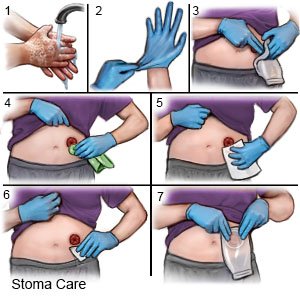
Your urostomy specialist will tell you how often to change your pouch and will show you how. Most pouches should be changed every 3 to 4 days to prevent an infection. You may need to change your pouch any time your skin sweats or gets wet. Always change it if is leaking. The best time to change your pouch is in the morning before you drink any liquids. You will have less urine draining for your stoma at this time. The following is general information about how to change your pouch:
- Wash your hands with soap and water. Empty the contents of the pouch into the toilet.
- Gently remove the pouch. Push your skin down and away from the adhesive skin barrier with one hand. With the other hand, pull the pouch up and away from your stoma.
- Hold a gauze roll or piece of clean cloth over your stoma while you clean your stoma. This will soak up urine and keep your skin dry. Do not insert anything into your stoma.
- Clean the skin around the stoma with warm water. You may also use soap. Do not use soaps that contain oil or perfumes. Pat your skin dry.
- Center the new pouch over the stoma and press it firmly into place on clean, dry skin. It may be helpful to hold your hand over the pouch for 30 seconds. The warmth of your hand can help to mold the adhesive skin barrier into place. You may have a pouch that comes in 2 parts. Apply the first part to your skin around your stoma as directed. Attach the bag by snapping it into the part of the pouch that is against your skin. Make sure it is sealed firmly against your skin and where the bag snaps on.
- Discard or clean the old pouch. Place the old pouch in another plastic bag and throw it away if the pouch is disposable. If you use a reusable pouch, ask how to clean the reusable pouch.
 |
Treatment options
The following list of medications are related to or used in the treatment of this condition.
What can I do to care for myself after a urostomy?
- Reduce odor. Some foods, such as asparagus, cheese, and eggs may cause your urine to have a strong odor. Vitamin C may help to decrease urine odor.
- Drink liquids as directed. Most people should drink at least 8 (8-ounce) cups of liquids each day. Ask your healthcare provider how much liquid you should drink each day.
- Return to work when your healthcare provider says it is okay. You may need support to prevent a hernia if you lift heavy items or perform heavy labor. You may need an ostomy belt over the pouch to keep it in place.
- Stay active and exercise as directed. Ask your healthcare provider about the best exercise plan for you. Wear your pouch when you swim. Use waterproof tape over the edges of your skin barrier to keep your pouch from leaking. Empty your pouch before you exercise or have sex.
- Carry extra supplies with you in case your bag leaks. Supplies include extra pouches, skin protection products, and a change of clothing.
When should I seek immediate care?
- You cannot stop the bleeding from your stoma.
- You have severe abdominal pain.
When should I call my doctor?
- You have a fever.
- You have blood in your urine, and your urine has a strong odor.
- Your incision wound or stoma is red or swollen, or you have a rash.
- You have nausea, bloating, pain, or are vomiting.
- You have little or no urine coming from your stoma.
- Your stoma changes in size or appearance.
- You are weak and unable to do your normal activities.
- You have questions or concerns about your condition or care.
Care Agreement
You have the right to help plan your care. Learn about your health condition and how it may be treated. Discuss treatment options with your healthcare providers to decide what care you want to receive. You always have the right to refuse treatment. The above information is an educational aid only. It is not intended as medical advice for individual conditions or treatments. Talk to your doctor, nurse or pharmacist before following any medical regimen to see if it is safe and effective for you.© Copyright Merative 2024 Information is for End User's use only and may not be sold, redistributed or otherwise used for commercial purposes.
Learn more about Urostomy Care
Treatment options
- Medications for Abdominopelvic Fistulas
- Medications for Bleeding Disorder
- Medications for Rupture of Bladder
- Medications for Urinary Retention
- Medications for Urinary Tract Obstruction
Care guides
Further information
Always consult your healthcare provider to ensure the information displayed on this page applies to your personal circumstances.
