Thomson Reuters Micromedex

Pelvic Inflammatory Disease

What is pelvic inflammatory disease?

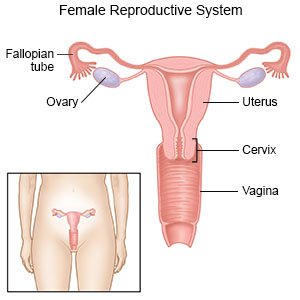
Pelvic inflammatory disease (PID) is a condition where your reproductive organs become inflamed (swollen). Your reproductive organs include your ovaries, fallopian tubes, uterus (womb), cervix (lower area of your uterus), and vagina. Your reproductive organs are found in your lower abdomen (stomach). PID may cause chronic (long-term) abdominal pain and problems with future pregnancies. Treatment may resolve your pain and swelling, and cure your PID.


What causes PID?

PID is an infection caused by germs called bacteria or viruses. The infection may start in your vagina and spread upward through your cervix. The germs may then spread to your uterus, and into your tubes and ovaries. PID may also spread to other areas of your abdomen. Causes of PID may include the following:

  • Normal vaginal bacteria: Different types of bacteria normally live in your vagina. The bacteria do not usually harm your body. If the amounts of your normal vaginal bacteria suddenly increase, you may get a vaginal infection. A vaginal infection may then lead to PID.

  • Sexually transmitted infections: Sexually transmitted infections are also called STIs. STIs are spread by having sex with an infected partner. STIs that commonly cause PID are the bacteria gonorrhea and chlamydia. One of the viruses that may cause PID is cytomegalovirus (CMV). PID often occurs if an STI is not treated. Ask your caregiver for more information about STIs.

What increases my risk for PID?

  • Sexual history or behavior: The following may increase your risk for a STI, which may cause PID:

    • Having a new sexual partner within the last three months.

    • Having had a STI or PID in the past.

    • Having more than one sexual partner at a time.

    • Starting to have sex at a young age.

  • Uterine procedures: Uterine procedures may damage your cervix. Your cervix helps block germs from entering into your reproductive organs. Any of the following procedures may increase your risk for PID:

    • Abortion (ending your pregnancy).

    • Hysterosalpingography (x-ray of your uterus and tubes using an injection of dye).

    • Intrauterine device (IUD) insertion within the past month. An IUD is a small, flexible device put into your uterus to prevent pregnancy.

    • Intrauterine insemination (injecting sperm directly into your uterus).

    • In vitro fertilization (having a woman's egg fertilized outside your womb and placed into your uterus).

What are the signs and symptoms of PID?

You may not have any symptoms with PID. If you do have signs or symptoms, you may have any of the following:

  • Fever (high body temperature), which may be more than 101.0 degrees Fahrenheit or 38.3 degrees Celsius.

  • Green or yellow discharge from your vagina. The discharge may have an unusual or bad smell.

  • Lower back pain.

  • Nausea (upset stomach) or vomiting (throwing up).

  • Pain in one or both sides of your lower abdomen.

  • Pain while having sex, especially if your PID is new.

  • Vaginal bleeding or spotting during or after sex. You may also have bleeding in between your monthly periods.

What conditions may occur with PID?

One or more of the following conditions may occur with PID:

  • Endometritis: Inflammation of your uterus.

  • Salpingitis: Inflammation of one or both of your tubes.

  • Oophoritis: Inflammation of one or both of your ovaries.

  • Tubo-ovarian abscess: A pocket of pus in your tube and nearby ovary.

  • Peritonitis: Inflammation of your peritoneum (lining of your abdomen).

  • Parametritis: Inflammation of the tissue around your uterus.

How is PID diagnosed?

Your caregiver will ask you questions about your health and sexual history. Tell your caregiver if you have other medical conditions, or if you have had past surgeries or procedures. Tell your caregiver about any STIs that you or your partner may have. Your caregiver may have you do a pregnancy test as well as any of the following:

  • Bimanual vaginal exam: Your caregiver will insert two gloved fingers into your vagina and place his other hand on your abdomen. Your caregiver will feel for your cervix and ovaries while pressing down lightly on your abdomen. If you feel pain when your caregiver touches and moves your cervix or ovaries, you may have PID. You may also feel pain when your caregiver presses down on your abdomen.

  • Biopsy: During a biopsy, your caregiver will take a tissue sample from the lining of your uterus. The sample is then checked for signs of inflammation.

  • Blood and urine tests: You may need blood and urine tests to check for infection. The tests may also show if another condition is causing your symptoms.

  • Culture or smear test: A sample of discharge from your vagina or cervix may be taken for testing. The sample may be cultured (grown) or looked at under a microscope. The culture or smear test may help your caregiver learn what germ is causing your PID.

  • Computed tomography scan: This is also called a CT scan. A special x-ray machine uses a computer to take pictures of your lower abdomen. The pictures may show if your reproductive organs and the tissues around them are inflamed. The pictures may also show if you have any abnormal fluid collecting in your reproductive organs.

  • Magnetic resonance imaging: This is also called an MRI. During this test, pictures of your lower abdomen are taken. These pictures may show if you have pus or fluid in your reproductive organs.

  • Ultrasound: This test uses sound waves to show pictures of your organs and tissues on a TV-like screen. You may have any of the following:

    • Abdominal ultrasound: A small device will be moved around your abdomen to show pictures of your reproductive organs.

    • Doppler ultrasound: A Doppler ultrasound is done to check your blood flow through your blood vessels.

    • Transvaginal ultrasound: A small tube will be placed inside your vagina to look at your reproductive organs.

  • Laparoscopy: A laparoscopy is surgery to look directly at your uterus, ovaries, and tubes. A special scope is put into your abdomen through a small incision (cut). You may have one or more incisions in or below your belly button. Ask your caregiver for more information about this surgery.

How is PID treated?

  • Antibiotics: This medicine is given to fight infection caused by bacteria. Your caregiver may have you start this medicine before your test results are back. Taking the antibiotics right away may help prevent worsening of your symptoms. Tell your caregiver if you are pregnant, or if you have allergies to any antibiotics.

  • Pain medicine: You may be given medicine to take away or decrease your pain.

  • Surgery: You may need surgery to treat problems related to your PID. If you have a tubo-ovarian abscess, you may need surgery to drain the pus. Ask your caregiver for more information about surgeries or other procedures you may need.

How can I decrease my chances of getting PID?

  • Do not have unprotected sex. If you have sex, always use a latex condom. Do not have sex with someone who has or is being treated for a STI.

  • Finish your treatment. If you do not finish your treatment for PID, your infection may not go away. You may also have an increased risk of having another STI in the future. Do not have sex while you or your partners are being treated for a STI.

  • Limit your sexual partners. If you are sexually active, having one sexual partner may decrease your risk of getting a STI.

  • Talk to your partners. If you have a STI, tell your recent partners. Advise them to see a caregiver for testing and treatment. This will help stop the spread of infection to others, or back to you.

Where can I find more information?

Contact any of the following:

  • Centers for Disease Control and Prevention
    1600 Clifton Road
    Atlanta , GA 30333
    Phone: 1- 800 - 232-4636
    Web Address: http://www.cdc.gov
  • The American College of Obstetricians and Gynecologists
    409 12th Street, SW
    Washington , DC 20090
    Phone: 1- 202 - 638-5577
    Web Address: http://www.acog.org

When should I call my caregiver?

Call your caregiver if:

  • You have nausea or vomiting.

  • Your skin is red, itchy, or you have a new rash.

  • You think or know you are pregnant.

  • You have questions or concerns about your condition, treatment, or care.

When should I seek immediate help?

Seek care immediately or call 911 if:

  • You have chills or a high fever.

  • You have pain in the upper right area of your abdomen.

  • You have pain in your lower abdomen that does not go away with rest or medicine.

  • Your symptoms get worse or do not improve after three days of treatment.

Care Agreement

You have the right to help plan your care. Learn about your health condition and how it may be treated. Discuss treatment options with your caregivers to decide what care you want to receive. You always have the right to refuse treatment.

Copyright © 2012. Thomson Reuters. All rights reserved. Information is for End User's use only and may not be sold, redistributed or otherwise used for commercial purposes.

The above information is an educational aid only. It is not intended as medical advice for individual conditions or treatments. Talk to your doctor, nurse or pharmacist before following any medical regimen to see if it is safe and effective for you.

Learn more about Pelvic Inflammatory Disease

Advertisement
Close

Recommended

(web2)