
Pancreatic Cancer
Medically reviewed by Drugs.com. Last updated on Sep 1, 2024.
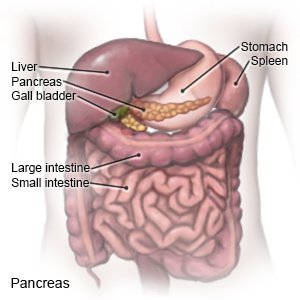
Pancreatic cancer starts in the pancreas. The pancreas is located just behind the stomach. It helps digest food by making enzymes. The pancreas also makes hormones, such as insulin, to help balance blood sugar levels.
 |
WHILE YOU ARE HERE:
Informed consent
is a legal document that explains the tests, treatments, or procedures that you may need. Informed consent means you understand what will be done and can make decisions about what you want. You give your permission when you sign the consent form. You can have someone sign this form for you if you are not able to sign it. You have the right to understand your medical care in words you know. Before you sign the consent form, understand the risks and benefits of what will be done. Make sure all your questions are answered.
Intake and output:
Healthcare providers will keep track of the amount of liquid you are getting. They also may need to know how much you are urinating. Ask how much liquid you should drink each day. Ask healthcare providers if they need to measure or collect your urine.
Medicines:
- Pain medicine may be given. Do not wait until the pain is severe before you ask for more medicine.
- Antibiotics help treat or prevent a bacterial infection.
- Pancreatic enzymes help your body digest protein, carbohydrates, and fats in your food.
- Insulin is given to help balance blood sugar levels.
Tests:
- Blood tests are used to monitor treatment and check your overall health.
- Ultrasound, CT, or MRI pictures will show the location and size of the cancer. Pictures may also show if cancer has spread to other places in your body. You may be given contrast liquid to help the cancer show up better in pictures. Tell the healthcare provider if you have ever had an allergic reaction to contrast liquid. Do not enter the MRI room with anything metal. Metal can cause serious injury. Tell the healthcare provider if you have any metal in or on your body.
- A PET scan is a test used to find cancer cells in other parts of your body. Ask your healthcare provider for more information on this test.
- An endoscopy is a procedure used to check for a tumor. An endoscopic ultrasound uses sound waves to show your pancreas on a monitor. An endoscopic retrograde cholangiopancreatography (ERCP) may also be used to help open a narrow or blocked bile duct.
- A biopsy is a procedure to remove a small piece of tissue from your pancreas. A biopsy may be done during an endoscopic ultrasound or ERCP, or with a needle. The tissue sample will be sent to a lab to be tested for cancer.
- Genomic sequencing tests may show which cells are causing cancer. This can help your provider choose which medicine to give you.
Treatment:
- Radiation therapy uses x-rays or gamma rays to treat cancer. Radiation kills cancer cells and may stop the cancer from spreading. It is also used to reduce symptoms, such as pain.
- Chemotherapy is medicine that kills cancer cells. Chemotherapy may also be used to shrink the tumor before surgery.
- Targeted therapy is medicine given to kill cancer cells without harming healthy tissue.
- Surgery is done to remove part or all of your pancreas and lymph nodes near your pancreas. It is most often done for tumors that have not spread to other parts of the body. The kind of surgery you need will depend on the size and location of the tumor.
Treatment options
The following list of medications are related to or used in the treatment of this condition.
RISKS:
Pancreatic cancer may make it difficult to digest food or absorb nutrients. It also increases your risk for a blood clot. This may become life-threatening. Pancreatic cancer increases your risk for diabetes, and you may need medicine to control your blood sugar level. Even with treatment, pancreatic cancer may return or become life-threatening.
CARE AGREEMENT:
You have the right to help plan your care. Learn about your health condition and how it may be treated. Discuss treatment options with your healthcare providers to decide what care you want to receive. You always have the right to refuse treatment.© Copyright Merative 2024 Information is for End User's use only and may not be sold, redistributed or otherwise used for commercial purposes.
The above information is an educational aid only. It is not intended as medical advice for individual conditions or treatments. Talk to your doctor, nurse or pharmacist before following any medical regimen to see if it is safe and effective for you.
Learn more about Pancreatic Cancer
Treatment options
Care guides
Symptoms and treatments
Further information
Always consult your healthcare provider to ensure the information displayed on this page applies to your personal circumstances.