Consumer Information
Carenotes > Lower Extremity Tenosynovitis (Inpatient Care)

Lower Extremity Tenosynovitis

Advertisement

WHAT YOU SHOULD KNOW:

  • Lower extremity (ek-strem-IH-tee) tenosynovitis (ten-o-sin-VEYE-tis) is a condition affecting the tendons, sheath, and synovium of the lower extremity (limb). Tendons are cords of tissue that connect muscles to the bones. The synovium is the lining of the sheath (covering) of the tendons. With lower extremity tenosynovitis, the sheath and the synovium of the flexor (bending) muscles become inflamed (swollen). The tendons may also become thickened and have a hard time moving through the swollen covering. This may cause pain and tenderness when moving the affected leg or foot, especially the ankle and heel areas. This condition usually affects athletes, ballet dancers, and people of middle age or older. Lower extremity tenosynovitis may be an acute (sudden) or chronic (long-term) condition. It may also be caused by an infection.
    Lower Leg and Foot


  • You may have pain, redness, and swelling in your leg, thigh, ankle, or foot. This pain usually occurs when you move the affected limb up and down or while walking or running. Over time, the pain may become worse and may be present even at rest. You may also have weakness and limited movement of the affected part. Your caregiver will test your legs and feet by moving them in different positions. X-rays, an arthrogram, a biopsy, or magnetic resonance imaging (MRI) may be done to look for tendon injuries and other problems. Treatment will depend on your symptoms and the length of time you have had them. With treatment, such as medicines, a splint, rehabilitation, or surgery, you may be able to resume your normal daily activities.

CARE AGREEMENT:

You have the right to help plan your care. To help with this plan, you must learn about your health condition and how it may be treated. You can then discuss treatment options with your caregivers. Work with them to decide what care may be used to treat you. You always have the right to refuse treatment.

RISKS:

  • Medicines used in relieving the signs and symptoms of lower extremity tenosynovitis may cause side effects. These include stomach ulcers (sores), nausea (upset stomach), or vomiting (throwing up). You could get an infection or bleed too much with surgery. Sometimes, even after treatment, your leg, ankle, or foot may not move the way it did before treatment. Rehabilitation may take a long time, and your tenosynovitis may return.

  • If left untreated, lower extremity tenosynovitis may cause further problems with using your legs and feet. You may not be able to do your usual activities. Your tendon may rupture or get badly damaged. The chances of treating lower extremity tenosynovitis are better when it is diagnosed and treated as early as possible. Completing your rehabilitation program is also very important. Ask your caregiver if you have concerns about your condition, medicines, or care.

WHILE YOU ARE HERE:

Informed consent: You have the right to understand your health condition in words that you know. You should be told what tests, treatments, or procedures may be done to treat your condition. Your doctor should also tell you about the risks and benefits of each treatment. You may be asked to sign a consent form that gives caregivers permission to do certain tests, treatments, or procedures. If you are unable to give your consent, someone who has permission can sign this form for you. A consent form is a legal piece of paper that tells exactly what will be done to you. Before giving your consent, make sure all your questions have been answered so that you understand what may happen.

Activity: At first you may need to rest in bed. Your caregiver will tell you when it is OK to get out of bed. Call your caregiver before getting up for the first time. If you feel weak or have a lot of pain in your lower extremity, sit or lie down right away.

Cold and warm compresses: Ice packs may be put first on your affected part. A warm, wet washcloth or a heating pad (turned on low) may be used next on the affected part. Alternating cold and warm compresses will help decrease the swelling and pain.

IV: An IV is a tube placed in your vein for giving medicine or liquids. This tube is capped or connected to tubing and liquid.

Medicines: Your caregiver may give you the following kinds of medicines:

  • Antibiotics: Antibiotics may be given to help treat or prevent an infection caused by germs called bacteria.

  • Antifungal medicine: This medicine helps kill fungus that can cause illness.

  • Medicines for pain, swelling, or fever: You may be given medicines to treat pain, swelling, or fever while you are in the hospital. These medicines are safe for most people to use. However, they can cause serious problems when used by people with certain medical conditions. Tell caregivers if you have liver or kidney disease, a history of bleeding in your stomach, or any other medical problems. Also tell your caregiver about any allergies you have to medicines. Tell your caregiver about all other medicines, herbs, and supplements that you have taken lately.

  • Steroid medicine: Your caregiver may suggest that you take steroid medicine. Steroid medicine may be injected into the affected tendon, taken by mouth, or given in an IV. This medicine decreases chronic (long-term) pain and swelling. It is important to follow your caregiver's instructions on how to take this medicine. Do not stop taking this medicine until your caregiver tells you to.

Tests: You may have one or more of the following:

  • Physical exam: Your caregiver may have to move your legs and feet in certain directions. He will check to see if you have any pain, weakness, or movement problems. He may also check your other lower extremity for any pain, weakness, or movement problems.

  • Blood tests: You may need blood taken for tests. The blood can be taken from a blood vessel in your hand, arm, or the bend in your elbow. It is tested to see how your body is doing. It can give your caregivers more information about your health condition. You may need to have blood drawn more than once.

  • Biopsy and culture test: A biopsy may be done by taking fluids out through a needle. Your caregiver may also do a biopsy by surgically opening one or more tendons. The fluid or the tendon biopsy will then be taken to a lab and tested.

  • Imaging tests: You may be given dye before the pictures are taken in some of these tests. The dye is usually given in your IV. The dye may help your caregiver see the pictures better. People who are allergic to iodine or shellfish (lobster, crab, or shrimp) may be allergic to some dyes. Tell the caregiver if you are allergic to shellfish, or have other allergies or medical conditions.

    • Arthrogram: An arthrogram is an x-ray that is taken after dye is injected into your affected joint. This test is used to view the structures of your joint such as muscles, ligaments, tendons and cartilage. The dye helps your caregiver see the structures better. People who are allergic to iodine or shellfish (lobster, crab or shrimp) may be allergic to some dyes. Tell the caregiver if you are allergic to shellfish or have other allergies or medical conditions.

    • Computerized tomography scan: This is also called a CT or CAT scan. A special x-ray machine uses a computer to take pictures of your lower extremity.

    • Magnetic resonance imaging scan: This is also called an MRI. An MRI uses magnetic waves to take pictures of the leg, thigh, knee, ankle, or foot area. This may help your caregiver decide if you have lower extremity tenosynovitis, or another condition that is affecting your limb.

    • Ultrasound: An ultrasound is a simple test that looks inside of your body. Sound waves are used to show pictures of your organs and tissues on a TV-like screen. Caregivers may also look for fluid near the area of your pain and redness. You may also be able to hear your blood flow during this test.

    • X-rays: You may need x-rays of your lower extremities to check for broken bones or other problems. X-rays of both your painful and non-painful lower extremities may be taken.

Treatment options: Your treatment may change if your health problem is not being controlled. This is often decided after you have tests. You may have some of the following treatments alone or together.

  • Aiding devices: You may need any of the following:

    • Crutches: Caregivers may have you use crutches to decrease stress and strain on your lower limbs.

    • Orthotics: Orthotics are shoe inserts that help decrease pain, relieve stress on the tendons, and make your foot and ankle more stable.

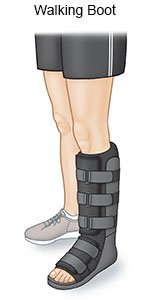
  • Immobilization: Immobilization (keeping the joint from moving) is an important treatment that allows the tendon and its covering to heal. A brace, splint, walking boot, or cast may be used on the affected part to immobilize it. These may also be used to give correction, support, or to decrease pain. It may also provide protection and prevent the tendons from being damaged further.

  • Surgery: You may need surgery if your symptoms do not go away with other treatments. Surgery may also be done if your pain gets worse or is so severe (bad) that it affects your daily activities.

  • Rehabilitation: This is a program that may include physical and occupational therapy to help your condition heal faster. When the swelling has gone down, you may be given exercises to do. These exercises will bring back the normal range of motion of your lower extremities and strengthen your tendons. Your caregiver may also ask you to make changes in your activities to decrease stress on the tendons. These changes may also prevent this condition from happening again.

  • Ultrasound therapy: A device that uses ultrasound with heat may be used to massage the swollen or irritated lower extremity. This may help relieve pain and swelling.

Copyright © 2008 Thomson Healthcare Inc. All rights reserved. Information is for End User's use only and may not be sold, redistributed or otherwise used for commercial purposes.

The above information is an educational aid only. It is not intended as medical advice for individual conditions or treatments. Talk to your doctor, nurse or pharmacist before following any medical regimen to see if it is safe and effective for you.


MedNotes
Advertisement

(web3)