
Low Back Strain
Medically reviewed by Drugs.com. Last updated on Sep 1, 2024.
Low back strain is an injury to your lower back muscles or tendons. Tendons are strong tissues that connect muscles to bones. The lower back supports most of your body weight and helps you move, twist, and bend.
DISCHARGE INSTRUCTIONS:
Seek care immediately if:
- You hear or feel a pop in your lower back.
- You have increased swelling or pain in your lower back.
- You have trouble moving your legs.
- Your legs are numb.
Call your doctor if:
- You have a fever.
- Your pain does not go away, even after treatment.
- You have questions or concerns about your condition or care.
Medicines:
The following medicines may be ordered by your healthcare provider:
- Acetaminophen decreases pain and fever. It is available without a doctor's order. Ask how much to take and how often to take it. Follow directions. Read the labels of all other medicines you are using to see if they also contain acetaminophen, or ask your doctor or pharmacist. Acetaminophen can cause liver damage if not taken correctly.
- NSAIDs , such as ibuprofen, help decrease swelling, pain, and fever. This medicine is available with or without a doctor's order. NSAIDs can cause stomach bleeding or kidney problems in certain people. If you take blood thinner medicine, always ask your healthcare provider if NSAIDs are safe for you. Always read the medicine label and follow directions.
- Muscle relaxers help decrease pain and muscle spasms.
- Prescription pain medicine may be given. Ask your healthcare provider how to take this medicine safely. Some prescription pain medicines contain acetaminophen. Do not take other medicines that contain acetaminophen without talking to your healthcare provider. Too much acetaminophen may cause liver damage. Prescription pain medicine may cause constipation. Ask your healthcare provider how to prevent or treat constipation.
- Take your medicine as directed. Contact your healthcare provider if you think your medicine is not helping or if you have side effects. Tell your provider if you are allergic to any medicine. Keep a list of the medicines, vitamins, and herbs you take. Include the amounts, and when and why you take them. Bring the list or the pill bottles to follow-up visits. Carry your medicine list with you in case of an emergency.
Treatment options
The following list of medications are related to or used in the treatment of this condition.
Self-care:
- Rest as directed. You may need to rest in bed for a period of time after your injury. Do not lift heavy objects.
- Apply ice on your back for 15 to 20 minutes every hour or as directed. Use an ice pack, or put crushed ice in a plastic bag. Cover it with a towel. Ice helps prevent tissue damage and decreases swelling and pain.
- Apply heat on your lower back for 20 to 30 minutes every 2 hours for as many days as directed. Heat helps decrease pain and muscle spasms.
- Slowly start to increase your activity as the pain decreases, or as directed.
Prevent another low back strain:
- Use correct body movements.
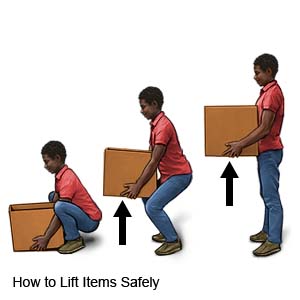
- Bend at the hips and knees when you pick up objects. Do not bend from the waist. Use your leg muscles as you lift the load. Do not use your back. Keep the object close to your chest as you lift it. Try not to twist or lift anything above your waist.
- Change your position often when you stand for long periods of time. Rest one foot on a small box or footrest, and then switch to the other foot often.
- Try not to sit for long periods of time. When you do, sit in a straight-backed chair with your feet flat on the floor.
- Never reach, pull, or push while you are sitting.
- Bend at the hips and knees when you pick up objects. Do not bend from the waist. Use your leg muscles as you lift the load. Do not use your back. Keep the object close to your chest as you lift it. Try not to twist or lift anything above your waist.
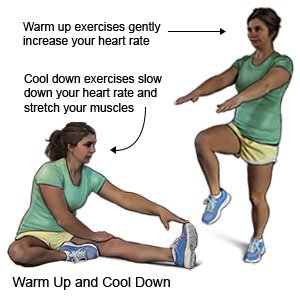
- Warm up before you exercise. Do exercises that strengthen your back muscles. Ask your healthcare provider about the best exercise plan for you.
- Maintain a healthy weight. Ask your healthcare provider how much you should weigh. Ask him to help you create a weight loss plan if you are overweight.
Follow up with your doctor as directed:
Write down your questions so you remember to ask them during your visits.
© Copyright Merative 2024 Information is for End User's use only and may not be sold, redistributed or otherwise used for commercial purposes.
The above information is an educational aid only. It is not intended as medical advice for individual conditions or treatments. Talk to your doctor, nurse or pharmacist before following any medical regimen to see if it is safe and effective for you.
Learn more about Low Back Strain
Treatment options
Care guides
Further information
Always consult your healthcare provider to ensure the information displayed on this page applies to your personal circumstances.