Thomson Reuters Micromedex

Coccyx Injury

What is a coccyx injury?

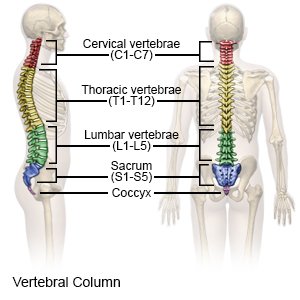
A coccyx injury is a condition where your coccyx bone becomes unstable, dislocated, or broken. The coccyx is the small, triangular, tail-like bone that is near your anus. It is made up of 3 to 5 smaller bones and has 2 to 3 parts joined together. The coccyx bone forms the end of your spine. Women 30 to 40 years of age are at a higher risk of having a coccyx injury than men. Women have a wider and larger pelvis and less fat tissue around their coccyx. This makes a woman's coccyx easier to injure than a man's. Having treatments can make your coccyx pain go away, and help you return to your usual activities.

Picture of a normal spine

What may cause a coccyx injury?

Coccyx injuries may be very painful. Coccyx pain may be caused by problems such as arthritis of the hips. Obesity (weighing more than your caregiver suggests) may increase your chance of having coccyx pain and injury. You may have coccyx pain for no known reason. The following may also cause or increase your risk of having coccyx pain or injury:

  • Accidents, such as if you fall down or are in a car accident. The most common cause of coccyx injury is from falling backwards on a slippery surface like ice or a floor.

  • A break in the coccyx as a woman delivers a baby.

  • A direct hit to the area near your anus. This may occur during a physical fight, or in contact sports such as football.

  • Tumors (growths) or infections in the tissues near your coccyx.

What are the signs and symptoms of a coccyx injury?

You may have coccygodynia or coccydynia. This is pain felt in and around your coccyx area that can happen suddenly or slowly. The pain may be acute and last for a short period of time. It may also be chronic where it may last for more than two months. The pain is usually felt while you are about to sit, when sitting down, or when standing up. You may also see or feel any of the following:

  • Bruises (black and blue marks) on your lower back, or swelling.

  • Low backache or pressure in your pelvis (hip area).

  • Pain in your buttocks that spreads to your thighs or legs.

  • Pain during bowel movements, when having sex, and when bending or lifting objects.

  • Pain that worsens while driving a car, rowing, and biking.

  • Trouble standing up or walking.

How is a coccyx injury diagnosed?

Your caregiver needs to know your past injuries and when they happened. You will be asked if sitting on a hard or soft seat surface makes your pain worse. Your coccyx area will be checked well for other problems. Dye may be given to you before some tests are done. The dye may help your caregiver see injuries more clearly on the pictures that are taken. People who are allergic to iodine or shellfish (lobster, crab, or shrimp) may be allergic to some dyes. Tell caregivers if you have any allergies.

  • Body mass index: This is a measure of your body fat in relation to your weight and height. Caregivers use this test to check if your weight causes pressure and pain on your back.

  • Bone scan: Pictures of your bones are taken. Caregivers can look at the pictures for broken bones, infections, or cancer.

  • Computerized tomography scan: This is also called a CT scan. An x-ray machine uses a computer to take pictures of your lower back.

  • Magnetic resonance imaging: This test is also called an MRI. During the MRI, pictures of your lower back are taken. You will need to lie still during the MRI. Never enter the MRI room with an oxygen tank, watch, or any other metal objects. Tell your caregiver if you have any metal implants in your body.

  • X-ray: You may need an x-ray of your pelvis, lumbosacral spine and coccyx.

How is a coccyx injury treated?

A coccyx injury that is mild may be treated with bed rest. Sitting in a donut-shaped support cushion, and taking warm baths may help relieve your pain. If your symptoms get worse, you may need other treatments. Ask your caregiver for more information about the following:

  • Heat therapy: This treatment may include the use of special devices such as a diathermy or ultrasound. These devices give out heat which can reach deep tissues inside your body. When heat reaches your coccyx area, your pain may be decreased. This treatment may need to be used more than once to help relieve your pain. Hot compresses may also help decrease your pain.

  • Ice: Ice causes blood vessels to constrict (get small) which helps decrease swelling, pain, and redness. Put crushed ice in a plastic bag and cover it with a towel. Place this on your coccyx area for 15 to 20 minutes every hour as long as you need it. Do not sleep with the ice pack on your back.

  • Intrarectal manipulation: This is done for people who have an unstable or dislocated coccyx. A caregiver moves your tail bone from inside your anus. You may need one or more treatments before your coccyx becomes stable or returns to normal.

  • Medicines:

    • Anesthesia: This medicine is given to make your coccyx area numb, so that do not feel as much pain.

    • NSAIDs: Nonsteroidal anti-inflammatory (NSAID) medicine may decrease swelling and pain or fever. This medicine can be bought with or without a doctor's order. This medicine can cause stomach bleeding or kidney problems in certain people. Always read the medicine label and follow the directions on it before using this medicine.

    • Steroids: This medicine may be given to decrease inflammation.

  • Spinal cord stimulation: This treatment uses mild electrical stimulation on your spinal cord. This can help make the painful area numb so that you feel less pain.

  • Surgery: You may need to have a coccygectomy if your pain does not go away using other treatments. This is surgery to remove all or part of your coccyx bone. You may need this surgery if damage to your coccyx is severe (very bad). This may also be done if the cause of your coccyx pain is not known.

What can I do to help decrease my coccyx pain?

  • Avoid activities that may make your pain worse or may injure your coccyx again. These include picking up heavy things and doing contact or hard sports. When the pain decreases, begin normal, slow movements as your caregiver tells you.

  • Being obese (weighing more than caregivers suggest) may increase your risk of having coccyx pain. Talk to your caregiver about your weight. You may be placed on a special diet.

  • Rest may help relieve your pain. Sit in a donut-shaped support cushion, and sleep on a firm mattress to help decrease pain. Sleep on your back with a pillow under your knees to help you sleep better. This will decrease the tension on your back. You may also sleep on your side with one or both of your knees bent.

When should I call my caregiver?

Call your caregiver if:

  • You have a fever.

  • You have problems passing urine or having bowel movements.

  • You have questions or concerns about your injury, pain, or treatment.

When should I seek immediate help?

Seek care immediately or call 911 if:

  • You suddenly have trouble moving your legs.

  • You suddenly have trouble breathing.

  • You suddenly lose feeling in your legs.

  • Your lower back pain or swelling is worse or does not go away even after taking medicines.

Care Agreement

You have the right to help plan your care. Learn about your health condition and how it may be treated. Discuss treatment options with your caregivers to decide what care you want to receive. You always have the right to refuse treatment.

Copyright © 2012. Thomson Reuters. All rights reserved. Information is for End User's use only and may not be sold, redistributed or otherwise used for commercial purposes.

The above information is an educational aid only. It is not intended as medical advice for individual conditions or treatments. Talk to your doctor, nurse or pharmacist before following any medical regimen to see if it is safe and effective for you.

Learn more about Coccyx Injury

Advertisement
Close

Recommended

(web5)