
Sacral Fracture
Medically reviewed by Drugs.com. Last updated on Jun 2, 2025.
What is a sacral fracture?
A sacral fracture is a break in your sacrum. The sacrum is a triangle-shaped bone that is found at the bottom of the spine.
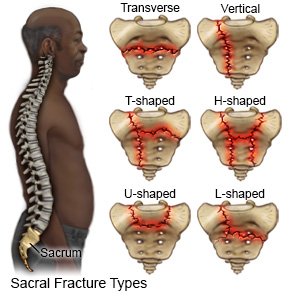 |
What increases my risk for a sacral fracture?
- Older age
- Diseases that affect your bones, such as osteoporosis, Paget disease, or bone cancer
- Use of certain medicines, such as steroids
- Increased activity, a sudden change in an athletic training program, or use of poor fitting or improper footwear
What are the signs and symptoms of a sacral fracture?
- Low back, buttock, or hip pain
- Pain in the front of your thigh and your groin
- Bruising and swelling around the sacral area
- Bowel or bladder conditions, sexual problems, or weakness of the lower limbs
How is a sacral fracture diagnosed?
- X-rays may be checked for broken bones or other problems.
- CT scan or MRI pictures may be taken of your sacrum. You may be given contrast liquid to help a fracture show up better in pictures. Tell the healthcare provider if you have ever had an allergic reaction to contrast liquid. Do not enter the MRI room with any metal. Metal can cause serious injury. Tell your healthcare provider if you have any metal in or on your body.
How is a sacral fracture treated?
Treatment will depend upon the kind of fracture that you have. Mild sacral fractures that were caused by increased activity may be treated with rest alone. Medicine to decrease pain may be given so that you can return to your usual activities as soon as possible. After your fracture has healed, you may need an exercise program to increase your flexibility. Severe sacral fractures may require surgery to place your bones in their normal positions.
When should I seek immediate care?
- You have increased pain in your lower back.
- Your leg tingles or feels like pins are being stuck in it.
- Your leg feels numb or weak.
- You have problems controlling your urine or bowel movements.
When should I call my doctor?
- You have pain in your low back that gets worse with walking, and gets better lying on your back.
- You have pain or swelling in your low back area, hip, or buttock that does not go away.
- You have questions or concerns about your condition or care.
Care Agreement
You have the right to help plan your care. Learn about your health condition and how it may be treated. Discuss treatment options with your healthcare providers to decide what care you want to receive. You always have the right to refuse treatment. The above information is an educational aid only. It is not intended as medical advice for individual conditions or treatments. Talk to your doctor, nurse or pharmacist before following any medical regimen to see if it is safe and effective for you.© Copyright Merative 2025 Information is for End User's use only and may not be sold, redistributed or otherwise used for commercial purposes.
Further information
Always consult your healthcare provider to ensure the information displayed on this page applies to your personal circumstances.