Thomson Reuters Micromedex

Influenza In Children

What is influenza?

Influenza is also called the flu. It is an infection that results in signs and symptoms in your child's nose, throat, and lungs. Most healthy children get better a week after getting signs or symptoms of the flu. For some children, the flu can cause health problems that are serious or even life-threatening.

What causes influenza, and how does it spread from one person to another?

  • The flu is caused by a virus (germ) called influenza. The flu is spread easily from person to person. The flu virus is spread by coughing, sneezing, or being near other people. When you cough or sneeze, the virus goes in the air, and can land on surfaces or objects. People can get the flu by touching something that has the virus on it, and then touching their mouth or nose. The flu can also be spread from one person to another by breathing in the virus.

  • Traveling to places where people have the flu increases the risk of getting it. If one person at home has the flu, other people in the house are at risk of getting it. Children may be able to spread the flu to others for 1 week or longer after signs or symptoms of the flu first appear.

What are the signs and symptoms of influenza in children?

Children younger than 5 years old are more likely to have severe signs and symptoms. Severe symptoms are more likely in children who have long-lasting heart or lung disease or a weak immune system. The immune system works to fight off diseases. Signs and symptoms of the flu may include one or more of the following:

  • Dry cough, runny or stuffy nose, and sore throat.

  • Fast breathing, shortness of breath, or chest pain.

  • Feeling more tired than usual.

  • Fever and chills.

  • Headaches, body aches, earaches, and muscle or joint pain.

  • Not wanting to eat, nausea (feeling sick), vomiting, or diarrhea.

How is influenza diagnosed?

Caregivers will examine your child, and ask questions about his signs and symptoms. Tell caregivers if your child has been around people who are sick. Tell caregivers if he has been around pigs, or if he has traveled recently. Tell caregivers if your child has health problems such as epilepsy (a seizure disorder), or if he has a disease such as asthma. The results of the following tests can show caregivers what is causing your child's illness. Your child may need one or more of the following tests:

  • Culture: For this test, fluid samples are collected from your child's throat or nose.

  • Sputum sample: Sputum (mucus from your child's lungs) is collected in a cup when he coughs.

  • Nasal wash: A sample of mucus from your child's nose may be taken using a suction tube.

  • Bronchoscopy: This test may be done to look inside your child's airways. Caregivers use a bronchoscope, which is a long tube with a light and magnifying glass on the end. The scope goes in your child's mouth and into his lungs. Caregivers may give your child medicine to help him relax and to decrease pain during the bronchoscopy. Suction may be used to collect fluid and cells from your child's lungs during this test.

How is influenza treated?

Your child may need one or more of the following:

  • Antiviral medicine: This medicine may be given to fight infection that is caused by a virus. Antiviral medicine can decrease your child's signs and symptoms, and help him recover faster. This medicine can also help prevent serious medical problems that can come with the flu.

  • Antibiotic medicine: The flu may lead to a lung infection that is caused by germs called bacteria. If your child gets this lung infection, he may need to take antibiotic medicine to treat it.

  • Isolation: Your child will need to wear a mask to help prevent spreading the flu to other people. Caregivers may wear gloves, goggles, and a gown, and anyone near your child should wear a mask. Only people that your child needs to help comfort and take care of him may be allowed in his room. Anyone in the same room as your child should wash their hands before leaving the room.

  • Liquids: Liquids are needed to treat and decrease the risk of dehydration, which is when too much water is lost from the body. Dehydration is more likely when a child has a fever, diarrhea, or is vomiting. If your child cannot drink enough liquid, caregivers may put an intravenous (IV) tube into his vein (blood vessel). Liquids are given through the tube.

What medicine may be used to help prevent influenza?

To help prevent the flu, your child may need one or both of the following:

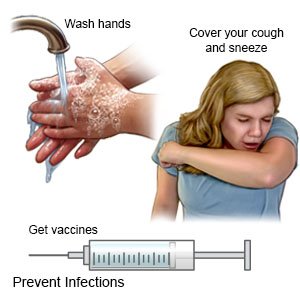
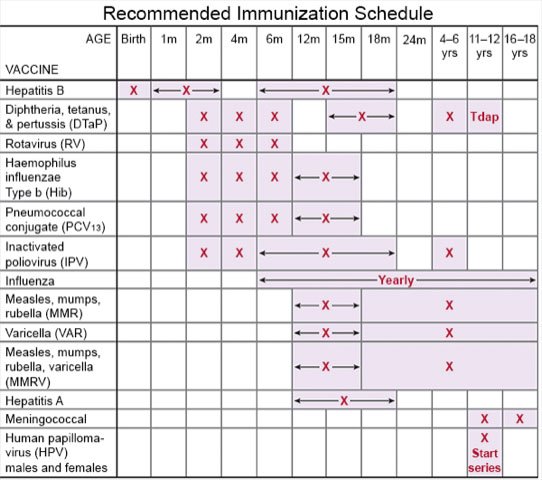
  • Influenza vaccine: This vaccine helps prevent influenza (flu). Everyone older than age 6 months should get a yearly influenza vaccine. Get the vaccine as soon as it is available, usually in October or November each year.

  • Antiviral medicine: Antiviral medicine may be given to help prevent your child from catching the flu. This medicine helps stop the flu virus from growing in your child's body.

What are the risks for children who have influenza?

If your child needs treatment for the flu and does not get it, his signs and symptoms may get worse. He may have a high fever and get dehydrated. If he has other health problems such as asthma or epilepsy, these problems may get worse. Infection may spread to other parts of his body, such as his ears, throat, or sinuses. He may get pneumonia, bronchiolitis, or croup, and he may not be able to breathe. He may get encephalopathy (a brain disease) or meningitis (swelling of the brain coverings). He may have seizures (convulsions) or have damage to his muscle tissue. He may have swelling of his heart or sepsis (infection in the blood), and he may die. Talk to your child's caregiver about the risks of having the flu.

What are the risks of influenza treatment?

  • Antiviral medicines may cause stomach pain, nausea, and vomiting. While taking antiviral medicine, your child may get nosebleeds, have trouble falling asleep, or his eyes may swell. Your child may still have signs and symptoms of the flu during or after using antiviral medicine. He may still get the flu even after taking antiviral medicine.

  • If your child gets the flu vaccine, the area where the vaccine is given may be sore and swollen. The vaccine may cause a fever, chills, sore throat, runny nose, headache, muscle aches, a rash, or tiredness. After getting the vaccine, your child may feel sick, and he may throw up. Infants may be irritable (cranky) and the infant may not want to eat. Your child may still get the flu even after getting the flu vaccine. Talk to your child's caregiver about the risks of treating the flu.

What can I do to take care of my child while he has influenza?

  • Give your child plenty of liquids. Give your child liquids such as water and juice to drink often. Give infants milk or formula. Liquids will help prevent dehydration.

  • Your child may need more rest than he realizes while he heals. Quiet play will keep your child safely busy so he does not become restless and risk injuring himself. Have your child read or draw quietly. Follow instructions for how much rest your child should get while he heals.

  • Give your child medicine to decrease a fever or symptoms such as aching muscles and a sore throat. Ask caregivers which medicine is best to give to your child. Acetaminophen, or non-steroidal anti-inflammatory (NSAID) medicine may decrease a fever. Do not give your child more medicine, or give it more often than caregivers tell you to. Too much acetaminophen can damage your child's liver, and can be harmful if it is given with some other medicines. Do not give aspirin to children or teenagers. Aspirin can cause a very serious illness called Reye's Syndrome, and can lead to brain and liver damage. Read medicine labels to see if your child's medicine has aspirin in it.

  • Increase air flow through your home. Open doors and windows in your home to let air flow through it.

  • Use a cool-mist humidifier. A humidifier increases moisture in the air in your child's room. This may help him breathe more easily.

What can I do to help prevent spreading influenza?

You can help prevent the flu from spreading from your child to other people by doing the following:

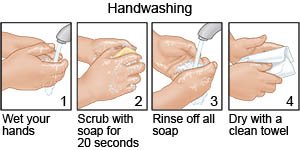
  • Wash your hands and your child’s hands often with soap and water.

    • All hand and arm jewelry should be removed before handwashing begins. Hands should be scrubbed using warm water and soap, for at least 15 seconds. Tell your child that this is about as long as it takes to sing the happy birthday song twice. Teach your child to wash between his fingers and under his nails. Teach him to wash both the front and the back of each hand. After washing his hands, he should gently rub them dry using a clean towel or paper towel. The water tap should be turned off using a paper towel.

    • Have your child grab the door handle while holding a paper towel in his hand as he leaves the bathroom. Watch your child wash his hands to be sure he is washing them correctly. Everyone should wash their hands before eating, after using the bathroom, and after petting animals.

  • Alcohol-based hand rubs can be used for hand cleaning if there is no water. Carry germ-killing hand gel (hand rub) with you when you leave the house. If you see dirt on your child's hands, wipe it off as much as you can before using the hand rub. Hands should be dry before the hand rub is used. Take enough of the hand rub to cover your child's hands and fingers. Have your child rub his hands together until all of the hand rub liquid has dried up.

  • Teach your child to cover his mouth and nose with a tissue when coughing or sneezing. Remind older children to cover their mouth and nose when they cough or sneeze. Everyone should cough or sneeze into a tissue, or into the bend of the elbow if they do not have a tissue. Throw used tissues into the trash. Wash your hands and your child's hands after touching used tissues. Teach your child to avoid touching his eyes, nose or mouth, as this can help prevent germs from spreading.

  • When you are near your child, wear a mask over your mouth and nose. Wearing a mask may help decrease your risk of getting the flu. If your child must leave the house, he should wear a mask to prevent spreading the flu virus to other people. Ask caregivers where to get single-use, paper face masks.

  • Keep your child away from others while he has a fever and other signs and symptoms of the flu. Do not send your child to school or daycare until his fever and other symptoms have gone away.

  • Keep surfaces such as tables, doorknobs, light switches, telephones, keyboards, and toys clean. Clean them by wiping them with a household germ-killing cleaner.

  • Wash all linens, towels, silverware, and dishes with soap and water after they are used. Do not let your child share items with anyone else.

Where can I find more information?

Contact the following:

  • American Academy of Pediatrics
    141 Northwest Point Boulevard
    Elk Grove Village , IL 60007-1098
    Phone: 1- 847 - 434-4000
    Web Address: http://www.aap.org
  • Centers for Disease Control and Prevention
    1600 Clifton Road
    Atlanta , GA 30333
    Phone: 1- 800 - 232-4636
    Web Address: http://www.cdc.gov

When should I call my child's caregiver?

Call your child's caregiver if:

  • Your child has a fever, chills, cough, runny or stuffy nose, or sore throat.

  • Your child is not eating, or has nausea, vomiting, or diarrhea.

  • Your child feels weak or has headaches, body aches, or muscle or joint pain.

  • Your child has signs of the flu and has been near others who have it, or he has visited an area where people have the flu.

When should I seek immediate care for my child?

Seek care immediately or call 911 if:

  • Your child is breathing fast, is having trouble breathing, or has chest pain.

  • Your child's skin color is blue or grey.

  • Your child has a fever with a rash.

  • Your child had flu symptoms that got better, but then came back with a fever, or a worse cough.

  • Your child will not drink liquids, is not urinating, or has no tears when he cries.

  • Your child does not want to be held and does not respond to you, or he does not wake up from sleeping.

  • Your child has a seizure.

  • Your child has trouble breathing, a moist cough, and he is vomiting blood.

Care Agreement

You have the right to help plan your child's care. Learn about your child's health condition and how it may be treated. Discuss treatment options with your child's caregivers to decide what care you want for your child.

Copyright © 2012. Thomson Reuters. All rights reserved. Information is for End User's use only and may not be sold, redistributed or otherwise used for commercial purposes.

The above information is an educational aid only. It is not intended as medical advice for individual conditions or treatments. Talk to your doctor, nurse or pharmacist before following any medical regimen to see if it is safe and effective for you.

Learn more about Influenza In Children

Advertisement
Close

Recommended

(web2)