
Hydrocephalus in Children
Medically reviewed by Drugs.com. Last updated on May 6, 2024.
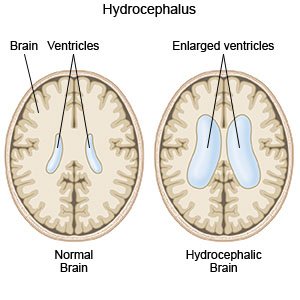
Hydrocephalus is a condition caused by too much cerebrospinal fluid (CSF) inside the ventricles of your child's brain. Ventricles are spaces inside the brain where cerebrospinal fluid (CSF) is produced. CSF surrounds your child's brain and spinal cord. CSF is constantly being made and absorbed by your child's body. It moves through ventricles before it drains out and gets absorbed into the bloodstream. When CSF cannot drain properly, the fluid pressure may cause the ventricles to swell.
 |
WHILE YOU ARE HERE:
Informed consent
is a legal document that explains the tests, treatments, or procedures that your child may need. Informed consent means you understand what will be done and can make decisions about what you want. You give your permission when you sign the consent form. You can have someone sign this form for you if you are not able to sign it. You have the right to understand your child's medical care in words you know. Before you sign the consent form, understand the risks and benefits of what will be done to your child. Make sure all of your questions are answered.
Stay with your child for comfort and support
as often as possible while he or she is in the hospital. Ask another family member or someone close to the family to stay with your child when you cannot be there. Bring items from home that will comfort your child, such as a favorite blanket or toy.
An IV
is a small tube placed in your child's vein that is used to give medicine or liquids.
Neuro signs
, or neuro checks show healthcare providers your child's brain function. They will check how your child's pupils react to light. They may check his or her memory and how easily he or she wakes up. Your child's strength, balance, vision, and other brain functions may also be tested.
Medicines:
- Antibiotics help treat or prevent an infection caused by bacteria.
- Anticonvulsants help control your child's seizures.
- Diuretics help decrease swelling in your child's brain.
Tests:
- An ultrasound, CT, or MRI may show bleeding, extra fluid, or blockage. Your child may be given contrast liquid to help his or her brain show up better in the pictures. Tell the healthcare provider if your child has ever had an allergic reaction to contrast liquid. Do not enter the MRI room with anything metal. Metal can cause serious injury. Tell the healthcare provider if your child has any metal in or on his or her body.
- A lumbar puncture , or spinal tap, is a procedure to collect a sample of CSF fluid to check for infection or test CSF pressure.
- Intracranial pressure (ICP) monitoring measures the pressure inside your child's skull. A small tube is put through his or her skull. The other end is connected to a monitor.
Treatment:
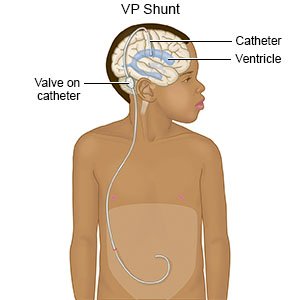
- Shunt placement helps drain extra CSF fluid through a tube from your child's brain into his or her abdomen where it is absorbed.
- Ventriculostomy helps drain the extra CSF fluid through a small hole in your child's brain.
Treatment options
The following list of medications are related to or used in the treatment of this condition.
RISKS:
Without treatment, the increased pressure inside the skull may damage the brain and cause lifelong problems. These include seizures and possibly death. If your child is has shunt surgery, he or she may get an infection, or the shunt can become blocked or stop working.
CARE AGREEMENT:
You have the right to help plan your child's care. Learn about your child's health condition and how it may be treated. Discuss treatment options with your child's healthcare providers to decide what care you want for your child.© Copyright Merative 2024 Information is for End User's use only and may not be sold, redistributed or otherwise used for commercial purposes.
The above information is an educational aid only. It is not intended as medical advice for individual conditions or treatments. Talk to your doctor, nurse or pharmacist before following any medical regimen to see if it is safe and effective for you.
Learn more about Hydrocephalus
Treatment options
- Medications for Brain Anomalies incl Congenital
- Medications for Central Nervous System Disorders
- Medications for Hydrocephalus
Care guides
Symptoms and treatments
Further information
Always consult your healthcare provider to ensure the information displayed on this page applies to your personal circumstances.
