
Facial Fracture
Medically reviewed by Drugs.com. Last updated on Sep 1, 2024.
What is a facial fracture?
A facial fracture is a break in one or more of the bones in your face. A facial fracture may also damage nearby tissue.
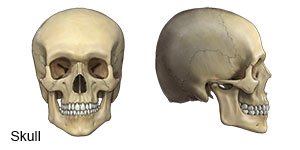 |
What are the signs and symptoms of a facial fracture?
- Pain, swelling, or bruises
- Headache
- Tingling or numbness
- Swollen or flattened cheek
- Blurry vision, double vision, or seeing floaters (spots)
- Decreased eye movement or pain when you move your eyes
- Eyes that are sunken or not in the normal position, or swollen eyelids
How is a facial fracture diagnosed?
Tell your healthcare provider about your injury. Your eyesight, pupils, and eye movements will be checked. Your provider may use a device to look inside your eye. He or she will also check your face for skin wounds. You may also need any of the following:
- X-ray or CT scan pictures may show broken bones and damaged tissue and blood vessels. You may be given contrast liquid to help the injured area show up better. Tell the provider if you have ever had an allergic reaction to contrast liquid.
- An ultrasound may be done to check for damage to your facial bones and tissue.
How is a facial fracture treated?
The fracture may be left to heal on its own if the broken bone stays in its normal position. You may need any of the following to treat a severe fracture:
- Closed reduction is a procedure to move your broken bones back to their normal positions by hand. Closed reduction is often done to fix a broken nose. You will not need an incision for this procedure.
- Endoscopy is a test that uses a scope to look inside your sinuses and eye socket. Small pieces of your broken bone may be removed. Devices may be placed to support the broken bones in your face.
- Medicines may be given to prevent or treat pain, swelling, or a bacterial infection.
- Orthodontic treatment may be used to fix damaged teeth. Orthodontic treatment may also be done if your teeth do not line up correctly when you close your jaw.
- Open reduction and internal fixation (ORIF) is surgery to help keep the bones from moving while they heal. Wires, screws, or plates are used to join broken facial bones.
- Reconstructive surgery may be needed to fix damaged areas of your face. Your healthcare provider may need to remove pieces of your broken facial bones and replace them with a graft. A graft is healthy bone taken from another area of your body or from a donor.
Treatment options
The following list of medications are related to or used in the treatment of this condition.
How can I care for myself at home?
- Apply ice as directed. Ice helps decrease swelling and pain. Ice may also help prevent tissue damage. Use an ice pack, or put crushed ice in a plastic bag. Cover the bag with a towel before you place it on your skin. Apply ice for 15 to 20 minutes every hour or as directed.
- Keep your head elevated. Keep your head above the level of your heart as often as you can. This will help decrease swelling and pain. Prop your upper body on pillows or blankets to keep your head elevated comfortably.
- Do not put pressure on your face:
- Do not sleep on the injured side of your face. Pressure may cause more damage.
- Sneeze with your mouth open to decrease pressure on your broken facial bones. Too much pressure from a sneeze may cause your broken bones to move and cause more damage.
- Try not to blow your nose. It may cause more damage if you have a fracture near your eye. The pressure from blowing your nose may pinch the nerve of your eye and cause permanent damage.
- Clean your mouth carefully. It may be hard to clean your teeth if have an injury or fracture near your mouth. Your healthcare provider will show you the best way to do this so you do not hurt yourself. A waterpik or a child-sized soft toothbrush may work well to clean your mouth.
Call your local emergency number (911 in the US) if:
- You suddenly feel lightheaded and short of breath.
- You have chest pain when you take a deep breath or cough.
- You cough up blood.
When should I seek immediate care?
- You suddenly have trouble chewing or swallowing.
- You have clear or pinkish fluid draining from your nose or mouth.
- You have numbness in your face.
- You have worsening pain in your eye or face.
- You have double vision or sudden trouble seeing.
- Your arm or leg feels warm, tender, and painful. It may look swollen and red.
When should I call my doctor?
- You are bleeding from a wound on your face.
- You have questions or concerns about your condition or care.
Care Agreement
You have the right to help plan your care. Learn about your health condition and how it may be treated. Discuss treatment options with your healthcare providers to decide what care you want to receive. You always have the right to refuse treatment. The above information is an educational aid only. It is not intended as medical advice for individual conditions or treatments. Talk to your doctor, nurse or pharmacist before following any medical regimen to see if it is safe and effective for you.© Copyright Merative 2024 Information is for End User's use only and may not be sold, redistributed or otherwise used for commercial purposes.
Learn more about Facial Fracture
Treatment options
- Medications for Head Injury
- Medications for Head Injury w/ Intracranial Hemorrhage and Loss of Consciousness
- Medications for Head Injury with Intracranial Hemorrhage
- Medications for Head Injury with Loss of Consciousness
Care guides
- Facial Fracture in Children
- Jaw Fracture in Adults
- Jaw Fracture in Children
- Skull Fracture
- Skull Fracture in Children
Symptoms and treatments
Further information
Always consult your healthcare provider to ensure the information displayed on this page applies to your personal circumstances.