Bone Marrow Biopsy
WHAT YOU SHOULD KNOW:
Bone Marrow Biopsy (Inpatient Care) Care Guide
- Bone Marrow Biopsy Aftercare Instructions
- Bone Marrow Biopsy Discharge Care
- Bone Marrow Biopsy Inpatient Care
- Bone Marrow Biopsy Precare
- En Espanol
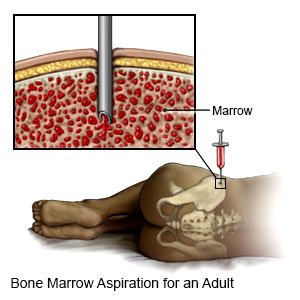
- A bone marrow biopsy (BEYE-op-see) is a procedure done to remove a small amount of marrow from your bone. Bone marrow is the soft, spongy tissue inside of your larger bones. Bone marrow makes blood cells called platelets, red blood cells (RBCs) and white blood cells (WBCs). Platelets help your blood to clot (stop bleeding). RBCs carry oxygen to your tissues, and WBCs help your body to fight infection. During the biopsy, caregivers use a needle and syringe to draw marrow out of your bone. The bone marrow is usually taken from the hip bone. After the biopsy, caregivers send your bone marrow to a lab for tests.

- You may need a bone marrow biopsy to find out why you are having problems with your blood cells. You may need the biopsy if you have anemia (not enough red blood cells). You may need a biopsy to learn if you have cancer in your bone marrow. A bone marrow biopsy may also be done to see how you are doing during some cancer treatments. The biopsy results will help caregivers plan the best treatment for you. This procedure may be done in your caregiver's office, in a clinic, or in the hospital.

CARE AGREEMENT:
You have the right to help plan your care. Learn about your health condition and how it may be treated. Discuss treatment options with your caregivers to decide what care you want to receive. You always have the right to refuse treatment.
RISKS:
There are risks with having a bone marrow biopsy, but the risks are rare. You could bleed too much or get an infection (in-FEK-shun). You may feel pain or discomfort during the procedure. There is a very small chance that an organ or blood vessel could be hurt during the test. If you follow the directions of your caregiver, you are not likely to have problems. Without the bone marrow biopsy, caregivers may not know how to treat your illness. Call your caregiver if you are worried or have questions about your medicine or care.
WHILE YOU ARE HERE:
Before Your Bone Marrow Biopsy:
- Informed consent: A consent form is a legal document that explains the tests, treatments, or procedures that you may need. Informed consent means you understand what will be done and can make decisions about what you want. You give your permission when you sign the consent form. You can have someone sign this form for you if you are not able to sign it. You have the right to understand your medical care in words you know. Before you sign the consent form, understand the risks and benefits of what will be done. Make sure all your questions are answered.
- Blood tests: You may need blood taken to give caregivers information about how your body is working. The blood may be taken from your hand, arm, or IV.
- Call button: You may use the call button when you need your caregiver. Pain, trouble breathing, or wanting to get out of bed are good reasons to call. The call button should always be close enough for you to reach it.
- Chest x-ray: This is a picture of your lungs and heart. Caregivers use it to see how your lungs and heart are doing. Caregivers may use the x-ray to look for signs of infection like pneumonia, or to look for collapsed lungs. Chest x-rays may show tumors, broken ribs, or fluid around the heart and lungs.
- Heart monitor: This is also called an ECG or EKG. Sticky pads placed on your skin record your heart's electrical activity.
- IV: An IV (intravenous) is a small tube placed in your vein that is used to give you medicine or liquids.
- Pre-Op Care: You may be asked to urinate (go to the bathroom) before the biopsy. You may be given medicine right before the bone marrow biopsy. This medicine may make you feel sleepy and more relaxed. You may be given local anesthesia (an-es-THEE-zah) right before the biopsy. This is a shot of medicine put into the skin where you will have the biopsy. It is used to numb (make you lose feeling in) the area and dull the pain.
- Pulse oximeter: A pulse oximeter is a device that measures the amount of oxygen in your blood. A cord with a clip or sticky strip is placed on your finger, ear, or toe. The other end of the cord is hooked to a machine. Never turn the pulse oximeter or alarm off. An alarm will sound if your oxygen level is low or cannot be read.
- Vital signs: Caregivers will check your blood pressure, heart rate, breathing rate, and temperature. They will also ask about your pain. These vital signs give caregivers information about your current health.
During Your Bone Marrow Biopsy:
You may lie on your side or stomach if the biopsy is taken from the back of the hip bone. You may lie on your back if the biopsy is taken from the front of the hip bone. Caregivers will use a special soap to clean the biopsy area. Then they will place clean sheets around it. After you are given the anesthesia, a needle is put into your skin until it reaches the marrow inside a bone. You must lie very still during the biopsy. You may feel pressure and discomfort while the needle goes into and removes marrow from your bone. Samples of your marrow are taken. The biopsy will take about 30 to 45 minutes.
After Your Bone Marrow Biopsy:
Caregivers will put a bandage on your biopsy area. This will keep the area clean and dry to prevent infection (in-FEK-shun). A caregiver may put pressure on the bandage until the bleeding stops. Then you may be asked to lie on the biopsy area for one hour or more after the biopsy. This may help prevent more bleeding. Do not get out of bed until your caregiver says it is OK. When you are ready, you will be taken to your hospital room or sent home.
- Activity: Rest for the remainder of the day after your biopsy.
- Eating: You may have your usual diet after the biopsy.
- Pain medicine: Caregivers may give you medicine to take away or decrease your pain.
- Do not wait until the pain is severe to ask for your medicine. Tell caregivers if your pain does not decrease. The medicine may not work as well at controlling your pain if you wait too long to take it.
- Pain medicine can make you dizzy or sleepy. Prevent falls by calling a caregiver when you want to get out of bed or if you need help.
- Do not wait until the pain is severe to ask for your medicine. Tell caregivers if your pain does not decrease. The medicine may not work as well at controlling your pain if you wait too long to take it.
Copyright © 2012. Thomson Reuters. All rights reserved. Information is for End User's use only and may not be sold, redistributed or otherwise used for commercial purposes.
The above information is an educational aid only. It is not intended as medical advice for individual conditions or treatments. Talk to your doctor, nurse or pharmacist before following any medical regimen to see if it is safe and effective for you.