
Thomson Reuters Micromedex

Bacterial Pneumonia

WHAT YOU SHOULD KNOW:

Bacterial Pneumonia (Inpatient Care) Care Guide

Bacterial pneumonia is a lung infection that you may get in the community, the hospital, or a long-term care facility. Bacterial pneumonia is caused by germs called bacteria.

CARE AGREEMENT:

You have the right to help plan your care. Learn about your health condition and how it may be treated. Discuss treatment options with your caregivers to decide what care you want to receive. You always have the right to refuse treatment.

RISKS:

  • Medicine to treat bacterial pneumonia may cause side effects, such as nausea (upset stomach), vomiting (throwing up), and stomach pain. Even with treatment, bacterial pneumonia may not go away, and your symptoms may get worse.

  • If your bacterial pneumonia is not treated, it may get worse. You may have breathing problems, or the infection can spread to other areas of your body. Pus or extra fluid may collect in the space around your lungs, or your lungs may get damaged. Your lungs may not give your body enough oxygen. Low oxygen can cause damage to other body organs, such as your kidneys, heart, and brain You may die from bacterial pneumonia if you do not get treatment, or you do not respond to treatment, and the infection worsens. Ask your caregiver if you have problems or concerns about your condition, treatment, or care.

WHILE YOU ARE HERE:

Informed consent:

A consent form is a legal document that explains the tests, treatments, or procedures that you may need. Informed consent means you understand what will be done and can make decisions about what you want. You give your permission when you sign the consent form. You can have someone sign this form for you if you are not able to sign it. You have the right to understand your medical care in words you know. Before you sign the consent form, understand the risks and benefits of what will be done. Make sure all your questions are answered.

Isolation:

You may be put on isolation safety measures if you have an infection or disease that may be given to others. Caregivers and visitors may need to wear gloves, a face mask, or a gown. Visitors should wash their hands before leaving to keep from spreading germs.

Activity:

Activity may help you breathe more easily and get better faster. Ask caregivers to help you sit up or get out of bed. You may need to breathe deeply and cough. Deep breathing helps to open the air passages in your lungs. Coughing helps to bring up mucus from your lungs. Deep breathing and coughing can help prevent bacterial pneumonia from getting worse.

Monitoring:

You may need any of the following:

  • Vital signs: Caregivers will check your blood pressure, heart rate, breathing rate, and temperature. They will also ask about your pain. These vital signs give caregivers information about your current health.

  • Pulse oximeter: A pulse oximeter is a device that measures the amount of oxygen in your blood. A cord with a clip or sticky strip is placed on your finger, ear, or toe. The other end of the cord is hooked to a machine. Never turn the pulse oximeter or alarm off. An alarm will sound if your oxygen level is low or cannot be read.
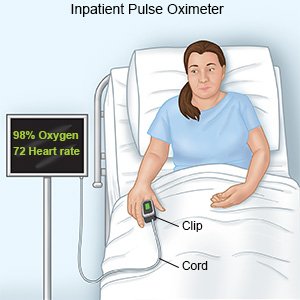
  • IV: An IV (intravenous) is a small tube placed in your vein that is used to give you medicine or liquids.

  • Neurologic exam: This is also called neuro signs, neuro checks, or neuro status. A neurologic exam can show caregivers how well your brain works after an injury or illness. Caregivers will check how your pupils (black dots in the center of each eye) react to light. They may check your memory and how easily you wake up. Your hand grasp and balance may also be tested.

  • Weight: You may be weighed each day. Caregivers compare your weight from day to day to record how much body fluid you have. You can become dehydrated if you lose too much. You can have shortness of breath or swelling in your legs if you retain too much.

  • CVP line: A CVP line is also called a central line. It is an IV catheter or tube. It is put into a large blood vessel near your collarbone, in your neck, or in your groin. The groin is the area where your abdomen meets your upper leg. The CVP line may be used to give medicines or IV fluids. It may also be hooked up to a monitor to take pressure readings. This information helps caregivers check your heart.

Medicine:

Medicine may be given to you to fight the infection, to decrease your signs and symptoms, and to prevent the problems that can be caused by bacterial pneumonia.

  • Antibiotics: This medicine is given to help treat or prevent an infection caused by bacteria.

  • Bronchodilators: You may need bronchodilators to help open the air passages in your lungs, and help you breathe more easily.

  • Expectorants: Expectorant medicine helps thin your sputum (mucus from the lungs). When sputum is thin, it may be easier for you to cough it up and spit it out. This may make your breathing easier, and may help you get better faster.

  • Antipyretics: This medicine is given to decrease a fever.

  • Immunomodulatory medicine: This medicine may help your immune system work better. It may also weaken your immune system to prevent it from attacking your own body. Your caregiver may give you this medicine to prevent or treat sepsis (widespread infection in the body).

  • Steroids: Steroid medicine may help to open your air passages so you can breathe easier. Do not stop taking this medicine without your caregiver's OK. Stopping on your own can cause problems.

  • Vasopressors: If your blood pressure has dropped too low, this medicine may be needed to increase it to a normal range.

  • Pain medicine: Caregivers may give you medicine to take away or decrease your pain.

    • Do not wait until the pain is severe to ask for your medicine. Tell caregivers if your pain does not decrease. The medicine may not work as well at controlling your pain if you wait too long to take it.

    • Pain medicine can make you dizzy or sleepy. Prevent falls by calling a caregiver when you want to get out of bed or if you need help.

  • Vaccines: To prevent influenza (flu), all adults should get the influenza vaccine. They should get it every year as soon as it becomes available. The pneumococcal vaccine is given to adults aged 65 years or older to prevent pneumococcal disease, such as pneumonia. People aged 19 to 64 years at high risk for pneumococcal disease also should get the pneumococcal vaccine. It may need to be repeated 5 years later.

Tests:

  • Chest x-ray: A chest x-ray shows a picture of your lungs. This test shows caregivers how well your lungs are working and other problems, such as fluid around your lungs. A chest x-ray can also show how well your treatment is working.

  • Blood and urine tests: Blood and urine may be collected for tests. These tests can help caregivers learn more about your bacterial pneumonia.

  • Sputum sample: Sputum (mucus from your lungs) is collected in a cup when you cough. The sample is sent to a lab to be tested for the germ that is causing your illness. It can also help your caregiver choose the best medicine to treat the infection.

  • Blood gases: This is also called an arterial blood gas, or ABG. Blood is taken from an artery (blood vessel) in your wrist, arm, or groin. Your blood is tested for the amount of oxygen and carbon dioxide in it. The results can tell caregivers how well your lungs are working.

  • CT scan: A special x-ray machine uses a computer to take pictures of your lungs.

  • Bronchoscopy: This is a procedure to look inside your airway and learn the cause of your airway or lung condition. A bronchoscope (thin tube with a light) is inserted into your mouth and moved down your throat to your airway. You may be given medicine to numb your throat and help you relax during the procedure. Tissue and fluid may be collected from your airway or lungs to be tested.

  • Thoracentesis: A thoracentesis is a treatment to take fluid or air out of your chest. You are given numbing medicine before a needle is put between two of your ribs. The needle is then put through the chest wall. The air or fluid is sucked out through the needle. You may breathe easier when the fluid or air is removed.

Treatment options:

  • Breathing treatments: You may need breathing treatments to help open your airways so you can breathe easier. A machine is used to change liquid medicine into a mist. You will breathe the mist into your lungs through tubing and a mouthpiece. Inhaled mist medicines act quickly on your airways and lungs to relieve your symptoms.

  • Oxygen: You may need extra oxygen if your blood oxygen level is lower than it should be. You may get oxygen through a mask placed over your nose and mouth or through small tubes placed in your nostrils. Ask your caregiver before you take off the mask or oxygen tubing.

  • Ventilator: This is a machine that gives you oxygen and breathes for you when you cannot breathe well on your own. An endotracheal (ET) tube is put into your airway through your mouth or nose. You may need a trach if an ET tube cannot be placed. A trach is an airway tube put into an incision (cut) in the front of your neck. The ET tube or trach is attached to the ventilator.

Smoking:

It is never too late to quit smoking. Smoking harms your body in many ways. Smoking increases your risk of lung infections and bacterial pneumonia. Smoking also makes it harder for you to get better after having a lung infection. Quit smoking to improve your health and the health of those around you. Ask caregivers for help and more information about how to stop smoking if you are having trouble quitting.

Copyright © 2012. Thomson Reuters. All rights reserved. Information is for End User's use only and may not be sold, redistributed or otherwise used for commercial purposes.

The above information is an educational aid only. It is not intended as medical advice for individual conditions or treatments. Talk to your doctor, nurse or pharmacist before following any medical regimen to see if it is safe and effective for you.

Learn more about Bacterial Pneumonia (Inpatient Care)

Advertisement
Close

Recommended

(web5)