
Ankle Fracture in Children
Medically reviewed by Drugs.com. Last updated on Apr 2, 2024.
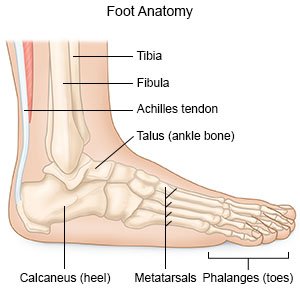
An ankle fracture is a break in 1 or more of the bones in your child's ankle.
 |
DISCHARGE INSTRUCTIONS:
Return to the emergency department if:
- Blood soaks through your child's bandage.
- Your child has severe pain in his or her ankle.
- Your child's cast feels too tight.
- Your child's cast breaks or gets damaged.
- Your child's foot or toes feel cold or numb.
- Your child's foot or toenails turn blue or gray.
- Your child's swelling has increased or returned.
Call your child's doctor if:
- Your child's splint feels too tight.
- Your child has a fever.
- You see new blood stains or notice a bad smell coming from under the cast or splint.
- Your child has more pain or swelling than he or she did before the cast or splint was put on.
- Your child's pain or swelling does not go away, even after treatment.
- You have questions or concerns about your child's condition or care.
Medicines:
- Pain medicine may be given. Ask your child's healthcare provider how to give this medicine safely.
- Do not give aspirin to children younger than 18 years. Your child could develop Reye syndrome if he or she has the flu or a fever and takes aspirin. Reye syndrome can cause life-threatening brain and liver damage. Check your child's medicine labels for aspirin or salicylates.
- Give your child's medicine as directed. Contact your child's healthcare provider if you think the medicine is not working as expected. Tell the provider if your child is allergic to any medicine. Keep a current list of the medicines, vitamins, and herbs your child takes. Include the amounts, and when, how, and why they are taken. Bring the list or the medicines in their containers to follow-up visits. Carry your child's medicine list with you in case of an emergency.
Follow up with your child's doctor in 1 to 2 days:
Your child's fracture may need to be reduced (bones pushed back into place). He or she may need surgery. Write down your questions so you remember to ask them during your child's visits.
Support devices:
Your child will be given a brace, cast, or splint to limit his or her movement and protect his or her ankle. Do not remove your child's device. He or she may need to use crutches to decrease pain as he or she moves around. He or she should not put weight on his or her injured ankle.
Rest:
Have your child rest his or her ankle so that it can heal.
Ice:
Apply ice on your child's ankle for 15 to 20 minutes every hour or as directed. Use an ice pack, or put crushed ice in a plastic bag. Cover it with a towel. Ice helps prevent tissue damage and decreases swelling and pain.
Compress:
Ask if you should wrap an elastic bandage around your child's ankle. An elastic bandage provides support and helps decrease swelling and movement so your child's ankle can heal. Have him or her wear the elastic bandage as directed.
Elevate:
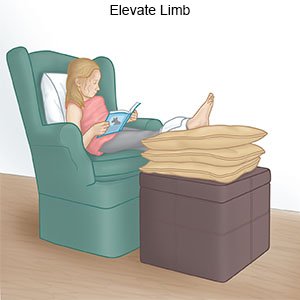
Have your child elevate his or her ankle above the level of his or her heart as often as he or she can. This will help decrease swelling and pain. Prop his or her ankle on pillows or blankets to keep it elevated comfortably.
 |
© Copyright Merative 2024 Information is for End User's use only and may not be sold, redistributed or otherwise used for commercial purposes.
The above information is an educational aid only. It is not intended as medical advice for individual conditions or treatments. Talk to your doctor, nurse or pharmacist before following any medical regimen to see if it is safe and effective for you.
Learn more about Ankle Fracture
Treatment options
Care guides
Symptoms and treatments
Medicine.com guides (external)
Further information
Always consult your healthcare provider to ensure the information displayed on this page applies to your personal circumstances.
