
Ankle Fracture in Children
Medically reviewed by Drugs.com. Last updated on Aug 4, 2025.
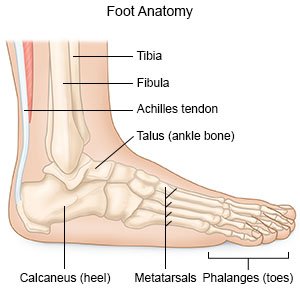
An ankle fracture is a break in 1 or more of the bones in your child's ankle.
 |
WHILE YOU ARE HERE:
Informed consent
is a legal document that explains the tests, treatments, or procedures that your child may need. Informed consent means you understand what will be done and can make decisions about what you want. You give your permission when you sign the consent form. You can have someone sign this form for you if you are not able to sign it. You have the right to understand your child's medical care in words you know. Before you sign the consent form, understand the risks and benefits of what will be done to your child. Make sure all of your questions are answered.
Stay with your child for comfort and support
as often as possible while he or she is in the hospital. Ask another family member or someone close to the family to stay with your child when you cannot be there. Bring items from home that will comfort your child, such as a favorite blanket or toy.
Medicines:
Pain medicine may be given. Do not wait until your child's pain is severe before you ask for more medicine.
Tests:
Your child's healthcare provider will ask about his or her injury and examine him or her. An x-ray, ultrasound, CT, or MRI may show a fracture, tissue damage, or other injuries. Your child may be given contrast liquid to help the fracture show up better in the pictures. Tell the healthcare provider if your child has ever had an allergic reaction to contrast liquid. Do not let your child enter the MRI room with anything metal. Metal can cause serious injury. Tell the healthcare provider if your child has any metal in or on his or her body.
Treatment:
- Support devices , such as a brace, cast, or splint may be needed to limit your child's movement and protect his or her ankle. Do not remove your child's device. He or she may need to use crutches to decrease pain as he or she moves around. He or she should not put weight on his or her injured ankle.
- Closed reduction may be done to put your child's bones back into their correct position without surgery.
- Open reduction surgery is done when a closed reduction does not work or your child has ligament damage. An incision is made and the bones and ligaments are put back in the correct position. This may include the use of special wires, pins, plates or screws.
RISKS:
Even after treatment, your child's ankle may not go back to the way it was before. Your child may have discomfort and problems walking if he or she has to wear a cast. Your child could get an infection or bleed more than expected if he or she has surgery.
CARE AGREEMENT:
You have the right to help plan your child's care. Learn about your child's health condition and how it may be treated. Discuss treatment options with your child's healthcare providers to decide what care you want for your child.© Copyright Merative 2025 Information is for End User's use only and may not be sold, redistributed or otherwise used for commercial purposes.
The above information is an educational aid only. It is not intended as medical advice for individual conditions or treatments. Talk to your doctor, nurse or pharmacist before following any medical regimen to see if it is safe and effective for you.
Learn more about Ankle Fracture
Treatment options
Care guides
Symptoms and treatments
Medicine.com guides (external)
Further information
Always consult your healthcare provider to ensure the information displayed on this page applies to your personal circumstances.