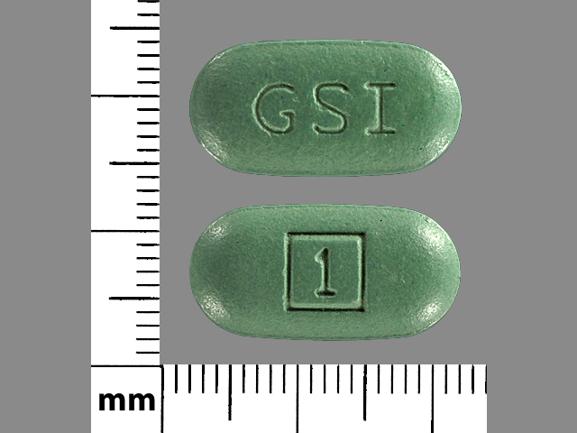
Generic Stribild Availability
Last updated on Sep 11, 2024.
Stribild is a brand name of cobicistat/elvitegravir/emtricitabine/tenofovir disoproxil, approved by the FDA in the following formulation(s):
STRIBILD (cobicistat; elvitegravir; emtricitabine; tenofovir disoproxil fumarate - tablet;oral)
-
Manufacturer: GILEAD SCIENCES INC
Approval date: August 27, 2012
Strength(s): 150MG;150MG;200MG;300MG [RLD]
Has a generic version of Stribild been approved?
No. There is currently no therapeutically equivalent version of Stribild available in the United States.
Note: Fraudulent online pharmacies may attempt to sell an illegal generic version of Stribild. These medications may be counterfeit and potentially unsafe. If you purchase medications online, be sure you are buying from a reputable and valid online pharmacy. Ask your health care provider for advice if you are unsure about the online purchase of any medication.
See also: Generic Drug FAQ.
Related patents
Patents are granted by the U.S. Patent and Trademark Office at any time during a drug's development and may include a wide range of claims.
-
Use of solid carrier particles to improve the processability of a pharmaceutical agent
Patent 10,039,718
Issued: August 7, 2018
Inventor(s): Koziara Joanna M. & Menning Mark M. & Strickley Robert G. & Yu Richard & Kearney Brian P. & Mathias Anita A.
Assignee(s): Gilead Sciences, Inc.The invention provides a composition comprising, a compound of formula (I):
Patent expiration dates:
- October 6, 2032✓
- October 6, 2032
-
Use of solid carrier particles to improve the processability of a pharmaceutical agent
Patent 10039718*PE
Issued: August 7, 2018
Inventor(s): Koziara Joanna M. & Menning Mark M. & Strickley Robert G. & Yu Richard & Kearney Brian P. & Mathias Anita A.
Assignee(s): Gilead Sciences, Inc.The invention provides a composition comprising, a compound of formula (I):
Patent expiration dates:
- April 6, 2033
- April 6, 2033
-
Patent 7,176,220
Patent expiration dates:
- August 27, 2026✓✓✓
- August 27, 2026
-
Patent 7176220*PED
Patent expiration dates:
- February 27, 2027✓
- February 27, 2027
-
Patent 7,635,704
Patent expiration dates:
- October 26, 2026✓✓✓
- October 26, 2026
-
Patent 7635704*PED
Patent expiration dates:
- April 26, 2027✓
- April 26, 2027
-
Modulators of pharmacokinetic properties of therapeutics
Patent 8,148,374
Issued: April 3, 2012
Inventor(s): Desai Manoj C. & Liu Hongtao & Xu Lianhong
Assignee(s): Gilead Sciences, Inc.The present application provides for a compound of Formula IV,
Patent expiration dates:
- September 3, 2029✓✓✓
- September 3, 2029
-
Modulators of pharmacokinetic properties of therapeutics
Patent 8148374*PED
Issued: April 3, 2012
Inventor(s): Desai Manoj C. & Liu Hongtao & Xu Lianhong
Assignee(s): Gilead Sciences, Inc.The present application provides for a compound of Formula IV,
Patent expiration dates:
- March 3, 2030✓
- March 3, 2030
-
Compositions and methods for combination antiviral therapy
Patent 8,592,397
Issued: November 26, 2013
Inventor(s): Dahl Terrence C. & Menning Mark M. & Oliyai Reza
Assignee(s): Gilead Sciences, Inc.The present invention relates to therapeutic combinations of [2-(6-amino-purin-9-yl)-1-methyl-ethoxymethyl]-phosphonic acid diisopropoxycarbonyloxymethyl ester (tenofovir disoproxil fumarate, Viread®) and (2R, 5S, cis)-4-amino-5-fluoro-1-(2-hydroxymethyl-1,3-oxathiolan-5-yl)-(1H)-pyrimidin-2-one(emtricitabine, Emtriva™, (-)-cis FTC) and their physiologically functional derivatives. The combinations may be useful in the treatment of HIV infections, including infections with HIV mutants bearing resistance to nucleoside and/or non-nucleoside inhibitors. The present invention is also concerned with pharmaceutical compositions and formulations of said combinations of tenofovir disoproxil fumarate and emtricitabine, and their physiologically functional derivatives, as well as therapeutic methods of use of those compositions and formulations.
Patent expiration dates:
- January 13, 2024✓✓
- January 13, 2024
-
Combination therapy
Patent 8,633,219
Issued: January 21, 2014
Inventor(s): Matsuzaki Yuji & Watanabe Wataru & Ikeda Satoru & Kano Mitsuki
Assignee(s): Japan Tobacco Inc.The present invention relates to a combination therapy for treating an HIV infection or inhibiting integrase comprising (S)-6-(3-Chloro-2-fluorobenzyl)-1-(1-hydroxymethyl-2-methylpropyl)-7-methoxy-4-oxo-1,4-dihydroquinoline-3-carboxylic acid (“Compound A”) or a pharmaceutically acceptable solvate or salt thereof in combination with at least one other anti-HIV agent. In some embodiments of the present invention, the other anti-HIV agents are chosen from reverse transcriptase inhibitors and protease inhibitors. In certain embodiments of the present invention, the other anti-HIV agents are chosen from AZT, 3TC, PMPA, efavirenz, indinavir, nelfinavir, a combination of AZT/3TC, and a combination of PMPA/3TC. Since Compound A has a high inhibitory activity specific for integrases, when used in combinations with other anti-HIV agents it can provide a combination therapy with fewer side effects for humans.
Patent expiration dates:
- April 30, 2030✓✓
- April 30, 2030
-
Combination therapy
Patent 8633219*PED
Issued: January 21, 2014
Inventor(s): Matsuzaki Yuji & Watanabe Wataru & Ikeda Satoru & Kano Mitsuki
Assignee(s): Japan Tobacco Inc.The present invention relates to a combination therapy for treating an HIV infection or inhibiting integrase comprising (S)-6-(3-Chloro-2-fluorobenzyl)-1-(1-hydroxymethyl-2-methylpropyl)-7-methoxy-4-oxo-1,4-dihydroquinoline-3-carboxylic acid (“Compound A”) or a pharmaceutically acceptable solvate or salt thereof in combination with at least one other anti-HIV agent. In some embodiments of the present invention, the other anti-HIV agents are chosen from reverse transcriptase inhibitors and protease inhibitors. In certain embodiments of the present invention, the other anti-HIV agents are chosen from AZT, 3TC, PMPA, efavirenz, indinavir, nelfinavir, a combination of AZT/3TC, and a combination of PMPA/3TC. Since Compound A has a high inhibitory activity specific for integrases, when used in combinations with other anti-HIV agents it can provide a combination therapy with fewer side effects for humans.
Patent expiration dates:
- October 30, 2030✓
- October 30, 2030
-
Compositions and methods for combination antiviral therapy
Patent 8,716,264
Issued: May 6, 2014
Inventor(s): Dahl Terrence C. & Menning Mark M. & Oliyai Reza
Assignee(s): Gilead Sciences, Inc.The present invention relates to therapeutic combinations of [2-(6-amino-purin-9-yl)-1-methyl-ethoxymethyl]-phosphonic acid diisopropoxycarbonyloxymethyl ester (tenofovir disoproxil fumarate, Viread®) and (2R,5S,cis)-4-amino-5-fluoro-1-(2-hydroxymethyl-1,3-oxathiolan-5-yl)-(1H)-pyrimidin-2-one (emtricitabine, Emtriva™, (−)-cis FTC) and their physiologically functional derivatives. The combinations may be useful in the treatment of HIV infections, including infections with HIV mutants bearing resistance to nucleoside and/or non-nucleoside inhibitors. The present invention is also concerned with pharmaceutical compositions and formulations of said combinations of tenofovir disoproxil fumarate and emtricitabine, and their physiologically functional derivatives, as well as therapeutic methods of use of those compositions and formulations.
Patent expiration dates:
- January 13, 2024✓✓
- January 13, 2024
-
Stable crystal of 4-oxoquinoline compound
Patent 8,981,103
Issued: March 17, 2015
Inventor(s): Ando Koji & Matsuda Koji & Miyake Shuji & Uehara Hideto
Assignee(s): Japan Tobacco Inc.Provision of a stabilized crystal of 6-(3-chloro-2-fluorobenzyl)-1-[(S)-1-hydroxymethyl-2-methylpropyl]-7-methoxy-4-oxo-1,4-dihydroquinoline-3-carboxylic acid (compound A). A crystal of compound A, which shows a particular X-ray powder diffraction pattern of a characteristic diffraction peaks at diffraction angles 2θ(°) as measured by X-ray powder diffractometry.
Patent expiration dates:
- October 26, 2026✓✓
- October 26, 2026
-
Stable crystal of 4-oxoquinoline compound
Patent 8981103*PED
Issued: March 17, 2015
Inventor(s): Ando Koji & Matsuda Koji & Miyake Shuji & Uehara Hideto
Assignee(s): Japan Tobacco Inc.Provision of a stabilized crystal of 6-(3-chloro-2-fluorobenzyl)-1-[(S)-1-hydroxymethyl-2-methylpropyl]-7-methoxy-4-oxo-1,4-dihydroquinoline-3-carboxylic acid (compound A). A crystal of compound A, which shows a particular X-ray powder diffraction pattern of a characteristic diffraction peaks at diffraction angles 2θ(°) as measured by X-ray powder diffractometry.
Patent expiration dates:
- April 26, 2027✓
- April 26, 2027
-
Compositions and methods for combination antiviral therapy
Patent 9,457,036
Issued: October 4, 2016
Inventor(s): Dahl Terrence C. & Menning Mark M. & Oliyai Reza
Assignee(s): Gilead Sciences, Inc.The present invention relates to therapeutic combinations of [2-(6-amino-purin-9-yl)-1-methyl-ethoxymethyl]-phosphonic acid diisopropoxycarbonyloxymethyl ester (tenofovir disoproxil fumarate, Viread®) and (2R,5S,cis)-4-amino-5-fluoro-1-(2-hydroxymethyl-1,3-oxathiolan-5-yl)-(1H)-pyrimidin-2-one (emtricitabine, Emtriva™, (−)-cis FTC) and their physiologically functional derivatives. The combinations may be useful in the treatment of HIV infections, including infections with HIV mutants bearing resistance to nucleoside and/or non-nucleoside inhibitors. The present invention is also concerned with pharmaceutical compositions and formulations of said combinations of tenofovir disoproxil fumarate and emtricitabine, and their physiologically functional derivatives, as well as therapeutic methods of use of those compositions and formulations.
Patent expiration dates:
- January 13, 2024✓✓
- January 13, 2024
-
Compositions and methods for combination antiviral therapy
Patent 9,744,181
Issued: August 29, 2017
Inventor(s): Dahl Terrence C. & Menning Mark M. & Oliyai Reza
Assignee(s): Gilead Sciences, Inc.The present invention relates to therapeutic combinations of [2-(6-amino-purin-9 yl)-1-methyl-ethoxymethyl]-phosphonic acid diisopropoxycarbonyloxymethyl ester (tenofovir disoproxil fumarate, Viread®) and (2R,5S,cis)-4-amino-5-fluoro-1-(2 hydroxymethyl-1,3-oxathiolan-5-yl)-(1H)-pyrimidin-2-one (emtricitabine, Emtriva™, (−)-cis FTC) and their physiologically functional derivatives. The combinations may be useful in the treatment of HIV infections, including infections with HIV mutants bearing resistance to nucleoside and/or non-nucleoside inhibitors. The present invention is also concerned with pharmaceutical compositions and formulations of said combinations of tenofovir disoproxil fumarate and emtricitabine, and their physiologically functional derivatives, as well as therapeutic methods of use of those compositions and formulations.
Patent expiration dates:
- January 13, 2024✓✓
- January 13, 2024
-
Modulators of pharmacokinetic properties of therapeutics
Patent 9,891,239
Issued: February 13, 2018
Inventor(s): Desai Manoj C. & Liu Hongtao & Xu Lianhong
Assignee(s): Gilead Sciences, Inc.The present application provides for a compound of Formula IV, or a pharmaceutically acceptable salt, solvate, and/or ester thereof, compositions containing such compounds, therapeutic methods that include the administration of such compounds, and therapeutic methods and include the administration of such compounds with at least one additional therapeutic agent.
Patent expiration dates:
- September 3, 2029✓✓
- September 3, 2029
-
Modulators of pharmacokinetic properties of therapeutics
Patent 9891239*PED
Issued: February 13, 2018
Inventor(s): Desai Manoj C. & Liu Hongtao & Xu Lianhong
Assignee(s): Gilead Sciences, Inc.The present application provides for a compound of Formula IV, or a pharmaceutically acceptable salt, solvate, and/or ester thereof, compositions containing such compounds, therapeutic methods that include the administration of such compounds, and therapeutic methods and include the administration of such compounds with at least one additional therapeutic agent.
Patent expiration dates:
- March 3, 2030✓
- March 3, 2030
More about Stribild (cobicistat / elvitegravir / emtricitabine / tenofovir disoproxil)
- Check interactions
- Compare alternatives
- Pricing & coupons
- Reviews (89)
- Drug images
- Side effects
- Dosage information
- Patient tips
- During pregnancy
- FDA approval history
- Drug class: antiviral combinations
- En español
Patient resources
Professional resources
- Stribild prescribing information
- Elvitegravir, Cobicistat, Emtricitabine, and tenofovir Disoproxil Fumarate (AHFS Monograph)
Related treatment guides
Glossary
| Term | Definition |
|---|---|
| Drug Patent | A drug patent is assigned by the U.S. Patent and Trademark Office and assigns exclusive legal right to the patent holder to protect the proprietary chemical formulation. The patent assigns exclusive legal right to the inventor or patent holder, and may include entities such as the drug brand name, trademark, product dosage form, ingredient formulation, or manufacturing process A patent usually expires 20 years from the date of filing, but can be variable based on many factors, including development of new formulations of the original chemical, and patent infringement litigation. |
| Drug Exclusivity | Exclusivity is the sole marketing rights granted by the FDA to a manufacturer upon the approval of a drug and may run simultaneously with a patent. Exclusivity periods can run from 180 days to seven years depending upon the circumstance of the exclusivity grant. |
| RLD | A Reference Listed Drug (RLD) is an approved drug product to which new generic versions are compared to show that they are bioequivalent. A drug company seeking approval to market a generic equivalent must refer to the Reference Listed Drug in its Abbreviated New Drug Application (ANDA). By designating a single reference listed drug as the standard to which all generic versions must be shown to be bioequivalent, FDA hopes to avoid possible significant variations among generic drugs and their brand name counterpart. |
Further information
Always consult your healthcare provider to ensure the information displayed on this page applies to your personal circumstances.