
Cerenia Tablets (60 mg) (Canada)
This treatment applies to the following species: Company: Zoetis
maropitant citrate tablets
Veterinary Use Only
antiemetic for dogs
DIN 02299496
DIN 02299518
DIN 02299526
DIN 02299534
Description
Maropitant is a potent and selective neurokinin (NK1) receptor antagonist that blocks the pharmacological action of substance P in the CNS. Maropitant is the non-proprietary designation for a substituted quinuclidine. The empirical formula is C32H40N20 C6H8O7 H2O and the molecular weight 678.81. The chemical name is (2S,3S) - N - [[5 - (1,1 - dimethylethyl) - 2 - methoxyphenyl]methyl] - 2 - (diphenylmethyl) - 1 - azabicyclo[2.2.2]octan - 3 - amine 2-hydroxy-1,2,3 - propanetricarboxylate monohydrate.
The chemical structure of maropitant citrate is:
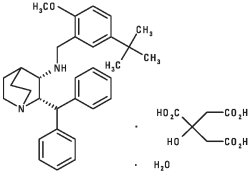
Each CERENIA® tablet contains 16, 24, 60 or 160 mg maropitant (as maropitant citrate) as the medicinal ingredient.
Cerenia Tablets (60 mg) Indications
For the symptomatic treatment of acute vomiting (e.g. parvo-virus infection, gastro-enteritis and pancreatitis) and the prevention of vomiting associated with motion sickness, in dogs.
Dosage and Administration
For the symptomatic treatment of acute vomiting:
● In dogs 10 weeks to 7 months of age: Administer CERENIA tablets orally at 2 mg/kg body weight (BW) once daily for up to 5 consecutive days.
● In dogs 7 months of age and older: Administer CERENIA tablets orally at 2 mg/kg body weight (BW) once daily until resolution of acute vomiting (see CAUTIONS section). If vomiting persists despite treatment, the case should be re-evaluated. CERENIA is most effective in preventing acute vomiting associated with chemotherapy if administered prior to the chemotherapeutic agent.
Dispense whole or half tablets in strength(s) that most closely results in a 2 mg/kg BW dose:
|
Symptomatic Treatment of Acute Vomiting (2 mg/kg) |
|||
|
Dog body weight |
Number of Tablets |
||
|
Kilogram |
16 mg |
24 mg |
60 mg |
|
1.0 - 4.0 |
1/2 |
|
|
|
4.1 - 8.0 |
1 |
|
|
|
8.1 - 12.0 |
|
1 |
|
|
12.1 - 24.0 |
|
2 |
|
|
24.1 - 30.0 |
|
|
1 |
|
30.1 - 60.0 |
|
|
2 |
For the prevention of motion sickness:
Administer CERENIA tablets in dogs 4 months and older orally at 8 mg/kg BW. Dogs should be fed 1 hour before treatment with CERENIA tablets and CERENIA tablets should be administered 2 hours prior to the car ride. Administration for the prevention of motion sickness may be repeated daily for a maximum of 2 consecutive days. Dispense whole or half tablets in strength(s) that most closely result in a 8 mg/kg BW dose:
|
Prevention of Motion Sickness (8 mg/kg) |
||||
|
Dog body weight |
Number of Tablets |
|||
|
Kilograms |
16 mg |
24 mg |
60 mg |
160 mg |
|
1 |
1/2 |
|
|
|
|
1.1 - 1.5 |
|
1/2 |
|
|
|
1.6 - 2.0 |
1 |
|
|
|
|
2.1 -3.0 |
|
1 |
|
|
|
3.1 - 4.0 |
2 |
|
|
|
|
4.1 - 6.0 |
|
2 |
|
|
|
6.1 - 7.5 |
|
|
1 |
|
|
7.6 - 10.0 |
|
|
|
1/2 |
|
10.1 - 15.0 |
|
|
2 |
|
|
15.1 - 20.0 |
|
|
|
1 |
|
20.1 - 30.0 |
|
|
|
1 1/2 |
|
30.1 - 40.0 |
|
|
|
2 |
|
40.1 - 60.0 |
|
|
|
3 |
CERENIA tablets are scored for accurate dosing. CERENIA tablets should not be administered wrapped in food as this may delay dissolution of the tablet, consequently delaying the onset of efficacy. Dogs should be carefully observed following administration to ensure that the tablet(s) is swallowed. CERENIA tablets can be used interchangeably with CERENIA injection to treat acute vomiting for up to 5 days with the most convenient formulation being administered once daily. The dose and duration of treatment is different depending on the formulation.
CONTRAINDICATIONS: CERENIA is contraindicated in dogs suspected of having a gastrointestinal obstruction or toxin ingestion. Immediate treatment should be directed at addressing the underlying cause not the sign of vomiting.
CAUTIONS:
● Safety in dogs used for breeding, pregnant, or lactating bitches and queens and puppies less than 10 weeks of age or kittens less than 16 weeks of age has not been established (See ANIMAL SAFETY section for complete information).
● Emesis may be associated with serious, severely debilitating conditions, and therefore appropriate diagnostic evaluations should be employed. Hypovolemia in combination with maropitant may increase the risk for hypotension; all dogs with ongoing emesis should receive rehydration therapy.
● CERENIA injection should be used with caution in dogs with bradycardia or underlying heart disease since maropitant may increase the risk of arrhythmias.
● Maropitant is metabolized in the liver and therefore should be used with caution in dogs with hepatic disease. As maropitant is accumulated in the body due to metabolic saturation, careful monitoring of liver function, in addition to any adverse events, should be implemented when treatment is extended beyond 14 days (see Pharmacokinetics section).
● Maropitant is a highly protein bound drug; use caution when administering other drugs that are highly protein bound. Drug interactions between maropitant and other drugs have not been thoroughly investigated in dogs.
● Hypoproteinemic dogs being treated with maropitant should be monitored closely; if adverse effects are seen, treatment should be discontinued.
● If maropitant therapy has not been effective after 3 days of use, alternative treatment to control vomiting should be pursued.
● The concurrent use of maropitant with other antiemetic agents has not been assessed in dogs.
● Food consumption and weight gain of puppies being treated with CERENIA should be closely monitored. Anorexia and weight loss may occur. CERENIA causes dose related decreases in appetite and body weight. In puppies younger than 11 weeks of age, histological evidence of bone marrow hypocellularity was observed at higher frequency and greater severity in puppies treated with CERENIA compared to control puppies. In puppies, 16 weeks and older, bone marrow hypocellularity was not observed (see Animal Safety section).
Warnings
Keep out of reach of children. If accidentally ingested, seek medical advice. Topical exposure may elicit localized allergic skin reactions in some individuals. Repeated or prolonged exposure may lead to skin sensitization. In case of accidental skin exposure, wash with soap and water. CERENIA is also an ocular irritant. In case of accidental eye exposure, flush with water for 15 minutes and seek medical attention.Adverse Reactions
Administering CERENIA on a completely empty stomach may cause your dog to vomit. Giving your dog a light meal or snack before administering the tablet could help prevent this effect. Prolonged fasting before administration should be avoided.
At 2 mg/kg dose: Depression, ataxia and trembling have been observed shortly after the use of the product and generally resolve within 24 hours without treatment or after the underlying cause for the vomiting is corrected.
At 8 mg/kg dose: Feeding dogs a small amount of food one hour prior to the administration of 8 mg/kg of CERENIA tablets may mitigate vomiting that may occur within two hours post-dosing and prior to travel. CERENIA is not a sedative and some motion sick dogs may show nausea-like signs during travel, such as salivation and lethargy. These signs are temporary and should resolve when the journey ends.
Post Market Experience:
The following adverse events are based on post-approval adverse drug experience reporting. Not all adverse reactions are reported and it is not always possible to reliably estimate the adverse event frequency or establish a causal relationship to product exposure using this data. Adverse Reactions are listed in decreasing order of reporting frequency (by body system):
● Digestive tract disorders - vomiting, hypersalivation, diarrhea
● Systemic disorders - lethargy, anorexia
● Neurological disorders - muscle tremors, ataxia, sedation, convulsion
If you notice any serious effects or other effects not mentioned in the package insert, please inform your veterinarian.
Clinical Pharmacology
Pharmacokinetics:
The absolute bioavailability of maropitant was low (24%) following oral administration of 2 mg/kg maropitant. Although hepatic first-pass metabolism contributed to the relatively low bioavailability after an oral dose, prandial status does not significantly affect the extent of oral bioavailability. Greater than dose-proportional drug exposure can be expected with an increase in dose (1-16 mg/kg PO). However, as doses increase (20-50 mg/kg PO), the dose proportionality is re-established. The hepatic metabolism of maropitant involves two cytochrome P-450 isoenzymes: CYP2D15 and CYP3A12. Based on in vitro enzyme kinetics data, it is believed that the non-linear kinetics may be partially associated with saturation of the low-capacity enzyme (CYP2D15). The high-capacity enzyme (CYP3A12) may contribute to this return to dose linearity. Plasma protein binding of maropitant was high (>99%). Urinary recovery of maropitant and its major metabolite was minimal (<1% each).
Based on differences in trough plasma concentrations from a single study, the exposure of 10 week old puppies to maropitant may be lower than that observed in adult dogs, particularly after doses of 1 or 2 mg/kg.
Sixteen Beagle dogs (8 males and 8 females), aged 10 months to 5 years, were administered either 2 mg/kg or 8 mg/kg orally for 14 consecutive days to characterise steady-state blood levels and pharmacokinetics (PK) of maropitant and its main metabolite.
Mean (±SD) Plasma Pharmacokinetic Parameters for Maropitant in Beagle Dogs after single dose and repeat oral doses of Maropitant
|
PK Parameter |
2 mg/kg Single Dose |
2 mg/kg Repeat Doses1 |
8 mg/kg Single Dose |
8 mg/kg Repeat Doses1 |
|
Tmax2(hr) |
2.0 (1.5 - 3.0) |
1.5 (1.0 - 3.0) |
1.5 (1.0 - 3.0) |
2.5 (1.5 - 7.0) |
|
Cmax (ng/mL) |
154 (111) |
304 (165) |
588 (416) |
1409 (516) |
|
AUC(0-24) (hr*ng/mL) |
1440 (982) |
3890 (3030) |
6730 (5030) |
26600 (9200) |
|
T1/22 (hr) |
NC |
7.69 (6.21 - 17.8) |
NC |
25.4 (6.06 - 30.0) |
|
Accumulation Ratio (Rac)3 |
NA |
2.46 (1.68, 3.61) |
NA |
4.81 (3.28, 7.05) |
1 Following once daily doses of maropitant for 14 days.
2 Median (Range)
3 Ratio=Multiple Dose AUC(0-24)/Single Dose AUC(0-24), Least square means (95% Confidence Interval)
NA= Not Applicable; NC= Not Calculated
Due to dose-dependent pharmacokinetics, the maropitant concentrations reached steady state approximately after 4 and 8 days following 2 and 8 mg/kg, respectively. The observed drug accumulation ratios were 2.46 and 4.81, after oral administration of 2 and 8 mg/kg, respectively.
Pharmacodynamics:
Emesis is a complex process coordinated centrally by the emetic center which consists of several brainstem nuclei (area postrema, nucleus tractus solitarius, dorsal motor nucleus of the vagus nerve) receiving and integrating sensory stimuli (from central and peripheral sources) and chemical stimuli (from the circulation and the cerebro-spinal fluid). Substance P is a neuropeptide of the tachykinin family found in significant concentrations in these nuclei and is considered the key neurotransmitter involved in emesis. Maropitant is a neurokinin 1 (NK1) receptor antagonist which acts by inhibiting the binding of substance P in the emetic center. A variety of in vitro assays have demonstrated that maropitant displays potent and selective binding at the NK1 receptor with dose-dependent functional antagonism of substance P activity.
ANIMAL SAFETY: Laboratory studies and clinical field evaluations have demonstrated that CERENIA tablets are well tolerated in dogs after oral administration.
Target animal safety studies for acute vomiting:
Fifty six Beagle dogs (28 males and 28 females) approximately 16 weeks of age were administered CERENIA tablets orally once daily for 15 days at 0, 2, 6, and 10 mg/kg. There were 8 dogs (4 males and 4 females) in the 2 mg/kg group and 16 dogs (8 males and 8 females) in all other groups. CERENIA tablets caused decreases in food consumption and body weight that were not dose-dependent and did not persist after cessation of treatment.
Beagle dogs approximately 10 weeks of age were administered either placebo tablets for 2 days, CERENIA tablets at 8 mg/kg for 2 days, placebo (saline) subcutaneously (SC) for 5 days, CERENIA injection at 1 mg/kg SC for 5 days, or CERENIA tablets at 2 mg/kg for 5 days (8 dogs in each dose group). Mild pain associated with injection was noted in more dogs and lasted longer in dogs that received maropitant injections compared to saline. Males administered CERENIA at 8 mg/kg orally for 2 days had a decrease in food consumption. Body weight and food consumption were variable throughout the 4 week acclimatization period. Two dogs that received 8 mg/kg maropitant orally for 2 days were below the reference range for reticulocyte counts. Decreases in reticulocyte counts were also seen in 4 (of 8) placebo treated dogs (SC saline for 5 days). Hypocellular femoral bone marrow described as “minimal” was seen in 1 male that received 1 mg/kg maropitant SC for 5 days; reticulocyte counts were not available for this dog. In the 10 week old puppies, the food consumption and body weights were variable in many puppies throughout the study. Two puppies in the 2 mg/kg oral group had decreased food consumption; one puppy consumed 13% less food and the second puppy consumed 18% less food. The decreased food consumption was not associated with a decrease in body weight in either puppy.
Beagle dogs approximately 8 weeks of age were administered CERENIA tablets orally once daily for 15 days at 0, 2, 6, and 10 mg/kg using a protocol similar to the previous study. A dose dependent increase in severity of bone marrow hypoplasia was observed histologically. Interpretation of these results is complicated by the health status of study animals. Dogs used in the study were weaned early, minimally acclimated to the test facility, many of the dogs in the study tested positive for coccidia and some tested positive for canine parvovirus.
Twenty four Beagle dogs (12 males and 12 females) 7 months or older were administered a solution of maropitant mesylate (in a citrate buffer) at doses of 0, 1, 5 and 20 mg/kg orally once daily for 93 consecutive days. Maropitant produced sporadic clinical signs (salivation, emesis), body weight loss, and lower serum albumin levels at 20 mg/kg/day. Maropitant increased P-R interval, P wave duration, and QRS amplitude in the 20 mg/kg/day dose group. One female in the 20 mg/kg/day group had increased cellularity of the bone marrow. This female was noted to have lower mean red cell parameters (red blood cell count, hemoglobin, hematocrit) and higher platelet counts and reticulocytes.
The following adverse reactions were reported during the course of a U.S. field study for the symptomatic treatment of acute vomiting in dogs treated with CERENIA tablets at 2 mg/kg orally and/or CERENIA injection at 1.0 mg/kg subcutaneously once daily for up to 5 consecutive days:
|
Frequency of Adverse Reactions by Treatment |
||||
|
Adverse Reaction |
Placebo (n=69) |
CERENIA (n=206) |
||
|
|
# dogs |
% occurrence |
# dogs |
% occurrence |
|
Death during study |
4 |
5.8 |
10 |
4.9 |
|
Euthanized during study |
0 |
0 |
2 |
1 |
|
Diarrhea |
6 |
8.7 |
8 |
3.9 |
|
Hematochezia/bloody stool |
5 |
7.2 |
4 |
1.9 |
|
Anorexia |
2 |
2.9 |
3 |
1.5 |
|
Otitis/Otorrhea |
0 |
0 |
3 |
1.5 |
|
Endotoxic Shock |
1 |
1.4 |
2 |
1 |
|
Hematuria |
0 |
0 |
2 |
1 |
|
Excoriation |
0 |
0 |
2 |
1 |
|
Lack of Efficacy |
6 |
8.7 |
5 |
2.4 |
Other clinical signs were reported in less than 0.5% of dogs.
Target animal safety studies for motion sickness: Forty Beagle dogs (20 males and 20 females) between 16 - 18 weeks of age were administered CERENIA tablets orally once daily for 6 days at 0, 8 and 24 mg/kg. There were 16 dogs (8 males and 8 females) in the 0 and 24 mg/kg groups and 8 dogs (4 males and 4 females) in the 8 mg/kg group. At 24 mg/kg, CERENIA tablets caused statistically significant decreases in food consumption, with decreases in body weight, liver and testis weight; and an increase in RBC count indicating hemoconcentration, but the effects on feed consumption, body weight, and RBCs did not persist in the post-treatment recovery period (beyond Day 5).
Beagle dogs approximately 8 weeks of age were administered CERENIA tablets orally once daily for 6 days at 0, 8, and 24 mg/ kg using a protocol similar to the previous study. One dog in the 24 mg/kg/day group died of unknown causes on study day 2 and a dose dependent increase in the severity of bone marrow hypoplasia and lymphoid depletion was observed histologically. Interpretation of these study results is complicated by the health status of the study animals. Dogs used in the study were weaned early, minimally acclimated to the test facility, and many of the dogs in the study tested positive for coccidia. Additionally, some dogs in the study tested positive for canine parvovirus, however, clinical parvoviral disease was not definitively diagnosed.
The following adverse reactions were reported during a U.S. field study for the prevention of vomiting due to motion sickness in dogs treated with CERENIA tablets at a minimum of 8 mg/kg orally one time. Dogs may have experienced more than one of the observed adverse reactions.
|
Frequency of Adverse Reactions by Treatment |
||||
|
Adverse Reaction |
Placebo (n=195) |
CERENIA (n=208) |
||
|
|
# dogs |
% occurrence |
# dogs |
% occurrence |
|
Hypersalivation |
19 |
9.7 |
26 |
12.5 |
|
Vomiting1 |
0 |
0 |
11 |
5.3 |
|
Muscle Tremors |
1 |
0.5 |
2 |
1 |
|
Sedation/Depression |
3 |
1.5 |
2 |
1 |
|
Retching |
3 |
1.5 |
1 |
0.5 |
|
Flatulence |
0 |
0 |
1 |
0.5 |
1Not associated with motion sickness
CERENIA was used in dogs receiving other frequently used veterinary products such as fluid and electrolyte replacement solutions, antimicrobial agents, vaccines, antacids, and antiparasitic agents. There were no notable differences in mean laboratory values between CERENIA treated and placebo-treated patients.
EFFICACY: In laboratory model studies, CERENIA tablets dosed at 2 mg/kg BW significantly reduced the number of emetic events associated with established neural (central) and humoral (peripheral) stimuli. In vivo studies in dogs demonstrated the antiemetic efficacy of maropitant against central and peripheral emetics including apomorphine, cisplatin and syrup of ipecac. Following administration of syrup of ipecac emesis was observed in 33% (4 of 12) of dogs treated with CERENIA tablets and in 83% (10 of 12) of dogs treated with placebo tablets. Following administration of apomorphine, emesis was observed in 33% (4 of 12) of dogs treated with CERENIA tablets and 100% (12 of 12) of dogs treated with placebo tablets.
Symptomatic treatment of acute vomiting: In a study of 275 canine patients presented to veterinary hospitals with a history of acute vomiting, dogs were initially administered CERENIA injection or placebo on Day 0. Following the initial dose, dogs allocated to the CERENIA group were treated with either CERENIA tablets at 2 mg/kg orally or CERENIA injection at 1 mg/kg subcutaneously once daily at the discretion of the clinician. Dogs allocated to the placebo group were treated using either an injectable placebo solution or placebo tablets once daily at the discretion of the clinician. Of the 252 dogs included in the analysis for effectiveness, 32 of 64 dogs (50%) in the placebo group displayed vomiting at some time during the study and 41 of 188 dogs (21.8%) in the treated group displayed vomiting during the study period.
Percent of Vomiting For Each Study Day, Based Upon Treatment and Route of Administration.
|
Days |
Treatment |
Route |
# dogs |
# vomited |
% vomited |
|
Day 0 |
Placebo (63) |
SC |
63 |
18 |
29% |
|
CERENIA (182) |
SC |
182 |
18 |
10% |
|
|
Day 1 |
Placebo (64) |
PO |
26 |
4 |
15% |
|
SC |
27 |
17 |
63% |
||
|
CERENIA (182) |
PO |
96 |
3 |
3% |
|
|
SC |
46 |
17 |
37% |
||
|
Day 2 |
Placebo (63) |
PO |
13 |
2 |
15% |
|
SC |
9 |
6 |
67% |
||
|
CERENIA (170) |
PO |
40 |
0 |
0% |
|
|
SC |
14 |
9 |
64% |
||
|
Day 3 |
Placebo (55) |
PO |
2 |
0 |
0% |
|
SC |
5 |
1 |
20% |
||
|
CERENIA (165) |
PO |
16 |
0 |
0% |
|
|
SC |
6 |
4 |
67% |
||
|
Day 4 |
Placebo (19) |
PO |
1 |
0 |
0% |
|
SC |
1 |
1 |
100% |
||
|
CERENIA (73) |
PO |
7 |
1 |
14% |
|
|
SC |
2 |
1 |
50% |
In those field studies of veterinary patients, CERENIA tablets and injection were well tolerated in dogs presenting with various conditions.
Number of Dogs with Emesis Due to Various Clinical Conditions Treated in U.S. Clinical Veterinary Patient Study with CERENIA tablets and injection
|
|
CERENIA (n = 206) |
Placebo (n = 69) |
|
Parvoviral enteritis |
50 |
22 |
|
Gastroenteritis and related1 |
93 |
24 |
|
Acute pancreatitis |
20 |
8 |
|
Renal disease2 |
4 |
4 |
|
Hepatic disease3 |
6 |
0 |
1 This medical condition included dietary gastritis, dietary indiscretion, digestive tract bacterial and viral infections, enteritis, gastritis, gastroenteritis, and hemorrhagic, parasitic and viral gastroenteritis.
2 This medical condition included acute renal failure, decompensated chronic renal failure, miscellaneous renal disorder NOS and pyelonephritis.
3 This medical condition included hepatic disease and hepatitis.
Prevention of motion sickness: In a study of canine veterinary patients taken on a one-hour car journey and treated with either CERENIA tablets at a minimum dose of 8 mg/kg BW or placebo tablets 2 hours prior to the journey, 67 of 122 (55%) of dogs vomited during the journey when treated with placebo while 8 of 122 (7%) vomited during the journey after treatment with CERENIA tablets. The probability that a dog in this study, prone to motion sickness would NOT vomit during a journey if treated with CERENIA tablets was 93%, while the probability was 48% if treated with placebo.
Storage
Store at a temperature between 15 and 30°C.PRESENTATION: CERENIA scored tablets are supplied as described below:
|
Concentration |
No. Tablets per blister |
|
16 mg |
4 |
|
24 mg |
4 |
|
60 mg |
4 |
|
160 mg |
4 |
Zoetis is a trademark and Cerenia is a registered trademark of Zoetis or its licensors, used under license by Zoetis Canada Inc.
Zoetis Canada Inc., Kirkland QC H9H 4M7
8179-11-3
Zoetis Version 5 August 31, 2016
CPN: 1198343.5
16,740 TRANS-CANADA HIGHWAY, KIRKLAND, QC, H9H 4M7
| Order Desk: | 800-663-8888 | |
| Technical Services Canada: | 800-461-0917 | |
| Technical Services USA: | 800-366-5288 | |
| Website: | www.zoetis.ca |
 |
THIS SERVICE AND DATA ARE PROVIDED "AS IS". Animalytix assumes no liability, and each user assumes full risk, responsibility, and liability, related to its use of the Animalytix service and data. See the Terms of Use for further details. |

Copyright © 2024 Animalytix LLC. Updated: 2024-02-27
