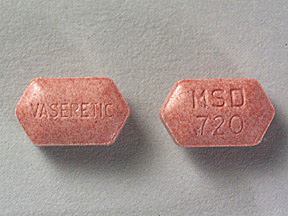
Vaseretic Side Effects
Please note - some side effects for Vaseretic may not be reported. Always consult your doctor or healthcare specialist for medical advice. You may also report side effects to the FDA.
Side Effects of Vaseretic - for the Consumer
Vaseretic
All medicines may cause side effects, but many people have no, or minor, side effects. Check with your doctor if any of these most COMMON side effects persist or become bothersome when using Vaseretic:
Seek medical attention right away if any of these SEVERE side effects occur when using Vaseretic:Diarrhea; dizziness; headache; light-headedness; nausea; persistent, dry cough; tiredness; vomiting.
Severe allergic reactions (rash; hives; itching; difficulty swallowing or breathing; tightness in the chest; swelling of the hands, mouth, face, lips, eyes, throat, or tongue; unusual hoarseness); burning, numbness, or tingling of the skin; chest pain; confusion; decreased, difficult, or painful urination; dry mouth; fainting; fast, slow, or irregular heartbeat; fever, chills, or sore throat; mental or mood changes; muscle cramps, pain, or weakness; red, swollen, blistered, or peeling skin; restlessness; seizures; severe dizziness, drowsiness, or light-headedness; severe or persistent nausea or vomiting; shortness of breath; sluggishness; stomach pain (with or without nausea or vomiting); unusual bruising or bleeding; unusual thirst, tiredness, or weakness; yellowing of the skin or eyes.
This is not a complete list of all side effects that may occur. If you have questions about side effects, contact your health care provider. Call your doctor for medical advice about side effects. To report side effects to the appropriate agency, please read the Guide to Reporting Problems to FDA.
TopVaseretic Side Effects - for the Professional
Vaseretic
Vaseretic has been evaluated for safety in more than 1500 patients, including over 300 patients treated for one year or more. In clinical trials with Vaseretic no adverse experiences peculiar to this combination drug have been observed. Adverse experiences that have occurred, have been limited to those that have been previously reported with enalapril or hydrochlorothiazide.
The most frequent clinical adverse experiences in controlled trials were: dizziness (8.6 percent), headache (5.5 percent), fatigue (3.9 percent) and cough (3.5 percent). Generally, adverse experiences were mild and transient in nature. Adverse experiences occurring in greater than two percent of patients treated with Vaseretic in controlled clinical trials are shown below.
| Percent of Patients in Controlled Studies |
||
|---|---|---|
| Vaseretic (n=1580) Incidence (discontinuation) |
Placebo (n=230) Incidence |
|
| Dizziness | 8.6 (0.7) | 4.3 |
| Headache | 5.5 (0.4) | 9.1 |
| Fatigue | 3.9 (0.8) | 2.6 |
| Cough | 3.5 (0.4) | 0.9 |
| Muscle Cramps | 2.7 (0.2) | 0.9 |
| Nausea | 2.5 (0.4) | 1.7 |
| Asthenia | 2.4 (0.3) | 0.9 |
| Orthostatic Effects | 2.3 (<0.1) | 0.0 |
| Impotence | 2.2 (0.5) | 0.5 |
| Diarrhea | 2.1 (<0.1) | 1.7 |
Clinical adverse experiences occurring in 0.5 to 2.0 percent of patients in controlled trials included: Body As A Whole: Syncope, chest pain, abdominal pain; Cardiovascular: Orthostatic hypotension, palpitation, tachycardia; Digestive: Vomiting, dyspepsia, constipation, flatulence, dry mouth; Nervous/Psychiatric: Insomnia, nervousness, paresthesia, somnolence, vertigo; Skin: Pruritus, rash; Other: Dyspnea, gout, back pain, arthralgia, diaphoresis, decreased libido, tinnitus, urinary tract infection.
Angioedema: Angioedema has been reported in patients receiving Vaseretic, with an incidence higher in black than in non-black patients. Angioedema associated with laryngeal edema may be fatal. If angioedema of the face, extremities, lips, tongue, glottis and/or larynx occurs, treatment with Vaseretic should be discontinued and appropriate therapy instituted immediately.
Hypotension: In clinical trials, adverse effects relating to hypotension occurred as follows: hypotension (0.9 percent), orthostatic hypotension (1.5 percent), other orthostatic effects (2.3 percent). In addition syncope occurred in 1.3 percent of patients.
Cough: See PRECAUTIONS, Cough.
Clinical Laboratory Test Findings
Serum Electrolytes: See PRECAUTIONS.
Creatinine, Blood Urea Nitrogen: In controlled clinical trials minor increases in blood urea nitrogen and serum creatinine, reversible upon discontinuation of therapy, were observed in about 0.6 percent of patients with essential hypertension treated with Vaseretic. More marked increases have been reported in other enalapril experience. Increases are more likely to occur in patients with renal artery stenosis.
Serum Uric Acid, Glucose, Magnesium, and Calcium: See PRECAUTIONS.
Hemoglobin and Hematocrit: Small decreases in hemoglobin and hematocrit (mean decreases of approximately 0.3 g percent and 1.0 vol percent, respectively) occur frequently in hypertensive patients treated with Vaseretic but are rarely of clinical importance unless another cause of anemia coexists. In clinical trials, less than 0.1 percent of patients discontinued therapy due to anemia.
Liver Function Tests: Rarely, elevations of liver enzymes and/or serum bilirubin have occurred.
Other adverse reactions that have been reported with the individual components are listed below and, within each category, are in order of decreasing severity.
Enalapril Maleate – Enalapril has been evaluated for safety in more than 10,000 patients. In clinical trials adverse reactions which occurred with enalapril were also seen with Vaseretic. However, since enalapril has been marketed, the following adverse reactions have been reported: Body As A Whole: Anaphylactoid reactions; Cardiovascular: Cardiac arrest; myocardial infarction or cerebrovascular accident, possibly secondary to excessive hypotension in high risk patients; pulmonary embolism and infarction; pulmonary edema; rhythm disturbances including atrial tachycardia and bradycardia; atrial fibrillation; hypotension; angina pectoris, Raynaud's phenomenon; Digestive: lleus, pancreatitis, hepatic failure, hepatitis (hepatocellular [proven on rechallenge] or cholestatic jaundice), melena, anorexia, glossitis, stomatitis, dry mouth; Hematologic: Rare cases of neutropenia, thrombocytopenia and bone marrow depression. Hemolytic anemia, including cases of hemolysis in patients with G-6-PD deficiency, has been reported; a causal relationship to enalapril cannot be excluded. Nervous System/Psychiatric: Depression, confusion, ataxia, peripheral neuropathy (e.g., paresthesia, dysesthesia), dream abnormality; Urogenital: Renal failure, oliguria, renal dysfunction,, flank pain, gynecomastia; Respiratory: Pulmonary infiltrates, eosinophilic pneumonitis, bronchospasm, pneumonia, bronchitis, rhinorrhea, sore throat and hoarseness, asthma, upper respiratory infection; Skin: Exfoliative dermatitits, toxic epidermal necrolysis, Stevens-Johnson syndrome, herpes zoster, erythema multiforme, urticaria, pemphigus, alopecia, flushing, photosensitivity; Special Senses: Blurred vision, taste alteration, anosmia, conjunctivitis, dry eyes, tearing.
Miscellaneous: A symptom complex has been reported which may include some or all of the following: a positive ANA, an elevated erythrocyte sedimentation rate, arthralgia/arthritis, myalgia/myositis, fever, serositis, vasculitis, leukocytosis, eosinophilia, photosensitivity, rash and other dermatologic manifestations.
Fetal/Neonatal Morbidity and Mortality: See WARNINGS, Pregnancy, Enalapril Maleate, Fetal/Neonatal Morbidity and Mortality.
Hydrochlorothiazide – Body as a Whole: Weakness; Digestive: Pancreatitis, jaundice (intrahepatic cholestatic jaundice), sialadenitis, cramping, gastric irritation, anorexia; Hematologic: Aplastic anemia, agranulocytosis, leukopenia, hemolytic anemia, thrombocytopenia; Hypersensitivity: Purpura, photosensitivity, urticaria, necrotizing angiitis (vasculitis and cutaneous vasculitis), fever, respiratory distress including pneumonitis and pulmonary edema, anaphylactic reactions; Musculoskeletal: Muscle spasm; Nervous System/Psychiatric: Restlessness; Renal: Renal failure, renal dysfunction, interstitial nephritis; Skin: Erythema multiforme including Stevens-Johnson syndrome, exfoliative dermatitis including toxic epidermal necrolysis, alopecia; Special Senses: Transient blurred vision, xanthopsia.
TopSide Effects by Body System - for Healthcare Professionals
Cardiovascular
Predisposing risk factors for hypotension after enalapril-HCTZ administration are decreased intravascular volume (angiotensin-dependency) and hyponatremia.
Cardiovascular complications are among the most common. Hypotension occurs in approximately 2% to 8%, and is more common in patients with hypovolemia. This can result in syncope in 1% to 4% of patients. Hypokalemia associated with hydrochlorothiazide (HCTZ) monotherapy has been associated with rare cases of cardiac arrhythmias, including ventricular ectopy and complete AV heart block. Chest pain has been reported in up to 5% of patients who are receiving enalapril.
Metabolic
Since HCTZ may increase total serum cholesterol by 11%, LDL lipoprotein cholesterol by 12%, and VLDL lipoprotein cholesterol levels by 50%, and may reduce insulin secretion, it should be used with caution in diabetic patients and in those with hypercholesterolemia. Indeed, rare cases of hyperosmolar hyperglycemic coma are associated with HCTZ.
Hyperuricemia may be an important consideration in patients with a history of gout. Hypophosphatemia and low serum magnesium concentrations may occur, but are usually clinically insignificant except in malnourished patients.
Metabolic side effects, such as hypokalemia, hyponatremia, hypomagnesemia, and hyperuricemia are common during HCTZ therapy, especially when doses greater than 50 mg per day are used. Mild hypokalemia (decrease of 0.5 mEq/L) occurs in up to 50% of patients taking HCTZ alone; this is less likely with the combination drug because enalapril attenuates the aldosteronism associated with thiazide diuretics. Metabolic alkalosis, hypercalcemia, hyperglycemia, and hypercholesterolemia have been associated with the use of HCTZ.
Renal
Enalapril, like other angiotensin converting enzyme inhibitors, may decrease serum aldosterone levels, resulting in mild to moderate hyperkalemia.
Although HCTZ has been used to treat nephrogenic diabetes insipidus, a case report in which the drug was believed to have caused this condition is reported.
Renal side effects including renal insufficiency has been associated with both the use of enalapril and HCTZ, and is, therefore, a problem with the combination product. Enalapril-associated renal failure is more likely in patients with "high angiotensin states" (congestive heart failure, edema, renal artery stenosis, hypovolemia, hypotension, or chronic renal failure). Rare cases of interstitial nephritis have been associated with HCTZ.
Hepatic
Hepatic side effects associated with the use of ACE inhibitors have included a rare syndrome that begins with cholestatic jaundice and progresses to fulminant hepatic necrosis and (sometimes) death. Experts recommend discontinuation of therapy with this drug if jaundice or markedly elevated hepatic serum enzymes develop. Both cholestatic jaundice and centrilobular necrosis have been described.
Rare case reports of enalapril-associated hepatitis, where liver function tests rose despite resolution of congestive heart failure, are reported.
A 54-year-old woman with hypertension developed asymptomatic abnormal liver function tests associated with eosinophilia and relatively normal abdominal ultrasonography seven weeks after beginning enalapril. An extensive work-up revealed no evidence of infection; liver biopsy revealed cellular degeneration, portal eosinophilic and mononuclear infiltration, and centrilobular necrosis. The signs and symptoms of hepatitis resolved upon discontinuation of enalapril.
Hypersensitivity
Hypersensitivity reactions to enalapril, as with some other angiotensin converting enzyme (ACE) inhibitors, may be life-threatening. Angioedema of the face, extremities, lips, tongue, glottis and/or pharynx have been reported rarely in patients receiving ACE inhibitors. Obstructive laryngeal and glossal angioedema due to enalapril is a rare, but potentially fatal reaction. In addition, intestinal angioedema has been reported in patients treated with ACE inhibitors. It is recommended that any patient with dyspnea, dysphagia, or significant facial angioedema stop therapy immediately and avoid ACE inhibitor therapy in general. Enalapril is not recommended for patients with a history of idiopathic angioedema.
Other hypersensitivity reactions associated with enalapril including photosensitivity in 0.1%, or urticaria in 0.3% of patients have been reported. A single case of Henoch-Schonlein purpura has also been reported.
Rare cases of acute pulmonary edema, interstitial cystitis, interstitial nephritis, and anaphylaxis have been associated with HCTZ.
Late-onset enalapril-induced angioedema (more than three months) is reported in at least one patient who had taken enalapril without incident for three years. Patients with intestinal angioedema generally present with abdominal pain (with or without nausea or vomiting) and in some cases there was no prior history of facial angioedema, and C-1 esterase levels were normal. These symptoms resolve after stopping the ACE inhibitor.
A 68-year-old man with a history of myocardial infarction (MI) developed dyspnea, chest tightness, a low grade fever, dizziness, sweating, and vomiting associated with cyanosis, a mild leukocytosis, radiographic evidence of pulmonary edema, clinical evidence of hypovolemia, and respiratory acidosis. MI and infection were ruled out; the patient recovered after restoration of his intravascular volume with saline and albumin. The only precipitating factor per history was taking HCTZ, which the patient had taken without incident for two years. Rechallenge with the drug resulted in recurrent acute pulmonary edema. Other signs of hypersensitivity, such as rash and eosinophilia, were absent.
Respiratory
Rare case reports of asthma associated with some angiotensin converting enzyme inhibitors suggest that these drugs seem to play a role in the genesis and metabolism of bronchodilatory mediators. For this reason, some experts recommend cautious use of enalapril in patients with preexisting asthma.
A retrospective study has revealed a significantly higher incidence of discontinuation of angiotensin converting enzyme inhibitor therapy due to cough among black patients compared with non-black patients (9.6% vs. 2.4%).
Respiratory system side effects are remarkable for a dry, nonproductive cough that has usually become a problem for 1% to 5% of patients who are receiving enalapril alone. Some patients with enalapril-induced cough demonstrate new bronchial hyper-reactivity. Less common respiratory system side effects include rhinorrhea associated with enalapril (thought to be due to the effect of enalapril on vasodilating kinins) and approximately 30 case reports of acute noncardiogenic pulmonary edema associated with HCTZ (thought to be due to idiosyncrasy or a hypersensitivity mechanism).
Hematologic
Hematologic side effects are extremely rare with either drug. Discontinuation of enalapril due to anemia has been reported in less than 0.1% of patients. Rare cases of neutropenia and agranulocytosis have been associated with enalapril and rare cases of immune-complex hemolytic anemia, aplastic anemia, and thrombocytopenia have been associated with HCTZ.
An 83-year-old woman with a history of hypertension, angina pectoris, coronary artery disease, and myocardial infarction developed fever associated with profound neutropenia and an E. coli urinary tract infection six months after beginning enalapril. Bone marrow aspiration revealed only a few myeloid progenitors, but normal erythropoiesis and megakaryocytic differentiation. The agranulocytosis resolved once enalapril was discontinued.
Nervous system
Nervous system side effects including headache is the most common. Headache occurs in 3% to 12% of patients. Other nervous system complaints, such as vertigo, fatigue, paresthesias, and insomnia have only rarely been reported. A single case of cerebrovascular insufficiency has been associated with HCTZ-induced plasma volume contraction.
Dermatologic
A 52-year-old Korean woman with hypertension experienced a generalized, erythematous, scaly rash associated with a positive Nikolsky sign and biopsy results consistent with pemphigus foliaceus within three weeks after beginning enalapril. Direct immunofluorescence revealed intercellular IgG deposition. The pemphigus remained active at least 12 months after enalapril was discontinued.
A 67-year-old white woman with hypothyroidism, hypercalcemia, depression, and hypertension developed facial erythema, headaches, tremors, confusion, and personality changes associated with a new positive ANA and anti-nRNP, and skin biopsy consistent with lupus erythematosus while taking HCTZ, levothyroxine, and amitriptyline. The eruption resolved upon discontinuation of HCTZ, but she later developed a higher ANA titer associated with symptomatic diffuse interstitial pulmonary infiltrates. She was successfully treated with corticosteroids.
A 35-year-old woman with hypertension developed alopecia during enalapril therapy, which resolved upon discontinuation of the drug, and recurred upon rechallenge.
Dermatologic side effects have been associated with the use of both ACE inhibitors and thiazide diuretics. Thiazides may induce phototoxic dermatitis. In addition, a rare, distinct entity with clinical and laboratory features indistinguishable from those of subacute cutaneous lupus erythematosus has been associated with HCTZ. Other dermatologic reactions include rare reports of erythema annular centrifugum, acute eczematous dermatitis, morbilliform and leukocytoclastic vasculitis associated with HCTZ, and alopecia, photosensitive lichenoid eruptions, erythema with vasculitis, bullous pemphigoid, and pemphigus foliaceus associated with enalapril.
Gastrointestinal
Gastrointestinal side effects are unusual. Nausea, vomiting, or diarrhea have each been reported in less than 3% of patients who are receiving enalapril. Dysgeusia is rare, occurring in less than 0.5% of patients. Rare cases of acute small bowel mucosal edema, acute cholecystitis, or pancreatitis have been associated with either drug.
A 56-year-old woman with hypertension and diabetes developed acute abdominal pain, nausea, and vomiting associated upper abdominal tenderness, hyperamylasemia, hyperlipasemia, and normal upper abdominal ultrasonography within 24 hours of starting enalapril. The signs and symptoms of pancreatitis resolved over the next several days once the drug was discontinued. No rechallenge was performed.
Thiazide diuretics may increase serum cholesterol and triglycerides, resulting in increased risk of cholesterol gallstone formation. Reports of bowel strictures associated with thiazide ingestion have been reported in the 1960's, although these patients were on a combination HCTZ-potassium product.
Immunologic
Immunologic side effects have been reported in a limited study of nine elderly patients, three of whom developed a positive fluorescent antinuclear antibody test during six weeks of enalapril therapy. Allergic vasculitis and hemolytic anemia have rarely been associated with HCTZ.
There are rare case reports of HCTZ-induced immune hemolytic anemia. The following illustrates a fatal case:
A 53-year-old man with hypertension developed nausea, vomiting, diarrhea, and progressive anorexia and weakness associated with scleral icterus, anemia with spherocytosis, dark red urine with proteinuria, bilirubinuria, hemoglobinuria, and elevated lactic dehydrogenase levels 18 months after beginning HCTZ and methyldopa. Haptoglobin was less than 50 mg/dl. Direct and indirect Coombs' tests were positive. The patient died suddenly; autopsy revealed no obvious cause of death, left ventricular hypertrophy, and mild coronary atherosclerosis.
Musculoskeletal
Musculoskeletal side effects are unusual and include case reports of myalgias and chills.
A 76-year-old woman with hypertension, on enalapril monotherapy for three weeks, developed progressive myalgias, asthenia, morning stiffness, and weakness associated with no abnormal laboratory values. Due to the absence of other apparent causes, enalapril was discontinued, and the patient's myalgias disappeared.
Endocrine
A 69-year-old woman with diabetes mellitus and hypertension developed symptomatic hyponatremia associated with decreased plasma and increased urine osmolalities, normal thyroid and basal cortisol studies, and a positive water load test four months after beginning enalapril. The syndrome resolved upon discontinuation of enalapril, and recurred upon rechallenge.
A prospective study of 34 patients who received oral thiazide diuretics for 14 years without interruption revealed an increased mean fasting blood glucose level after treatment. Withdrawal of thiazide therapy for seven months in 10 of the patients resulted in average reductions of 10% in fasting blood glucose and 25% in the 2-hour glucose tolerance test value. A control group was not reported.
Endocrinologic problems associated with thiazide diuretics include glucose intolerance and a potentially deleterious effect on the lipid profile. This may be important in some patients with or who are at risk for diabetes or coronary artery disease. A single case of recurrent parathyroid adenoma has been reported, although the association is probably coincidental. The only reported endocrinologic side effects associated with the use of enalapril include one case of the syndrome of inappropriate antidiuretic hormone secretion (SIADH) and three cases of glycosuria.
Psychiatric
A 52-year-old woman with hypertension and a history of depression associated with the use of beta-blockers, developed fatigue, malaise, and clinical signs and symptoms of depression, including suicidal ideation, within five weeks after starting enalapril. The depression gradually resolved with substitution of a thiazide diuretic and a low sodium diet. Rechallenge resulted in recurrent depression.
A 41-year-old man with hypertension became agitated, anxious, depressed, and unable to sleep four weeks after starting enalapril. The psychosis resolved when enalapril was stopped, and recurred upon rechallenge.
Psychiatric problems associated with the use of enalapril include rare cases of depression and acute psychosis.
Genitourinary
Genitourinary side effects including rare reports of vulvovaginal pruritus, dysuria, and incontinence have been associated with the use of enalapril in an elderly patient.
Ocular
Ocular side effects have included idiosyncratic reactions to the hydrochlorothiazide component resulting in acute transient myopia and acute angle-closure glaucoma.
TopMore Vaseretic resources
- Vaseretic 10-25 Concise Consumer Information (Cerner Multum)
Disclaimer: Every effort has been made to ensure that the information provided is accurate, up-to-date, and complete, but no guarantee is made to that effect. In addition, the drug information contained herein may be time sensitive and should not be utilized as a reference resource beyond the date hereof. This information does not endorse drugs, diagnose patients, or recommend therapy. This drug information is a reference resource designed as supplement to, and not a substitute for, the expertise, skill , knowledge, and judgement of healthcare practitioners in patient care. The absence of a warning for a given drug or drug combination in no way should be construed to indicate that the drug of drug combination is safe, effective, or appropriate for any given patient. Drugs.com does not assume any responsibility for any aspect of healthcare administered with the aid of information provided. The information contained herein is not intended to cover all possible uses, directions, precautions, warnings, drug interactions, allergic reactions, or adverse effects. If you have questions about the drugs you are taking, check with your doctor, nurse, or pharmacist.