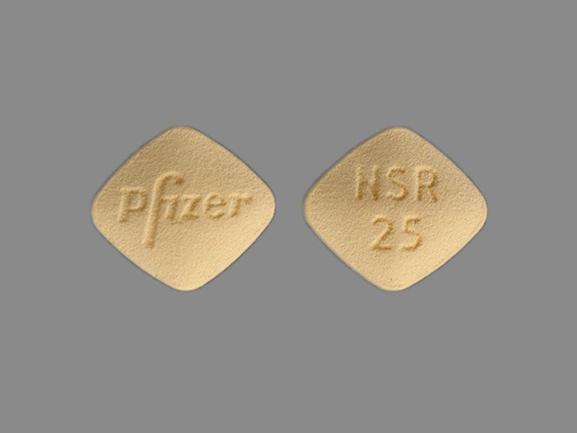
Inspra Side Effects
Generic Name: Eplerenone
Please note - some side effects for Inspra may not be reported. Always consult your doctor or healthcare specialist for medical advice. You may also report side effects to the FDA at http://www.fda.gov/medwatch/ or 1-800-FDA-1088 (1-800-332-1088).
|
For the consumer For the professional
|
|
Side Effects of Inspra - for the consumer
Inspra
All medicines may cause side effects, but many people have no, or minor, side effects. Check with your doctor if any of these most COMMON side effects persist or become bothersome when using Inspra:
Seek medical attention right away if any of these SEVERE side effects occur when using Inspra:Cough; diarrhea; dizziness; flu-like symptoms (fever, chills, muscle ache, tiredness); headache; stomach pain.
TopSevere allergic reactions (rash; hives; difficulty breathing; tightness in the chest; swelling of the mouth, face, lips, or tongue); abnormal vaginal discharge; chest pain; enlarged or swollen breasts; irregular heartbeat; severe muscle weakness.
For the professional
Inspra
Congestive Heart Failure Post-Myocardial Infarction
In EPHESUS, safety was evaluated in 3307 patients treated with Inspra and 3301 placebo-treated patients. The overall incidence of adverse events reported with Inspra (78.9%) was similar to placebo (79.5%). Adverse events occurred at a similar rate regardless of age, gender, or race. Patients discontinued treatment due to an adverse event at similar rates in either treatment group (4.4% Inspra vs. 4.3% placebo).
Adverse events that occurred more frequently in patients treated with Inspra than placebo were hyperkalemia (3.4% vs 2.0%) and increased creatinine (2.4% vs 1.5%). Discontinuations due to hyperkalemia or abnormal renal function were less than 1.0% in both groups. Hypokalemia occurred less frequently in patients treated with Inspra (0.6% vs. 1.6%).
The rates of sex hormone related adverse events are shown in Table 3.
| Rates in Males | Rates in Females | |||
|---|---|---|---|---|
| Gynecomastia | Mastodynia | Either | Abnormal Vaginal Bleeding |
|
| Inspra | 0.4% | 0.1% | 0.5% | 0.4% |
| Placebo | 0.5% | 0.1% | 0.6% | 0.4% |
Hypertension
Inspra has been evaluated for safety in 3091 patients treated for hypertension. A total of 690 patients were treated for over 6 months and 106 patients were treated for over 1 year.
In placebo-controlled studies, the overall rates of adverse events were 47% with Inspra and 45% with placebo. Adverse events occurred at a similar rate regardless of age, gender, or race. Therapy was discontinued due to an adverse event in 3% of patients treated with Inspra and 3% of patients given placebo. The most common reasons for discontinuation of Inspra were headache, dizziness, angina pectoris/myocardial infarction, and increased GGT. The adverse events that were reported at a rate of at least 1% of patients and at a higher rate in patients treated with Inspra in daily doses of 25 to 400 mg versus placebo are shown in Table 4.
| Inspra (n=945) |
Placebo (n=372) |
|
|---|---|---|
| Note: Adverse events that are too general to be informative or are very common in the treated population are excluded. | ||
| Metabolic | ||
| Hypercholesterolemia | 1 | 0 |
| Hypertriglyceridemia | 1 | 0 |
| Digestive | ||
| Diarrhea | 2 | 1 |
| Abdominal pain | 1 | 0 |
| Urinary | ||
| Albuminuria | 1 | 0 |
| Respiratory | ||
| Coughing | 2 | 1 |
| Central/Peripheral Nervous System | ||
| Dizziness | 3 | 2 |
| Body as a Whole | ||
| Fatigue | 2 | 1 |
| Influenza-like symptoms | 2 | 1 |
Gynecomastia and abnormal vaginal bleeding were reported with Inspra but not with placebo. The rates of these sex hormone related adverse events are shown in Table 5. The rates increased slightly with increasing duration of therapy. In females, abnormal vaginal bleeding was also reported in 0.8% of patients on antihypertensive medications (other than spironolactone) in active control arms of the studies with Inspra.
| Rates in Males | Rates in Females | |||
|---|---|---|---|---|
| Gynecomastia | Mastodynia | Either | Abnormal Vaginal Bleeding |
|
| All controlled studies | 0.5% | 0.8% | 1.0% | 0.6% |
| Controlled studies lasting ≥ 6 months | 0.7% | 1.3% | 1.6% | 0.8% |
| Open label, long-term study | 1.0% | 0.3% | 1.0% | 2.1% |
Clinical Laboratory Test Findings
Congestive Heart Failure Post-Myocardial InfarctionCreatinine
Increases of more than 0.5 mg/dL were reported for 6.5% of patients administered Inspra and for 4.9% of placebo-treated patients.
Potassium
In EPHESUS, the frequency of patients with changes in potassium (<3.5 mEq/L or >5.5 mEq/L or ≥6.0 mEq/L) receiving Inspra compared with placebo are displayed in Table 6.
| Potassium (mEq/L) | Inspra (N=3251) n (%) |
Placebo (N=3237) n (%) |
|---|---|---|
| < 3.5 | 273 (8.4) | 424 (13.1) |
| >5.5 | 508 (15.6) | 363 (11.2) |
| ≥ 6.0 | 180 (5.5) | 126 (3.9) |
Table 7 shows the rates of hyperkalemia in EPHESUS as assessed by baseline renal function (creatinine clearance).
| Baseline Creatinine Clearance | Inspra | Placebo |
|---|---|---|
| ||
| ≤30 mL/min | 31.5% | 22.6% |
| 31–50 mL/min | 24.1% | 12.7% |
| 51–70 mL/min | 16.9% | 13.1% |
| >70 mL/min | 10.8% | 8.7% |
Table 8 shows the rates of hyperkalemia in EPHESUS as assessed by two baseline characteristics: presence/absence of proteinuria from baseline urinalysis and presence/absence of diabetes.
| Inspra | Placebo | |
|---|---|---|
| ||
| Proteinuria, no Diabetes | 16% | 11% |
| Diabetes, no Proteinuria | 18% | 13% |
| Proteinuria and Diabetes | 26% | 16% |
Potassium
In placebo-controlled fixed-dose studies, the mean increases in serum potassium were dose related and are shown in Table 9 along with the frequencies of values >5.5 mEq/L.
| Mean Change mEq/L | %>5.5 mEq/L | ||
|---|---|---|---|
| Daily Dosage | n | ||
| Placebo | 194 | 0 | 1 |
| 25 | 97 | 0.08 | 0 |
| 50 | 245 | 0.14 | 0 |
| 100 | 193 | 0.09 | 1 |
| 200 | 139 | 0.19 | 1 |
| 400 | 104 | 0.36 | 8.7 |
Patients with both type 2 diabetes and microalbuminuria are at increased risk of developing persistent hyperkalemia. In a study in such patients taking Inspra 200 mg, the frequencies of maximum serum potassium levels >5.5 mEq/L were 33% with Inspra given alone and 38% when Inspra was given with enalapril.
Rates of hyperkalemia increased with decreasing renal function. In all studies serum potassium elevations >5.5 mEq/L were observed in 10.4% of patients treated with Inspra with baseline calculated creatinine clearance <70 mL/min, 5.6% of patients with baseline creatinine clearance of 70 to 100 mL/min, and 2.6% of patients with baseline creatinine clearance of >100 mL/min.
Sodium
Serum sodium decreased in a dose-related manner. Mean decreases ranged from 0.7 mEq/L at 50 mg daily to 1.7 mEq/L at 400 mg daily. Decreases in sodium (<135 mEq/L) were reported for 2.3% of patients administered Inspra and 0.6% of placebo-treated patients.
Triglycerides
Serum triglycerides increased in a dose-related manner. Mean increases ranged from 7.1 mg/dL at 50 mg daily to 26.6 mg/dL at 400 mg daily. Increases in triglycerides (above 252 mg/dL) were reported for 15% of patients administered Inspra and 12% of placebo-treated patients.
Cholesterol
Serum cholesterol increased in a dose-related manner. Mean changes ranged from a decrease of 0.4 mg/dL at 50 mg daily to an increase of 11.6 mg/dL at 400 mg daily. Increases in serum cholesterol values greater than 200 mg/dL were reported for 0.3% of patients administered Inspra and 0% of placebo-treated patients.
Liver Function Tests
Serum alanine aminotransferase (ALT) and gamma glutamyl transpeptidase (GGT) increased in a dose-related manner. Mean increases ranged from 0.8 U/L at 50 mg daily to 4.8 U/L at 400 mg daily for ALT and 3.1 U/L at 50 mg daily to 11.3 U/L at 400 mg daily for GGT. Increases in ALT levels greater than 120 U/L (3 times upper limit of normal) were reported for 15/2259 patients administered Inspra and 1/351 placebo-treated patients. Increases in ALT levels greater than 200 U/L (5 times upper limit of normal) were reported for 5/2259 of patients administered Inspra and 1/351 placebo-treated patients. Increases of ALT greater than 120 U/L and bilirubin greater than 1.2 mg/dL were reported 1/2259 patients administered Inspra and 0/351 placebo-treated patients. Hepatic failure was not reported in patients receiving Inspra.
BUN/Creatinine
Serum creatinine increased in a dose-related manner. Mean increases ranged from 0.01 mg/dL at 50 mg daily to 0.03 mg/dL at 400 mg daily. Increases in blood urea nitrogen to greater than 30 mg/dL and serum creatinine to greater than 2 mg/dL were reported for 0.5% and 0.2%, respectively, of patients administered Inspra and 0% of placebo-treated patients.
Uric Acid
Increases in uric acid to greater than 9 mg/dL were reported in 0.3% of patients administered Inspra and 0% of placebo-treated patients.
TopMore resources:
Inspra - Includes detailed dosage instructions.
Disclaimer: Every effort has been made to ensure that the information provided is accurate, up-to-date, and complete, but no guarantee is made to that effect. In addition, the drug information contained herein may be time sensitive and should not be utilized as a reference resource beyond the date hereof. This information does not endorse drugs, diagnose patients, or recommend therapy. This drug information is a reference resource designed as supplement to, and not a substitute for, the expertise, skill , knowledge, and judgement of healthcare practitioners in patient care. The absence of a warning for a given drug or drug combination in no way should be construed to indicate that the drug of drug combination is safe, effective, or appropriate for any given patient. Drugs.com does not assume any responsibility for any aspect of healthcare administered with the aid of information provided. The information contained herein is not intended to cover all possible uses, directions, precautions, warnings, drug interactions, allergic reactions, or adverse effects. If you have questions about the drugs you are taking, check with your doctor, nurse, or pharmacist.