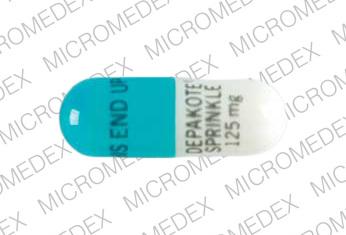
Depakote Sprinkles Side Effects
Generic name: divalproex sodium
Medically reviewed by Drugs.com. Last updated on Jun 12, 2023.
Note: This document contains side effect information about divalproex sodium. Some dosage forms listed on this page may not apply to the brand name Depakote Sprinkles.
Applies to divalproex sodium: oral capsule delayed release, oral tablet delayed release, oral tablet extended release.
Warning
Oral route (Tablet, Delayed Release; Capsule, Delayed Release; Tablet, Extended Release)
Hepatotoxicity (some cases fatal), usually occurring during the first 6 months of treatment, has been reported in patients receiving valproate and its derivatives. Children younger than 2 years and patients with hereditary mitochondrial disease are at a considerably increased risk of developing fatal hepatotoxicity. For these patients under 2 years, valproate sodium should be used with extreme caution as a sole agent. Use is contraindicated in patients with known mitochondrial disorders caused by mitochondrial DNA polymerase gamma (POLG) mutations and in children younger than 2 years in which mitochondrial disorder is clinically suspected. Failure of other anticonvulsants is the only indication for divalproex sodium in patients older than 2 years with hereditary mitochondrial disease. Perform POLG mutation screening as clinically indicated. Monitor patients closely and perform liver function tests prior to therapy and at frequent intervals thereafter, especially during the first 6 months. Valproate can impair cognitive development with prenatal exposure and produce major congenital malformations, particularly neural tube defects (eg, spina bifida). Valproate is contraindicated for prophylaxis of migraine headaches in pregnant women and women of childbearing potential who are not using effective contraception. Valproate should not be administered to a woman of childbearing potential unless other medications have failed or are otherwise unacceptable. Effective contraception should be used in such situations. Life-threatening pancreatitis has been reported in both children and adults receiving valproate. Cases have occurred shortly after initiation as well as several years after use. If pancreatitis is diagnosed, valproate should ordinarily be discontinued.
Serious side effects of Depakote Sprinkles
Along with its needed effects, divalproex sodium (the active ingredient contained in Depakote Sprinkles) may cause some unwanted effects. Although not all of these side effects may occur, if they do occur they may need medical attention.
Check with your doctor immediately if any of the following side effects occur while taking divalproex sodium:
More common
- Black, tarry stools
- bleeding gums
- bloating or swelling of the face, arms, hands, lower legs, or feet
- blood in the urine or stools
- chills
- confusion
- cough
- crying
- delusions of persecution, mistrust, suspiciousness, or combativeness
- diarrhea
- difficult or labored breathing
- dysphoria
- false beliefs that cannot be changed by facts
- false or unusual sense of well-being
- feeling of unreality
- fever
- general feeling of discomfort or illness
- headache
- hoarseness
- joint pain
- loss of appetite
- lower back or side pain
- mental depression
- muscle aches and pains
- nausea
- nervousness
- painful or difficult urination
- pinpoint red spots on the skin
- poor insight and judgment
- problems with memory or speech
- quick to react or overreact emotionally
- rapid weight gain
- rapidly changing moods
- runny nose
- sense of detachment from self or body
- shakiness in the legs, arms, hands, or feet
- shivering
- sleepiness or unusual drowsiness
- sore throat
- sweating
- tightness in the chest
- tingling of the hands or feet
- trembling or shaking of the hands or feet
- trouble recognizing objects
- trouble sleeping
- trouble thinking and planning
- trouble walking
- unusual bleeding or bruising
- unusual tiredness or weakness
- unusual weight gain or loss
- vomiting
Less common
- Abnormal dreams
- absence of or decrease in body movement
- anxiety
- bloody nose
- blurred vision
- bruising burning, crawling, itching, numbness, prickling, "pins and needles", or tingling feelings
- change in personality
- change in walking and balance
- changes in patterns and rhythms of speech
- chest pain
- cloudy urine
- clumsiness or unsteadiness
- cold sweats
- constipation
- dark urine
- deep or fast breathing with dizziness
- degenerative disease of the joint
- difficulty with moving
- dizziness
- dizziness, faintness, or lightheadedness when getting up suddenly from a lying or sitting position
- dry mouth
- excessive muscle tone
- fast, irregular, pounding, or racing heartbeat or pulse
- feeling of warmth or heat
- flushing or redness of the skin, especially on the face and neck
- frequent urge to urinate
- heavy non-menstrual vaginal bleeding
- increased need to urinate
- indigestion
- lack of coordination
- large, flat, blue or purplish patches in the skin
- leg cramps
- lip smacking or puckering
- loss of bladder control
- loss of strength or energy
- multiple swollen and inflamed skin lesions
- muscle pain or stiffness
- muscle tension or tightness
- normal menstrual bleeding occurring earlier, possibly lasting longer than expected
- numbness of the feet, hands and around mouth
- pains in the stomach, side, or abdomen, possibly radiating to the back
- passing urine more often
- pounding in the ears
- puffing of the cheeks
- rapid or worm-like movements of the tongue
- rapid weight gain
- restlessness
- seeing, hearing, or feeling things that are not there
- shakiness and unsteady walk
- slurred speech
- small red or purple spots on the skin
- sweating
- swollen joints
- trouble with speaking
- twitching
- uncontrolled chewing movements
- uncontrolled movements of the arms and legs
- unsteadiness, trembling, or other problems with muscle control or coordination
- vomiting of blood or material that looks like coffee grounds
- yellow eyes or skin
Incidence not known
- Aggression
- bladder pain
- blistering, peeling, loosening of the skin
- blisters on the skin
- bone pain, tenderness, or aching
- chest discomfort
- cloudy urine
- decrease in height
- decreased urine output
- difficulty swallowing
- feeling that others are watching you or controlling your behavior
- feeling that others can hear your thoughts
- feeling, seeing, or hearing things that are not there
- hives, itching, skin rash
- increased sensitivity of the skin to sunlight
- increased thirst
- irritability
- joint or muscle pain
- loss of balance control
- loss of consciousness
- mask-like face
- pain in the back, ribs, arms, or legs
- pain or swelling in the arms or legs without any injury
- puffiness or swelling of the eyelids or around the eyes, face, lips, or tongue
- red skin lesions, often with a purple center
- red, irritated eyes
- redness or other discoloration of the skin
- seizures
- severe mood or mental changes
- severe sunburn
- shuffling walk
- slow heartbeat
- slowed movements
- slurred speech
- sores, ulcers, or white spots in the mouth or on the lips
- stiffness of the arms and legs
- swelling of the face, ankles, or hands
- swollen or painful glands
- tic-like (jerky) movements of the head, face, mouth, and neck
- unusual behavior
Get emergency help immediately if any of the following symptoms of overdose occur while taking divalproex sodium:
Symptoms of overdose
- Change in consciousness
- fainting
- loss of consciousness
- slow or irregular heartbeat
Other side effects of Depakote Sprinkles
Some side effects of divalproex sodium may occur that usually do not need medical attention. These side effects may go away during treatment as your body adjusts to the medicine. Also, your health care professional may be able to tell you about ways to prevent or reduce some of these side effects.
Check with your health care professional if any of the following side effects continue or are bothersome or if you have any questions about them:
More common
- Belching
- body aches or pain
- change in vision
- congestion
- continuing ringing or buzzing or other unexplained noise in the ears
- hair loss or thinning of the hair
- hearing loss
- heartburn
- impaired vision
- lack or loss of strength
- loss of memory
- problems with memory
- seeing double
- tender, swollen glands in the neck
- uncontrolled eye movements
- voice changes
- weight gain
- weight loss
Less common
- Absent, missed, or irregular menstrual periods
- burning, dry, or itching eyes
- change in taste or bad unusual or unpleasant (after) taste
- coin-shaped lesions on the skin
- cough producing mucus
- cramps
- dandruff
- discharge or excessive tearing
- dry skin
- earache
- excess air or gas in the stomach or bowels
- eye pain
- feeling of constant movement of self or surroundings
- full feeling
- heavy bleeding
- increased appetite
- itching of the vagina or genital area
- loss of bowel control
- neck pain
- oily skin
- pain
- pain during sexual intercourse
- pain or tenderness around the eyes and cheekbones
- passing gas
- rash with flat lesions or small raised lesions on the skin
- redness or swelling in the ear
- redness, pain, swelling of the eye, eyelid, or inner lining of the eyelid
- redness, swelling, or soreness of the tongue
- sensation of spinning
- sneezing
- stiff neck
- stopping of menstrual bleeding
- thick, white vaginal discharge with no odor or with a mild odor
Incidence not known
- Breast enlargement
- changes in hair color or texture
- discoloration of the fingernails or toenails
- increased hair growth, especially on the face
- unexpected or excess milk flow from the breasts
For Healthcare Professionals
Applies to divalproex sodium: oral delayed release capsule, oral delayed release tablet, oral tablet extended release.
General
The more commonly reported adverse reactions have included headache, asthenia, nausea/vomiting, abdominal pain, somnolence, tremor, dizziness, diplopia, and amblyopia/blurred vision.
Gastrointestinal
Very common (10% or more): Abdominal pain, diarrhea, dyspepsia, gingival disorder, nausea, vomiting
Common (1% to 10%): Constipation, dry mouth, eructation, fecal incontinence, flatulence, gastralgia, gastroenteritis, glossitis, periodontal abscess, hematemesis, stomatitis
Uncommon (0.1% to 1%): Pancreatitis (life-threatening)[Ref]
Hepatic
Common (1% to 10%): Increased liver enzymes (particularly early in treatment), liver injury, SGOT increased, SGPT increased
Frequency not reported: Severe liver damage (including hepatic failure sometimes resulting in death), increased serum bilirubin, abnormal changes in other liver function tests[Ref]
Nervous system
Very common (10% or more): Dizziness, headache, somnolence, tremor
Common (1% to 10%): Abnormal gait, amnesia, catatonic reaction, convulsion, disturbance in attention, dysarthria, extrapyramidal disorder, hypertonia, hypokinesia, incoordination, increased reflexes, memory impairment, nystagmus, paresthesia, speech disorder, stupor, tardive dyskinesia, taste perversion
Uncommon (0.1% to 1%): Ataxia, coma, encephalopathy, lethargy, reversible Parkinsonism
Rare (less than 0.1%): Cognitive disorder, reversible dementia associated with reversible cerebral atrophy
Frequency not reported: Cerebral atrophy, dementia
Postmarketing reports: Paradoxical convulsion, parkinsonism[Ref]
Hematologic
Very common (10% or more): Thrombocytopenia
Common (1% to 10%): Anemia, hemorrhage
Uncommon (0.1% to 1%): Leucopenia, pancytopenia
Rare (less than 0.1%): Abnormal coagulation tests (e.g., prolonged prothrombin time, prolonged activated partial thromboplastin time, prolonged thrombin time, prolonged INR), agranulocytosis, bone marrow failure, decreased coagulation factors, including pure red cell aplasia, macrocytosis
Frequency not reported: Aplastic anemia, bone marrow suppression, bruising, eosinophilia, frank hemorrhage, hypofibrinogenemia, anemia including macrocytic with or without folate deficiency, relative lymphocytosis
Postmarketing reports: Relative lymphocytosis, macrocytosis, leukopenia, anemia including macrocytic with or without folate deficiency, bone marrow suppression, pancytopenia, aplastic anemia, agranulocytosis, acute intermittent porphyria, Fanconi's syndrome (mostly children)[Ref]
Respiratory
Very common (10% or more): Flu syndrome, respiratory infection
Common (1% to 10%): Bronchitis, dyspnea, epistaxis, increased cough, pharyngitis, pneumonia, rhinitis, sinusitis
Uncommon (0.1% to 1%): Pleural effusion[Ref]
Renal
Rare (less than 0.1%): Reversible Fanconi's syndrome, tubulointerstitial nephritis[Ref]
Cardiovascular
Common (1% to 10%): Edema, hypertension, hypotension, palpitations, postural hypotension, peripheral edema, tachycardia, vasodilation
Frequency not reported: Bradycardia, cutaneous vasculitis, hematoma formation
Postmarketing reports: Bradycardia, cutaneous vasculitis[Ref]
Psychiatric
Very common (10% or more): Nervousness
Common (1% to 10%): Abnormal dreams, agitation, anxiety, aggression, confusion, depression, emotional lability, hallucinations, insomnia, personality disorder, thinking abnormalities
Rare (less than 0.1%): Abnormal behavior, learning disorder, psychomotor hyperactivity
Frequency not reported: Behavioral deterioration, hostility, psychosis
Postmarketing reports: Emotional upset, psychosis, aggression, psychomotor hyperactivity, hostility, disturbance in attention, learning disorder, behavioral deterioration[Ref]
Endocrine
Uncommon (0.1% to 1%): Hyperandrogenism, syndrome of inappropriate ADH secretion
Rare (less than 0.1%): Hypothyroidism
Frequency not reported: Abnormal thyroid function tests, elevated serum testosterone concentrations, parotid gland swelling
Postmarketing reports: Hyperandrogenism, hirsutism, elevated testosterone level, breast enlargement, galactorrhea, parotid gland swelling, inappropriate ADH secretion, developmental delay[Ref]
Dermatologic
Very common (10% or more): Alopecia
Common (1% to 10%): Discoid lupus erythematosus, dry skin, ecchymosis, furunculosis, maculopapular rash, petechia, pruritus, rash, seborrhea
Uncommon (0.1% to 1%): Abnormal hair texture, abnormal hair growth, hair color changes, sweating
Rare (0.01% to 0.1%): Drug rash with eosinophilia and systemic symptoms (DRESS) syndrome, erythema multiforme, Stevens-Johnson syndrome, toxic epidermal necrolysis
Very rare (less than 0.01%): Acne, hirsutism
Frequency not reported: Angioedema, generalized pruritus, photosensitivity
Postmarketing reports: Hair texture changes, hair color changes, photosensitivity, erythema multiforme, toxic epidermal necrolysis, nail and nail bed disorders, Stevens-Johnson syndrome[Ref]
Genitourinary
Common (1% to 10%): Amenorrhea, cystitis, dysmenorrhea, dysuria, enuresis, metrorrhagia, urinary incontinence, urinary frequency, vaginal hemorrhage, vaginitis
Frequency not reported: Breast enlargement, galactorrhea, polycystic ovary disease
Postmarketing reports: Irregular menses, secondary amenorrhea, polycystic ovary disease, aspermia, azoospermia, decreased sperm count, decreased spermatozoa motility, male infertility, abnormal spermatozoa morphology, enuresis, urinary tract infection[Ref]
Hypersensitivity
Frequency not reported: Allergic reaction, anaphylaxis, hypersensitivity[Ref]
Metabolic
Very common (10% or more): Anorexia
Common (1% to 10%): Weight loss/gain, increased appetite, hyponatremia
Rare (less than 0.1%): Hyperammonemia
Frequency not reported: Acute intermittent porphyria, minor elevations of LDH (dose related), decreased carnitine concentrations, hyperglycinemia
Postmarketing reports: Decreased carnitine concentrations, hyponatremia, hyperglycinemia, weight gain[Ref]
Musculoskeletal
Common (1% to 10%): Arthralgia, arthrosis, leg cramps, myalgia, myasthenia, twitching
Uncommon (0.1% to 1%): Decreased bone mineral density, osteopenia, osteoporosis and fractures on long term therapy
Rare (less than 0.1%): Rhabdomyolysis, systemic lupus erythematosus
Frequency not reported: Bone pain
Postmarketing reports: Fractures, decreased bone mineral density, osteopenia, osteoporosis, weakness, bone pain[Ref]
Ocular
Very common (10% or more): Amblyopia/blurred vision, diplopia
Common (1% to 10%): Abnormal vision, conjunctivitis, diplopia, dry eyes, eye pain[Ref]
Oncologic
Rare (less than 0.1%): Myelodysplastic syndrome[Ref]
Other
Very common (10% or more): Asthenia
Common (1% to 10%): Back pain, chills, deafness, ear disorder, ear pain, face edema, fever, malaise, otitis media, tinnitus, vertigo
Frequency not reported: Hypothermia, weakness
Postmarketing reports: Hearing loss[Ref]
More about Depakote Sprinkles (divalproex sodium)
- Check interactions
- Compare alternatives
- Pricing & coupons
- Reviews (1)
- Drug images
- Dosage information
- During pregnancy
- Drug class: fatty acid derivative anticonvulsants
- Breastfeeding
- En español
Patient resources
Professional resources
Other formulations
Related treatment guides
References
1. Product Information. Depakote (divalproex sodium). Abbott Pharmaceutical. 2001;PROD.
2. Cerner Multum, Inc. UK Summary of Product Characteristics.
Further information
Always consult your healthcare provider to ensure the information displayed on this page applies to your personal circumstances.
Some side effects may not be reported. You may report them to the FDA.