
Recombinate Prescribing Information
Package insert / product label
Generic name: antihemophilic factor, recombinant
Dosage form: injection
Drug class: Miscellaneous coagulation modifiers
J Code (medical billing code): J7192 (Per intl units, injection)
Medically reviewed by Drugs.com. Last updated on Sep 15, 2023.
On This Page
Lyophilized Powder for Reconstitution for injection
Reconstitute with 5 mL of Sterile Water for Injection using BAXJECT II
Recombinate Description
RECOMBINATE [Antihemophilic Factor (Recombinant)] is a glycoprotein synthesized by a genetically engineered Chinese Hamster Ovary (CHO) cell line. In culture, the CHO cell line secretes recombinant Factor VIII (rFVIII) into the cell culture medium. The rFVIII is purified from the culture medium utilizing a series of chromatography columns. A key step in the purification process is an immunoaffinity chromatography methodology in which a purification matrix, prepared by immobilization of a monoclonal antibody directed to Factor VIII, is utilized to selectively isolate the rFVIII in the medium. The synthesized rFVIII produced by the CHO cells has the same biological effects as human Factor VIII. Structurally the protein has a similar combination of heterogenous heavy and light chains as found in human Factor VIII.
RECOMBINATE is formulated as a sterile, nonpyrogenic, off-white to faint yellow, lyophilized powder preparation of concentrated recombinant Factor VIII for intravenous injection. RECOMBINATE is available in single-dose vials, which contain nominally 250, 500, 1000, 1500, and 2000 International Units per vial. When reconstituted with the appropriate volume of diluent, the product contains the following stabilizers in maximum amounts: For 5 mL reconstitution volume: 25 mg/mL Albumin (Human), 0.40 mg/mL calcium, 3 mg/mL polyethylene glycol (3350), 360 mEq/L sodium, 110 mM histidine, 1.5 µg/Factor VIII International Unit (IU) polysorbate-80. Recombinant Von Willebrand Factor (rVWF) is coexpressed with the rFVIII and helps to stabilize it. The final product contains not more than 2 ng rVWF/IU rFVIII, which will not have any clinically relevant effect in patients with von Willebrand's disease. The product contains no preservative.
Each vial of RECOMBINATE is labeled with the Factor VIII activity expressed in IU per vial. Biological potency is determined by an in vitro assay which is referenced to the World Health Organization (WHO) International Standard for Factor VIII:C Concentrate.
Related/similar drugs
tranexamic acid, desmopressin, Hemlibra, Cyklokapron, DDAVP, antihemophilic factor
Recombinate - Clinical Pharmacology
Factor VIII is the specific clotting factor deficient in patients with hemophilia A (classical hemophilia). Hemophilia A is a genetic bleeding disorder characterized by hemorrhages, which may occur spontaneously or after minor trauma. The administration of RECOMBINATE provides an increase in plasma levels of Factor VIII and can temporarily correct the coagulation defect in these patients. Pharmacokinetic studies on sixty-nine (69) patients revealed the circulating mean half-life for RECOMBINATE to be 14.6 ± 4.9 hours (n=67), which was not statistically significantly different from plasma-derived HEMOFIL M, [Antihemophilic Factor (Human), Method M, Monoclonal Purified]. The mean half-life of HEMOFIL M was 14.7 ± 5.1 hours (n=61). The actual baseline recovery observed with RECOMBINATE was 123.9 ± 47.7 IU/dL (n=23), which is significantly higher than the actual HEMOFIL M baseline recovery of 101.7 ± 31.6 IU/dL (n=61). However, the calculated ratio of actual to expected recovery with RECOMBINATE (121.2 ± 48.9%) is not different on average from HEMOFIL M (123.4 ± 16.4%).
The clinical study of RECOMBINATE in previously treated patients (individuals with hemophilia A who had been treated with plasma derived Factor VIII) was based on observations made on a study group of 69 patients. These individuals received cumulative amounts of Factor VIII ranging from 20,914 to 1,383,063 IU over the 48 month study. Patients were given a total of 17,700 infusions totaling 28,090,769 IU RECOMBINATE.
These patients were successfully treated for bleeding episodes on a demand basis and also for the prevention of bleeds (prophylaxis). Spontaneous bleeding episodes successfully managed include hemarthroses, soft tissue and muscle bleeds. Management of hemostasis was also evaluated in surgeries. A total of 24 procedures on 13 patients were performed during this study. These included minor (e.g. tooth extraction) and major (e.g. bilateral osteotomies, thoracotomy and liver transplant) procedures. Hemostasis was maintained perioperatively and postoperatively with individualized Factor VIII replacement.
A study of RECOMBINATE in previously untreated patients was also performed as part of an ongoing study. The study group was comprised of seventy-nine (79)1 patients, of whom seventy-six (76) had received at least one infusion of RECOMBINATE. To date, this cohort has been given 12,209 infusions totaling over 11,277,043 IU of RECOMBINATE. Hemostasis was appropriately managed in spontaneous bleeding episodes, intracranial hemorrhage and surgical procedures.
Indications and Usage for Recombinate
The use of RECOMBINATE [Antihemophilic Factor (Recombinant)] is indicated in hemophilia A (classical hemophilia) for the prevention and control of hemorrhagic episodes.2 RECOMBINATE is also indicated in the perioperative management of patients with hemophilia A (classical hemophilia).
RECOMBINATE can be of therapeutic value in patients with acquired Factor VIII inhibitors not exceeding 10 Bethesda Units per mL.3 In clinical studies with RECOMBINATE, patients with inhibitors who were entered into the previously treated patient trial and those previously untreated children who have developed inhibitor activity on study, showed clinical hemostatic response when the titer of inhibitor was less than 10 Bethesda Units per mL. However, in such uses, the dosage of RECOMBINATE should be controlled by frequent laboratory determinations of circulating Factor VIII levels as well as the clinical status of the patient.
RECOMBINATE is not indicated in von Willebrand's disease.
Contraindications
RECOMBINATE is contraindicated in patients who have manifested life-threatening immediate hypersensitivity reactions, including anaphylaxis, to the product or its components, including bovine, mouse or hamster proteins.
Warnings
General
The clinical response to RECOMBINATE may vary. If bleeding is not controlled with the recommended dose, the plasma level of factor VIII should be determined and a sufficient dose of RECOMBINATE should be administered to achieve a satisfactory clinical response. If the patient's plasma factor VIII level fails to increase as expected or if bleeding is not controlled after the expected dose, the presence of an inhibitor (neutralizing antibodies) should be suspected and appropriate testing performed. (see PRECAUTIONS - Monitoring Laboratory Tests).
Anaphylaxis and Severe Hypersensitivity Reactions
Allergic type hypersensitivity reactions, including anaphylaxis, have been reported with RECOMBINATE and have been manifested as dizziness, pruritus, rash, urticaria, flushing, angioedema/face swelling, laryngeal edema, dyspnea, pallor, pyrexia, nausea, paresthesia, hypotension, and loss of consciousness. Discontinue RECOMBINATE if symptoms occur and seek immediate emergency treatment. RECOMBINATE contains trace amounts of bovine proteins, mouse immunoglobulin G (MuIgG), and hamster (CHO) proteins. Patients treated with this product may develop hypersensitivity to these non-human mammalian proteins.
Neutralizing Antibodies
Patients treated with antihemophilic factor (AHF) products should be carefully monitored for the development of factor VIII inhibitors by appropriate clinical observations and laboratory tests. Inhibitors have been reported following administration of RECOMBINATE predominantly in previously untreated and minimally treated patients. The risk of developing inhibitors is highest during the first 20 exposure days. If expected plasma factor VIII activity levels are not attained, or if bleeding is not controlled with an expected dose, an assay that measures factor VIII inhibitor concentration should be performed (see PRECAUTIONS - Monitoring Laboratory Tests).
Precautions
General
Certain components used in the packaging of this product contain natural rubber latex.
Identification of the clotting defect as a Factor VIII deficiency is essential before the administration of RECOMBINATE [Antihemophilic Factor (Recombinant)] is initiated. No benefit may be expected from this product in treating other deficiencies.
Formation of Antibodies to Mouse, Hamster or Bovine Protein
As RECOMBINATE contains trace amounts of mouse protein (maximum of 0.1 ng/IU RECOMBINATE), hamster protein (maximum of 1.5 ng CHO protein/IU RECOMBINATE), and bovine protein (maximum of 1 ng BSA/IU RECOMBINATE), the remote possibility exists that patients treated with this product may develop hypersensitivity to these non-human mammalian proteins.
Information for Patients
The patient and physician should discuss the risks and benefits of this product.
Allergic type hypersensitivity reactions have been observed with RECOMBINATE. Patients should be informed of the early signs of hypersensitivity reactions including hives, generalized urticaria, tightness of the chest, wheezing, hypotension, symptoms of laryngeal edema, and anaphylaxis. Patients should be advised to discontinue use of the product and contact their physician if these symptoms occur. Additionally, patients should be informed that local tissue irritation may occur when infusing RECOMBINATE reconstituted with 5 mL sWFI.
Monitoring Laboratory Tests
- Monitor plasma factor VIII activity levels by the one-stage clotting assay to confirm the adequate factor VIII levels have been achieved and maintained, when clinically indicated. (see DOSAGE AND ADMINISTRATION).
- Monitor for development of factor VIII inhibitors. Perform assay to determine if factor VIII inhibitor is present if expected factor VIII activity plasma levels are not attained, or if bleeding is not controlled with the expected dose of RECOMBINATE. Use Bethesda Units (BU) to titer inhibitors.
- If the inhibitor is less than 10 BU per mL, the administration of additional RECOMBINATE concentrate may neutralize the inhibitor, and may permit an appropriate hemostatic response.
- Adequate hemostasis may not be achieved if inhibitor titers are above 10 BU per mL. The inhibitor titer may rise following RECOMBINATE infusion as a result of an anamnestic response to factor VIII. The treatment or prevention of bleeding in such patients requires the use of alternative therapeutic approaches and agents.
Carcinogenesis, Mutagenesis, Impairment of Fertility
RECOMBINATE was tested for mutagenicity at doses considerably exceeding plasma concentrations of Factor VIII in vitro and at doses up to ten times the expected maximum clinical dose in vivo, and did not cause reverse mutations, chromosomal aberrations, or an increase in micronuclei in bone marrow polychromatic erythrocytes. Long-term studies in animals have not been performed to evaluate carcinogenic potential.
Pediatric Use
RECOMBINATE is appropriate for use in children of all ages, including the newborn. Safety and efficacy studies have been performed in both previously treated (n=23) and previously untreated (n=75) children. (See CLINICAL PHARMACOLOGY and PRECAUTIONS).
Pregnancy
Animal reproduction studies have not been conducted with RECOMBINATE. The safety of RECOMBINATE for use in pregnant women has not been established. It is not known whether RECOMBINATE can cause fetal harm when administered to a pregnant woman or can affect reproductive capacity. Physicians should carefully consider the potential risks and benefits for each specific patient before prescribing RECOMBINATE. RECOMBINATE should be given to a pregnant woman only if clearly needed.
Adverse Reactions/Side Effects
Adverse Reactions from Clinical Trials
During controlled clinical studies with RECOMBINATE enrolling 210 subjects, the most commonly reported adverse drug reactions were chills, flushing, rash and epistaxis.
| System Organ Class (SOC) | Preferred MedDRA Term | Number of Subjects | Percent of Evaluable Subjects* |
| GASTROINTESTINAL DISORDERS | Nausea | 1 | 0.48 |
| GENERAL DISORDERS AND ADMINISTRATION SITE CONDITIONS |
Chills Fatigue Pyrexia |
3 1 1 |
1.43 0.48 0.48 |
| INFECTIONS AND INFESTATIONS | Ear infections | 1 | 0.48 |
| INVESTIGATIONS | Acoustic stimulation tests abnormal | 1 | 0.48 |
| MUSCULOSKELETAL AND CONNECTIVE TISSUES DISORDERS | Pain in extremity | 1 | 0.48 |
| NERVOUS SYSTEM DISORDERS |
Dizziness Tremors |
1 1 |
0.48 0.48 |
| RESPIRATORY, THORACIC AND MEDIASTINAL DISORDERS | Pharyngolaryngeal pain | 1 | 0.48 |
| SKIN AND SUBCUTANEOUS TISSUE DISORDERS |
Hyperhidrosis Pruritus Rash Rash maculopapular |
1 1 2 1 |
0.48 0.48 0.95 0.48 |
| VASCULAR DISORDERS |
Epistaxis Flushing Hematoma Hypotension Pallor Peripheral coldness |
1† 2 1 1 1 1 |
0.48 0.95 0.48 0.48 0.48 0.48 |
During the Previously Treated Patients (PTP) study, none of the 71 subjects developed de novo evidence of Factor VIII inhibitor. However, during the phase II/III portion of the study, 1 subject with a history of inhibitors exhibited inhibitor activity at 6 months (0.8 Bethesda Units [BU]), which resolved by 9 months. One other subject in this study had detectable Factor VIII inhibitor at baseline (1.26 BU) and exhibited an anamnestic response at 6 months (10.3 BU). During a prospective pharmaco-surveillance study of subjects who received batches of RECOMBINATE containing modestly increased Chinese Hamster Ovary (CHO) cell protein levels, none of the 34 treated subjects developed a Factor VIII inhibitor.
During the Previously Untreated Patients (PUP) study, 22 of the 73 evaluable subjects developed inhibitors to Factor VIII. Of these, 13 subjects displayed no detectable Factor VIII inhibitors at study exit.
Post-Marketing Adverse Reactions
In addition to the adverse reactions noted in clinical trials, the following adverse reactions have been reported in the post-marketing experience. These adverse reactions are listed by MedDRA (version 12.1) System Organ Class (SOC), then by MedDRA coding system Preferred Term in order of severity.
BLOOD AND LYMPHATIC SYSTEM DISORDERS: Factor VIII inhibition
CARDIAC DISORDERS: Tachycardia, Cyanosis
GASTROINTESTINAL DISORDERS: Vomiting, Abdominal pain
GENERAL DISORDERS AND ADMINISTRATION SITE CONDITIONS: Malaise, Injection site reactions, Chest pain, Chest discomfort
IMMUNE SYSTEM DISORDERS: Anaphylactic reaction, Hypersensitivity
NERVOUS SYSTEM DISORDERS: Loss of consciousness, Headache, Paresthesia
RESPIRATORY, THORACIC AND MEDIASTINAL DISORDERS: Dyspnea, Cough, Laryngeal edema
SKIN AND SUBCUTANEOUS TISSUE DISORDERS: Angioedema, Urticaria, Erythema
Recombinate Dosage and Administration
Each vial of RECOMBINATE is labeled with the Factor VIII activity expressed in IU per vial. This potency assignment is referenced to the World Health Organization International Standard for Factor VIII:C Concentrate and is evaluated by appropriate methodology to ensure accuracy of the results.
The expected in vivo peak increase in Factor VIII level expressed as IU/dL of plasma or % (percent) of normal can be estimated by multiplying the dose administered per kg body weight (IU/kg) by two. This calculation is based on the clinical findings of Abildgaard et al 4 and is supported by the data generated by 419 clinical pharmacokinetic studies with RECOMBINATE in 67 patients over time. This pharmacokinetic data demonstrated a peak recovery point above the pre-infusion baseline of approximately 2.0 IU/dL per IU/kg body weight.
Examples (Assuming patient's baseline Factor VIII level is at <1%):
- (1) A dose of 1750 IU RECOMBINATE administered to a 70 kg patient, i.e. 25 IU/kg (1750 IU/70 kg), should be expected to cause a peak post-infusion Factor VIII increase of 25 IU/kg x 2 (IU/dL)/(IU/kg) = 50 IU/dL (50% of normal).
- (2) A peak level of 70% is required in a 40 kg child. In this situation, the dose would be 70 IU/dL/[2(IU/dL)/(IU/kg)] x 40 kg = 1400 IU.
Recommended Dosage Schedule
Physician supervision of the dosage is required. The following dosage schedule may be used as a guide.
| Hemorrhage | ||
| Degree of hemorrhage | Required peak post-infusion Factor VIII activity in the blood (as % of normal or IU/dL plasma) | Frequency of Infusion |
| Early hemarthrosis or muscle bleed or oral bleed | 20-40 | Begin infusion every 12 to 24 hours for one-three days until the bleeding episode is resolved (as indicated by pain), or healing is achieved. |
| More extensive hemarthrosis, muscle bleed, or hematoma | 30-60 | Repeat infusion every 12 to 24 hours for (usually) three days or more until pain and disability are resolved. |
| Life threatening bleeds such as head injury, throat bleed, severe abdominal pain | 60-100 | Repeat infusion every 8 to 24 hours until threat is resolved. |
| Surgery | ||
| Type of operation | ||
| Minor surgery, including tooth extraction | 60-80 | A single infusion plus oral antifibrinolytic therapy within one hour is sufficient in approximately 70% of cases. |
| Major surgery | 80-100 (pre- and post-operative) | Repeat infusion every 8 to 24 hours depending on state of healing. |
If bleeding is not controlled with the recommended dose, the plasma level of Factor VIII should be determined and a sufficient dose of RECOMBINATE should be administered to achieve a satisfactory clinical response.
The careful control of the substitution therapy is especially important in cases of major surgery or life threatening hemorrhages. In presence of a low titer inhibitor, doses larger than those recommended may be necessary as per standard care.
Although dosage can be estimated by the calculations above, it is strongly recommended that whenever possible, appropriate laboratory tests including serial Factor VIII assays be performed on the patient's plasma at suitable intervals to assure that adequate Factor VIII levels have been reached and are maintained.
Patients should be evaluated for the development of Factor VIII inhibitors, if the expected plasma Factor VIII activity levels are not attained, or if bleeding is not controlled with an appropriate dose.
Reconstitution: Use Aseptic Technique
- Bring RECOMBINATE (dry factor concentrate) and Sterile Water for Injection, USP, (diluent) to room temperature.
- Remove caps from concentrate and diluent vials.
- Cleanse stoppers with germicidal solution and allow to dry prior to use. Place vials on a flat surface.
- Open the BAXJECT II device package by peeling away the lid, without touching the inside. Do not remove the device from the package.
- Turn the package over. Press straight down to fully insert the clear plastic spike through the diluent vial stopper.
- Grip the BAXJECT II package at its edge and pull the package off the device. Do not remove the blue cap from the BAXJECT II device. Do not touch the exposed white plastic spike.
- Turn the system over, so that the diluent vial is on top. Quickly insert the white plastic spike fully into the RECOMBINATE vial stopper by pushing straight down. The vacuum will draw the diluent into the RECOMBINATE vial.
- Swirl gently until RECOMBINATE is completely dissolved. After reconstitution, the solution should be colorless to faint yellow, and substantially free from foreign particles.
NOTE: Do not refrigerate after reconstitution. (see Administration)
Administration: Use Aseptic Technique
RECOMBINATE is administered by intravenous (IV) injection after reconstitution.
Administer at room temperature.
RECOMBINATE should be administered not more than 3 hours after reconstitution.
Intravenous Syringe Injection
Parenteral drug products should be inspected for particulate matter and discoloration prior to administration, whenever solution and container permit. The solution should be colorless to faint yellow in appearance. If not, do not use the solution and notify Takeda Pharmaceuticals U.S.A., Inc. immediately.
Plastic syringes are recommended for use with this product since proteins such as RECOMBINATE tend to stick to the surface of glass syringes.
- Remove the blue cap from the BAXJECT II device. Connect the syringe to the BAXJECT II device. DO NOT INJECT AIR.
- Turn over the connected vials so that the RECOMBINATE vial is on top. Draw the factor concentrate into the syringe by pulling the plunger back slowly.
- Disconnect the syringe; attach a suitable needle and inject intravenously as instructed (see Rate of Administration)
- If a patient is to receive more than one vial of RECOMBINATE, the contents of multiple vials may be drawn into the same syringe. Please note that the BAXJECT II device is intended for use with a single vial of RECOMBINATE and Sterile Water for Injection only, therefore reconstituting and withdrawing a second vial into the syringe requires a second BAXJECT II device.
Rate of Administration
The rate of administration should be a rate that ensures the comfort of the patient. Preparations of RECOMBINATE can be administered at a rate of up to 5 mL per minute when reconstituted with 5 mL of sWFI.
The pulse rate should be determined before and during administration of RECOMBINATE. Should a significant increase in pulse rate occur, reducing the rate of administration or temporarily halting the injection usually allows the symptoms to disappear promptly.
How is Recombinate supplied
RECOMBINATE is available in five different strengths in single-dose vials. The strength is designated on the outer box and on the vial label using the following color codes:
| Color Code | Dosage Strength | RECOMBINATE Supplied with
5 mL sWFI |
| Light blue bar | 220-400 IU per vial | NDC 0944-2841-10 |
| Pink bar | 401-800 IU per vial | NDC 0944-2842-10 |
| Green bar | 801-1240 IU per vial | NDC 0944-2843-10 |
| Purple bar | 1241-1800 IU per vial | NDC 0944-2844-10 |
| Orange bar | 1801-2400 IU per vial | NDC 0944-2845-10 |
RECOMBINATE is packaged with 5 mL of Sterile Water for Injection, USP, a BAXJECT II Needleless Transfer Device, one physician insert and one patient insert.
Storage and Handling
RECOMBINATE can be refrigerated [2° - 8°C (36° - 46°F)] or stored at room temperature, not to exceed 30°C (86°F). Avoid freezing to prevent damage to the diluent vial. Do not use beyond the expiration date printed on the box.
Clinical Studies
Over the investigational period of the original safety and efficacy study of RECOMBINATE, none of the 69 subjects without an inhibitor at entry into the study, developed an inhibitor. In the previously untreated patient group there were 73 eligible subjects with Factor VIII levels less than or equal to 2% who received at least one RECOMBINATE treatment (median days 100, range 3-821) and who were tested for an inhibitor after treatment with RECOMBINATE. Of this group, 23 individuals (32%) developed a detectable inhibitor (median days on treatment at time of detection 10, range 3-69) and of these, 8 subjects (11%) showed a titer greater than 10 B.U.
References
- Bray GL, Gomperts ED, Courter S, Gruppo R, et al: A Multicenter Study of Recombinant Factor VIII (Recombinate): Safety, Efficacy, and Inhibitor Risk in Previously Untreated Patients with Hemophilia A Blood 83:2428-2435, 1994
- White GC, McMillan CW, Kingdon HS, et al: Use of recombinant antihemophilic factor in the treatment of two patients with classic hemophilia. New Eng J Med 320:166-170, 1989
- Kessler CM: An Introduction to Factor VIII Inhibitors: The Detection and Quantitation. Am J Med 91 (Suppl 5A):1S-5S, 1991
- Abildgaard CF, Simone JV, Corrigan JJ, et al: Treatment of hemophilia with glycine-precipitated Factor VIII. New Eng J Med 275:471-475, 1966
To enroll in the confidential, industry-wide Patient Notification System, call 1-888-873-2838.
Takeda Pharmaceuticals U.S.A., Inc.
Lexington, MA 02421
U.S. License No. 1898
BAXJECT® and RECOMBINATE® are registered trademarks of Baxalta Incorporated.
TAKEDA® and the TAKEDA Logo® are registered trademarks of Takeda Pharmaceutical Company Limited.
Revised: 3/2023
Patient InformationRECOMBINATE[Antihemophilic Factor (Recombinant)]
This leaflet summarizes important information about RECOMBINATE. Please read it carefully before using this medicine. This information does not take the place of talking with your healthcare provider, and it does not include all of the important information about RECOMBINATE. If you have any questions after reading this, ask your healthcare provider.
Do not attempt to self-infuse unless you have been taught how by your doctor or hemophilia center.
What is RECOMBINATE [Antihemophilic Factor (Recombinant)]?
RECOMBINATE is a medicine used to replace a clotting factor (Factor VIII or antihemophilic factor) that is missing in people with hemophilia A (also called "classic" hemophilia). Hemophilia A is an inherited bleeding disorder that prevents blood from clotting normally.
RECOMBINATE is used to prevent and control bleeding in people with hemophilia A.
RECOMBINATE is not used to treat von Willebrand's Disease.
Who should not use RECOMBINATE [Antihemophilic Factor (Recombinant)]?
You should not use RECOMBINATE if you
- are allergic to mouse, hamster or bovine proteins.
- are allergic to any ingredients in RECOMBINATE (such as calcium, histidine, human albumin, polyethylene glycol, polysorbate-80 and sodium).
Tell your healthcare provider if you are pregnant or breast-feeding because RECOMBINATE may not be right for you.
How should I use RECOMBINATE [Antihemophilic Factor (Recombinant)]?
RECOMBINATE is given directly into the blood stream.
You may infuse RECOMBINATE at a hemophilia treatment center, at your healthcare provider's office or in your home. You should be trained on how to do infusions by your hemophilia treatment center or healthcare provider. Many people with hemophilia A learn to infuse their RECOMBINATE by themselves or with the help of a family member.
You must carefully follow your doctor's or other healthcare provider's instructions regarding the dose and schedule for infusing RECOMBINATE so that your treatment will work best for you.
Your healthcare provider will tell you how much RECOMBINATE to use based on your weight, the severity of your hemophilia A, and where you are bleeding.
You may have to have blood tests done after getting RECOMBINATE to be sure that your blood level of Factor VIII is high enough to clot your blood.
Call your healthcare provider right away if your bleeding does not stop after taking RECOMBINATE.
What should I tell my healthcare provider before I use RECOMBINATE [Antihemophilic Factor (Recombinant)]?
You should tell your healthcare provider if you
- have or have had any medical problems.
- take any medicines, including non-prescription medicines, dietary supplements and herbal remedies.
- have any allergies, including allergies to mouse, hamster or bovine proteins.
- are nursing.
- are pregnant or planning to become pregnant.
- have been told that you have inhibitors to Factor VIII (because Factor VIII may not work for you).
What are the possible side effects of RECOMBINATE [Antihemophilic Factor (Recombinant)]?
You could have an allergic reaction to RECOMBINATE.
Call your healthcare provider right away and stop treatment if you get a:
- Rash or hives
- itching
- tightness of the throat
- chest pain or tightness
- difficulty breathing
- light-headed, dizziness
- fainting
The most common side effects are chills, flushing, rash and nose bleeds. These are not all possible side effects with RECOMBINATE. You can ask your healthcare provider for information that is written for healthcare professionals. Tell your doctor about any side effect that bothers you or that does not go away.
What are the RECOMBINATE [Antihemophilic Factor (Recombinant)] dosage strengths?
RECOMBINATE comes in five different dosage strengths. The actual strength will be imprinted on the label and on the box. The five different strengths are coded, as follows:
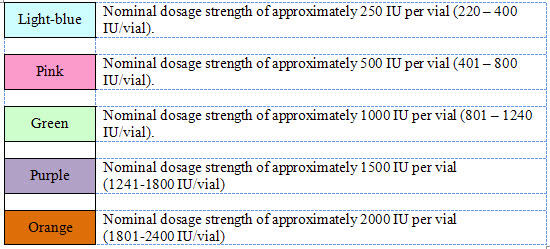
Always check the potency printed on the label to make sure you are using the strength prescribed by your doctor. Always check the expiration date printed on the box. You should not use the product after the expiration date printed on the box.
How do I store RECOMBINATE [Antihemophilic Factor (Recombinant)]?
RECOMBINATE vials containing powdered product (without sterile diluent added) should be stored in a refrigerator (2° to 8°C [36° to 46°F]) or at room temperature (up to 30°C [86°F]).
If you choose to store RECOMBINATE at room temperature:
- it should remain at room temperature until infused.
- do not put room temperature product back in the refrigerator.
Store vials in their original box and protect them from extreme exposure to light.
Do not freeze.
Reconstituted product (after mixing dry product with wet diluent) must be used within 3 hours and cannot be stored or refrigerated. Any RECOMBINATE left in the vial at the end of your infusion should be discarded.
What else should I know about RECOMBINATE [Antihemophilic Factor (Recombinant)] and hemophilia A?
Your body may form inhibitors to Factor VIII. An inhibitor is part of the body's normal defense system. If you form inhibitors, it may stop RECOMBINATE from working properly. Call your healthcare provider right away if your bleeding does not stop after taking RECOMBINATE. Consult with your healthcare provider to make sure you are carefully monitored with blood tests for the development of inhibitors to Factor VIII.
Resources at Takeda available to the patients:
Contact Takeda for more product information: 1-877-TAKEDA-7 (1-877-825-3327).
INSTRUCTIONS FOR USE RECOMBINATE [Antihemophilic Factor (Recombinant)](For intravenous use only)
Do not attempt to do an infusion to yourself unless you have been taught how by your doctor or hemophilia center.
1. In a quiet place, prepare a clean flat surface and gather all the materials you will need for the infusion. Check the expiration date, and let the vial with the RECOMBINATE concentrate and the Sterile Water for Injection, USP (diluent) warm up to room temperature. Wash your hands and put on clean exam gloves. If infusing yourself at home, the use of gloves is optional.
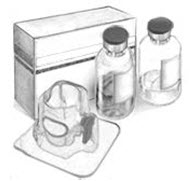
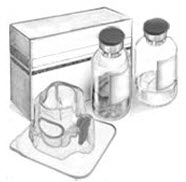
2. Remove caps from the RECOMBINATE concentrate and diluent vials to expose the centers of the rubber stoppers.
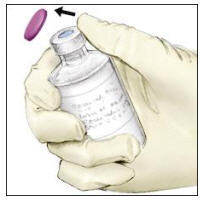
3. Disinfect the stoppers with an alcohol swab (or other suitable solution suggested by your doctor or hemophilia center) by rubbing the stoppers firmly for several seconds, and allow to dry prior to use. Place the vials on a flat surface.
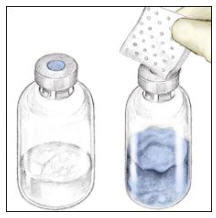
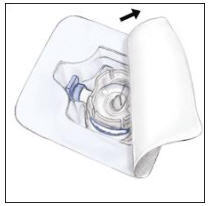
4. Open the BAXJECT II device package by peeling away the lid, without touching the inside of the package. Do not remove the BAXJECT II device from the package.
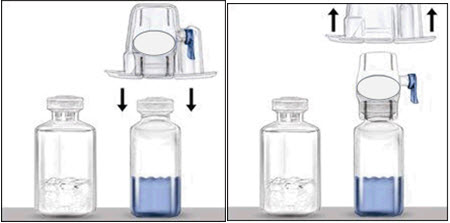
5. Turn the package with the BAXJECT II device upside down, and place it over the top of the diluent vial. Fully insert the clear plastic spike of the device into the center of the diluent vial's stopper by pushing straight down. Grip the package at its edge and lift it off the device. Be careful not to touch the white plastic spike. Do not remove the blue cap from the BAXJECT II device.
The diluent vial now has the BAXJECT II device connected to it and is ready to be connected to the RECOMBINATE vial.
6. To connect the diluent vial to the RECOMBINATE vial, turn the diluent vial over and place it on top of the vial containing RECOMBINATE concentrate. Fully insert the white plastic spike into the RECOMBINATE vial's stopper by pushing straight down. Diluent will flow into the RECOMBINATE vial. This should be done right away to keep the liquid free of germs.
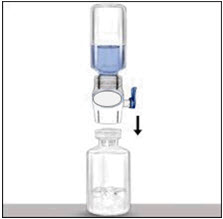
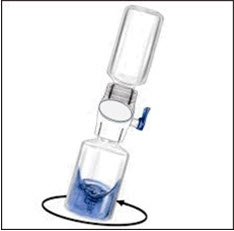
7. Swirl the connected vials gently and continuously until the RECOMBINATE is completely dissolved. Do not shake. The RECOMBINATE solution should be colorless to light-yellow in appearance. If not, do not use it and notify Takeda Pharmaceuticals U.S.A., Inc. immediately.
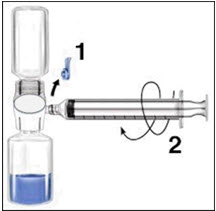
8. Take off the blue cap from the BAXJECT II device and connect the syringe. BE CAREFUL TO NOT INJECT AIR.
9. Turn over the connected vials so that the RECOMBINATE vial is on top. Draw the RECOMBINATE solution into the syringe by pulling back the plunger slowly. Disconnect the syringe from the vials. Attach the infusion needle to the syringe using a winged (butterfly) infusion set, if available. Point the needle up and remove any air bubbles by gently tapping the syringe with your finger and slowly and carefully pushing air out of the syringe and needle.
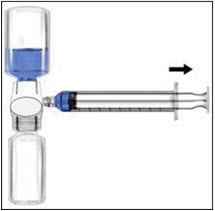
If you are using more than one vial of RECOMBINATE, the contents of more than one vial may be drawn into the same syringe. However, you will need a separate diluent and BAXJECT II device to mix each additional vial of RECOMBINATE.
10. Apply a tourniquet, and get the injection site ready by wiping the skin well with an alcohol swab (or other suitable solution suggested by your doctor or hemophilia center).
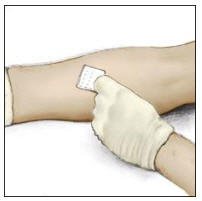
11. Insert the needle into the vein, and remove the tourniquet. Slowly infuse the RECOMBINATE. Do not infuse any faster than 5 mL per minute for RECOMBINATE dissolved with 5 mL of sWFI. Redness of the skin or irritation may be seen when infusing RECOMBINATE dissolved with 5 mL diluent.
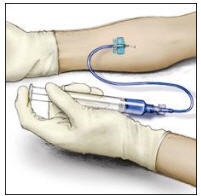
12. Take the needle out of the vein and use sterile gauze to put pressure on the infusion site for several minutes.
Do not recap the needle. Place it with the used syringe in a hard-walled Sharps container for proper disposal.
13. Remove the peel-off label from the RECOMBINATE vial and place it in your logbook. Clean any spilled blood with a freshly prepared mixture of 1 part bleach and 9 parts water, soap and water, or any household disinfecting solution.
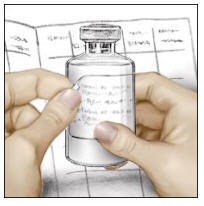
14. Dispose of the used vials and BAXJECT II system in your hard-walled Sharps container, without taking them apart. Do not dispose of these supplies in ordinary household trash.
Important: Contact your doctor or local Hemophilia Treatment Center if you experience any problems.
Takeda Pharmaceuticals U.S.A., Inc.
Lexington, MA 02421
U.S. License No. 1898
BAXJECT® and RECOMBINATE® are registered trademarks of Baxalta Incorporated.
TAKEDA® and the TAKEDA Logo® are registered trademarks of Takeda Pharmaceutical Company Limited.
Revised: 3/2023
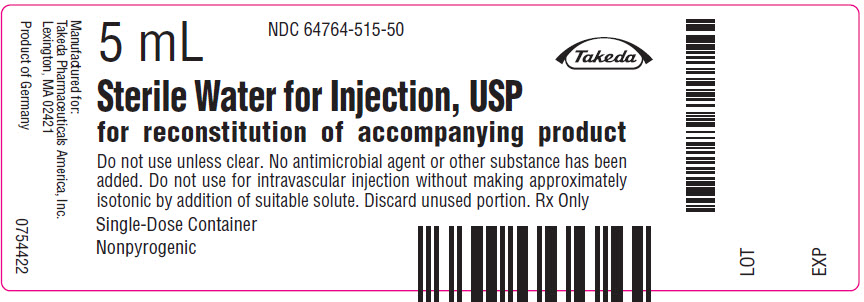
PRINCIPAL DISPLAY PANEL - 5 mL Vial Label
5 mL
NDC 64764-515-50
Takeda
Sterile Water for Injection, USP
for reconstitution of accompanying product
Do not use unless clear. No antimicrobial agent or other substance has been
added. Do not use for intravascular injection without making approximately
isotonic by addition of suitable solute. Discard unused portion. Rx Only
Single-Dose Container
Nonpyrogenic
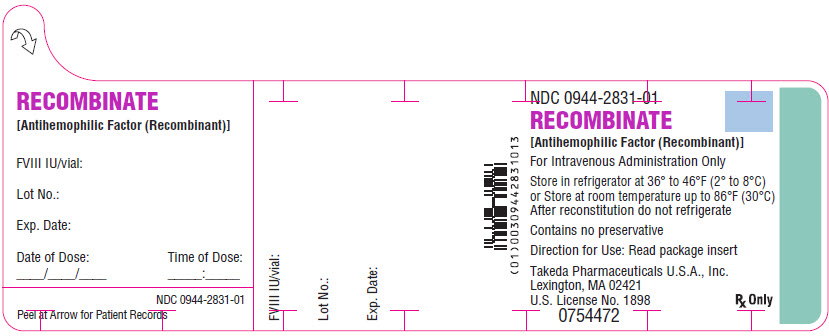
PRINCIPAL DISPLAY PANEL - 10 mL Vial Label - 250 IU
NDC 0944-2831-01
RECOMBINATE
[Antihemophilic Factor (Recombinant)]
For Intravenous Administration Only
Store in refrigerator at 36° to 46°F (2° to 8°C)
or Store at room temperature up to 86°F (30°C)
After reconstitution do not refrigerate
Contains no preservative
Direction for Use: Read package insert
Takeda Pharmaceuticals U.S.A., Inc.
Lexington, MA 02421
U.S. License No. 1898
Rx Only
0754472
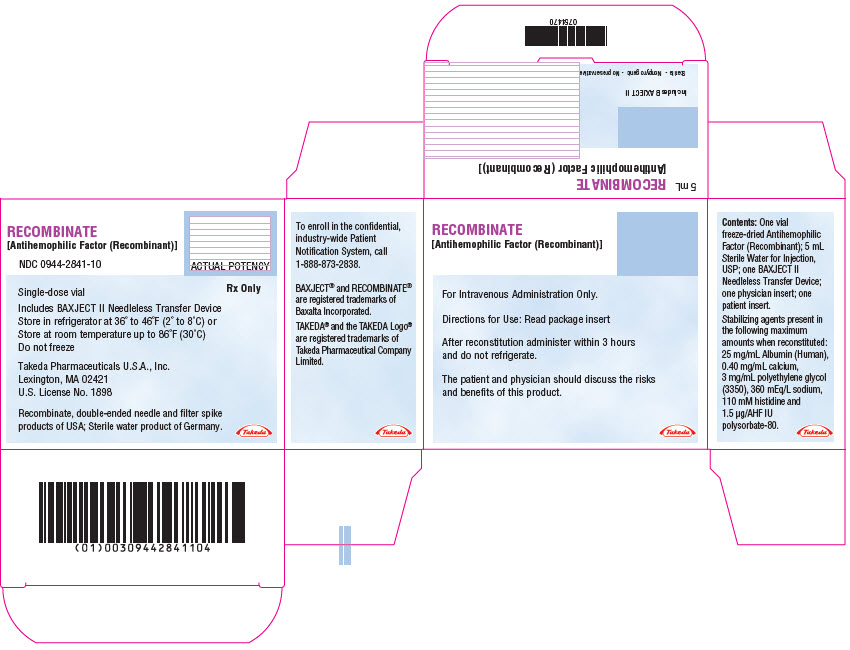
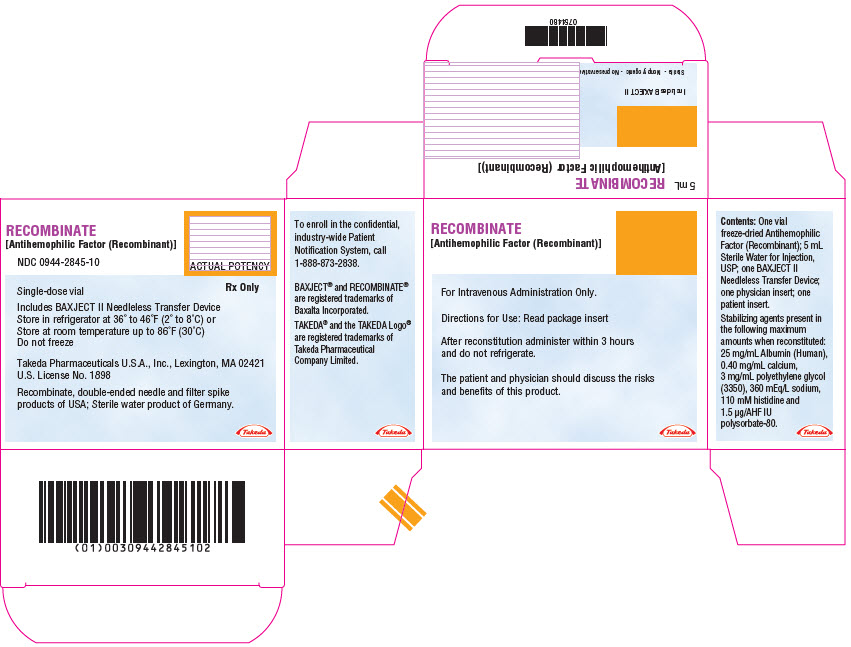
PRINCIPAL DISPLAY PANEL - Kit Carton - 250 IU
RECOMBINATE
[Antihemophilic Factor (Recombinant)]
NDC 0944-2841-10
ACTUAL POTENCY
Rx Only
Single-dose vial
Includes BAXJECT II Needleless Transfer Device
Store in refrigerator at 36° to 46°F (2° to 8°C) or
Store at room temperature up to 86°F (30°C)
Do not freeze
Takeda Pharmaceuticals U.S.A., Inc.
Lexington, MA 02421
U.S. License No. 1898
Recombinate, double-ended needle and filter spike
products of USA; Sterile water product of Germany.
Takeda
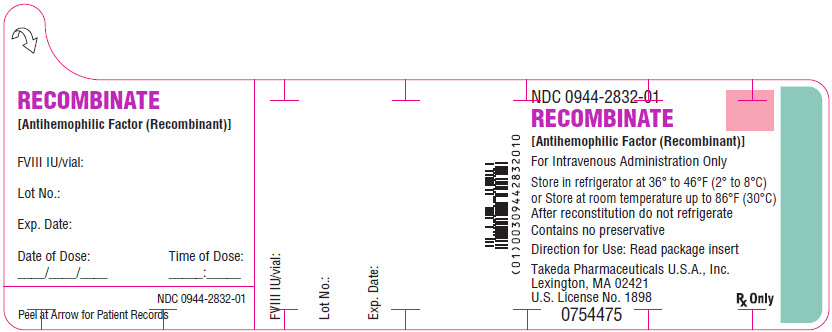
PRINCIPAL DISPLAY PANEL - 10 mL Vial Label - 500 IU
NDC 0944-2832-01
RECOMBINATE
[Antihemophilic Factor (Recombinant)]
For Intravenous Administration Only
Store in refrigerator at 36° to 46°F (2° to 8°C)
or Store at room temperature up to 86°F (30°C)
After reconstitution do not refrigerate
Contains no preservative
Direction for Use: Read package insert
Takeda Pharmaceuticals U.S.A., Inc.
Lexington, MA 02421
U.S. License No. 1898
Rx Only
0754475
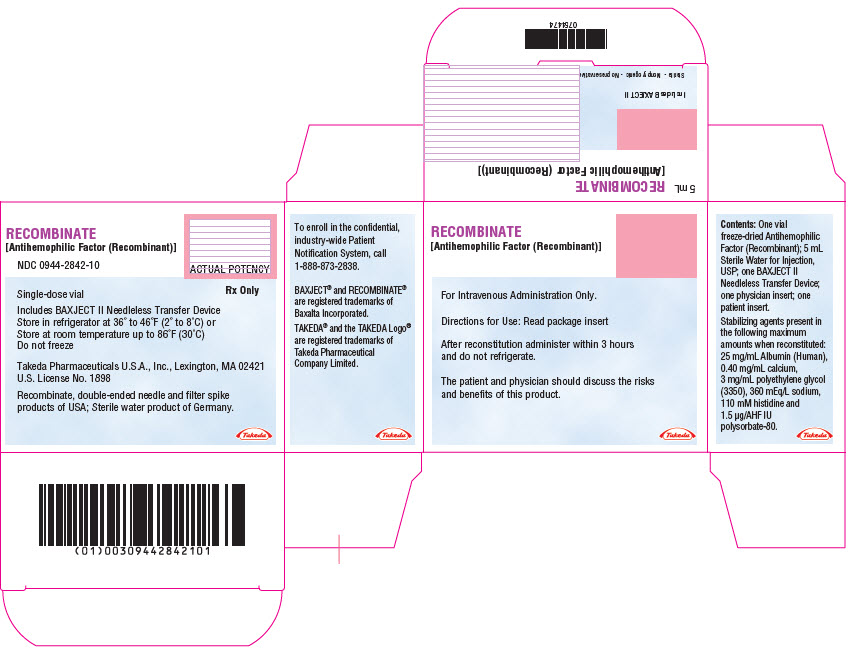
PRINCIPAL DISPLAY PANEL - Kit Carton - 500 IU
RECOMBINATE
[Antihemophilic Factor (Recombinant)]
NDC 0944-2842-10
ACTUAL POTENCY
Rx Only
Single-dose vial
Includes BAXJECT II Needleless Transfer Device
Store in refrigerator at 36° to 46°F (2° to 8°C) or
Store at room temperature up to 86°F (30°C)
Do not freeze
Takeda Pharmaceuticals U.S.A., Inc., Lexington, MA 02421
U.S. License No. 1898
Recombinate, double-ended needle and filter spike
products of USA; Sterile water product of Germany.
Takeda
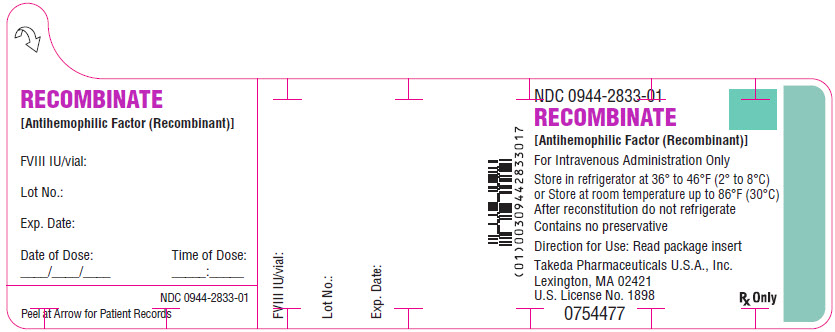
PRINCIPAL DISPLAY PANEL - 10 mL Vial Label - 1000 IU
NDC 0944-2833-01
RECOMBINATE
[Antihemophilic Factor (Recombinant)]
For Intravenous Administration Only
Store in refrigerator at 36° to 46°F (2° to 8°C)
or Store at room temperature up to 86°F (30°C)
After reconstitution do not refrigerate
Contains no preservative
Direction for Use: Read package insert
Takeda Pharmaceuticals U.S.A., Inc.
Lexington, MA 02421
U.S. License No. 1898
Rx Only
0754477
PRINCIPAL DISPLAY PANEL - Kit Carton - 1000 IU
RECOMBINATE
[Antihemophilic Factor (Recombinant)]
NDC 0944-2843-10
ACTUAL POTENCY
Rx Only
Single-dose vial
Includes BAXJECT II Needleless Transfer Device
Store in refrigerator at 36° to 46°F (2° to 8°C) or
Store at room temperature up to 86°F (30°C)
Do not freeze
Takeda Pharmaceuticals U.S.A., Inc., Lexington, MA 02421
U.S. License No. 1898
Recombinate, double-ended needle and filter spike
products of USA; Sterile water product of Germany.
Takeda
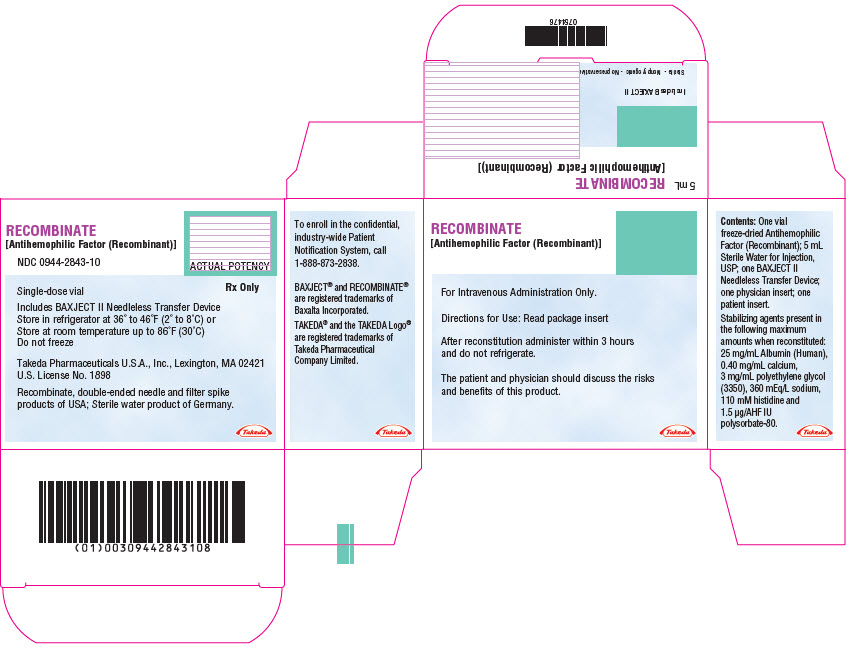
PRINCIPAL DISPLAY PANEL - 10 mL Vial Label - 1500 IU
NDC 0944-2834-01
RECOMBINATE
[Antihemophilic Factor (Recombinant)]
For Intravenous Administration Only
Store in refrigerator at 36° to 46°F (2° to 8°C)
or Store at room temperature up to 86°F (30°C)
After reconstitution do not refrigerate
Contains no preservative
Direction for Use: Read package insert
Takeda Pharmaceuticals U.S.A., Inc.
Lexington, MA 02421
U.S. License No. 1898
Rx Only
0754479
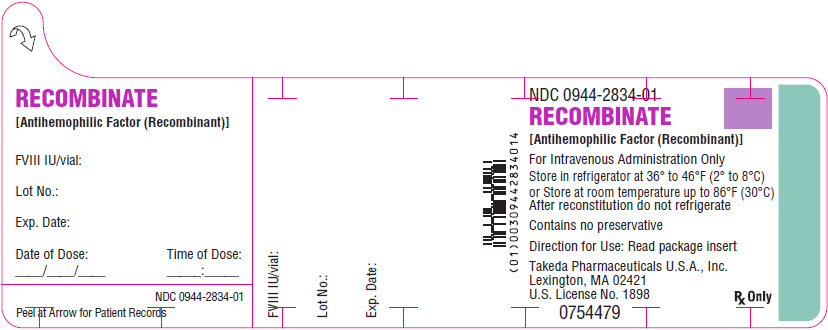
PRINCIPAL DISPLAY PANEL - Kit Carton - 1500 IU
RECOMBINATE
[Antihemophilic Factor (Recombinant)]
NDC 0944-2844-10
ACTUAL POTENCY
Rx Only
Single-dose vial
Includes BAXJECT II Needleless Transfer Device
Store in refrigerator at 36° to 46°F (2° to 8°C) or
Store at room temperature up to 86°F (30°C)
Do not freeze
Takeda Pharmaceuticals U.S.A., Inc., Lexington, MA 02421
U.S. License No. 1898
Recombinate, double-ended needle and filter spike
products of USA; Sterile water product of Germany.
Takeda
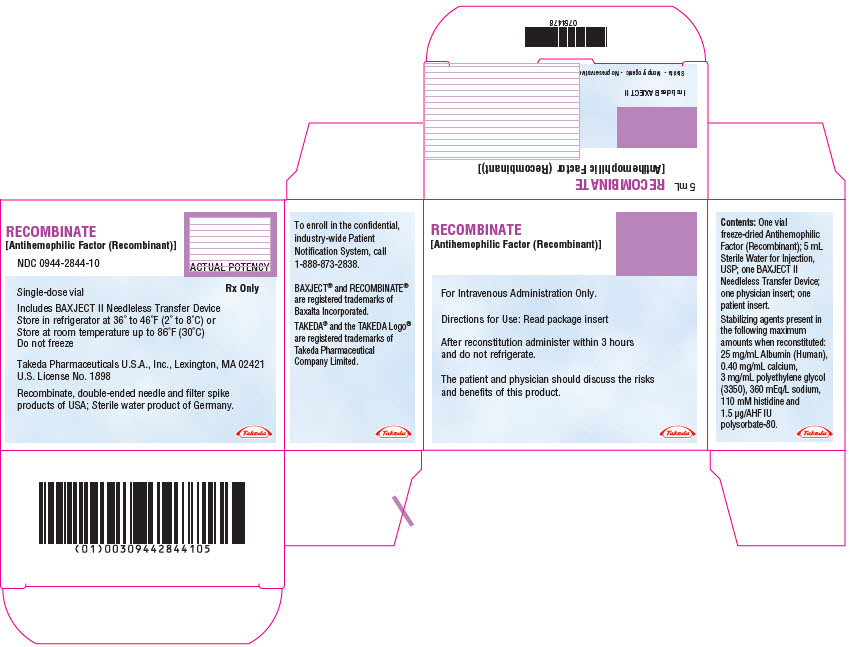
PRINCIPAL DISPLAY PANEL - 10 mL Vial Label - 2000 IU
NDC 0944-2835-01
RECOMBINATE
[Antihemophilic Factor (Recombinant)]
For Intravenous Administration Only
Store in refrigerator at 36° to 46°F (2° to 8°C)
or Store at room temperature up to 86°F (30°C)
After reconstitution do not refrigerate
Contains no preservative
Direction for Use: Read package insert
Takeda Pharmaceuticals U.S.A., Inc.
Lexington, MA 02421
U.S. License No. 1898
Rx Only
0754481
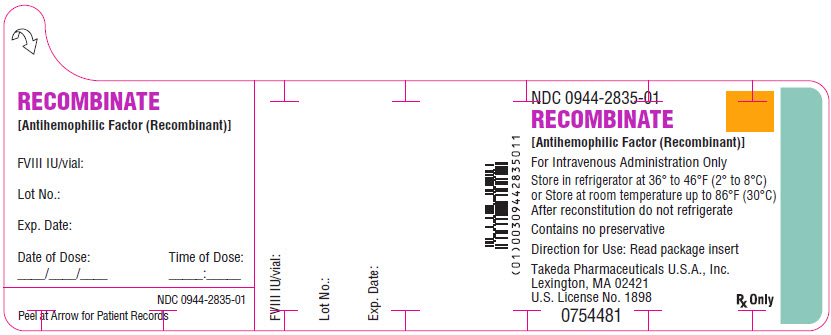
PRINCIPAL DISPLAY PANEL - Kit Carton - 2000 IU
RECOMBINATE
[Antihemophilic Factor (Recombinant)]
NDC 0944-2845-10
ACTUAL POTENCY
Rx Only
Single-dose vial
Includes BAXJECT II Needleless Transfer Device
Store in refrigerator at 36° to 46°F (2° to 8°C) or
Store at room temperature up to 86°F (30°C)
Do not freeze
Takeda Pharmaceuticals U.S.A., Inc., Lexington, MA 02421
U.S. License No. 1898
Recombinate, double-ended needle and filter spike
products of USA; Sterile water product of Germany.
Takeda
| RECOMBINATE
antihemophilic factor recombinant kit |
||||||||||||||||
|
||||||||||||||||
|
||||||||||||||||
|
||||||||||||||||
|
||||||||||||||||
|
||||||||||||||||
|
||||||||||||||||
|
||||||||||||||||
|
||||||||||||||||
|
||||||||||||||||
|
||||||||||||||||
|
||||||||||||||||
|
||||||||||||||||
|
||||||||||||||||
|
||||||||||||||||
|
||||||||||||||||
| RECOMBINATE
antihemophilic factor recombinant kit |
||||||||||||||||
|
||||||||||||||||
|
||||||||||||||||
|
||||||||||||||||
|
||||||||||||||||
|
||||||||||||||||
|
||||||||||||||||
|
||||||||||||||||
|
||||||||||||||||
|
||||||||||||||||
|
||||||||||||||||
|
||||||||||||||||
|
||||||||||||||||
|
||||||||||||||||
|
||||||||||||||||
|
||||||||||||||||
| RECOMBINATE
antihemophilic factor recombinant kit |
||||||||||||||||
|
||||||||||||||||
|
||||||||||||||||
|
||||||||||||||||
|
||||||||||||||||
|
||||||||||||||||
|
||||||||||||||||
|
||||||||||||||||
|
||||||||||||||||
|
||||||||||||||||
|
||||||||||||||||
|
||||||||||||||||
|
||||||||||||||||
|
||||||||||||||||
|
||||||||||||||||
|
||||||||||||||||
| RECOMBINATE
antihemophilic factor recombinant kit |
||||||||||||||||
|
||||||||||||||||
|
||||||||||||||||
|
||||||||||||||||
|
||||||||||||||||
|
||||||||||||||||
|
||||||||||||||||
|
||||||||||||||||
|
||||||||||||||||
|
||||||||||||||||
|
||||||||||||||||
|
||||||||||||||||
|
||||||||||||||||
|
||||||||||||||||
|
||||||||||||||||
|
||||||||||||||||
| RECOMBINATE
antihemophilic factor recombinant kit |
||||||||||||||||
|
||||||||||||||||
|
||||||||||||||||
|
||||||||||||||||
|
||||||||||||||||
|
||||||||||||||||
|
||||||||||||||||
|
||||||||||||||||
|
||||||||||||||||
|
||||||||||||||||
|
||||||||||||||||
|
||||||||||||||||
|
||||||||||||||||
|
||||||||||||||||
|
||||||||||||||||
|
||||||||||||||||
| Labeler - Takeda Pharmaceuticals America, Inc. (039997266) |
| Establishment | |||
| Name | Address | ID/FEI | Business Operations |
|---|---|---|---|
| Baxalta US Inc. | 009471603 | MANUFACTURE, LABEL | |
More about Recombinate (antihemophilic factor)
- Check interactions
- Compare alternatives
- Pricing & coupons
- Reviews (1)
- Side effects
- Dosage information
- During pregnancy
- Drug class: miscellaneous coagulation modifiers
- Breastfeeding
- En español
Patient resources
Professional resources
Other brands
Advate, Jivi, Altuviiio, Eloctate, ... +12 more