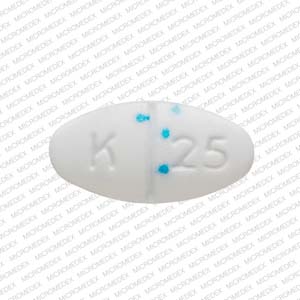
Phentermine (Monograph)
Brand names: Adipex-P, Ionamin, Phentride, Teramine
Drug class: Amphetamine Derivatives
VA class: GA751
CAS number: 122-09-8
Introduction
Amphetamine congener; anorexigenic agent.
Uses for Phentermine
Exogenous Obesity
Adjunct to exercise, behavioral modification, and caloric restriction in the short-term management (a few weeks) of exogenous obesity.
May use in patients with no underlying risk factor but a pretreatment body mass index (BMI) of ≥30 kg/m2 and in those with an underlying risk factor (e.g., hypertension, diabetes mellitus, hyperlipidemia) and a pretreatment BMI of ≥27 kg/m2.
Use only for short-term monotherapy; not for use in combination with any other drug for weight loss, including SSRI antidepressants (e.g., fluoxetine, fluvoxamine, paroxetine, sertraline) or MAO inhibitors. (See Warnings under Cautions.)
Phentermine Dosage and Administration
General
-
Teach patient to curtail overeating and consume a suitable diet to help induce and maintain weight loss.
Administration
Oral Administration
Administer phentermine resin complex capsule before breakfast or 10–14 hours before retiring; swallow capsule whole.
Administer phentermine hydrochloride 37.5-mg capsule or tablet (Adipex-P) before or 1–2 hours after breakfast; avoid late evening administration because of possible insomnia.
Dosage
Available as phentermine resin complex; dosage expressed in terms of phentermine. Also available as phentermine hydrochloride; dosage expressed in terms of phentermine hydrochloride.
Adjust dosage according to individual response and tolerance; use the smallest dosage required to produce the desired response.
Adults
Exogenous Obesity
Oral
Phentermine (as resin complex): Usual dosage is 15 or 30 mg once daily.
Phentermine hydrochloride: Usual dosage is 8 mg 3 times daily (given 30 minutes before meals) or 15–37.5 mg once daily (in the morning). Alternatively, 18.75 mg twice daily.
Special Populations
Geriatric Patients
Select dosage with caution, starting at lower end of dosage range. \
Related/similar drugs
Mounjaro, semaglutide, Wegovy, Zepbound, Saxenda, Alli
Cautions for Phentermine
Contraindications
-
Symptomatic cardiovascular disease, hyperthyroidism, moderate to severe hypertension, glaucoma, or advanced arteriosclerosis.
-
Agitated state or history of drug abuse.
-
Within 14 days of MAO inhibitor therapy.
-
Known hypersensitivity or idiosyncrasy to sympathomimetic amines.
Warnings/Precautions
Warnings
Concomitant Drug Therapy for Weight Loss
Avoid concomitant use with other drugs for weight loss, including anorexigenic agents (e.g., phendimetrazine), SSRI antidepressants (e.g., fluoxetine, fluvoxamine, paroxetine, sertraline), and MAO inhibitors, since severe adverse reactions may occur. (See Specific Drugs under Interactions.)
Primary Pulmonary Hypertension
Risk of primary pulmonary hypertension (frequently fatal) when used in combination with at least one other anorexigenic agent, including dexfenfluramine or fenfluramine (both no longer commercially available in the US) or phendimetrazine or in those with a history of receiving at least one other anorexigenic agent.
Risk with use of phentermine alone cannot be ruled out; primary pulmonary hypertension reported rarely in patients receiving phentermine alone.
Discontinue if new, unexplained symptoms of dyspnea, angina, syncope, or edema of the lower extremities occur, and evaluate for possible pulmonary hypertension.
Valvular Heart Disease
Risk of serious regurgitant valvular (principally mitral, aortic, and/or tricuspid; usually multivalvular) heart disease when used in combination with phendimetrazine or with dexfenfluramine or fenfluramine (both no longer commercially available in the US).
Risk with use of phentermine alone cannot be ruled out; valvular heart disease reported rarely in patients receiving phentermine alone.
Medical history and cardiovascular examination are recommended for patients who received dexfenfluramine or fenfluramine alone or in combination with other anorexigenic drugs (e.g., phentermine). Perform echocardiogram in those with signs/symptoms suggestive of valvular heart disease and base subsequent testing and/or treatment on the specific valve lesions. Strongly consider performing echocardiographic evaluation in all patients exposed to these anorexigenic agents who are about to undergo invasive procedures for which anti-infective prophylaxis for bacterial endocarditis is indicated. In case of emergency procedures when cardiac evaluation cannot be performed, administer preventive anti-infective therapy.
Tolerance to Anorexigenic Effect
Tolerance to anorexigenic effect usually develops within a few weeks. When it does, discontinue therapy; do not attempt to increase effect by exceeding recommended dosage.
CNS Effects
Performance of activities requiring mental alertness or physical coordination may be impaired.
Abuse Potential
Potential for abuse; habituation or addiction reported with similar drugs (e.g., amphetamines).
Manifestations of chronic intoxication may include psychosis resembling schizophrenia, severe dermatoses, marked insomnia, irritability, hyperactivity, and personality changes.
Abrupt discontinuance following prolonged high dosage may result in extreme fatigue, depression, and sleep EEG changes.
General Precautions
Prescribe and dispense in the smallest feasible quantity to minimize possibility of overdosage.
Hypertension
Use with caution in patients with mild hypertension; monitor BP closely. Contraindicated in those with moderate or severe hypertension.
Diabetes Mellitus
Use with caution in patients with diabetes mellitus; insulin requirements may decrease in association with phentermine use and the concomitant dietary regimen and weight loss.
Specific Populations
Pregnancy
Category C.
Whether potential benefits outweigh risks is questionable; use during pregnancy (especially during the first trimester) probably should be considered a contraindication.
Lactation
Not known whether phentermine is distributed into milk. Discontinue nursing or the drug.
Pediatric Use
Safety and efficacy not established; use not recommended in children <16 years of age.
Geriatric Use
Insufficient experience in patients ≥65 years of age to determine whether geriatric patients respond differently than younger adults; select dosage with caution, starting at lower end of dosage range, due to greater frequency of decreased hepatic, renal, and/or cardiac function and of concomitant disease and drug therapy observed in the elderly. Monitoring of renal function may be useful.
Renal Impairment
Use with caution; clearance may be decreased and risk of toxicity increased.
Common Adverse Effects
Palpitation, tachycardia, increased BP, overstimulation, restlessness, insomnia, tremor, dizziness, headache, euphoria, dysphoria, dryness of the mouth, unpleasant taste, diarrhea, constipation, vomiting, other GI disturbances, urticaria, impotence, changes in libido.
Drug Interactions
Specific Drugs
|
Drug |
Interaction |
Comments |
|---|---|---|
|
α-Adrenergic blocking agents (e.g., guanethidine [no longer commercially available in the US]) |
Decreased hypotensive effect |
|
|
Alcohol |
Risk of adverse interaction |
|
|
Anorexigenic agents (e.g., phendimetrazine; dexfenfluramine or fenfluramine [both no longer commercially available in the US]) |
Potential valvuar heart disease and primary pulmonary hypertension |
Do not use in combination with other anorexigenic agents |
|
Antidepressants, SSRI (e.g., fluoxetine, fluvoxamine, paroxetine, sertraline) |
Potentially severe adverse reactions |
Concomitant use not recommended |
|
MAO inhibitors |
Potential for hypertensive crisis |
Phentermine use within 14 days of MAO inhibitor use is contraindicated |
Phentermine Pharmacokinetics
Absorption
Bioavailability
Absorption from resin complex formulation is slower and peak blood concentration is decreased but prolonged compared with the same dose of phentermine hydrochloride; no substantial difference in prolongation of blood levels with resin complex.
Elimination
Elimination Route
Excreted substantially in urine.
Stability
Storage
Oral
Phentermine Hydrochloride Capsules and Tablets
15–30°C.
Phentermine Resin Complex Capsules
25°C (may be exposed to 15–13°C).
Actions
-
Produces anorexigenic effect and loss of weight.
-
Like other amphetamine derivatives, has no primary effect on appetite; anorexigenic action probably is secondary to CNS stimulation.
-
Inhibits uptake of norepinephrine and dopamine.
-
Combined therapy with serotoninergic fenfluramine (no longer commercially available in the US) may have provided complementary anorexigenic effects and had been used to manage obesity; however, fenfluramine hydrochloride (Pondimin) and dexfenfluramine hydrochloride (Redux) were withdrawn from the US market in 1997 because of adverse effects associated with the drugs. (See Warnings under Cautions.)
-
Potential for drug to impair mental alertness or physical coordination; avoid driving or operating machinery until effects on individual are known.
-
Importance of immediately informing clinicians if any deterioration in exercise tolerance occurs.
-
Importance of informing clinicians of existing or contemplated concomitant therapy, including prescription and OTC drugs, and alcohol consumption.
-
Importance of women informing clinicians if they are or plan to become pregnant or plan to breast-feed.
-
Importance of informing patients of other important precautionary information. (See Cautions.)
Preparations
Excipients in commercially available drug preparations may have clinically important effects in some individuals; consult specific product labeling for details.
Please refer to the ASHP Drug Shortages Resource Center for information on shortages of one or more of these preparations.
Subject to control under the Federal Controlled Substances Act of 1970 as schedule IV (C-IV) drugs.
|
Routes |
Dosage Forms |
Strengths |
Brand Names |
Manufacturer |
|---|---|---|---|---|
|
Oral |
Capsules |
15 mg (of phentermine) |
Ionamin (C-IV) |
Celltech |
|
30 mg (of phentermine) |
Ionamin (C-IV) |
Celltech |
* available from one or more manufacturer, distributor, and/or repackager by generic (nonproprietary) name
|
Routes |
Dosage Forms |
Strengths |
Brand Names |
Manufacturer |
|---|---|---|---|---|
|
Oral |
Capsules |
37.5 mg* |
Adipex-P (C-IV) |
Gate |
|
Tablets |
37.5 mg* |
Adipex-P (C-IVscored) |
Gate |
AHFS DI Essentials™. © Copyright 2024, Selected Revisions November 20, 2012. American Society of Health-System Pharmacists, Inc., 4500 East-West Highway, Suite 900, Bethesda, Maryland 20814.
Reload page with references included
Frequently asked questions
More about phentermine
- Check interactions
- Compare alternatives
- Pricing & coupons
- Reviews (3,006)
- Drug images
- Side effects
- Dosage information
- Patient tips
- During pregnancy
- Support group
- Drug class: anorexiants
- Breastfeeding
- En español
Patient resources
Professional resources
- Phentermine prescribing information
- Phentermine Capsules (FDA)
- Phentermine Extended Release (FDA)
- Phentermine ODT Tablets (FDA)