Pegfilgrastim (Monograph)
Brand name: Neulasta;Fulphila; Fylnetra; Nyvepria; Stimufend; Udenyca; Ziextenzo
Drug class: Hematopoietic Agents
Introduction
Pegfilgrastim, a covalent conjugate of filgrastim and monomethoxypolyethylene glycol, is a biosynthetic hematopoietic agent that principally affects the proliferation and differentiation of neutrophils within the bone marrow.
Pegfilgrastim-jmdb, pegfilgrastim-pbbk, pegfilgrastim-apgf, pegfilgrastim-fpgk, pegfilgrastim-cbqv, and pegfilgrastim-bmez are biosimilar to pegfilgrastim (Neulasta). A biosimilar is a biological that is highly similar to an FDA-licensed reference biological with the exception of minor differences in clinically inactive components and for which there are no clinically meaningful differences in safety, purity, or potency. Biosimilars are approved through an abbreviated licensure pathway that establishes biosimilarity between a proposed biological and reference biological but does not independently establish safety and effectiveness of the proposed biological. In order to be considered an interchangeable biosimilar, a biological product must meet additional requirements beyond demonstrating biosimilarity to its reference product. None of the available pegfilgrastim biosimilars have interchangeable data at this time.
Related/similar drugs
filgrastim, Neulasta, Zarxio, Neupogen, Nivestym, Udenyca, Granix
Uses for Pegfilgrastim
Chemotherapy-induced Neutropenia
Pegfilgrastim (Neulasta) and its biosimilars: reduces the incidence of infection, as seen by the presence of febrile neutropenia, in patients with non-myeloid malignancies administered myelosuppressive chemotherapeutic agents associated with a clinically significant incidence of febrile neutropenia.
Clinical practice guidelines on use of myeloid growth factors focus on recommendations for the use of these agents in reducing the risk of febrile neutropenia in patients at increased risk for associated complications. ASCO specifically states that pegfilgrastim and biosimilars can be used for prevention of treatment-related febrile neutropenia and that choice of agent depends on convenience, costs, and clinical situation.
Acute Exposure to Myelosuppressive Doses of Radiation
Pegfilgrastim (Neulasta) and the biosimilar (pegfilgrastim-cbqv): improves survival in patients acutely exposed to myelosuppressive radiation doses.
Pegfilgrastim Dosage and Administration
General
Patient Monitoring
-
Monitor patients for signs and symptoms of serious allergic reactions during therapy.
-
Monitor platelet count and CBC during therapy.
-
Monitor for the development of left upper abdominal or shoulder pain during therapy.
-
Monitor for signs and symptoms of myelodysplastic syndrome (MDS)/acute myeloid leukemia (AML) in patients with breast and lung cancer who use pegfilgrastim products concomitantly with chemotherapy and/or radiotherapy.
-
Monitor for the development of sickle cell crisis in patients with sickle cell disorders.
-
Monitor kidney function as glomerulonephritis has been reported during therapy.
-
Monitor patients closely for the development of signs and symptoms of capillary leak syndrome during therapy (e.g., hypotension, hypoalbuminemia, edema, hemoconcentration).
-
Monitor patients for signs and symptoms of aortitis (e.g., fever, abdominal pain, malaise, back pain, increased inflammatory markers).
Dispensing and Administration Precautions
-
Missed or partial doses have been reported in patients administered pegfilgrastim via the on-body injector (OBI) – Neulasta Onpro kit. Patients should notify their healthcare provider to determine if a replacement dose is required if the device does not perform as intended.
-
The OBI contains acrylic adhesives, which may produce a significant reaction in patients who have a sensitivity to these adhesives.
-
Natural rubber (derived from latex) is contained in the needle cap of the prefilled syringe for some pegfilgrastim products (Neulasta, pegfilgrastim-fpgk, pegfilgrastim-bmez). Avoid use in patients with latex allergies.
-
The pegfilgrastim product prefilled syringes do not bear graduation marks, which are necessary to accurately measure doses <0.6 mL for direct administration to patients. Direct administration of doses <0.6 mL is not recommended due to the potential for dosing errors.
-
The Institute for Safe Medication Practices (ISMP) notes that the brand name Neulasta may be potentially confused with the brand names Lunesta, Nuedexta, and Neumega.
Administration
Administer pegfilgrastim products by sub-Q injection via a single-dose prefilled syringe.
Pegfilgrastim (Neulasta Onpro kit) is also administered sub-Q via an OBI, co-packaged with a single-dose prefilled syringe. Not recommended for use in patients acutely exposed to myelosuppressive doses of radiation and not evaluated in pediatric patients.
Fill the OBI with pegfilgrastim using the prefilled syringe and apply to intact, non-irritated skin on abdomen or back of arm (only if a caregiver is available). Administration of pegfilgrastim with the OBI can be initiated on the same day as chemotherapy, as long as the OBI delivers the drug no <24 hours after administration of chemotherapy.
Only use the prefilled syringe co-packaged in the Neulasta Onpro kit with the OBI. If the Neulasta Onprokit co-packaged prefilled syringe is used for manual sub-Q injection, an overdose will occur. Conversely, if the prefilled syringe for manual use is used with the OBI, the patient may receive less than the recommended dose.
Refer to the pegfilgrastim (Neulasta) product labeling for more detailed instructions on the use of the OBI.
Pegfilgrastim-cbqv (Udenyca) is also administered sub-Q via a single-dose prefilled autoinjector. Not suitable for use in pediatric patients who weigh <45 kg. Provide training to ensure that patients understand how to use and identify that a full dose has been administered.
Refer to the pegfilgrastim-cbqv product labeling for more detailed instructions on the use of the prefilled autoinjector.
Visually inspect for particulate matter and discoloration prior to administration. Do not administer if particulate matter or discoloration observed.
Dosage
Pediatric Patients
Chemotherapy-induced Neutropenia
Sub-Q
Pegfilgrastim or biosimilars (pegfilgrastim-jmdb, pegfilgrastim-pbbk, pegfilgrastim-apgf, pegfilgrastim-fpgk, pegfilgrastim-cbqv, pegfilgrastim-bmez): 6 mg once per chemotherapy cycle; dosing recommendations for pediatric patients weighing <45 kg (see Table 1).
Do not administer between 14 days before and 24 hours after administration of cytotoxic chemotherapy.
For patients <10 kg, administer 0.1 mg/kg (0.01 mL/kg).
|
Weight (kg) |
Pegfilgrastim Dose (mg) |
Volume to Administer (mL) |
|---|---|---|
|
<10 |
See footnote |
See footnote |
|
10-20 |
1.5 |
0.15 |
|
21-30 |
2.5 |
0.25 |
|
31-44 |
4 |
0.4 |
Acute Exposure to Myelosuppressive Doses of Radiation
Sub-Q
Pegfilgrastim (Neulasta) and pegfilgrastim-cbqv (Udenyca): 2 doses (6 mg each) given one week apart. Give the first dose as soon as possible after suspected or confirmed exposure to radiation doses >2 Gray. Administer the second dose 1 week after the initial dose. For pediatric patients weighing <45 kg, see Table 1.
Obtain a baseline CBC; do not delay therapy if a CBC is not readily available.
Estimate the level of radiation exposure via clinical findings, biodosimetry (if available), and information from public health authorities.
Adults
Chemotherapy-induced Neutropenia
Sub-Q
Pegfilgrastim or biosimilars (pegfilgrastim-jmdb, pegfilgrastim-pbbk, pegfilgrastim-apgf, pegfilgrastim-fpgk, pegfilgrastim-cbqv, pegfilgrastim-bmez): 6 mg once per chemotherapy cycle.
Do not administer between 14 days before and 24 hours after administration of cytotoxic chemotherapy.
Acute Exposure to Myelosuppressive Doses of Radiation
Sub-Q
Pegfilgrastim (Neulasta) and pegfilgrastim-cbqv (Udenyca): 2 doses (6 mg each) given one week apart. Give the first dose as soon as possible after suspected or confirmed exposure to radiation doses >2 Gray. Administer the second dose 1 week after the initial dose.
Obtain a baseline CBC; do not delay therapy if a CBC is not readily available.
Estimate the level of radiation exposure via clinical findings, biodosimetry (if available), and information from public health authorities.
Special Populations
Hepatic Impairment
No specific dosage recommendations.
Renal Impairment
No specific dosage recommendations.
Geriatric Use
No specific dosage recommendations.
Cautions for Pegfilgrastim
Contraindications
-
History of serious allergic reactions, including anaphylaxis, to pegfilgrastim or filgrastim products.
Warnings/Precautions
Splenic Rupture
Splenic rupture, including fatal cases, reported. Monitor patients for left upper abdominal pain or shoulder pain as these may be suggestive of an enlarged spleen or splenic rupture.
Acute Respiratory Distress Syndrome
Acute respiratory distress syndrome (ARDS) reported. Monitor patients for fever and lung infiltrates or respiratory distress as these may be suggestive of ARDS; discontinue in patients with ARDS.
Serious Allergic Reactions
Serious allergic reactions, including anaphylaxis, reported. Most occur upon initial exposure. Serious allergic reactions, including anaphylaxis, can recur within days after discontinuing treatment for the initial reaction; permanently discontinue in patients with serious allergic reactions. Do not administer to patients with a history of serious allergic reactions to these products or filgrastim.
Sickle Cell Disorders
Severe sickle cell crises, including fatal cases, reported in patients with sickle cell disorders; discontinue therapy if a crisis occurs.
Glomerulonephritis
Glomerulonephritis reported with therapy. If suspected, assess for the underlying etiology. If a pegfilgrastim product is the likely cause, reduce the dose or interrupt therapy.
Leukocytosis
Leukocytosis (WBC ≥100,000/mm3) reported with therapy; monitor CBC during treatment.
Thrombocytopenia
Thrombocytopenia reported with therapy; monitor platelet counts.
Capillary Leak Syndrome
Symptoms of capillary leak syndrome (e.g., hypotension, hypoalbuminemia, edema, hemoconcentration) may occur. May be life-threatening if treatment delayed; closely monitor patients who develop capillary leak syndrome and initiate symptomatic treatment.
Tumor Growth Stimulatory Effects
May potentially act as growth factors for any tumor type.
Myelodysplastic Syndrome (MDS) and Acute Myeloid Leukemia (AML) in Patients with Breast and Lung Cancer
Patients with breast and lung cancer who receive pegfilgrastim products in conjunction with chemotherapy and/or radiotherapy may potentially develop MDS and AML; monitor for signs and symptoms of MDS/AML.
Aortitis
Signs and symptoms of aortitis (e.g., fever, abdominal pain, malaise, back pain, and increased inflammatory markers) have been reported and may occur as soon as the initial week of treatment. Discontinue if aortitis suspected.
Nuclear Imaging
Transient positive bone imaging changes may occur due to increased hematopoietic bone marrow activity. Consider these changes when interpreting bone imaging results.
Allergies to Acrylics
The pegfilgrastim on-body injector (OBI) uses acrylic adhesive. May result in a significant allergic reaction in patients with sensitivity to acrylic adhesives.
Potential Device Failures
The pegfilgrastim OBI may not perform as intended, resulting in missed or partial doses. If suspected that the OBI has not performed as intended, patients should notify their healthcare provider immediately in order to determine the need for a replacement dose.
Immunogenicity
Anti-drug antibodies have been detected with use.
Specific Populations
Pregnancy
Insufficient data in pregnant women; however, there are data from published studies in pregnant women exposed to filgrastim products. These studies have not established a link between filgrastim use during pregnancy and adverse maternal or fetal outcomes.
Lactation
Not known if these products distribute into milk, affect milk production, or affect the breast-fed infant. Weigh the developmental and health benefits of breastfeeding along with the clinical need against any potential adverse effects of therapy on the breast-fed child.
Pediatric Use
Efficacy and safety of pegfilgrastim products have been established in pediatric patients. Based on postmarketing data and a review of the scientific literature, no safety differences between adult and pediatric patients identified.
Geriatric Use
No differences in effectiveness or safety observed between patients ≥65 years of age and younger patients.
Renal Impairment
No effect on pharmacokinetics of pegfilgrastim in a study involving 30 subjects with varying degrees of renal dysfunction.
Common Adverse Effects
Most common adverse reactions (≥5%): bone pain, pain in extremity.
Drug Interactions
No formal drug interaction studies performed.
Pegfilgrastim Pharmacokinetics
Elimination
Elimination Route
Conjugation of filgrastim with polyethylene glycol (PEG) results in delayed renal clearance (compared with filgrastim).
Neutrophil receptor binding is an important factor in pegfilgrastim clearance. Serum clearance is related to the number of circulating neutrophils; serum concentrations of the drug decline rapidly with resolution of neutropenia.
Half-life
Conjugation with PEG results in increased plasma half-life (15–80 hours) compared with filgrastim (about 3.5 hours).
Special Populations
Nonlinear pharmacokinetics in patients with cancer; clearance decreases with increasing dosages.
Stability
Storage
Parenteral
Injection
Store the prefilled syringe under refrigeration (2°-8°C) and protect from light; do not shake. Prior to administration, remove from refrigeration and allow to reach room temperature for at least 30 minutes (at least 15 to 30 minutes for pegfilgrastim-bmez). Do not freeze the prefilled syringe;however, if frozen, thaw in the refrigerator before use. Discard if frozen more than once.
Refer to the product labeling for specific information on when to dispose a prefilled syringe left at room temperature as time periods vary among products.
Store the pegfilgrastim (Neulasta Onpro kit) under refrigeration (2°-8°C) until 30 minutes prior to administration. Do not keep at room temperature for >12 hours prior to use. Discard if stored at room temperature for >12 hours. Do not use if packaging has been opened prior.
Store the pegfilgrastim-cbqv (Udenyca) single-dose prefilled autoinjector under refrigeration (2°-8°C), protect from light, and do not shake. Discard if left at room temperature for >48 hours. Do not freeze; however, if frozen, thaw in the refrigerator prior to use. Throw away if frozen more than one time.
Actions
-
Affects the proliferation and differentiation of neutrophils within the bone marrow.
-
Filgrastim used in the manufacture of pegfilgrastim is produced using recombinant DNA technology and cultures of Escherichia coli that have been genetically modified to incorporate the human G-CSF gene, and is identical to that contained in commercially available filgrastim (Neupogen).
-
Studies on cellular proliferation, receptor binding, and neutrophil function demonstrate that filgrastim and pegfilgrastim have the same mechanism of action.
Advice to Patients
-
Instruct patients who self-administer pegfilgrastim products as to the proper administration and disposal procedures.
-
Advise patients to avoid traveling, driving, or operating heavy machinery during hours 26 to 29 following application of the on-body injector (OBI) for Neulasta Onpro kit. Inform patients to have a caregiver nearby during first use of the OBI.
-
Train patients on the OBI regarding understanding as to when dose delivery will occur and how to monitor for completed dosage delivery.
-
Ensure that patients are able to identify signs of malfunction of the OBI for Neulasta Onpro kit and are able to contact their healthcare provider if there is a need for a replacement dose.
-
Inform patients with sensitivity to acrylic adhesives that the pegfilgrastim OBI uses this product. Use of the OBI may produce a significant reaction in these patients.
-
Advise patients of the potential risk of serious allergic reactions. Symptoms may include rash, shortness of breath, wheezing, dizziness, swelling around the mouth or eyes, fast heart rate, and sweating.
-
Inform patients of the potential risk for rupture of the spleen. Patients should report any pain in the left upper stomach area or left shoulder to their healthcare provider.
-
Advise patients of the risk for acute respiratory distress syndrome. Advise patients to contact their healthcare provider if any shortness of breath (with or without a fever), trouble breathing, or fast breathing occurs.
-
Inform patients with sickle cell disease to report any symptoms of sickle cell crisis (e.g., pain, difficulty breathing) to their healthcare provider.
-
Advise patients of the potential for kidney injury. Advise patients to contact their healthcare provider if any swelling of the face or ankles, blood in the urine or dark colored urine, or urination less frequently than normal occurs.
-
Advise patients to report any unusual bleeding or bruising to their healthcare provider.
-
Inform patients of the potential risk of capillary leak syndrome. Advise patients to contact emergency medical services if any of the following symptoms occur: trouble breathing, swelling of the stomach area and feeling of fullness, dizziness or feeling faint, swelling or puffiness, a reduction in urination, and a general feeling of tiredness.
-
Inform patients of the potential for aortitis (inflammation of the aorta). Advise patients to report any symptoms of aortitis (e.g., fever, abdominal pain, feeling tired, back pain) to their healthcare provider.
-
Advise patients with breast or lung cancer of the increased risk of development of myelodysplastic syndrome (MDS) or acute myeloid leukemia (AML) with therapy when used in conjunction with chemotherapy and/or radiotherapy. These patients should report any tiredness, fever, and easy bruising or bleeding to their healthcare provider.
-
Inform clinicians of existing or contemplated concomitant therapy, including prescription and OTC drugs and dietary or herbal supplements, as well as any concomitant illnesses.
-
Importance of women informing clinicians if they are or plan to become pregnant or plan to breast-feed.
-
Inform patients of other important precautionary information.
Additional Information
The American Society of Health-System Pharmacists, Inc. represents that the information provided in the accompanying monograph was formulated with a reasonable standard of care, and in conformity with professional standards in the field. Readers are advised that decisions regarding use of drugs are complex medical decisions requiring the independent, informed decision of an appropriate health care professional, and that the information contained in the monograph is provided for informational purposes only. The manufacturer’s labeling should be consulted for more detailed information. The American Society of Health-System Pharmacists, Inc. does not endorse or recommend the use of any drug. The information contained in the monograph is not a substitute for medical care.
Preparations
Excipients in commercially available drug preparations may have clinically important effects in some individuals; consult specific product labeling for details.
Please refer to the ASHP Drug Shortages Resource Center for information on shortages of one or more of these preparations.
|
Routes |
Dosage Forms |
Strengths |
Brand Names |
Manufacturer |
|---|---|---|---|---|
|
Parenteral |
Injection, for subcutaneous use |
6 mg/0.6 mL |
Neulasta (available in prefilled disposable syringes) |
Amgen |
|
6 mg/0.6 mL |
Neulasta Onpro kit (available in prefilled syringe co-packaged with an on-body injector) |
|
Routes |
Dosage Forms |
Strengths |
Brand Names |
Manufacturer |
|---|---|---|---|---|
|
Parenteral |
Injection, for subcutaneous use |
6 mg/0.6 mL |
Fulphila (available in prefilled disposable syringes) |
|
Routes |
Dosage Forms |
Strengths |
Brand Names |
Manufacturer |
|---|---|---|---|---|
|
Parenteral |
Injection, for subcutaneous use |
6 mg/0.6 mL |
Fylnetra (available in prefilled disposable syringes) |
|
Routes |
Dosage Forms |
Strengths |
Brand Names |
Manufacturer |
|---|---|---|---|---|
|
Parenteral |
Injection, for subcutaneous use |
6 mg/0.6 mL |
Nyvepria (available in prefilled disposable syringes) |
|
Routes |
Dosage Forms |
Strengths |
Brand Names |
Manufacturer |
|---|---|---|---|---|
|
Parenteral |
Injection, for subcutaneous use |
6 mg/0.6 mL |
Stimufend (available in prefilled disposable syringes) |
|
Routes |
Dosage Forms |
Strengths |
Brand Names |
Manufacturer |
|---|---|---|---|---|
|
Parenteral |
Injection, for subcutaneous use |
6 mg/0.6 mL |
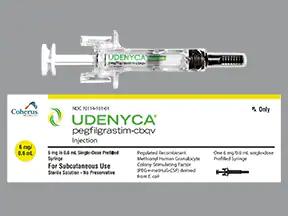
Udenyca (available in prefilled disposable syringes) |
|
|
6 mg/0.6 mL |
Udenyca (available in prefilled autoinjector) |
|
Routes |
Dosage Forms |
Strengths |
Brand Names |
Manufacturer |
|---|---|---|---|---|
|
Parenteral |
Injection, for subcutaneous use |
6 mg/0.6 mL |
Ziextenzo (available in prefilled disposable syringes) |
AHFS DI Essentials™. © Copyright 2024, Selected Revisions November 27, 2023. American Society of Health-System Pharmacists, Inc., 4500 East-West Highway, Suite 900, Bethesda, Maryland 20814.
Reload page with references included
Frequently asked questions
- What is the difference between Fulphila and Neulasta?
- What is the difference between Udenyca and Neulasta?
- How is Fulphila injected / administered?
- Is Fulphila a chemo drug?
- What is the difference between Udenyca and Fulphila?
- What does cbqv stand for in pegfilgrastim?
- Why do you take Claritin with Neulasta?
- How many biosimilars have been approved in the United States?
- How long do the side effects of the Neulasta (pegfilgrastim) shot last?
More about pegfilgrastim
- Check interactions
- Compare alternatives
- Reviews (76)
- Side effects
- Dosage information
- During pregnancy
- Support group
- Drug class: colony stimulating factors
- En español
Patient resources
Professional resources
Other brands
Neulasta, Fulphila, Udenyca, Nyvepria, ... +3 more