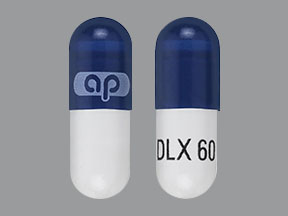
Duloxetine (Monograph)
Brand name: Cymbalta
Drug class: Selective Serotonin- and Norepinephrine-reuptake Inhibitors
- Selective Serotonin- and Norepinephrine-reuptake Inhibitors
- Serotonin-reuptake Inhibitors
- SNRIs
VA class: CN609
Chemical name: N-methyl-γ-(1-naphthalenyloxy)-2-thiopropanamine hydrochloride
Molecular formula: C18H19NOS•HCl
CAS number: 136434-34-9
Warning
- Suicidality
-
Antidepressants may increase risk of suicidal thinking and behavior (suicidality) in children, adolescents, and young adults (18–24 years of age) with major depressive disorder and other psychiatric disorders; balance this risk with clinical need. Duloxetine is not approved for use in pediatric patients. (See Pediatric Use under Cautions.)
-
In pooled data analyses, risk of suicidality was not increased in adults >24 years of age and apparently was reduced in adults ≥65 years of age with antidepressant therapy compared with placebo.
-
Depression and certain other psychiatric disorders are themselves associated with an increased risk of suicide.
-
Appropriately monitor and closely observe all patients who are started on duloxetine therapy for clinical worsening, suicidality, or unusual changes in behavior; involve family members and/or caregivers in this process. (See Worsening of Depression and Suicidality Risk under Cautions.)
Introduction
Antidepressant and anxiolytic; a selective serotonin- and norepinephrine-reuptake inhibitor (SNRI).
Uses for Duloxetine
Major Depressive Disorder
Acute and maintenance treatment of major depressive disorder in adults.
Efficacy in hospital settings not established.
Generalized Anxiety Disorder
Acute management of generalized anxiety disorder in adults.
Neuropathic Pain
Management of neuropathic pain associated with diabetic peripheral neuropathy in adults.
Fibromyalgia
Management of fibromyalgia in adults.
Stress Urinary Incontinence
Has been used for the management of moderate to severe stress urinary incontinence (SUI)† [off-label] in women.
Duloxetine Dosage and Administration
General
-
Allow at least 2 weeks to elapse between discontinuance of an MAO inhibitor and initiation of duloxetine, and at least 5 days to elapse between discontinuance of duloxetine and initiation of an MAO inhibitor.
-
Monitor for possible worsening of depression, suicidality, or unusual changes in behavior, especially at the beginning of therapy or during periods of dosage adjustments. (See Worsening of Depression and Suicidality Risk under Cautions.)
-
Avoid abrupt discontinuance. To avoid withdrawal reactions, taper dosage gradually. (See Worsening of Depression and Suicidality Risk and also see Withdrawal of Therapy under Cautions.)
-
Consider cautiously tapering dosage during third trimester of pregnancy prior to delivery. (See Pregnancy under Cautions.)
Administration
Oral Administration
Administer orally without regard to meals.
Swallow delayed-release capsules whole; do not chew or crush.
Do not sprinkle contents of delayed-release capsules on food or mix with liquids.
Dosage
Available as duloxetine hydrochloride; dosage expressed in terms of duloxetine.
Adults
Major Depressive Disorder
Oral
Acute treatment: Initially, 40–60 mg daily (as a single dose or in 2 equally divided doses). In some patients, it may be desirable to initiate therapy with a dosage of 30 mg once daily given for 1 week, followed by an increase to 60 mg once daily. Dosages of up to 120 mg daily have been effective; however, no additional benefit demonstrated from dosages >60 mg daily.
Maintenance treatment: 60 mg once daily.
Optimum duration not established; may require several months of therapy or longer.
Periodically reassess need for continued therapy and appropriateness of dosage.
Generalized Anxiety Disorder
Oral
Initially, 60 mg once daily. In some patients, it may be desirable to initiate therapy with a dosage of 30 mg once daily given for 1 week, followed by an increase to 60 mg once daily. Dosage may be increased in increments of 30 mg once daily (up to a maximum dosage of 120 mg once daily). However, no additional benefit demonstrated from dosages >60 mg once daily.
Optimum duration not established; long-term efficacy (>10 weeks) not demonstrated. Generalized anxiety disorder is chronic. Periodically reassess need for continued therapy.
Neuropathic Pain
Diabetic Neuropathy
Oral60 mg once daily; consider lower initial dosage if suspect tolerability issues in patient.
Assess efficacy individually; progression of diabetic peripheral neuropathy is highly variable, and pain management is empirical.
Long-term efficacy (>12 weeks) not established in controlled studies.
Fibromyalgia
Oral
60 mg once daily; initiate therapy with 30 mg once daily for 1 week to allow patients to adjust to drug before increasing dosage to 60 mg once daily. Some patients may respond to the initial dosage of 30 mg once daily. Dosages >60 mg daily do not provide additional therapeutic benefit and are associated with a higher incidence of adverse effects.
Fibromyalgia is recognized as a chronic condition. Manufacturer states that long-term efficacy (>3 months) not established in controlled studies; however, efficacy has been demonstrated for up to 6 months in clinical studies. Manufacturer recommends that decision to continue therapy be based on individual patient response.
Stress Urinary Incontinence† [off-label]
Oral
Optimum dosage not established; 80 mg daily (given in 2 divided doses) usually has been given. Dosages have ranged from 20–120 mg daily in clinical studies.
Prescribing Limits
Adults
Major Depressive Disorder
Oral
Maximum 120 mg once daily. However, dosages >60 mg daily apparently do not provide additional benefit.
Generalized Anxiety Disorder
Oral
Maximum 120 mg once daily. However, dosages >60 mg daily apparently do not provide additional benefit.
Neuropathic Pain
Diabetic Neuropathy
OralDosages >60 mg daily apparently do not substantially increase benefit and are less well tolerated.
Fibromyalgia
Oral
Dosages >60 mg daily apparently do not provide additional benefit and are less well tolerated.
Special Populations
Hepatic Impairment
Use not recommended in patients with any hepatic insufficiency or with substantial alcohol use.
Renal Impairment
Consider lower initial dosage in patients with mild to moderate renal impairment (Clcr 30–80 mL/minute) and increase gradually; do not administer if Clcr <30 mL/minute or if end-stage renal disease (requiring dialysis) present.
Geriatric Patients
No dosage adjustment recommended, but use caution when increasing dosage.
Cautions for Duloxetine
Contraindications
-
Concurrent or recent (i.e., within 2 weeks) therapy with an MAO inhibitor. (See MAO Inhibitors under Cautions and see Specific Drugs under Interactions.)
-
Uncontrolled angle-closure glaucoma.
-
Known hypersensitivity to duloxetine or any ingredient in the formulation.
Warnings/Precautions
Warnings
Worsening of Depression and Suicidality Risk
Possible worsening of depression and/or the emergence of suicidal ideation and behavior (suicidality) or unusual changes in behavior in both adult and pediatric patients with major depressive disorder, whether or not they are taking antidepressants; may persist until clinically important remission occurs. However, suicide is a known risk of depression and certain other psychiatric disorders, and these disorders themselves are the strongest predictors of suicide.
Appropriately monitor and closely observe patients receiving duloxetine for any reason, particularly during initiation of therapy (i.e., the first few months) and during periods of dosage adjustments. (See Boxed Warning and also see Pediatric Use under Cautions.)
Anxiety, agitation, panic attacks, insomnia, irritability, hostility, aggressiveness, impulsivity, akathisia, hypomania, and/or mania may be precursors to emerging suicidality. Consider changing or discontinuing therapy in patients whose depression is persistently worse and in those with emerging suicidality or symptoms that might be precursors to worsening depression or suicidality, particularly if severe, abrupt in onset, or not part of patient’s presenting symptoms. If decision is made to discontinue therapy, taper duloxetine dosage as rapidly as is feasible but consider risks of abrupt discontinuance. (See Withdrawal of Therapy under Cautions.)
Prescribe in smallest quantity consistent with good patient management to reduce risk of overdosage.
Observe these precautions for patients with psychiatric (e.g., major depressive disorder, obsessive-compulsive disorder) or nonpsychiatric disorders.
Other Warnings and Precautions
Hepatic Effects
Hepatic failure, sometimes fatal, reported; cases presented as hepatitis accompanied by abdominal pain, hepatomegaly, and markedly elevated serum transaminase concentrations (>20 times ULN) with or without jaundice. Cases of cholestatic jaundice with minimal elevation of serum transaminase concentrations also reported. Postmarketing reports indicate that elevated serum transaminase, bilirubin, and alkaline phosphatase concentrations have occurred in duloxetine-treated patients with chronic hepatic disease or cirrhosis.
Discontinue duloxetine in any patient who develops jaundice or other evidence of clinically important hepatic dysfunction; do not resume therapy unless another cause for the hepatic dysfunction can be established.
Duloxetine increased the risk of serum transaminase elevations in clinical trials. Such elevations resulted in discontinuance of the drug in 0.3% of patients; the median time to detection of the transaminase elevation was about 2 months. In placebo-controlled trials, elevations in serum ALT concentrations to >3 times ULN occurred in 1.1% of the duloxetine-treated patients compared with 0.2% of those receiving placebo. There was evidence of a dose-response relationship for ALT (SGPT) and AST (SGOT) elevations of >3 times ULN and >5 times ULN, respectively.
Because of the possibility that duloxetine and alcohol may interact to cause hepatic injury or that duloxetine may aggravate preexisting hepatic disease, duloxetine should not ordinarily be prescribed to patients with a history of excessive alcohol consumption or evidence of chronic hepatic disease. Promptly investigate any manifestations of hepatic injury.
Orthostatic Hypotension and Syncope
Orthostatic hypotension and syncope reported with therapeutic dosages; these effects tend to occur within first week of therapy, but may occur any time, particularly following increases in dosage. Patients concomitantly receiving other drugs that produce orthostatic hypotension (e.g., antihypertensive agents), potent CYP1A2 inhibitors, or duloxetine dosages >60 mg daily may be at increased risk. (See Interactions.) Consider discontinuing duloxetine in patients experiencing symptomatic orthostatic hypotension and/or syncope.
Serotonin Syndrome
Potentially life-threatening serotonin syndrome reported during concurrent therapy with SSRIs or SNRIs and other serotonergic drugs (e.g., 5-HT1 receptor agonists [“triptans”]) or drugs that impair serotonin metabolism (e.g., MAO inhibitors). Symptoms may include mental status changes (e.g., agitation, hallucinations, coma), autonomic instability (e.g., tachycardia, labile BP, hyperthermia), neuromuscular aberrations (e.g., hyperreflexia, incoordination), and/or GI symptoms (e.g., nausea, vomiting, diarrhea). (See Interactions.)
MAO Inhibitors
Concomitant use of SSRIs or SNRIs with MAO inhibitors is associated with serious, sometimes fatal reactions, including manifestations resembling serotonin syndrome (e.g., hyperthermia, rigidity, myoclonus, autonomic instability, mental status changes) or neuroleptic malignant syndrome (NMS). (See Contraindications and also see Serotonin Syndrome under Cautions and see Interactions.)
Abnormal Bleeding
SSRIs and SNRIs, including duloxetine, may increase the risk of bleeding events. Bleeding events have ranged from ecchymoses, hematomas, epistaxis, and petechiae to life-threatening hemorrhages. Concomitant use of aspirin, NSAIAs, warfarin, or other anticoagulants may potentiate such risk. (See Drugs Affecting Hemostasis and Specific Drugs under Interactions and see Advice to Patients.)
Withdrawal of Therapy
Possibly severe withdrawal reactions (e.g., dysphoric mood, irritability, agitation, nausea/vomiting, dizziness, sensory disturbances, anxiety, confusion, headache, lethargy, emotional lability, insomnia, hypomania, tinnitus, seizures); avoid abrupt discontinuance of therapy. Taper dosage gradually and monitor patients for possible withdrawal symptoms when discontinuing therapy.
Activation of Mania/Hypomania
Activation of mania and hypomania has occurred in patients with major depressive disorder receiving duloxetine; use with caution in patients with history of mania.
Seizures
Risk of seizures associated with duloxetine use not systematically evaluated, but seizures have been reported in patients receiving the drug. Use with caution in patients with a history of seizures.
Elevated BP
Possible increased BP; monitor BP prior to and periodically during therapy.
Clinically Important Drug Interactions
Because both CYP1A2 and CYP2D6 are responsible for duloxetine metabolism, potential exists for clinically important drug interactions when duloxetine is concurrently administered with CYP1A2 inhibitors, CYP2D6 inhibitors, and CYP2D6 substrates. (See Interactions.)
Concurrent therapy with MAO inhibitors used for treatment of depression is contraindicated. (See Serotonin Syndrome and see MAO Inhibitors under Cautions and Interactions.)
Possible hepatotoxicity when duloxetine and alcohol are used together; avoid concomitant duloxetine use in patients with a history of excessive alcohol consumption or evidence of chronic hepatic disease. (See Hepatic Effects under Cautions and see Specific Drugs under Interactions.)
Potential pharmacologic interaction when duloxetine is given with or substituted for other centrally acting drugs, including those with a similar mechanism of action; use CNS-active drugs with caution in patients receiving duloxetine. (See Specific Drugs under Interactions.)
Hyponatremia or SIADH
Possible hyponatremia during treatment with SSRIs and SNRIs, including duloxetine; in many cases, hyponatremia appears to be due to SIADH. Geriatric patients and patients receiving diuretics or who are otherwise volume depleted may be at greater risk.
Initiate appropriate medical intervention and consider drug discontinuance in patients with symptomatic hyponatremia.
Concomitant Illnesses
Limited experience in patients with concomitant diseases. (See Hepatic Impairment and see Renal Impairment under Cautions.)
Because of enteric coating on pellets in duloxetine capsules, use with caution in patients with conditions that may slow gastric emptying (e.g., in some patients with diabetes mellitus).
Not systematically evaluated in patients with a recent history of MI or unstable CAD.
Possible worsening of glycemic control in patients with diabetes mellitus. In clinical studies in patients with diabetic peripheral neuropathy, glycosylated hemoglobin (hemoglobin A1c) increased by an average of 0.3% more in patients receiving duloxetine (for up to 52 weeks) compared with patients receiving placebo, and fasting blood glucose increased by an average of 12 mg/dL in the duloxetine group and decreased by an average of 11.5 mg/dL in patients receiving placebo.
Controlled Angle-closure Glaucoma
Increased risk of mydriasis; use with caution. (See Contraindications.)
Urinary Hesitation and Retention
May affect urethral resistance. Urinary retention reported; hospitalization and/or catheterization were necessary in some cases. If symptoms of urinary hesitation develop, consider possibility that symptoms may be drug-related. (See Uses: Stress Urinary Incontinence.)
Specific Populations
Pregnancy
Category C.
Possible complications, sometimes severe and requiring prolonged hospitalization, respiratory support, enteral nutrition, and other forms of supportive care in neonates exposed to duloxetine and other SNRIs or SSRIs late in the third trimester; may arise immediately upon delivery.
Carefully consider the potential risks and benefits of treatment when used during the third trimester of pregnancy. Consider cautiously tapering dosage during third trimester prior to delivery.
Lactation
Distributed into milk in humans. Use not recommended.
Pediatric Use
Safety and efficacy not established in children <18 years of age.
FDA warns that a greater risk of suicidal thinking or behavior (suicidality) occurred during first few months of antidepressant treatment (4%) compared with placebo (2%) in children and adolescents with major depressive disorder, obsessive-compulsive disorder (OCD), or other psychiatric disorders based on pooled analyses of 24 short-term, placebo-controlled trials of 9 antidepressant drugs (SSRIs and others). However, a more recent meta-analysis of 27 placebo-controlled trials of 9 antidepressants (SSRIs and others) in patients <19 years of age with major depressive disorder, OCD, or non-OCD anxiety disorders suggests that the benefits of antidepressant therapy in treating these conditions may outweigh the risks of suicidal behavior or suicidal ideation. No suicides occurred in these pediatric trials.
Carefully consider these findings when assessing potential benefits and risks of duloxetine in a child or adolescent for any clinical use. (See Worsening of Depression and Suicidality Risk under Cautions.)
Geriatric Use
No substantial differences in safety and efficacy relative to younger adults with major depressive disorder, diabetic peripheral neuropathy, or fibromyalgia, but increased sensitivity cannot be ruled out. Insufficient experience in patients ≥65 years of age with generalized anxiety disorder to determine whether they respond differently than younger adults.
Clinically important hyponatremia reported in geriatric patients, who may be at greater risk for this adverse effect. (See Hyponatremia or SIADH under Cautions.)
In pooled data analyses, a reduced risk of suicidality was observed in adults ≥65 years of age with antidepressant therapy compared with placebo. (See Boxed Warning and also see Worsening of Depression and Suicidality Risk under Cautions.)
Hepatic Impairment
Possible risk of severe hepatic toxicity; use not recommended in patients with hepatic insufficiency or excessive alcohol use. (See Hepatic Effects under Cautions.)
Renal Impairment
Use not recommended in end-stage renal disease or severe renal impairment (Clcr<30 mL/minute). (See Absorption: Special Populations and see Elimination: Special Populations, under Pharmacokinetics.)
Common Adverse Effects
Nausea, dry mouth, constipation, diarrhea, decreased appetite, vomiting, fatigue, somnolence, insomnia, dizziness, asthenia, agitation, hyperhidrosis or increased sweating, and decreased sexual function (e.g., decreased libido, delayed ejaculation, erectile dysfunction).
Drug Interactions
Metabolized by CYP isoenzymes, principally CYP2D6 and CYP1A2.
Moderately inhibits CYP2D6.
Does not induce CYP1A2, but inhibits CYP1A2 in vitro. However, no evidence of clinically important interactions with CYP1A2 substrate in vivo.
Does not inhibit CYP2C9 or CYP2C19 in vitro, or induce or inhibit CYP3A in vitro.
Drugs Affecting Hepatic Microsomal Enzymes
Potent inhibitors of CYP1A2: potential pharmacokinetic interaction (increased plasma duloxetine concentrations); avoid concomitant use.
Potent inhibitors of CYP2D6: potential pharmacokinetic interaction (increased plasma duloxetine concentrations).
Drugs Metabolized by Hepatic Microsomal Enzymes
Substrates of CYP2D6: potential pharmacokinetic interaction (increased plasma substrate concentrations). Use concomitantly with caution.
Substrates of CYP1A2, CYP3A, CYP2C9, or CYP2C19: pharmacokinetic interaction unlikely.
Drugs Affecting Hemostasis
Potential pharmacologic interaction (increased risk of bleeding) with concomitant use of drugs that affect coagulation; use with caution. (See Abnormal Bleeding under Cautions and Specific Drugs under Interactions.)
Drugs Associated with Serotonin Syndrome
Potential pharmacologic interaction (serotonin syndrome) with serotonergic agents. Avoid such use or use with caution. (See Serotonin Syndrome under Cautions.)
Drugs Affecting Gastric Acidity
Theoretical risk of early duloxetine release from enteric-coated pellets if administered with drugs that increase gastric pH.
Protein-bound Drugs
Not fully evaluated. Potential for duloxetine to displace other highly protein-bound drugs; may result in increased plasma concentrations and adverse effects of other drug.
Specific Drugs
|
Drug |
Interaction |
Comments |
|---|---|---|
|
Alcohol |
Increased risk of hepatotoxicity Duloxetine did not potentiate alcohol impairment of mental or motor skills |
Avoid concomitant duloxetine use with substantial alcohol use |
|
Antacids |
Potential early duloxetine release from enteric-coated pellets; aluminum- and magnesium-containing antacids had no substantial effect on duloxetine absorption |
|
|
Antiarrhythmics, class IC (e.g., flecainide, propafenone) |
Potential increased antiarrhythmic plasma concentrations |
Use concomitantly with caution |
|
Antidepressants, SSRIs (e.g., citalopram, escitalopram, fluoxetine, fluvoxamine, paroxetine, sertraline) or other SNRIs (e.g., desvenlafaxine, venlafaxine) |
Potentially life-threatening serotonin syndrome Possible decreased duloxetine clearance and increased plasma concentrations Fluvoxamine may increase duloxetine peak plasma concentrations, AUC, and half-life; substantial increases (six-fold) in duloxetine AUCs and peak plasma concentrations reported during concurrent fluvoxamine administration in poor CYP2D6 metabolizers |
Avoid concomitant use |
|
Antidepressants, tricyclic (TCAs) (e.g., amitriptyline, desipramine, imipramine, nortriptyline) |
Potential increased plasma TCA concentrations; increased plasma desipramine concentrations reported |
Use with caution; consider monitoring plasma TCA concentrations and reducing TCA dosage if used concomitantly |
|
Antihypertensive agents |
Possible increased risk of hypotension and syncope |
|
|
Benzodiazepines (e.g., lorazepam, temazepam) |
Pharmacokinetic interaction unlikely |
|
|
CNS drugs |
Potential pharmacologic interaction |
Use concomitantly with caution |
|
Histamine H2-receptor antagonists |
Potential early duloxetine release from enteric-coated pellets; famotidine had no substantial effect on duloxetine absorption Cimetidine may decrease duloxetine clearance and increase plasma concentrations |
|
|
5-HT1 receptor agonists (“triptans”) (e.g., almotriptan, eletriptan, frovatriptan, naratriptan, rizatriptan, sumatriptan, zolmitriptan) |
Potentially life-threatening serotonin syndrome |
Observe carefully if used concomitantly, particularly during treatment initiation, dosage increases, or when another serotonergic agent is initiated |
|
MAO inhibitors |
Potentially fatal serotonin syndrome |
Concomitant use is contraindicated Allow at least 5 days to elapse between discontinuance of duloxetine and initiation of MAO inhibitor and at least 2 weeks between discontinuance of MAO inhibitor and initiation of duloxetine |
|
NSAIAs (e.g., aspirin) |
Increased risk of bleeding |
Use concomitantly with caution |
|
Phenothiazines (e.g., thioridazine) |
Potential increased plasma phenothiazine concentrations Increased plasma thioridazine concentrations could result in serious ventricular arrhythmias and sudden death |
Use concomitantly with caution Concomitant use with thioridazine not recommended |
|
Proton-pump inhibitors |
Proton-pump inhibitor effects unknown; potential early duloxetine release from enteric-coated pellets |
|
|
Quinidine |
Possible decreased duloxetine clearance and increased plasma concentrations |
Concomitant use not recommended |
|
Quinolones (e.g., ciprofloxacin, enoxacin) |
Possible decreased duloxetine clearance and increased plasma concentrations |
Concomitant use not recommended |
|
Sibutramine |
Possible serotonin syndrome |
Use with caution |
|
Smoking |
Possible reduced duloxetine bioavailability and plasma concentrations |
Although manufacturer states that routine dosage adjustment not necessary, some clinicians recommend a small increase in duloxetine dosage (of about 15%) in smoking patients |
|
Theophylline |
Possible increased theophylline AUC during concurrent use |
Routine theophylline dosage adjustment does not appear necessary |
|
Tramadol |
Possible serotonin syndrome |
Use with caution |
|
Tryptophan and other serotonin precursors |
Possible serotonin syndrome |
Concomitant use not recommended |
|
Warfarin and other anticoagulants |
Altered anticoagulant effects, including increased bleeding, reported |
Carefully monitor patients receiving warfarin when duloxetine is initiated or discontinued |
Duloxetine Pharmacokinetics
Absorption
Bioavailability
Well absorbed following oral administration, with peak plasma concentration usually attained in 6 hours.
Food
Food decreases rate and marginally decreases extent (about 10%) of absorption.
Special Populations
In patients with end-stage renal disease (requiring dialysis), AUCs and peak plasma concentration of duloxetine and its metabolites are increased. (See Renal Impairment under Cautions.)
Distribution
Extent
Distributed into milk in humans; concentration in milk is about one-fourth that in plasma at steady state.
Plasma Protein Binding
>90%.
Elimination
Metabolism
Extensively metabolized to numerous metabolites.
Metabolized by CYP isoenzymes, principally CYP2D6 and CYP1A2.
Elimination Route
Excreted principally in urine as metabolites (about 70%) and unchanged drug (<1%), and in feces (20%).
Half-life
Approximately 12 hours.
Special Populations
In patients with hepatic impairment, metabolism and clearance are decreased. (See Hepatic Impairment under Cautions.)
In patients with end-stage renal disease (requiring dialysis), plasma half-life may be unchanged; in patients with mild to moderate renal impairment (CLcr 30–80 mL/min), there is no clinically important effect on clearance. (See Renal Impairment under Cautions.)
Lactation does not influence pharmacokinetics.
Stability
Storage
Oral
Delayed-release Capsules
25°C (may be exposed to 15-30°C).
Actions
-
Mechanism of antidepressant effects, anxiolytic effects, or CNS pain inhibition not established but presumed to be linked to potentiation of serotonergic and noradrenergic activity in the CNS resulting from its inhibition of CNS neuronal reuptake of serotonin (5-HT) and norepinephrine.
-
Precise mechanism of action in stress urinary incontinence unknown, but thought to be related to potentiation of serotonin and norepinephrine activity in sacral spinal cord, which increases urethral closure forces and thereby reduces involuntary urine loss.
-
Potent inhibitor of serotonin and norepinephrine reuptake; less potent inhibitor of dopamine reuptake.
-
Does not inhibit MAO and has not demonstrated significant affinity for dopaminergic, adrenergic, cholinergic, histaminergic, opiate, glutamate, or GABA receptors in vitro.
Advice to Patients
-
Risk of suicidality; importance of patients, family, and caregivers being alert to and immediately reporting emergence of suicidality, worsening depression, or unusual changes in behavior, especially during the first few months of therapy or during periods of dosage adjustment. FDA recommends providing written patient information (medication guide) explaining risks of suicidality each time the drug is dispensed.
-
Importance of promptly reporting any manifestations of liver dysfunction (e.g., pruritus, dark urine, jaundice, right upper quadrant tenderness, unexplained flu-like symptoms) to clinician.
-
Importance of informing patient of risk of severe liver injury associated with concomitant use of duloxetine and heavy alcohol intake.
-
Potential for drug to impair mental alertness or physical coordination; avoid driving or operating machinery until effects on individual are known.
-
Importance of advising patients of risk of orthostatic hypotension and syncope, particularly during initial therapy and subsequent dosage escalation and during concomitant therapy with drugs that may potentiate these effects.
-
Importance of taking medication exactly as prescribed by the clinician. Importance of swallowing the capsule whole, without chewing, crushing, sprinkling on food, or mixing with liquids.
-
Importance of continuing duloxetine therapy even if a response is not evident within 1–4 weeks, unless directed otherwise.
-
Importance of women informing clinicians if they are or plan to become pregnant or plan to breast-feed.
-
Importance of informing clinicians of existing or contemplated concomitant therapy, including prescription and OTC drugs, as well as any concomitant illnesses (e.g., bipolar disorder, liver disease) or family history of suicidality or bipolar disorder. Risk of bleeding associated with concomitant use of duloxetine with aspirin or other nonsteroidal anti-inflammatory agents, warfarin, or other drugs that affect coagulation.
-
Importance of informing patients of risk of serotonin syndrome with concurrent use of duloxetine and 5-HT1 receptor agonists (“triptans”) or other serotonergic agents. Importance of seeking immediate medical attention if symptoms of serotonin syndrome develop.
-
Importance of informing patients of other important precautionary information. (See Cautions.)
Preparations
Excipients in commercially available drug preparations may have clinically important effects in some individuals; consult specific product labeling for details.
Please refer to the ASHP Drug Shortages Resource Center for information on shortages of one or more of these preparations.
|
Routes |
Dosage Forms |
Strengths |
Brand Names |
Manufacturer |
|---|---|---|---|---|
|
Oral |
Capsules, delayed-release (containing enteric-coated pellets) |
20 mg (of duloxetine) |
Cymbalta |
Lilly |
|
30 mg (of duloxetine) |
Cymbalta |
Lilly |
||
|
60 mg (of duloxetine) |
Cymbalta |
Lilly |
AHFS DI Essentials™. © Copyright 2024, Selected Revisions October 1, 2012. American Society of Health-System Pharmacists, Inc., 4500 East-West Highway, Suite 900, Bethesda, Maryland 20814.
† Off-label: Use is not currently included in the labeling approved by the US Food and Drug Administration.
Reload page with references included
Frequently asked questions
- SSRI’s vs SNRI’s - What's the difference between them?
- 8 Cymbalta Side Effects: Should I be Concerned?
- How to sleep while taking Cymbalta?
- What helps with Cymbalta withdrawal symptoms?
- Does Cymbalta cause weight gain?
- How long does it take for Cymbalta to work?
- What do Cymbalta brain zaps feel like?
- Can I take Cymbalta (duloxetine) and Trintellix (vortioxetine) together?
More about duloxetine
- Check interactions
- Compare alternatives
- Pricing & coupons
- Reviews (2,419)
- Drug images
- Side effects
- Dosage information
- Patient tips
- During pregnancy
- Support group
- Drug class: serotonin-norepinephrine reuptake inhibitors
- Breastfeeding
- En español