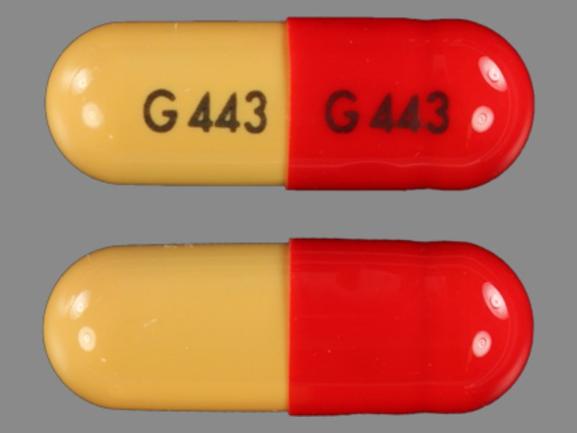
Dantrolene (Monograph)
Brand names: Dantrium, Revonto, Ryanodex
Drug class: Direct-acting Skeletal Muscle Relaxants
VA class: MS200
Chemical name: 1-[[[5-(4-Nitrophenyl)-2-furanyl]methylene]amino]-2,4-imidazolidinedione sodium salt, hydrate (2:7)
Molecular formula: C14H9N4NaO5•3½H2O
CAS number: 24868-20-0
Warning
- Hepatic Effects of Oral Dantrolene
-
Risk of developing potentially fatal, hepatic injury (e.g., hepatitis); should not be used for unlabeled indications.
-
Females, patients >35 years of age, and those receiving other drugs (especially estrogens) concomitantly are at greatest risk.
-
Possible higher risk in geriatric patients. (See Geriatric Use under Cautions.)
-
Risk of symptomatic hepatitis (fatal and nonfatal) may be dose dependent; incidence much higher at dosages ≥800 mg daily than at dosages ≤400 mg daily. Even intermittent, short courses at higher dosages associated with increased risk. Use lowest possible effective dose.
-
Overt hepatitis most frequently observed between 3rd and 12th month of therapy.
-
Frequently monitor hepatic function. (See Hepatic Effects under Cautions.)
-
If benefits are not evident within 45 days, discontinue therapy.
Introduction
Skeletal muscle relaxant.
Uses for Dantrolene
Spasticity
Used orally for management of spasticity resulting from upper motor neuron disorders (e.g., multiple sclerosis, cerebral palsy, spinal cord injury, stroke syndrome).
Evidence supporting use is limited and the drug is associated with many adverse effects, some of which may be severe (e.g., hepatotoxicity); however, subtle but meaningful improvement (e.g., decrease in severity of spasticity, ability to resume daily function) may occasionally occur in some patients.
Ineffective in the treatment of amyotrophic lateral sclerosis (ALS).
Not indicated for the treatment of muscle spasms resulting from rheumatic disorders or musculoskeletal trauma.
Malignant Hyperthermia Crisis
IV treatment of fulminant hypermetabolism of skeletal muscle that is characteristic of malignant hyperthermia crisis; should be used with and not as a substitute for supportive measures (e.g., oxygen, treatment of metabolic acidosis, cooling procedures).
Dantrolene sodium for injectable suspension (Ryanodex) is designated an orphan drug by FDA for this use.
Also has been used preoperatively to prevent or attenuate the development of malignant hyperthermia in susceptible individuals; however, prophylactic use no longer recommended because of adverse effects and questionable benefit.
Neuroleptic Malignant Syndrome† [off-label]
Has been used for the treatment of neuroleptic malignant syndrome† [off-label]; fatalities reported despite therapy with the drug.
Related/similar drugs
Botox, baclofen, Lioresal, onabotulinumtoxinA, Dantrium, Fleqsuvy, Revonto
Dantrolene Dosage and Administration
General
- Spasticity
-
Establish therapeutic goal before initiating therapy. Use lowest possible effective dosage. Discontinue drug if beneficial effects are not attained within 45 days. (See Boxed Warning.)
-
Subjective impressions of improvement may sometimes be confirmed by withdrawal of the drug for 2–4 days.
- Malignant Hyperthermia Crisis
-
Immediately discontinue all anesthetic agents or other potential triggering agents (e.g., succinylcholine) and institute IV dantrolene as soon as malignant hyperthermia crisis is recognized.
-
Use in conjunction with supportive measures.
-
When using injectable suspension formulation, administer a diuretic to prevent late kidney injury due to myoglobinuria; amount of mannitol contained in formulation is insufficient to maintain diuresis.
-
When used preoperatively for prophylaxis, monitor for early clinical and metabolic signs of malignant hyperthermia; monitor vital signs (e.g., for possible respiratory depression).
Administration
Administer orally or by continuous IV infusion or rapid IV injection.
Oral Administration
Administer orally 1–4 times daily.
Extemporaneous Suspension
To prepare an oral suspension containing 25 mg of dantrolene sodium per 5 mL, empty five 100-mg capsules in a small amount of simple syrup NF, then add a solution containing 150 mg of citric acid in 10 mL of water followed by a sufficient volume of simple syrup NF to make 100 mL. Mix thoroughly before use. Other extemporaneously prepared suspensions of dantrolene also have been described.
IV Administration
For solution compatibility information, see Compatibility under Stability.
Administer by rapid IV injection for acute treatment of malignant hyperthermia. May administer by IV infusion for prevention of malignant hyperthermia.
Commercially available as a lyophilized drug for injection (e.g., Dantrium, Revonto, or generic equivalents) or a lyophilized drug for injectable suspension (Ryanodex). Reconstitution procedures differ based on the preparation; consult manufacturer’s prescribing information for specific instructions.
Avoid extravasation (injection has high pH and can cause tissue necrosis).
Reconstitution and Administration
Dantrolene sodium for injection: Add 60 mL of sterile water for injection (without bacteriostatic agent) to vial containing 20 mg of the drug. Do not reconstitute with any other solution. Shake vial until solution is clear. Use reconstituted solution within 6 hours of reconstitution. For administration by IV infusion, transfer desired volume of reconstituted solution to an appropriate-size empty sterile IV plastic bag. Do not transfer to large glass containers because precipitate formation has been observed.
Dantrolene sodium for injectable suspension: Add 5 mL of sterile water for injection (without bacteriostatic agent) to vial containing 250 mg of the drug. Do not reconstitute with any other solution. Shake vial until an orange-colored uniform suspension is formed. Do not dilute or transfer reconstituted suspension to another container. Use reconstituted suspension within 6 hours after reconstitution. May administer reconstituted suspension into the IV catheter of a freely running IV infusion of 0.9% sodium chloride or 5% dextrose for injection, or into an indwelling catheter (after assuring its patency) without a freely running IV infusion. If an indwelling catheter is used, flush line to assure that there is no residual drug remaining in the catheter.
Rate of Administration
Acute management of malignant hyperthermia crisis: Rapid IV injection.
Preoperative prophylaxis of malignant hyperthermia: Infuse IV over approximately 1 hour (for Dantrium, Revonto or generic equivalents) or over at least 1 minute (for Ryanodex).
Dosage
Available as dantrolene sodium; dosage expressed in terms of the salt.
Pediatric Patients
Spasticity
Oral
Children ≥5 years of age: 0.5 mg/kg once daily for 7 days, followed by 0.5 mg/kg 3 times daily for 7 days, then 1 mg/kg 3 times daily for 7 days, and then 2 mg/kg 3 times daily, if necessary. Some patients may require doses 4 times daily.
If no additional benefit is observed at the next higher dosage, decrease dosage to the previous (lower) dosage.
Malignant Hyperthermia Crisis
Preoperative Prophylaxis
Oral4–8 mg/kg daily in 3 or 4 divided doses for 1–2 days prior to surgery; give the last dose approximately 3–4 hours before surgery with small amount of water.
IV2.5 mg/kg infused over approximately 1 hour (Dantrium, Revonto, or generic equivalents) or at least 1 minute (Ryanodex), beginning about 1.25 hours before anticipated anesthesia or surgery; may give additional individualized doses intraoperatively, if necessary.
Treatment
IVInitially, 1 mg/kg or more by rapid IV injection. Administer continuous rapid IV injections as necessary until physiologic and metabolic abnormalities subside or a maximum total dosage of 10 mg/kg is reached.
Effective dosage will vary between patients based on their susceptibility to malignant hyperthermia, amount and time of exposure to the triggering agent, and rapidity of treatment.
Repeat regimen if physiologic and metabolic abnormalities reappear.
Post-crisis Follow-up
OralTo prevent recurrence, 4–8 mg/kg daily in 4 divided doses for up to 3 days after the crisis.
IVIf oral therapy not practical or feasible, may administer IV starting with a dose of 1 mg/kg or more as clinically indicated based on individual requirements.
Adults
Spasticity
Oral
Initially, 25 mg once daily for 7 days, followed by 25 mg 3 times daily for 7 days, then 50 mg 3 times daily for 7 days, and then 100 mg 3 times daily, if necessary. Some patients may require doses 4 times daily.
If no additional benefit is observed at the next higher dosage, decrease dosage to the previous (lower) dosage.
Malignant Hyperthermia Crisis
Preoperative Prophylaxis
Oral4–8 mg/kg daily in 3 or 4 divided doses for 1–2 days prior to surgery; give the last dose approximately 3–4 hours before surgery with small amount of water.
IV2.5 mg/kg infused over approximately 1 hour (Dantrium, Revonto, or generic equivalents) or over at least 1 minute (Ryanodex), beginning about 1.25 hours before anticipated anesthesia or surgery; may give additional individualized doses intraoperatively, if necessary.
Treatment
IVInitially, 1 mg/kg or more by rapid IV injection. Administer continuous rapid IV injections as necessary until physiologic and metabolic abnormalities subside or a maximum total dosage of 10 mg/kg is reached.
Effective dosage will vary between patients based on their susceptibility to malignant hyperthermia, amount and time of exposure to the triggering agent, and rapidity of treatment.
Repeat regimen if physiologic and metabolic abnormalities reappear.
Post-crisis Follow-up
OralTo prevent recurrence, 4–8 mg/kg daily in 4 divided doses for up to 3 days after the crisis.
IVIf oral therapy not practical or feasible, may administer IV starting with a dose of 1 mg/kg or more as clinically indicated based on individual requirements.
Prescribing Limits
Pediatric Patients
Spasticity
Oral
Maximum 100 mg 4 times daily.
Malignant Hyperthermia Crisis
Treatment
IVMaximum total dose of 10 mg/kg.
Adults
Spasticity
Oral
Maximum 100 mg 4 times daily.
Malignant Hyperthermia Crisis
Treatment
IVMaximum total dose of 10 mg/kg.
Cautions for Dantrolene
Contraindications
-
Oral dantrolene contraindicated in patients with active hepatic disease (e.g., hepatitis, cirrhosis).
-
Also contraindicated in patients who must utilize spasticity to maintain upright posture and balance in moving or to obtain or maintain increased body function.
-
No contraindications to IV dantrolene for prophylaxis or management of malignant hyperthermia crisis.
Warnings/Precautions
Warnings
Hepatic Effects
Fatal and nonfatal hepatic disorders of idiosyncratic or hypersensitivity type possible with oral dantrolene. (See Boxed Warning.)
Obtain serum AST, ALT, alkaline phosphatase, and total bilirubin concentrations prior to and periodically during therapy or whenever symptoms of hepatitis occur.
If liver function test abnormalities occur alone, consider discontinuing therapy; continue or reinstitute the drug only if major benefits occurred during dantrolene therapy.
If symptoms of hepatitis are accompanied by liver function test abnormalities or jaundice, discontinue dantrolene.
Following discontinuance for clinical and/or laboratory evidence of hepatotoxicity, reinstitute dantrolene only in patients who clearly need the drug and only after symptoms and laboratory abnormalities of hepatotoxicity have resolved. Hospitalize patient to reinitiate therapy with very small doses; gradually increase dosage with frequent monitoring of liver function; discontinue drug immediately if signs of liver abnormality recur.
Sensitivity Reactions
Photosensitivity
Possible photosensitivity reactions; limit exposure to sunlight.
Other Warnings/Precautions
Supportive Therapy
In the treatment of malignant hyperthermia, must use in conjunction with supportive measures (e.g., oxygen, treatment of metabolic acidosis, cooling procedures) and discontinue all suspect triggering agents (e.g., inhaled anesthetics, succinylcholine); monitor urinary output and serum electrolytes. Use of IV dantrolene is not a substitute for these supportive measures.
Musculoskeletal Effects
Skeletal muscle weakness (e.g., loss of grip strength, leg weakness) may occur with IV dantrolene. Patients should not be permitted to ambulate without assistance until normal strength and balance return.
Dysphagia reported; monitor patients for difficulty swallowing and choking.
Administration Precautions
Injection site reactions (pain, erythema, swelling), commonly due to extravasation, reported with IV dantrolene therapy. IV formulations have high pH; care must be taken to prevent extravasation.
Mannitol Content
If mannitol is used for prevention or treatment of late renal complications of malignant hyperthermia, consider the amount of mannitol in the IV dantrolene formulation (e.g., 3 g of mannitol per 20-mg vial of Dantrium, Revonto, or generic equivalents; 125 mg of mannitol per 250-mg vial of Ryanodex) as part of the total amount administered. (See General under Dosage and Administration.)
Concomitant Conditions
Use with caution in patients with severe cardiac impairment secondary to myocardial disease or with impaired pulmonary function (particularly obstructive pulmonary disease).
CNS Effects
Drowsiness and dizziness may occur, and may persist for up to 48 hours. Performance of activities requiring mental alertness may be impaired. (See Advice to Patients.)
Concurrent use of other CNS depressants may cause additive CNS effects. (See Specific Drugs under Interactions.)
Respiratory Effects
Respiratory effects including respiratory depression, a feeling of suffocation, dyspnea, respiratory muscle weakness, and decreased inspiratory capacity reported. Use with caution in patients with impaired pulmonary function. Monitor patients for adequate ventilation and vital signs.
Rarely, pulmonary edema has developed during treatment of malignant hyperthermia crisis in which the diluent volume and amount of mannitol associated with IV dantrolene may have contributed.
Specific Populations
Pregnancy
Category C.
No adequate and well-controlled studies in pregnant women. Embryocidal effects and decreased pup survival observed in animal studies.
Readily crosses the placenta. (See Distribution under Pharmacokinetics.)
Lactation
Distributed into milk; discontinue nursing or the drug.
Pediatric Use
Long-term safety of oral dantrolene not established in children <5 years of age.
Weigh possible risks against potential benefits before initiating long-term oral therapy; adverse effects may become evident only after many years.
Geriatric Use
Insufficient experience in patients ≥65 years of age to determine whether geriatric patients respond differently than younger adults.
Spontaneous reports suggest that geriatric patients receiving oral dantrolene may have a higher risk of hepatic events with fatal outcomes; however, majority of these reports were complicated by confounding factors (e.g., comorbid illnesses, concomitant use of hepatotoxic drugs).
Titrate dosage carefully.
Hepatic Impairment
Use with caution in patients with a history of hepatic impairment.
Common Adverse Effects
Oral or IV: Muscle weakness, drowsiness, dizziness, lightheadedness, diarrhea, nausea, malaise, fatigue.
IV: thrombophlebitis, tissue necrosis secondary to extravasation, urticaria, erythema, injection site reactions (pain, erythema, swelling).
Drug Interactions
Metabolized in the liver.
Drugs Affecting Hepatic Microsomal Enzymes
Pharmacokinetic interaction with CYP enzyme inducers theoretically possible.
Specific Drugs
|
Drug |
Interaction |
Comment |
|---|---|---|
|
Calcium-channel blockers (e.g., verapamil) |
Cardiovascular collapse reported rarely |
Concomitant use during management of malignant hyperthermia not recommended |
|
Clofibrate |
Decreased binding of dantrolene to plasma proteins |
|
|
CNS depressants |
Possible additive CNS effects (e.g., dizziness) |
Use with caution |
|
Diazepam |
Additive sedative effect; dantrolene metabolism and protein binding unaffected |
Use with caution |
|
Estrogens |
Possible increased frequency of hepatotoxicity in women >35 years of age |
Potential for interaction not clearly established; use with caution |
|
Muscle relaxants |
Potentiation of neuromuscular block |
|
|
Phenobarbital |
Pharmacokinetic interaction unlikely; dantrolene metabolism unaffected |
|
|
Phenytoin |
No change in binding of dantrolene to plasma proteins |
|
|
Tolbutamide |
Increased binding of dantrolene to plasma proteins |
|
|
Vecuronium |
Potentiation of vecuronium-induced neuromuscular blockade |
|
|
Warfarin |
Decreased binding of dantrolene to plasma proteins |
Dantrolene Pharmacokinetics
Absorption
Bioavailability
Absorption following oral administration is incomplete and slow but consistent. Oral bioavailability is 70%.
Distribution
Extent
Readily crosses the placenta, with maternal and fetal whole blood concentrations approximately equal at delivery; neonatal concentrations then fall approximately 50% per day for 2 days before declining sharply.
Plasma Protein Binding
Substantially bound to plasma proteins (mostly albumin); binding is readily reversible.
Elimination
Metabolism
Major metabolites are 5-hydroxydantrolene and an acetylamino metabolite. May undergo hydrolysis and subsequent oxidation forming nitrophenylfuroic acid.
Elimination Route
Mainly excreted in urine and bile.
Half-life
Approximately 4–11.4 hours following IV administration.
Approximately 9 hours (depending on preparation) following oral administration in adults.
Stability
Storage
Oral
Capsules
20–25°C.
Parenteral
Powder for Injection
Dantrium: 20–25°C. Avoid prolonged exposure to light. Store reconstituted solutions at 15–30°C for ≤6 hours; protect from light.
Revonto or generic dantrolene sodium for injection: 20–25°C. Avoid prolonged exposure to light. Store reconstituted solutions at 20–25°C for ≤6 hours; protect from direct light.
Powder for Injectable Suspension
Ryanodex: 20–25°C (may be exposed to 15–30°C). Avoid prolonged exposure to light. Store reconstituted suspension at 20–25°C for ≤6 hours.
Compatibility
Parenteral
Solution Compatibility
Dantrolene sodium for injection (Dantrium, Revonto, or generic equivalents) is incompatible with sodium chloride 0.9% and dextrose 5% injection.
Reconstituted dantrolene sodium suspension (Ryanodex) is compatible with small amounts of sodium chloride 0.9% or dextrose 5% injection when administered into the IV catheter of a freely running IV infusion of these solutions.
Actions
-
Causes skeletal muscle relaxation through a direct effect on skeletal muscle, probably by interfering with release of calcium from the sarcoplasmic reticulum.
-
Interference with calcium release from the sarcoplasmic reticulum may prevent the increase in myoplasmic calcium that activates acute catabolism of skeletal muscle cells in patients with anesthesia-induced malignant hyperthermia.
-
Has little or no effect on the contraction of cardiac or intestinal smooth muscle, except possibly at concentrations higher than those required for effects on skeletal muscle contraction.
Advice to Patients
-
Risk of hepatotoxicity with oral dantrolene.
-
Risk of dizziness, somnolence, and muscle weakness; do not ambulate without assistance until strength and balance have returned to normal. Do not drive or operate machinery within 48 hours of receiving IV dantrolene.
-
Risk of choking and difficulty swallowing; exercise caution during meals.
-
Risk of photosensitivity reactions; limit exposure to sunlight.
-
Importance of women informing their clinician if they are or plan to become pregnant or plan to breast-feed.
-
Importance of informing clinicians of existing or contemplated concomitant therapy, including prescription and OTC drugs, alcohol consumption, and any concomitant illnesses.
-
Importance of informing patients of other important precautionary information. (See Cautions.)
Excipients in commercially available drug preparations may have clinically important effects in some individuals; consult specific product labeling for details.
Please refer to the ASHP Drug Shortages Resource Center for information on shortages of one or more of these preparations.
* available from one or more manufacturer, distributor, and/or repackager by generic (nonproprietary) name
|
Routes |
Dosage Forms |
Strengths |
Brand Names |
Manufacturer |
|---|---|---|---|---|
|
Oral |
Capsules |
25 mg* |
Dantrium |
Par |
|
Dantrolene Sodium Capsules |
||||
|
50 mg* |
Dantrium |
Par |
||
|
Dantrolene Sodium Capsules |
||||
|
100 mg* |
Dantrium |
Par |
||
|
Dantrolene Sodium Capsules |
||||
|
Parenteral |
For injection |
20 mg* |
Dantrium Intravenous |
Par |
|
Dantrolene Sodium for Injection |
||||
|
Revonto |
US WorldMeds |
|||
|
For injectable suspension |
250 mg |
Ryanodex |
Eagle |
AHFS DI Essentials™. © Copyright 2024, Selected Revisions October 15, 2018. American Society of Health-System Pharmacists, Inc., 4500 East-West Highway, Suite 900, Bethesda, Maryland 20814.
† Off-label: Use is not currently included in the labeling approved by the US Food and Drug Administration.
Reload page with references included
More about dantrolene
- Check interactions
- Compare alternatives
- Pricing & coupons
- Reviews (4)
- Drug images
- Side effects
- Dosage information
- During pregnancy
- Drug class: skeletal muscle relaxants
- Breastfeeding
- En español
Patient resources
Professional resources
Other brands
Dantrium, Revonto, Dantrium Intravenous, Ryanodex