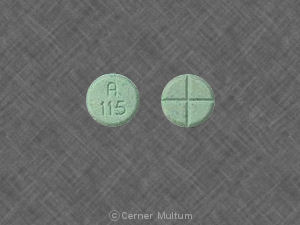
Bellamine S and Alcohol/Food Interactions
There are 9 alcohol/food/lifestyle interactions with Bellamine S (belladonna / ergotamine / phenobarbital).
Phenobarbital Alcohol (Ethanol)
Major Drug Interaction
Ask your doctor before using PHENobarbital together with ethanol, this can add to dizziness, drowsiness and other side effects of PHENobarbital. Be careful if you drive or do activities that require you to be awake and alert. Talk with your doctor before using any medications together, or drinking alcohol with PHENobarbital. It is important to tell your doctor about all other medications you use, including vitamins and herbs. Do not stop using any medications without first talking to your doctor.
Ergotamine Alcohol (Ethanol)
Moderate Drug Interaction
PHENobarbital may reduce the blood levels and effects of ergotamine. Contact your doctor if your symptoms worsen or your condition changes during treatment with these medications. Your doctor may be able to prescribe alternatives that do not interact, or you may need a dose adjustment or more frequent monitoring to safely use both medications. It is important to tell your doctor about all other medications you use, including vitamins and herbs. Do not stop using any medications without first talking to your doctor.
Belladonna Alcohol (Ethanol)
Moderate Drug Interaction
Ask your doctor before using belladonna together with ethanol. Use alcohol cautiously. Alcohol may increase drowsiness and dizziness while you are taking belladonna. You should be warned not to exceed recommended dosages and to avoid activities requiring mental alertness. If your doctor prescribes these medications together, you may need a dose adjustment to safely take this combination. It is important to tell your doctor about all other medications you use, including vitamins and herbs. Do not stop using any medications without first talking to your doctor.
Ergotamine Nicotine
Moderate Drug Interaction
Nicotine may increase the effects of ergotamine in narrowing the blood vessels and decreasing blood flow. A severe decrease in blood flow to the brain and other parts of the body can lead to dangerous side effects. Contact your doctor immediately if you experience coldness, paleness, discoloration, numbness, tingling, or pain in your hands or feet; muscle pain or weakness; severe or worsening headache; blurred vision; severe abdominal pain; chest pain; or shortness of breath while using these medications. It is important to tell your doctor about all other medications you use, including vitamins and herbs. Do not stop using any medications without first talking to your doctor.
Ergotamine Nicotine
Moderate Drug Interaction
PHENobarbital may reduce the blood levels and effects of ergotamine. Contact your doctor if your symptoms worsen or your condition changes during treatment with these medications. Your doctor may be able to prescribe alternatives that do not interact, or you may need a dose adjustment or more frequent monitoring to safely use both medications. It is important to tell your doctor about all other medications you use, including vitamins and herbs. Do not stop using any medications without first talking to your doctor.
Ergotamine Food
Moderate Food Interaction
Consumer information for this interaction is not currently available.
MONITOR: Grapefruit juice may increase the plasma concentrations of orally administered drugs that are substrates of the CYP450 3A4 isoenzyme. The proposed mechanism is inhibition of CYP450 3A4-mediated first-pass metabolism in the gut wall by certain compounds present in grapefruit. Because grapefruit juice inhibits primarily intestinal rather than hepatic CYP450 3A4, the magnitude of interaction is greatest for those drugs that undergo significant presystemic metabolism by CYP450 3A4 (i.e., drugs with low oral bioavailability). In general, the effect of grapefruit juice is concentration-, dose- and preparation-dependent, and can vary widely among brands. Certain preparations of grapefruit juice (e.g., high dose, double strength) have sometimes demonstrated potent inhibition of CYP450 3A4, while other preparations (e.g., low dose, single strength) have typically demonstrated moderate inhibition. Pharmacokinetic interactions involving grapefruit juice are also subject to a high degree of interpatient variability, thus the extent to which a given patient may be affected is difficult to predict.
MANAGEMENT: Patients who regularly consume grapefruit or grapefruit juice should be monitored for adverse effects and altered plasma concentrations of drugs that undergo significant presystemic metabolism by CYP450 3A4. Grapefruit and grapefruit juice should be avoided if an interaction is suspected. Orange juice is not expected to interact with these drugs.
References
- Edgar B, Bailey D, Bergstrand R, et al. (1992) "Acute effects of drinking grapefruit juice on the pharmacokinetics and dynamics on felodipine and its potential clinical relevance." Eur J Clin Pharmacol, 42, p. 313-7
- Jonkman JH, Sollie FA, Sauter R, Steinijans VW (1991) "The influence of caffeine on the steady-state pharmacokinetics of theophylline." Clin Pharmacol Ther, 49, p. 248-55
- Bailey DG, Arnold JM, Munoz C, Spence JD (1993) "Grapefruit juice--felodipine interaction: mechanism, predictability, and effect of naringin." Clin Pharmacol Ther, 53, p. 637-42
- Bailey DG, Arnold JMO, Spence JD (1994) "Grapefruit juice and drugs - how significant is the interaction." Clin Pharmacokinet, 26, p. 91-8
- Sigusch H, Hippius M, Henschel L, Kaufmann K, Hoffmann A (1994) "Influence of grapefruit juice on the pharmacokinetics of a slow release nifedipine formulation." Pharmazie, 49, p. 522-4
- Bailey DG, Arnold JM, Strong HA, Munoz C, Spence JD (1993) "Effect of grapefruit juice and naringin on nisoldipine pharmacokinetics." Clin Pharmacol Ther, 54, p. 589-94
- Yamreudeewong W, Henann NE, Fazio A, Lower DL, Cassidy TG (1995) "Drug-food interactions in clinical practice." J Fam Pract, 40, p. 376-84
- (1995) "Grapefruit juice interactions with drugs." Med Lett Drugs Ther, 37, p. 73-4
- Hukkinen SK, Varhe A, Olkkola KT, Neuvonen PJ (1995) "Plasma concentrations of triazolam are increased by concomitant ingestion of grapefruit juice." Clin Pharmacol Ther, 58, p. 127-31
- Min DI, Ku YM, Geraets DR, Lee HC (1996) "Effect of grapefruit juice on the pharmacokinetics and pharmacodynamics of quinidine in healthy volunteers." J Clin Pharmacol, 36, p. 469-76
- Majeed A, Kareem A (1996) "Effect of grapefruit juice on cyclosporine pharmacokinetics." Pediatr Nephrol, 10, p. 395
- Clifford CP, Adams DA, Murray S, Taylor GW, Wilkins MR, Boobis AR, Davies DS (1996) "Pharmacokinetic and cardiac effects of terfenadine after inhibition of its metabolism by grapefruit juice." Br J Clin Pharmacol, 42, p662
- Josefsson M, Zackrisson AL, Ahlner J (1996) "Effect of grapefruit juice on the pharmacokinetics of amlodipine in healthy volunteers." Eur J Clin Pharmacol, 51, p. 189-93
- Kantola T, Kivisto KT, Neuvonen PJ (1998) "Grapefruit juice greatly increases serum concentrations of lovastatin and lovastatin acid." Clin Pharmacol Ther, 63, p. 397-402
- Ozdemir M, Aktan Y, Boydag BS, Cingi MI, Musmul A (1998) "Interaction between grapefruit juice and diazepam in humans." Eur J Drug Metab Pharmacokinet, 23, p. 55-9
- Bailey DG, Malcolm J, Arnold O, Spence JD (1998) "Grapefruit juice-drug interactions." Br J Clin Pharmacol, 46, p. 101-10
- Bailey DG, Kreeft JH, Munoz C, Freeman DJ, Bend JR (1998) "Grapefruit juice felodipine interaction: Effect of naringin and 6',7'-dihydroxybergamottin in humans." Clin Pharmacol Ther, 64, p. 248-56
- Garg SK, Kumar N, Bhargava VK, Prabhakar SK (1998) "Effect of grapefruit juice on carbamazepine bioavailability in patients with epilepsy." Clin Pharmacol Ther, 64, p. 286-8
- Lilja JJ, Kivisto KT, Neuvonen PJ (1998) "Grapefruit juice-simvastatin interaction: Effect on serum concentrations of simvastatin, simvastatin acid, and HMG-CoA reductase inhibitors." Clin Pharmacol Ther, 64, p. 477-83
- Fuhr U, Maier-Bruggemann A, Blume H, et al. (1998) "Grapefruit juice increases oral nimodipine bioavailability." Int J Clin Pharmacol Ther, 36, p. 126-32
- Lilja JJ, Kivisto KT, Neuvonen PJ (1999) "Grapefruit juice increases serum concentrations of atorvastatin and has no effect on pravastatin." Clin Pharmacol Ther, 66, p. 118-27
- Eagling VA, Profit L, Back DJ (1999) "Inhibition of the CYP3A4-mediated metabolism and P-glycoprotein-mediated transport of the HIV-I protease inhibitor saquinavir by grapefruit juice components." Br J Clin Pharmacol, 48, p. 543-52
- Damkier P, Hansen LL, Brosen K (1999) "Effect of diclofenac, disulfiram, itraconazole, grapefruit juice and erythromycin on the pharmacokinetics of quinidine." Br J Clin Pharmacol, 48, p. 829-38
- Lee AJ, Chan WK, Harralson AF, Buffum J, Bui BCC (1999) "The effects of grapefruit juice on sertraline metabolism: An in vitro and in vivo study." Clin Ther, 21, p. 1890-9
- Dresser GK, Spence JD, Bailey DG (2000) "Pharmacokinetic-pharmacodynamic consequences and clinical relevance of cytochrome P450 3A4 inhibition." Clin Pharmacokinet, 38, p. 41-57
- Gunston GD, Mehta U (2000) "Potentially serious drug interactions with grapefruit juice." S Afr Med J, 90, p. 41
- Takanaga H, Ohnishi A, Maatsuo H, et al. (2000) "Pharmacokinetic analysis of felodipine-grapefruit juice interaction based on an irreversible enzyme inhibition model." Br J Clin Pharmacol, 49, p. 49-58
- Libersa CC, Brique SA, Motte KB, et al. (2000) "Dramatic inhibition of amiodarone metabolism induced by grapefruit juice." Br J Clin Pharmacol, 49, p. 373-8
- Bailey DG, Dresser GR, Kreeft JH, Munoz C, Freeman DJ, Bend JR (2000) "Grapefruit-felodipine interaction: Effect of unprocessed fruit and probable active ingredients." Clin Pharmacol Ther, 68, p. 468-77
- Zaidenstein R, Soback S, Gips M, Avni B, Dishi V, Weissgarten Y, Golik A, Scapa E (2001) "Effect of grapefruit juice on the pharmacokinetics of losartan and its active metabolite E3174 in healthy volunteers." Ther Drug Monit, 23, p. 369-73
- Sato J, Nakata H, Owada E, Kikuta T, Umetsu M, Ito K (1993) "Influence of usual intake of dietary caffeine on single-dose kinetics of theophylline in healthy human subjects." Eur J Clin Pharmacol, 44, p. 295-8
- Flanagan D (2005) "Understanding the grapefruit-drug interaction." Gen Dent, 53, 282-5; quiz 286
Phenobarbital High Blood Pressure (Hypertension)
Major Potential Hazard, Moderate plausibility
barbiturates IV - cardiovascular
The intravenous administration of barbiturates may produce severe cardiovascular reactions such as bradycardia, hypertension, or vasodilation with fall in blood pressure, particularly during rapid infusion. Parenteral therapy with barbiturates should be administered cautiously in patients with hypertension, hypotension, or cardiac disease. The intravenous administration of barbiturates should be reserved for emergency treatment of acute seizures or for anesthesia.
References
- (2001) "Product Information. Phenobarbital (phenobarbital)." Lilly, Eli and Company
- American Medical Association, Division of Drugs and Toxicology (1994) "Drug evaluations annual 1994." Chicago, IL: American Medical Association;
- (2001) "Product Information. Amytal Sodium (amobarbital)." Lilly, Eli and Company
- (2001) "Product Information. Nembutal Sodium (pentobarbital)." Abbott Pharmaceutical
- (2001) "Product Information. Seconal Sodium (secobarbital)." Lilly, Eli and Company
Ergotamine High Blood Pressure (Hypertension)
Major Potential Hazard, High plausibility
ergot alkaloids - vasospastic reactions
The use of ergot alkaloids is contraindicated in patients with conditions predisposing them to vasospastic reactions, including, ischemic heart disease (angina, history of myocardial infarction, silent ischemia), peripheral vascular disease, sepsis, shock, vascular surgery, uncontrolled hypertension, and severely impaired hepatic or renal function. The vasoconstriction produced be ergot alkaloids may exacerbate these conditions. Ergot alkaloids may cause vasospastic reactions other than coronary artery vasospasm such as peripheral vascular reactions, and colonic ischemia, causing muscle pains, numbness, coldness, pallor, and cyanosis of the digits. In patients with compromised circulation, persistent vasospasm may result in gangrene or death. Nitroprusside and heparin have been used to treat ergotamine- induced severe vasoconstriction.
References
- (2002) "Product Information. D.H.E. 45 (dihydroergotamine)." Sandoz Pharmaceuticals Corporation
- (2001) "Product Information. Migranal (dihydroergotamine nasal)." Novartis Pharmaceuticals
Belladonna High Blood Pressure (Hypertension)
Minor Potential Hazard, Low plausibility
anticholinergics - hypertension
Cardiovascular effects of anticholinergics may exacerbate hypertension. Therapy with anticholinergic agents should be administered cautiously in patients with hypertension.
References
- (2002) "Product Information. Benadryl (diphenhydramine)." Parke-Davis
- (2001) "Product Information. Antivert (meclizine)." Roerig Division
- (2001) "Product Information. Marezine (cyclizine)." Glaxo Wellcome
- Valentin N, Staffeldt H, Kyst A (1984) "Effect of i.v. atropine on cardiac rhythm, heart rate, blood pressure and airway secretion during isoflurane anaesthesia." Acta Anaesthesiol Scand, 28, p. 621-4
- (2022) "Product Information. Atropine Sulfate (atropine)." ESI Lederle Generics
- (2001) "Product Information. Artane (trihexyphenidyl)." Lederle Laboratories
- (2002) "Product Information. Atropisol (atropine ophthalmic)." Ciba Vision Ophthalmics
Bellamine S drug interactions
There are 938 drug interactions with Bellamine S (belladonna / ergotamine / phenobarbital).
Bellamine S disease interactions
There are 36 disease interactions with Bellamine S (belladonna / ergotamine / phenobarbital) which include:
- cardiovascular adverse effects
- autonomic neuropathy
- GI obstruction
- glaucoma
- obstructive uropathy
- reactive airway diseases
- myasthenia gravis
- infectious diarrhea
- acute alcohol intoxication
- drug dependence
- liver disease
- porphyria
- rash
- respiratory depression
- cardiovascular
- prolonged hypotension
- vasospastic reactions
- renal dysfunction
- cardiac disease
- tachycardia
- suicidal tendency
- coronary artery disease
- gastric ulcer
- gastroesophageal reflux
- ulcerative colitis
- liver disease
- renal failure
- adrenal insufficiency
- depression
- hematologic toxicity
- osteomalacia
- paradoxical reactions
- hypertension
- hyperthyroidism
- diarrhea
- fever
Report options

More about Bellamine S (belladonna / ergotamine / phenobarbital)
- Check interactions
- Compare alternatives
- Drug images
- Side effects
- Drug class: anticholinergics/antispasmodics
Related treatment guides
Drug Interaction Classification
| Highly clinically significant. Avoid combinations; the risk of the interaction outweighs the benefit. | |
| Moderately clinically significant. Usually avoid combinations; use it only under special circumstances. | |
| Minimally clinically significant. Minimize risk; assess risk and consider an alternative drug, take steps to circumvent the interaction risk and/or institute a monitoring plan. | |
| No interaction information available. |
Further information
Always consult your healthcare provider to ensure the information displayed on this page applies to your personal circumstances.