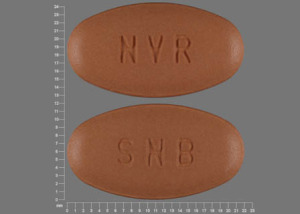
Aliskiren / Valsartan Dosage
Applies to the following strengths: 150 mg-160 mg; 300 mg-320 mg
Usual Adult Dose for:
Additional dosage information:
Usual Adult Dose for Hypertension
Initial dose: 150/160 mg once a day
Maintenance dose: 150/160 mg or 300/320 mg once a day
Maximum dose: Titrate as needed to a maximum dose of 200/320 mg daily.
The antihypertensive effect of aliskiren-valsartan is largely attained within 2 weeks. If blood pressure remains uncontrolled after 2 to 4 weeks of therapy, the dose may be titrated up to a maximum of 300/320 mg.
A patient whose blood pressure is not adequately controlled with aliskiren alone or valsartan (or another angiotensin receptor blocker) alone may be switched to combination therapy with aliskiren-valsartan. The usual initial dose is 150/160 mg once daily as needed to control blood pressure.
For convenience, patients receiving aliskiren and valsartan from separate tablets may instead wish to receive a single tablet of aliskiren-valsartan containing the same component doses.
Renal Dose Adjustments
Adjustment of the starting dose is not required in patients with mild-to-moderate renal impairment. Clinical
experience with dosing aliskiren-valsartan in patients with moderate renal impairment is limited. No data are available in patients with severe renal impairment.
Liver Dose Adjustments
Adjustment of the starting dose is not necessary with mild or moderate hepatic impairment. Clinical experience
with dosing aliskiren-valsartan in patients with severe hepatic impairment is limited.
Dose Adjustments
In the short-term controlled clinical trials of aliskiren-valsartan, 99 (15.9%) patients treated with aliskiren-valsartan were greater than or equal to 65 years and 14 (2.2%) were greater than or equal to 75 years. No overall differences in safety or effectiveness were observed between the elderly and younger subjects, and other reported clinical experience has not identified differences in responses between the elderly and younger patients, but greater sensitivity of some older individuals cannot be ruled out.
The pharmacokinetic differences among Blacks, Caucasians, and Japanese are minimal with aliskiren therapy. Pharmacokinetic differences due to race have not been studied with valsartan therapy.
Precautions
Safety and effectiveness have not been established in pediatric patients (less than 18 years of age).
Dialysis
Data not available
Other Comments
Since high fat meals substantially decrease the absorption of aliskiren, patients should be instructed to establish a routine pattern for administration with regard to meals. However, although absorption may be affected by food, pharmacodynamic data suggest that aliskiren may be taken without regard to meals. Valsartan absorption is not significantly affected by food. In clinical trials of aliskiren-valsartan, it was administered without requiring a fixed relation of administration to meals.
More about aliskiren / valsartan
- Check interactions
- Compare alternatives
- Reviews (10)
- Side effects
- During pregnancy
- Drug class: miscellaneous antihypertensive combinations
Patient resources
Other brands
Related treatment guides
Further information
Always consult your healthcare provider to ensure the information displayed on this page applies to your personal circumstances.