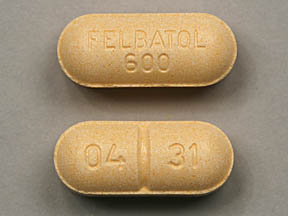
Felbatol Disease Interactions
There are 4 disease interactions with Felbatol (felbamate).
Felbamate (applies to Felbatol) aplastic anemia
Major Potential Hazard, High plausibility. Applicable conditions: Bone Marrow Depression/Low Blood Counts, History - Blood Dyscrasias
The use of felbamate is contraindicated in patients with bone marrow suppression or a current or prior history of blood dyscrasias. A marked increase in the incidence of aplastic anemia has been associated with the use of felbamate, reportedly exceeding 100 times the incidence observed in the general population (2 to 5 per million persons per year). In the few cases that have been reported in felbamate patients, the onset of clinical manifestations of aplastic anemia ranged from 5 to 30 weeks. However, the injury to bone marrow stem cells that is believed to be ultimately responsible for the anemia may occur much earlier. Currently, it is not known whether the risk is related to dose, duration of exposure, and/or concomitant use of other antiepileptic or myelotoxic drugs. Expert hematologic consultation should be available for all patients treated with felbamate. Since aplastic anemia typically develops without premonitory clinical or laboratory signs, it should be borne in mind that routine blood testing may not be reliably used to prevent development of the syndrome. However, in some cases, it may allow the detection of hematologic changes before the condition is full-blown. Felbamate therapy should be withdrawn if evidence of bone marrow depression is observed. Patients who are discontinued from the drug may remain at risk for developing anemia for a variable and unknown period afterwards and should be monitored accordingly.
Felbamate (applies to Felbatol) liver disease
Major Potential Hazard, High plausibility.
The use of felbamate is contraindicated in patients with a history of hepatic impairment. A marked increase in the incidence of hepatic failure, some resulting in fatality, has been associated with the use of felbamate relative to that expected in the general population (approximately 2000 cases per year). Currently, it is not known whether the risk is related to dose, duration of exposure, and/or concomitant use of other antiepileptic or hepatotoxic drugs. All patients treated with felbamate should have serum transaminase and bilirubin levels checked prior to initiating therapy and at 1- to 2-week intervals while treatment continues. Felbamate therapy should be withdrawn if abnormal liver function tests occur.
Felbamate (applies to Felbatol) renal dysfunction
Major Potential Hazard, High plausibility.
Felbamate is partially eliminated by the kidney as unchanged drug (approximately 40% to 50% of absorbed dose). The plasma clearance of felbamate may be decreased and the half-life prolonged in patients with impaired renal function. Therapy with felbamate should be administered cautiously in patients with renal impairment.
Antiepileptics (applies to Felbatol) suicidal tendency
Moderate Potential Hazard, Moderate plausibility. Applicable conditions: Depression, Psychosis
Antiepileptic drugs (AEDs) have been associated with an increased risk of suicidal thoughts or behavior in patients taking these drugs for any indication. Pooled analyses of 199 placebo-controlled clinical studies involving the use of 11 different AEDs showed that patients receiving AEDs had approximately twice the risk of suicidal thinking or behavior compared to patients receiving placebo. AEDs should be administered cautiously in patients with depression or other psychiatric disorders; phentermine-topiramate should be avoided in patients with history of suicidal attempts or active suicidal ideation. The risk of suicidal thoughts and behavior should be carefully assessed against the risk of untreated illness, bearing in mind that epilepsy and many other conditions for which AEDs are prescribed are themselves associated with morbidity and mortality and an increased risk of suicidal thoughts and behavior. Patients, caregivers, and families should be alert to the emergence or worsening of signs and symptoms of depression, any unusual changes in mood or behavior, or the emergence of suicidal thoughts or behavior. If patients have symptoms of suicidal ideation or behavior, a dosage reduction or treatment discontinuation should be considered.
Felbatol drug interactions
There are 517 drug interactions with Felbatol (felbamate).
Felbatol alcohol/food interactions
There is 1 alcohol/food interaction with Felbatol (felbamate).
Report options

More about Felbatol (felbamate)
- Felbatol consumer information
- Check interactions
- Compare alternatives
- Pricing & coupons
- Reviews (8)
- Drug images
- Side effects
- Dosage information
- During pregnancy
- Generic availability
- Drug class: carbamate anticonvulsants
- Breastfeeding
- En español
Related treatment guides
Drug Interaction Classification
| Highly clinically significant. Avoid combinations; the risk of the interaction outweighs the benefit. | |
| Moderately clinically significant. Usually avoid combinations; use it only under special circumstances. | |
| Minimally clinically significant. Minimize risk; assess risk and consider an alternative drug, take steps to circumvent the interaction risk and/or institute a monitoring plan. | |
| No interaction information available. |
Further information
Always consult your healthcare provider to ensure the information displayed on this page applies to your personal circumstances.