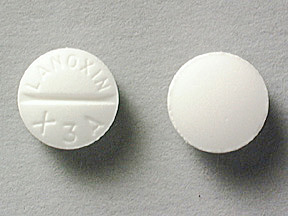
Lanoxin Disease Interactions
There are 13 disease interactions with Lanoxin (digoxin).
- Accessory AV pathway
- Bradyarrhythmia/AV block
- Hypercalcemia
- Hypocalcemia
- Hypokalemia/hypomagnesemia
- Preserved left ventricular ejection
- Renal dysfunction
- Vasoconstriction
- Ventricular arrhythmia
- Acute MI
- Hyperthyroidism
- Hypothyroidism
- Thiamine deficiency
Digoxin (applies to Lanoxin) accessory AV pathway
Major Potential Hazard, High plausibility. Applicable conditions: Preexcitation Syndrome
Digoxin may enhance accessory pathway conduction in conditions such as the Wolff-Parkinson-White syndrome. Patients with Wolf-Parkinson-White syndrome that presents atrial fibrillation are at higher risk for ventricular fibrillation. Treatment with digoxin should be used with caution in these patients.
References
- (2001) "Product Information. Lanoxin (digoxin)." Glaxo Wellcome
Digoxin (applies to Lanoxin) bradyarrhythmia/AV block
Major Potential Hazard, High plausibility. Applicable conditions: Sinus Node Dysfunction, Heart Block
Digoxin slows sinoatrial and AV conduction, prolonging the PR interval. When treated with digoxin, patients with preexisting sinus node disease may develop severe sinus bradycardia or sinoatrial block, and patients with incomplete AV block may progress to advanced or complete heart block. In such patients, consideration should be given to the insertion of a pacemaker prior to initiating treatment with digoxin. Digoxin may be administered to patients with complete, stable AV block who have congestive heart failure, provided the block was not induced by cardiac glycosides.
References
- Gould L, Patel C, Betzu R, Judge D, Lee J (1986) "Right bundle branch block: a rare manifestation of digitalis toxicity- -case report." Angiology, 37, p. 543-6
- (2001) "Product Information. Lanoxin (digoxin)." Glaxo Wellcome
- Banerjee AK, Campbell RWF (1996) "Digoxin therapy and survival in heart failure in sinus rhythm." Int J Cardiol, 55, p. 9-13
Digoxin (applies to Lanoxin) hypercalcemia
Major Potential Hazard, High plausibility.
Calcium and digoxin have additive inotropic effects. Therefore, hypercalcemia from any cause will predispose patients to digoxin toxicity and serious arrhythmias. Hypercalcemia should be corrected prior to initiating treatment with digoxin, and serum calcium levels should be monitored during therapy.
References
- (2001) "Product Information. Lanoxin (digoxin)." Glaxo Wellcome
Digoxin (applies to Lanoxin) hypocalcemia
Major Potential Hazard, High plausibility.
Hypocalcemia can nullify the effects of digoxin. The drug may be ineffective in hypocalcemic patients until serum calcium levels are restored to normal. Restore serum calcium levels prior to initiating therapy with digoxin to obtain maximum results when using digoxin.
References
- (2001) "Product Information. Lanoxin (digoxin)." Glaxo Wellcome
Digoxin (applies to Lanoxin) hypokalemia/hypomagnesemia
Major Potential Hazard, High plausibility. Applicable conditions: Malnourished, Diarrhea, Magnesium Imbalance, Vomiting, Electrolyte Abnormalities, hemodialysis, Hyperaldosteronism
Potassium and/or magnesium depletion sensitizes the myocardium to digoxin. In patients with hypokalemia or hypomagnesemia, digoxin toxicity may occur despite serum drug concentrations below 2.0 ng/mL. Therapy with digoxin should be administered cautiously in patients with or predisposed to potassium and/or magnesium deficiency, including patients on diuretic therapy; those with primary or secondary aldosteronism (may have low potassium levels); those with severe or prolonged diarrhea or vomiting; those with malnutrition; and renal dialysis patients. Electrolyte imbalances should be corrected prior to initiation of treatment. Serum potassium and magnesium concentrations should be monitored during therapy.
References
- Brater DC, Morrelli HF (1977) "Digoxin toxicity in patients with normokalemic potassium depletion." Clin Pharmacol Ther, 22, p. 21-33
- Steiness E, Olesen KH (1976) "Cardiac arrhythmias induced by hypokalaemia and potassium loss during maintenance digoxin therapy." Br Heart J, 38, p. 167-72
- Whang R, Oei TO, Watanabe A (1985) "Frequency of hypomagnesemia in hospitalized patients receiving digitalis." Arch Intern Med, 145, p. 655-6
- (2001) "Product Information. Lanoxin (digoxin)." Glaxo Wellcome
Digoxin (applies to Lanoxin) preserved left ventricular ejection
Major Potential Hazard, High plausibility. Applicable conditions: Cardiomyopathy, Cor Pulmonale, Constrictive Pericarditis
Patients with heart failure associated with preserved left ventricular systolic function, such as in restrictive cardiomyopathy, constrictive pericarditis, amyloid heart disease and acute cor pulmonale, may be particularly susceptible to experience decrease cardiac output. Therapy with digoxin should be administered cautiously in such patients. Patients with idiopathic hypertrophic subaortic stenosis may have worsening of the outflow obstruction due to the inotropic effects of digoxin.
References
- (2001) "Product Information. Lanoxin (digoxin)." Glaxo Wellcome
Digoxin (applies to Lanoxin) renal dysfunction
Major Potential Hazard, High plausibility.
Digoxin is primarily eliminated by the kidney. Patients with renal impairment may be at increased risk for digoxin toxicity, including ventricular arrhythmias and AV conduction disturbances, due to decreased drug clearance. Therapy with digoxin should be administered cautiously in patients with impaired renal function. Dosage adjustments should be made according to product package labeling and patient attributes such as age, ideal body weight, and other concomitant disease states and medication usage. Dosage increments should be made very gradually, since the elimination half-life may be prolonged in these patients and a longer period of time is required to establish steady-state serum concentrations than normal. These patients should be monitored closely for manifestations of toxicity, and dosages further adjusted as necessary. If toxicity occurs, clinicians should be aware that the adverse effects may also be prolonged.
References
- Koup JR, Jusko WJ, Elwood CM, Kohli RK (1975) "Digoxin pharmacokinetics: role of renal failure in dosage regimen design." Clin Pharmacol Ther, 18, p. 9-21
- Doherty JE, Bissett JK, Kane JJ, et al. (1975) "Tritiated digoxin: studies in renal disease in human subjects." Int J Clin Pharmacol, 12, p. 89-95
- van der Vijgh WJF, Oe PL (1977) "Pharmacokinetic aspects of digoxin in patients with terminal renal failure I: off dialysis." Int J Clin Pharmacol Biopharm, 15, p. 249-54
- van der Vijgh WJF, Oe PL (1978) "Pharmacokinetic aspects of digoxin in patients with terminal renal failure IV: clinical implications of own observations with a recent review of literature." Int J Clin Pharmacol Biopharm, 16, p. 540-6
- Ohnhaus EE, Vozeh S, Nuesch E (1979) "Absolute bioavailability of digoxin in chronic renal failure." Clin Nephrol, 11, p. 302-6
- Kaufmann B, Olcay A, Schaumann W, et al. (1981) "Pharmacokinetics of metildigoxin and digoxin in geriatric patients with normal and elevated serum creatinine levels." Clin Pharmacokinet, 6, p. 463-8
- Aronson JK (1983) "Clinical pharmacokinetics of cardiac glycosides in patients with renal dysfunction." Clin Pharmacokinet, 8, p. 155-78
- Gault MH, Churchill DN, Kalra J (1980) "Loading dose of digoxin in renal failure." Br J Clin Pharmacol, 9, p. 593-7
- Ohnhaus EE, Lenzinger HR, Galeazzi RL (1980) "Comparison of two different loading doses of digoxin in severe renal impairment." Eur J Clin Pharmacol, 18, p. 467-72
- Twittenhoff WD, Strauch M, Kutemeyer M, Koch K, Schaumann W (1981) "Extrarenal clearance, distribution volume, and elimination rate of digoxin and metildigoxin in anuric patients." Int J Clin Pharmacol Ther Toxicol, 19, p. 405-8
- Jusko WJ, Szefler SJ, Goldfarb AL (1974) "Pharmacokinetic design of digoxin dosage regimens in relation to renal function." J Clin Pharmacol, 14, p. 525-35
- Keller F, Molzahn M, Ingerowski R (1980) "Digoxin dosage in renal insufficiency: impracticality of basing it on the creatinine clearance, body weight and volume of distribution." Eur J Clin Pharmacol, 18, p. 433-41
- (2001) "Product Information. Lanoxin (digoxin)." Glaxo Wellcome
Digoxin (applies to Lanoxin) vasoconstriction
Major Potential Hazard, Moderate plausibility. Applicable conditions: Cardiomyopathy
Digoxin can rarely precipitate vasoconstriction and may promote the development of cytokines; therefore, should be avoided in patients with myocarditis.
References
- (2001) "Product Information. Lanoxin (digoxin)." Glaxo Wellcome
Digoxin (applies to Lanoxin) ventricular arrhythmia
Major Potential Hazard, High plausibility.
The use of digoxin is contraindicated in patients with ventricular fibrillation. Digoxin toxicity is associated with adverse cardiac effects, including ventricular arrhythmias, which are most commonly seen in chronic toxicity. Digoxin-induced ventricular tachycardia is associated with a high mortality rate, since ventricular fibrillation or asystole may result. Therapy with digoxin should be administered cautiously in patients with frequent ventricular premature contractions or ventricular tachycardia, especially if these arrhythmias are not caused by heart failure.
References
- Moorman JR, Pritchett EL (1985) "The arrhythmias of digitalis intoxication." Arch Intern Med, 145, p. 1289-92
- Salmela PI, Ikaheimo M, Juustila H (1981) "Fatal ventricular fibrillation after treatment with digoxin in a 27- year-old man with mitral leaflet prolapse syndrome." Br Heart J, 46, p. 338-41
- Manninen V, Reissell P, Paukkala E (1976) "Transient cardiac arrhythmias after single daily maintenance doses of digoxin." Clin Pharmacol Ther, 20, p. 266-8
- Chung EK (1969) "Digitalis-induced cardiac arrhythmias: a report of 180 cases." Jpn Heart J, 10, p. 409-27
- Castellanos A, Lemberg L, Centurion M (1968) "The mechanisms of digitalis-induced ventricular fibrillation." Dis Chest, 54, p. 53-7
- (2001) "Product Information. Lanoxin (digoxin)." Glaxo Wellcome
- Warren JL, Mcbean AM, Hass SL, Babish JD (1994) "Hospitalizations with adverse events caused by digitalis therapy among elderly medicare beneficiaries." Arch Intern Med, 154, p. 1482-7
- Steiner JF, Robbins LJ, Hammermeister KE, Roth SC, Hammond WS (1994) "Incidence of digoxin toxicity in outpatients." West J Med, 161, p. 474-8
- Braunwald E, Hauser SL, Kasper DL, Fauci AS, Isselbacher KJ, Longo DL, Martin JB, eds., Wilson JD (1998) "Harrison's Principles of Internal Medicine." New York, NY: McGraw-Hill Health Professionals Division
Digoxin (applies to Lanoxin) acute MI
Moderate Potential Hazard, High plausibility. Applicable conditions: Myocardial Infarction
The use of inotropic drugs in some patients with acute myocardial infarction may lead to increases in myocardial oxygen demand and lead to ischemia. Therapy with digoxin should be administered cautiously in these patients.
References
- (2001) "Product Information. Lanoxin (digoxin)." Glaxo Wellcome
- Kober L, Torppedersen C, Gadsboll N, Hildebrandt P, Hoilundcarlsen PF (1994) "Is digoxin an independent risk factor for long-term mortality after acute myocardial infarction." Eur Heart J, 15, p. 382-8
- Leor J, Goldbourt U, Behar S (1995) "Is it safe to prescribe digoxin after acute myocardial infarction? update on continued controversy." Am Heart J, 130, p. 1322-6
Digoxin (applies to Lanoxin) hyperthyroidism
Moderate Potential Hazard, High plausibility.
Heart failure and/or atrial arrhythmias resulting from hypermetabolic or hyperdynamic states such as hyperthyroidism, hypoxia, or arteriovenous shunt are best managed by treating the underlying condition. Atrial arrhythmias associated with hypermetabolic states are particularly refractory to digoxin, possibly due to altered pharmacokinetics. Specifically, the apparent volume of distribution and renal elimination of the drug may be increased, resulting in lower serum concentrations. Therapy with digoxin should be administered cautiously in patients with hyperthyroidism. Serum digoxin levels should be monitored regularly and dosage adjustments may be required secondary to changes in their thyroid condition.
References
- Lawrence JR, Sumner DJ, Kalk WJ, et al. (1977) "Digoxin kinetics in patients with thyroid dysfunction." Clin Pharmacol Ther, 22, p. 7-13
- Ochs HR, Greenblatt DJ, Bodem G, Dengler HJ (1982) "Disease-related alterations in cardiac-glycoside disposition." Clin Pharmacokinet, 7, p. 434-51
- Bonelli J, Haydl H, Hruby K, Kaik G (1978) "The pharmacokinetics of digoxin in patients with manifest hyperthyroidism and after normalization of thyroid function." Int J Clin Pharmacol Biopharm, 16, p. 302-6
- (2001) "Product Information. Lanoxin (digoxin)." Glaxo Wellcome
- O'Connor P, Feely J (1987) "Clinical pharmacokinetics and endocrine disorders. Therapeutic implications." Clin Pharmacokinet, 13, p. 345-64
Digoxin (applies to Lanoxin) hypothyroidism
Moderate Potential Hazard, High plausibility.
Hypothyroidism may reduce the requirements for digoxin due to decreased volume of distribution and plasma clearance of the drug. Therapy with digoxin should be initiated at lower dosages in patients with hypothyroidism to avoid toxicity. Serum digoxin levels should be monitored regularly and dosage adjustments may be required secondary to changes in thyroid condition.
References
- Lawrence JR, Sumner DJ, Kalk WJ, et al. (1977) "Digoxin kinetics in patients with thyroid dysfunction." Clin Pharmacol Ther, 22, p. 7-13
- Ochs HR, Greenblatt DJ, Bodem G, Dengler HJ (1982) "Disease-related alterations in cardiac-glycoside disposition." Clin Pharmacokinet, 7, p. 434-51
- (2001) "Product Information. Lanoxin (digoxin)." Glaxo Wellcome
- O'Connor P, Feely J (1987) "Clinical pharmacokinetics and endocrine disorders. Therapeutic implications." Clin Pharmacokinet, 13, p. 345-64
Digoxin (applies to Lanoxin) thiamine deficiency
Moderate Potential Hazard, Moderate plausibility.
Patients with beri beri heart disease may fail to respond adequately to digoxin if the underlying thiamine deficiency is not treated concomitantly.
References
- (2001) "Product Information. Lanoxin (digoxin)." Glaxo Wellcome
Lanoxin drug interactions
There are 428 drug interactions with Lanoxin (digoxin).
Lanoxin alcohol/food interactions
There is 1 alcohol/food interaction with Lanoxin (digoxin).
Report options

More about Lanoxin (digoxin)
- Lanoxin consumer information
- Check interactions
- Compare alternatives
- Pricing & coupons
- Drug images
- Side effects
- Dosage information
- During pregnancy
- Generic availability
- Drug class: group V antiarrhythmics
- Breastfeeding
- En español
Related treatment guides
Drug Interaction Classification
| Highly clinically significant. Avoid combinations; the risk of the interaction outweighs the benefit. | |
| Moderately clinically significant. Usually avoid combinations; use it only under special circumstances. | |
| Minimally clinically significant. Minimize risk; assess risk and consider an alternative drug, take steps to circumvent the interaction risk and/or institute a monitoring plan. | |
| No interaction information available. |
Further information
Always consult your healthcare provider to ensure the information displayed on this page applies to your personal circumstances.