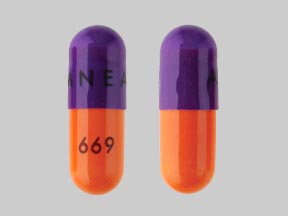
Acebutolol Disease Interactions
There are 19 disease interactions with acebutolol.
- Hemodialysis
- Renal dysfunction
- Bradyarrhythmia/AV block
- Cardiogenic shock/hypotension
- CHF
- Diabetes
- Hypersensitivity
- Ischemic heart disease
- PVD
- Hepatic impairment
- Cerebrovascular insufficiency
- Glaucoma
- Hyperlipidemia
- Hyperthyroidism
- Myasthenia gravis
- Pheochromocytoma
- Psoriasis
- Tachycardia
- Asthma/COPD
Acebutolol (applies to acebutolol) hemodialysis
Major Potential Hazard, High plausibility.
Acebutolol is moderately removed by hemodialysis and should be administered after dialysis when the patient is hemodynamically stable to avoid marked falls in blood pressure. The hemodynamic status should be closely monitored before and after the dose.
References
- Roux A, Aubert P, Guedon J, Flouvat B "Study of acebutolol dialysis and pharmacokinetic data in patients with renal insufficiency undergoing hemodialysis." Nouv Presse Med 4 (1975): 3228-33
- "Product Information. Sectral (acebutolol)." Wyeth-Ayerst Laboratories PROD (2002):
Acebutolol (applies to acebutolol) renal dysfunction
Major Potential Hazard, High plausibility.
The active metabolite of acebutolol, diacetolol, is eliminated primarily by the kidney. Patients with renal impairment may be at greater risk for adverse effects due to metabolite accumulation. Dosage adjustments are recommended for patients with moderate to severe renal dysfunction (CrCl < 50 mL/min).
References
- Kirch W, Kohler H, Berggren G, Braun W "The influence of renal function on plasma levels and urinary excretion of acebutolol and its main N-acetyl metabolite." Clin Nephrol 18 (1982): 88-94
- Gabriel R "Acebutolol in the management of hypertension in patients with renal disease." Br J Clin Pract 33 (1979): 259-62
- Roux A, Aubert P, Guedon J, Flouvat B "Pharmacokinetics of acebutolol in patients with all grades of renal failure." Eur J Clin Pharmacol 17 (1980): 339-48
- "Product Information. Sectral (acebutolol)." Wyeth-Ayerst Laboratories PROD (2002):
Beta-blockers (applies to acebutolol) bradyarrhythmia/AV block
Major Potential Hazard, High plausibility. Applicable conditions: Heart Block, Sinus Node Dysfunction
The use of beta-adrenergic receptor blocking agents (aka beta-blockers) is contraindicated in patients with sinus bradyarrhythmia or heart block greater than the first degree (unless a functioning pacemaker is present). Due to their negative inotropic and chronotropic effects on the heart, the use of beta-blockers is likely to exacerbate these conditions.
References
- Crean PA, Williams DO "Effect of intravenous and oral acebutolol in patients with bundle branch block." Int J Cardiol 10 (1986): 119-26
- Mashford ML, Coventry D, Hecker R, et al. "Adverse Drug Reactions Advisory Committee: ADRAC report for 1980." Med J Aust 1 (1982): 416-9
- Treseder AS, Thomas TP "Sinus arrest due to timolol eye drops." Br J Clin Pract 40 (1986): 256-8
- "Product Information. Sectral (acebutolol)." Wyeth-Ayerst Laboratories PROD (2002):
- "Product Information. Tenormin (atenolol)." ICN Pharmaceuticals Inc PROD (2002):
- "Product Information. Normodyne (labetalol)." Schering Corporation PROD (2002):
- "Product Information. Trandate (labetalol)." Glaxo Wellcome PROD (2002):
- "Product Information. Corgard (nadolol)." Bristol-Myers Squibb PROD (2002):
- "Product Information. Inderal (propranolol)." Wyeth-Ayerst Laboratories PROD (2001):
- "Product Information. Blocadren (timolol)." Merck & Co., Inc PROD (2001):
- "Product Information. Brevibloc (esmolol)." DuPont Pharmaceuticals PROD (2001):
- "Product Information. Cartrol (carteolol)." Abbott Pharmaceutical PROD (2001):
- "Product Information. Kerlone (betaxolol)." Searle PROD (2001):
- "Product Information. Lopressor (metoprolol)." Novartis Pharmaceuticals PROD (2001):
- "Product Information. Betapace (sotalol)." Berlex Laboratories PROD (2001):
- "Product Information. Zebeta (bisoprolol)." Lederle Laboratories PROD (2001):
- "Product Information. Visken (pindolol)." Sandoz Pharmaceuticals Corporation PROD (2001):
- "Product Information. Levatol (penbutolol)." Reed and Carnrick PROD (2001):
- "Product Information. Coreg (carvedilol)." SmithKline Beecham PROD (2001):
- Frishman WH "Carvedilol." N Engl J Med 339 (1998): 1759-65
- Braunwald E, Hauser SL, Kasper DL, Fauci AS, Isselbacher KJ, Longo DL, Martin JB, eds., Wilson JD "Harrison's Principles of Internal Medicine." New York, NY: McGraw-Hill Health Professionals Division (1998):
- "Product Information. Bystolic (nebivolol)." Forest Pharmaceuticals (2007):
Beta-blockers (applies to acebutolol) cardiogenic shock/hypotension
Major Potential Hazard, High plausibility.
The use of beta-adrenergic receptor blocking agents (aka beta-blockers) is contraindicated in patients with hypotension or cardiogenic shock. Due to their negative inotropic and chronotropic effects on the heart, the use of beta-blockers is likely to further depress cardiac output and blood pressure, which can be detrimental in these patients.
References
- Kholeif M, Isles C "Profound hypotension after atenolol in severe hypertension." Br Med J 298 (1989): 161-2
- Tirlapur VG, Evans PJ, Jones MK "Shock syndrome after acebutolol." Br J Clin Pract 40 (1986): 33-4
- "Product Information. Sectral (acebutolol)." Wyeth-Ayerst Laboratories PROD (2002):
- "Product Information. Tenormin (atenolol)." ICN Pharmaceuticals Inc PROD (2002):
- "Product Information. Normodyne (labetalol)." Schering Corporation PROD (2002):
- "Product Information. Trandate (labetalol)." Glaxo Wellcome PROD (2002):
- "Product Information. Corgard (nadolol)." Bristol-Myers Squibb PROD (2002):
- "Product Information. Inderal (propranolol)." Wyeth-Ayerst Laboratories PROD (2001):
- "Product Information. Blocadren (timolol)." Merck & Co., Inc PROD (2001):
- "Product Information. Brevibloc (esmolol)." DuPont Pharmaceuticals PROD (2001):
- "Product Information. Cartrol (carteolol)." Abbott Pharmaceutical PROD (2001):
- "Product Information. Kerlone (betaxolol)." Searle PROD (2001):
- "Product Information. Lopressor (metoprolol)." Novartis Pharmaceuticals PROD (2001):
- "Product Information. Betapace (sotalol)." Berlex Laboratories PROD (2001):
- "Product Information. Zebeta (bisoprolol)." Lederle Laboratories PROD (2001):
- "Product Information. Visken (pindolol)." Sandoz Pharmaceuticals Corporation PROD (2001):
- "Product Information. OptiPranolol (metipranolol ophthalmic)." Bausch and Lomb Americas, Inc. (2022):
- "Product Information. Levatol (penbutolol)." Reed and Carnrick PROD (2001):
- "Product Information. Betagan (levobunolol ophthalmic)." Allergan Inc (2022):
- "Product Information. Coreg (carvedilol)." SmithKline Beecham PROD (2001):
- "Product Information. Acupress (carteolol ophthalmic)." Otsuka American Pharmaceuticals Inc, Rockville, MD.
- "Product Information. Betoptic (betaxolol ophthalmic)." Alcon Laboratories Inc PROD (2001):
- Frishman WH "Carvedilol." N Engl J Med 339 (1998): 1759-65
- "Product Information. Bystolic (nebivolol)." Forest Pharmaceuticals (2007):
Beta-blockers (applies to acebutolol) CHF
Major Potential Hazard, High plausibility. Applicable conditions: Congestive Heart Failure
Beta-adrenergic receptor blocking agents (aka beta-blockers) in general should not be used in patients with overt congestive heart failure (CHF). Sympathetic stimulation may be important in maintaining the hemodynamic function in these patients, thus beta-blockade can worsen the heart failure. However, therapy with beta-blockers may be beneficial and can be administered cautiously in some CHF patients provided they are well compensated and receiving digitalis, diuretics, an ACE inhibitor, and/or nitrates. Carvedilol, specifically, is indicated for use with these agents in the treatment of mild to severe heart failure of ischemic or cardiomyopathic origin. There is also increasing evidence that the addition of a beta-blocker to standard therapy can improve morbidity and mortality in patients with advanced heart failure, although it is uncertain whether effectiveness varies significantly with the different agents. Data from one meta-analysis study suggest a greater reduction of mortality risk for nonselective beta-blockers than for beta-1 selective agents.
References
- Michelson EL, Frishman WH, Lewis JE, et al. "Multicenter clinical evaluation of long-term efficacy and safety of labetalol in treatment of hypertension." Am J Med Oct 17 (1983): 68-80
- Myers J, Morgan T, Waga S, et al. "Long-term experiences with labetalol." Med J Aust 1 (1980): 665-6
- Tcherdakoff P "Side-effects with long-term labetalol: an open study of 251 patients in a single centre." Pharmatherapeutica 3 (1983): 342-8
- Altus P "Timolol-induced congestive heart failure." South Med J 74 (1981): 88
- Mashford ML, Coventry D, Hecker R, et al. "Adverse Drug Reactions Advisory Committee: ADRAC report for 1980." Med J Aust 1 (1982): 416-9
- "Product Information. Sectral (acebutolol)." Wyeth-Ayerst Laboratories PROD (2002):
- "Product Information. Tenormin (atenolol)." ICN Pharmaceuticals Inc PROD (2002):
- "Product Information. Normodyne (labetalol)." Schering Corporation PROD (2002):
- "Product Information. Trandate (labetalol)." Glaxo Wellcome PROD (2002):
- "Product Information. Corgard (nadolol)." Bristol-Myers Squibb PROD (2002):
- "Product Information. Inderal (propranolol)." Wyeth-Ayerst Laboratories PROD (2001):
- "Product Information. Blocadren (timolol)." Merck & Co., Inc PROD (2001):
- "Product Information. Brevibloc (esmolol)." DuPont Pharmaceuticals PROD (2001):
- "Product Information. Cartrol (carteolol)." Abbott Pharmaceutical PROD (2001):
- "Product Information. Kerlone (betaxolol)." Searle PROD (2001):
- "Product Information. Lopressor (metoprolol)." Novartis Pharmaceuticals PROD (2001):
- "Product Information. Betapace (sotalol)." Berlex Laboratories PROD (2001):
- "Product Information. Zebeta (bisoprolol)." Lederle Laboratories PROD (2001):
- "Product Information. Visken (pindolol)." Sandoz Pharmaceuticals Corporation PROD (2001):
- "Product Information. Levatol (penbutolol)." Reed and Carnrick PROD (2001):
- Lechat P, Jaillon P, Fontaine ML, Chanton E, Mesenge C, Gagey S, Guillardeau A, Dussous V "A randomized trial of beta-blockade in heart failure - the cardiac insufficiency bisoprolol study (CIBIS)." Circulation 90 (1994): 1765-73
- Maisel AS "Beneficial effects of metoprolol treatment in congestive heart failure - reversal of sympathetic-induced alterations of immunologic function." Circulation 90 (1994): 1774-80
- Persson H, Rythenalder E, Melcher A, Erhardt L "Effects of beta receptor antagonists in patients with clinical evidence of heart failure after myocardial infarction: double blind comparison of metoprolol and xamoterol." Br Heart J 74 (1995): 140-8
- Kelly DT "Carvedilol in heart failure." Cardiology 82 Suppl 3 (1993): 45-9
- Olsen SL, Gilbert EM, Renlund DG, Taylor DO, Yanowitz FD, Bristow MR "Carvedilol improves left ventricular function and symptoms in chronic heart failure: a double-blind randomized study." J Am Coll Cardiol 25 (1995): 1225-31
- Krum H, Sackner-Bernstein JD, Goldsmith RL, et al. "Double-blind, placebo-controlled study of the long-term efficacy of carvedilol in patients with severe chronic heart failure." Circulation 92 (1995): 1499-506
- Australia-New Zealand Heart Failure Research Collaborative Group. "Effects of carvedilol, a vasodilator-B-blocker, in patients with congestive heart failure due to ischemic heart disease." Circulation 92 (1995): 212-8
- Kalman J, Buchholz C, Steinmetz M, Courtney M, Gass A, Lansman S, Kukin ML "Safety and efficacy of beta blockade in patients with chronic congestive heart failure awaiting transplantation." J Heart Lung Transplant 14 (1995): 1212-7
- Adams KF Jr "Current perspectives on B-receptor antagonists in the treatment of symptomatic ventricular dysfunction." Pharmacotherapy 16(2 Pt 2) (1996): 69-77
- Packer M, Bristow MR, Cohn JN, Colucci WS, Fowler MB, Gilbert EM, Shusterman NH "The effect of carvedilol on morbidity and mortality in patients with chronic heart failure." N Engl J Med 334 (1996): 1349-55
- Persson SV, Erhardt L "Effects of beta receptor antagonists on left ventricular function in patients with clinical evidence of heart failure after myocardial infarction. A double-blind comparison of metoprolol and xamoterol: echocardiographic results from the Metoprolol and..." Eur Heart J 17 (1996): 741-9
- Cleland JGF, Swedberg K "Carvedilol for heart failure, with care." Lancet 347 (1996): 1199-201
- Moye LA, Abernethy D "Carvedilol in patients with chronic heart failure." N Engl J Med 335 (1996): 1318
- Von Olshausen K, Pop T, Berger J "Carvedilol in patients with chronic heart failure." N Engl J Med 335 (1996): 1318-20
- Packer M, Cohn JN, Colucci WS "Carvedilol in patients with chronic heart failure." N Engl J Med 335 (1996): 1310-20
- Colucci WS, Packer M, Bristow MR, Gilbert EM, Cohn JN, Fowler MB, Krueger SK, Hershberger R, Uretsky BF, Bowers JA, Sackne "Carvedilol inhibits clinical progression in patients with mild symptoms of heart failure." Circulation 94 (1996): 2800-6
- Macmahon S, Sharpe N, Doughty R, Krum H, Tonkin A, Trotter A, Burton R, Garrett J, Lane G, Owensby D, Ryan J, Shepherd J, Sing "Randomised, placebo-controlled trial of carvedilol in patients with congestive heart failure due to ischaemic heart disease." Lancet 349 (1997): 375-80
- Bristow MR, Gilbert EM, Abraham WT, et al. "Carvedilol produces dose-related improvements in left ventricular function and survival in subjects with chronic heart failure. MOCHA Investigators." Circulation 94 (1996): 2807-16
- Packer M, Colucci WS, Sackner-Bernstein JD, Liang CS, Goldscher DA, Freeman I, Kukin ML, Kinhal V, Udelson JE, Klapholz M, Gottlieb SS, Pearle D "Double-blind, placebo-controlled study of the effects of carvedilol in patients with moderate to severe heart failure. The PRECISE Trial Prospective Randomized Evaluation of Carvedilol on Symptoms an Exercise." Circulation 94 (1996): 2793-9
- Doughty RN, Whalley GA, Gamble G, MacMahon S, Sharpe N "Left ventricular remodeling with carvedilol in patients with congestive heart failure due to ischemic heart disease. Australia-Ne Zealand Heart Failure Research Collaborative Group." J Am Coll Cardiol 29 (1997): 1060-6
- Lechat P, Packer M, Chalon S, Cucherat M, Arab T, Boissel JP "Clinical effects of beta-adrenergic blockade in chronic heart failure: A meta-analysis of double-blind, placebo-controlled, randomized trials." Circulation 98 (1998): 1184-91
- Frishman WH "Carvedilol." N Engl J Med 339 (1998): 1759-65
- CIBIS-II Investigators and Committees. "The cardiac insufficiency bisoprolol study II (CIBIS-II): a randomised trial." Lancet 353 (1999): 9-13
- Macdonald PS, Keogh AM, Aboyoun CL, Lund M, Amor R, McCaffrey DJ "Tolerability and efficacy of carvedilol in patients with New York Heart Association class IV heart failure." J Am Coll Cardiol 33 (1999): 924-31
- Hjalmarson A, Goldstein S, Fagerberg B, et al. "Effects of controlled-release metoprolol on total mortality, hospitalizations, and well-being in patients with heart failure: the Metoprolol CR/XL Randomized Intervention Trial in congestive heart failure (MERIT-HF)." JAMA 283 (2000): 1295-302
- Phillips KA, Shlipak MG, Coxson P, et al. "Health and economic benefits of increased B-blocker use following myocardial infarction." JAMA 284 (2000): 2748-54
- Hart SM "Influence of B-blockers on mortality in chronic heart failure." Ann Pharmacother 34 (2000): 1440-51
- "Product Information. Bystolic (nebivolol)." Forest Pharmaceuticals (2007):
Beta-blockers (applies to acebutolol) diabetes
Major Potential Hazard, High plausibility. Applicable conditions: Diabetes Mellitus
Beta-adrenergic receptor blocking agents (aka beta-blockers) may mask symptoms of hypoglycemia such as tremors, tachycardia and blood pressure changes. In addition, the nonselective beta-blockers (e.g., propranolol, pindolol, timolol) may inhibit catecholamine-mediated glycogenolysis, thereby potentiating insulin-induced hypoglycemia and delaying the recovery of normal blood glucose levels. Since cardioselectivity is not absolute, larger doses of beta-1 selective agents may demonstrate these effects as well. Therapy with beta-blockers should be administered cautiously in patients with diabetes or predisposed to spontaneous hypoglycemia.
References
- Darga LL, Hakim MJ, Lucas CP, Franklin BA "Comparison of the effects of guanadrel sulfate and propranolol on blood pressure, functional capacity, serum lipoproteins and glucose in systemic hypertension." Am J Cardiol 67 (1991): 590-6
- Uusitupa M, Aro A, Pietikainen M "Severe hypoglycaemia caused by physical strain and pindolol therapy." Ann Clin Res 12 (1980): 25-7
- Velde TM, Kaiser FE "Ophthalmic timolol treatment causing altered hypoglycemic response in a diabetic patient." Arch Intern Med 143 (1983): 1627
- Grimaldi A, Bennett P, Delas B, et al. "Beta-blockers and hypoglycaemia: assessment of cardioselective and intrinsic sympathomimetic properties in relation to severity of hypoglycaemia." Curr Ther Res Clin Exp 36 (1984): 361-73
- "Product Information. Sectral (acebutolol)." Wyeth-Ayerst Laboratories PROD (2002):
- "Product Information. Tenormin (atenolol)." ICN Pharmaceuticals Inc PROD (2002):
- "Product Information. Normodyne (labetalol)." Schering Corporation PROD (2002):
- "Product Information. Trandate (labetalol)." Glaxo Wellcome PROD (2002):
- "Product Information. Corgard (nadolol)." Bristol-Myers Squibb PROD (2002):
- "Product Information. Inderal (propranolol)." Wyeth-Ayerst Laboratories PROD (2001):
- "Product Information. Blocadren (timolol)." Merck & Co., Inc PROD (2001):
- "Product Information. Brevibloc (esmolol)." DuPont Pharmaceuticals PROD (2001):
- "Product Information. Cartrol (carteolol)." Abbott Pharmaceutical PROD (2001):
- "Product Information. Kerlone (betaxolol)." Searle PROD (2001):
- "Product Information. Lopressor (metoprolol)." Novartis Pharmaceuticals PROD (2001):
- "Product Information. Betapace (sotalol)." Berlex Laboratories PROD (2001):
- "Product Information. Zebeta (bisoprolol)." Lederle Laboratories PROD (2001):
- "Product Information. Visken (pindolol)." Sandoz Pharmaceuticals Corporation PROD (2001):
- "Product Information. Levatol (penbutolol)." Reed and Carnrick PROD (2001):
- Giugliano D, Acampora R, Marfella R, DeRosa N, Ziccardi P, Ragone R, DeAngelis L, DOnofrio F "Metabolic and cardiovascular effects of carvedilol and atenolol in non-insulin-dependent diabetes mellitus and hypertension - A randomized, controlled trial." Ann Intern Med 126 (1997): 955-9
- "Product Information. Bystolic (nebivolol)." Forest Pharmaceuticals (2007):
Beta-blockers (applies to acebutolol) hypersensitivity
Major Potential Hazard, High plausibility. Applicable conditions: Allergies
The use of beta-adrenergic receptor blocking agents (aka beta-blockers) in patients with a history of allergic reactions or anaphylaxis may be associated with heightened reactivity to culprit allergens. The frequency and/or severity of attacks may be increased during beta-blocker therapy. In addition, these patients may be refractory to the usual doses of epinephrine used to treat acute hypersensitivity reactions and may require a beta-agonist such as isoproterenol.
References
- "Product Information. Sectral (acebutolol)." Wyeth-Ayerst Laboratories PROD (2002):
- "Product Information. Tenormin (atenolol)." ICN Pharmaceuticals Inc PROD (2002):
- "Product Information. Normodyne (labetalol)." Schering Corporation PROD (2002):
- "Product Information. Trandate (labetalol)." Glaxo Wellcome PROD (2002):
- "Product Information. Corgard (nadolol)." Bristol-Myers Squibb PROD (2002):
- "Product Information. Inderal (propranolol)." Wyeth-Ayerst Laboratories PROD (2001):
- "Product Information. Blocadren (timolol)." Merck & Co., Inc PROD (2001):
- "Product Information. Brevibloc (esmolol)." DuPont Pharmaceuticals PROD (2001):
- "Product Information. Cartrol (carteolol)." Abbott Pharmaceutical PROD (2001):
- "Product Information. Kerlone (betaxolol)." Searle PROD (2001):
- "Product Information. Lopressor (metoprolol)." Novartis Pharmaceuticals PROD (2001):
- "Product Information. Betapace (sotalol)." Berlex Laboratories PROD (2001):
- "Product Information. Zebeta (bisoprolol)." Lederle Laboratories PROD (2001):
- "Product Information. Visken (pindolol)." Sandoz Pharmaceuticals Corporation PROD (2001):
- "Product Information. Levatol (penbutolol)." Reed and Carnrick PROD (2001):
- "Product Information. Coreg (carvedilol)." SmithKline Beecham PROD (2001):
- "Product Information. Bystolic (nebivolol)." Forest Pharmaceuticals (2007):
Beta-blockers (applies to acebutolol) ischemic heart disease
Major Potential Hazard, High plausibility.
Heightened sensitivity to catecholamines may occur after prolonged use of beta-adrenergic receptor blocking agents (aka beta-blockers). Exacerbation of angina, myocardial infarction and ventricular arrhythmias have been reported in patients with coronary artery disease following abrupt withdrawal of therapy. Cessation of beta-blocker therapy, whenever necessary, should occur gradually with incrementally reduced dosages over a period of 1 to 2 weeks in patients with coronary insufficiency. Patients should be advised not to discontinue treatment without first consulting with the physician. In patients who experience an exacerbation of angina following discontinuation of beta-blocker therapy, the medication should generally be reinstituted, at least temporarily, along with other clinically appropriate measures.
References
- Miller RR, Olson HG, Amsterdam EA, Mason DT "Propranolol-withdrawal rebound phenomenon: exacerbation of coronary events after abrupt cessation of antianginal therapy." N Engl J Med 293 (1975): 416-8
- Rangno RE, Langlois S "Comparison of withdrawal phenomena after propranolol, metoprolol, and pindolol." Am Heart J 104 (1982): 473-8
- Szecsi E, Kohlschutter S, Schiess W, Lang E "Abrupt withdrawal of pindolol or metoprolol after chronic therapy." Br J Clin Pharmacol 13 (1982): s353-7
- Walden RJ, Hernandez J, Yu Y, et al. "Withdrawal of beta-blocking drugs." Am Heart J 104 (1982): 515-20
- "Product Information. Sectral (acebutolol)." Wyeth-Ayerst Laboratories PROD (2002):
- "Product Information. Tenormin (atenolol)." ICN Pharmaceuticals Inc PROD (2002):
- "Product Information. Normodyne (labetalol)." Schering Corporation PROD (2002):
- "Product Information. Trandate (labetalol)." Glaxo Wellcome PROD (2002):
- "Product Information. Corgard (nadolol)." Bristol-Myers Squibb PROD (2002):
- "Product Information. Inderal (propranolol)." Wyeth-Ayerst Laboratories PROD (2001):
- "Product Information. Blocadren (timolol)." Merck & Co., Inc PROD (2001):
- "Product Information. Cartrol (carteolol)." Abbott Pharmaceutical PROD (2001):
- "Product Information. Kerlone (betaxolol)." Searle PROD (2001):
- "Product Information. Lopressor (metoprolol)." Novartis Pharmaceuticals PROD (2001):
- "Product Information. Betapace (sotalol)." Berlex Laboratories PROD (2001):
- "Product Information. Zebeta (bisoprolol)." Lederle Laboratories PROD (2001):
- "Product Information. Visken (pindolol)." Sandoz Pharmaceuticals Corporation PROD (2001):
- "Product Information. Levatol (penbutolol)." Reed and Carnrick PROD (2001):
- "Product Information. Coreg (carvedilol)." SmithKline Beecham PROD (2001):
- "Product Information. Bystolic (nebivolol)." Forest Pharmaceuticals (2007):
Beta-blockers (applies to acebutolol) PVD
Major Potential Hazard, High plausibility. Applicable conditions: Peripheral Arterial Disease
Due to their negative inotropic and chronotropic effects on the heart, beta-adrenergic receptor blocking agents (aka beta-blockers) reduce cardiac output and may precipitate or aggravate symptoms of arterial insufficiency in patients with peripheral vascular disease. In addition, the nonselective beta-blockers (e.g., propranolol, pindolol, timolol) may attenuate catecholamine-mediated vasodilation during exercise by blocking beta-2 receptors in peripheral vessels. Therapy with beta-blockers should be administered cautiously in patients with peripheral vascular disease. Close monitoring for progression of arterial obstruction is advised.
References
- Michelson EL, Frishman WH, Lewis JE, et al. "Multicenter clinical evaluation of long-term efficacy and safety of labetalol in treatment of hypertension." Am J Med Oct 17 (1983): 68-80
- Eliasson K, Danielson M, Hylander B, Lindblad LE "Raynaud's phenomenon caused by beta-receptor blocking drugs." Acta Med Scand 215 (1984): 333-9
- Myers J, Morgan T, Waga S, et al. "Long-term experiences with labetalol." Med J Aust 1 (1980): 665-6
- Tcherdakoff P "Side-effects with long-term labetalol: an open study of 251 patients in a single centre." Pharmatherapeutica 3 (1983): 342-8
- Eliasson K, Lins L-E, Sundqvist K "Peripheral vasospasm during beta-receptor blockade: a comparison between metoprolol and pindolol." Acta Med Scand 665 (1982): 109-12
- Lepantalo M "Beta blockade and intermittent claudication." Acta Med Scand 700 (1985): 1-48
- Mashford ML, Coventry D, Hecker R, et al. "Adverse Drug Reactions Advisory Committee: ADRAC report for 1980." Med J Aust 1 (1982): 416-9
- Coppeto JR "Transient ischemic attacks and amaurosis fugax from timolol." Ann Ophthalmol 17 (1985): 64-5
- "Product Information. Sectral (acebutolol)." Wyeth-Ayerst Laboratories PROD (2002):
- "Product Information. Tenormin (atenolol)." ICN Pharmaceuticals Inc PROD (2002):
- "Product Information. Normodyne (labetalol)." Schering Corporation PROD (2002):
- "Product Information. Trandate (labetalol)." Glaxo Wellcome PROD (2002):
- "Product Information. Corgard (nadolol)." Bristol-Myers Squibb PROD (2002):
- "Product Information. Inderal (propranolol)." Wyeth-Ayerst Laboratories PROD (2001):
- "Product Information. Blocadren (timolol)." Merck & Co., Inc PROD (2001):
- "Product Information. Brevibloc (esmolol)." DuPont Pharmaceuticals PROD (2001):
- "Product Information. Cartrol (carteolol)." Abbott Pharmaceutical PROD (2001):
- "Product Information. Kerlone (betaxolol)." Searle PROD (2001):
- "Product Information. Lopressor (metoprolol)." Novartis Pharmaceuticals PROD (2001):
- "Product Information. Betapace (sotalol)." Berlex Laboratories PROD (2001):
- Broeder CE, Thomas EL, Martin NB, Hofman Z, Jesek JK, Scruggs KD, Wambsgans KC, Wilmore JH "Effects of propranolol and pindolol on cardiac output during extended periods of low-intensity physical activity." Am J Cardiol 72 (1993): 1188-95
- "Product Information. Zebeta (bisoprolol)." Lederle Laboratories PROD (2001):
- Holti G "A double-blind study of the peripheral vasoconstrictor effects of the beta-blocking drug penbutolol in patients with Raynaud's phenomenon." Curr Med Res Opin 6 (1979): 267-70
- "Product Information. Visken (pindolol)." Sandoz Pharmaceuticals Corporation PROD (2001):
- "Product Information. Levatol (penbutolol)." Reed and Carnrick PROD (2001):
- Breckenridge A, Roberts DH "Antihypertensive treatment in concomitant peripheral vascular disease: current experience and the potential of carvedilol." J Cardiovasc Pharmacol 18 Suppl 4 (1991): s78-81
- "Product Information. Bystolic (nebivolol)." Forest Pharmaceuticals (2007):
Acebutolol (applies to acebutolol) hepatic impairment
Moderate Potential Hazard, Moderate plausibility. Applicable conditions: Liver Disease
Acebutolol should be used cautiously in patients with impaired hepatic function.
References
- "Product Information. Sectral (acebutolol)." Wyeth-Ayerst Laboratories PROD (2002):
Beta-blockers (applies to acebutolol) cerebrovascular insufficiency
Moderate Potential Hazard, Moderate plausibility.
Beta-adrenergic blocking agents (beta-blockers), should be used with caution in patients with cerebrovascular insufficiency because of their potential effects relative to blood pressure and pulse. If signs or symptoms suggesting reduced cerebral blood flow are observed, consideration should be given to discontinuing these agents.
References
- "Product Information. Sectral (acebutolol)." Wyeth-Ayerst Laboratories PROD (2002):
- "Product Information. Tenormin (atenolol)." ICN Pharmaceuticals Inc PROD (2002):
- "Product Information. Trandate (labetalol)." Glaxo Wellcome PROD (2002):
- "Product Information. Corgard (nadolol)." Bristol-Myers Squibb PROD (2002):
- "Product Information. Inderal (propranolol)." Wyeth-Ayerst Laboratories PROD (2001):
- "Product Information. Blocadren (timolol)." Merck & Co., Inc PROD (2001):
- "Product Information. Brevibloc (esmolol)." DuPont Pharmaceuticals PROD (2001):
- "Product Information. Cartrol (carteolol)." Abbott Pharmaceutical PROD (2001):
- "Product Information. Kerlone (betaxolol)." Searle PROD (2001):
- "Product Information. Lopressor (metoprolol)." Novartis Pharmaceuticals PROD (2001):
- "Product Information. Betapace (sotalol)." Berlex Laboratories PROD (2001):
- "Product Information. Zebeta (bisoprolol)." Lederle Laboratories PROD (2001):
- "Product Information. Visken (pindolol)." Sandoz Pharmaceuticals Corporation PROD (2001):
- "Product Information. Levatol (penbutolol)." Reed and Carnrick PROD (2001):
- "Product Information. Coreg (carvedilol)." SmithKline Beecham PROD (2001):
- "Product Information. Bystolic (nebivolol)." Forest Pharmaceuticals (2007):
Beta-blockers (applies to acebutolol) glaucoma
Moderate Potential Hazard, Moderate plausibility. Applicable conditions: Glaucoma/Intraocular Hypertension
Systemic beta-adrenergic receptor blocking agents (aka beta-blockers) may lower intraocular pressure. Therefore, patients with glaucoma or intraocular hypertension may require adjustments in their ophthalmic regimen following a dosing change or discontinuation of beta-blocker therapy.
References
- "Product Information. Sectral (acebutolol)." Wyeth-Ayerst Laboratories PROD (2002):
- "Product Information. Tenormin (atenolol)." ICN Pharmaceuticals Inc PROD (2002):
- "Product Information. Normodyne (labetalol)." Schering Corporation PROD (2002):
- "Product Information. Trandate (labetalol)." Glaxo Wellcome PROD (2002):
- "Product Information. Corgard (nadolol)." Bristol-Myers Squibb PROD (2002):
- "Product Information. Inderal (propranolol)." Wyeth-Ayerst Laboratories PROD (2001):
- "Product Information. Blocadren (timolol)." Merck & Co., Inc PROD (2001):
- "Product Information. Cartrol (carteolol)." Abbott Pharmaceutical PROD (2001):
- "Product Information. Kerlone (betaxolol)." Searle PROD (2001):
- "Product Information. Lopressor (metoprolol)." Novartis Pharmaceuticals PROD (2001):
- "Product Information. Betapace (sotalol)." Berlex Laboratories PROD (2001):
- "Product Information. Zebeta (bisoprolol)." Lederle Laboratories PROD (2001):
- "Product Information. Visken (pindolol)." Sandoz Pharmaceuticals Corporation PROD (2001):
- "Product Information. Levatol (penbutolol)." Reed and Carnrick PROD (2001):
- "Product Information. Coreg (carvedilol)." SmithKline Beecham PROD (2001):
- "Product Information. Bystolic (nebivolol)." Forest Pharmaceuticals (2007):
Beta-blockers (applies to acebutolol) hyperlipidemia
Moderate Potential Hazard, Low plausibility.
Beta-adrenergic receptor blocking agents (aka beta-blockers) may alter serum lipid profiles. Increases in serum VLDL and LDL cholesterol and triglycerides, as well as decreases in HDL cholesterol, have been reported with some beta-blockers. Patients with preexisting hyperlipidemia may require closer monitoring during beta-blocker therapy, and adjustments made accordingly in their lipid-lowering regimen.
References
- Rossner S, Weiner L "Atenolol and metoprolol: comparison of effects on blood pressure and serum lipoproteins, and side effects." Eur J Clin Pharmacol 24 (1983): 573-7
- Valimaki M, Maass L, Harno K, Nikkila EA "Lipoprotein lipids and apoproteins during beta-blocker administration: comparison of penbutolol and atenolol." Eur J Clin Pharmacol 30 (1986): 17-20
- Disler LJ, Joffe BI, Seftel HC "Massive hypertriglyceridemia associated with atenolol." Am J Med 85 (1988): 586-7
- Harvengt C, Heller FR, Martiat P, Nieuwenhuyze YV "Short-term effects of beta blockers atenolol, nadolol, pindolol, and propranolol on lipoprotein metabolism in normolipemic subjects." J Clin Pharmacol 27 (1987): 475-80
- Darga LL, Hakim MJ, Lucas CP, Franklin BA "Comparison of the effects of guanadrel sulfate and propranolol on blood pressure, functional capacity, serum lipoproteins and glucose in systemic hypertension." Am J Cardiol 67 (1991): 590-6
- Weiner L, Rossner S "Atenolol 50 mg or metoprolol 200 mg: a comparison of antihypertensive efficacy, side effects and lipoprotein changes." Acta Med Scand 677 (1983): 153-7
- Ferrara LA, Marotta T, Scilla A, et al. "Effect of oxprenolol and metoprolol on serum lipid concentration." Eur J Clin Pharmacol 26 (1984): 331-4
- Pasotti C, Capra A, Fiorella G, et al. "Effects of pindolol and metoprolol on plasma lipids and lipoproteins." Br J Clin Pharmacol 13 (1982): s435-9
- Carlson LA, Ribacke M, Terent A "A long-term study on the effect of pindolol on serum lipoproteins: a preliminary report." Br J Clin Pharmacol 24 (1987): s61-2
- Samuel P, Chin B, Schoenfeld BH, et al. "Comparison of the effect of pindolol versus propranolol on the lipid profile in patients treated for hypertension." Br J Clin Pharmacol 24 (1987): s63-4
- Terent A, Ribacke M, Carlson LA "Long-term effect of pindolol on lipids and lipoproteins in men with newly diagnosed hypertension." Eur J Clin Pharmacol 36 (1989): 347-50
- Sasaki J, Saku K, Ideishi M, et al. "Effects of pindolol on serum lipids, apolipoproteins, and lipoproteins in patients with mild to moderate essential hypertension." Clin Ther 11 (1989): 219-24
- Szollar LG, Meszaros I, Tornoci L, et al. "Effect of metoprolol and pindolol monotherapy on plasma lipid- and lipoprotein-cholesterol levels (including the HDL subclasses) in mild hypertensive males and females." J Cardiovasc Pharmacol 15 (1990): 911-7
- Leren P, Foss PO, Nordvik B, Fossbakk B "The effect of enalapril and timolol on blood lipids." Acta Med Scand 223 (1988): 321-6
- "Product Information. Sectral (acebutolol)." Wyeth-Ayerst Laboratories PROD (2002):
- "Product Information. Tenormin (atenolol)." ICN Pharmaceuticals Inc PROD (2002):
- "Product Information. Normodyne (labetalol)." Schering Corporation PROD (2002):
- "Product Information. Trandate (labetalol)." Glaxo Wellcome PROD (2002):
- "Product Information. Corgard (nadolol)." Bristol-Myers Squibb PROD (2002):
- "Product Information. Inderal (propranolol)." Wyeth-Ayerst Laboratories PROD (2001):
- "Product Information. Blocadren (timolol)." Merck & Co., Inc PROD (2001):
- Northcote RJ, Packard CJ, Ballantyne D "The effect of sotalol on plasma lipoproteins and apolipoproteins." Clin Chim Acta 158 (1986): 187-91
- Lehtonen A, Hietanen E, Marniemi J, Peltonen P, Nikkila EA "Effect of sotalol withdrawal on serum lipids and lipoprotein lipase activity." Int J Clin Pharmacol Ther Toxicol 21 (1983): 73-6
- "Product Information. Cartrol (carteolol)." Abbott Pharmaceutical PROD (2001):
- "Product Information. Kerlone (betaxolol)." Searle PROD (2001):
- "Product Information. Lopressor (metoprolol)." Novartis Pharmaceuticals PROD (2001):
- "Product Information. Betapace (sotalol)." Berlex Laboratories PROD (2001):
- "Product Information. Zebeta (bisoprolol)." Lederle Laboratories PROD (2001):
- Safran AB, Simona F, Sansonetti A, Pometta D, James R "Effects of ocular carteolol and timolol on plasma high-density lipoprotein cholesterol level." Am J Ophthalmol 117 (1994): 683
- "Product Information. Visken (pindolol)." Sandoz Pharmaceuticals Corporation PROD (2001):
- Clucas A, Miller N "Effects of acebutolol on the serum lipid profile." Drugs 36 Suppl 2 (1988): 41-50
- "Product Information. Levatol (penbutolol)." Reed and Carnrick PROD (2001):
- Kasiske BL, Ma JZ, Kalil RS, Louis TA "Effects of antihypertensive therapy on serum lipids." Ann Intern Med 122 (1995): 133-41
- Lind L, Pollare T, Berne C, Lithell H "Long-term metabolic effects of antihypertensive drugs." Am Heart J 128 (1994): 1177-83
- Sasaki J, Kajiyama G, Kusukawa R, Mori H, Koga S, Takagi R, Tanaka N, Ogawa N, Arakawa K "Effect of bevantolol and propranolol on serum lipids in patients with essential hypertension." Int J Clin Pharmacol Ther 32 (1994): 660-4
- "Product Information. Coreg (carvedilol)." SmithKline Beecham PROD (2001):
- Lithell H, Andersson PE "Metabolic effects of carvedilol in hypertensive patients." Eur J Clin Pharmacol 52 (1997): 13-7
- Gordon NF, Scott CB, Duncan JJ "Effects of atenolol versus enalapril on cardiovascular fitness and serum lipids in physically active hypertensive men." Am J Cardiol 79 (1997): 1065-9
- "Product Information. Bystolic (nebivolol)." Forest Pharmaceuticals (2007):
Beta-blockers (applies to acebutolol) hyperthyroidism
Moderate Potential Hazard, High plausibility.
When beta-adrenergic receptor blocking agents (aka beta-blockers) are used to alleviate symptoms of hyperthyroidism such as tachycardia, anxiety, tremor and heat intolerance, abrupt withdrawal can exacerbate thyrotoxicosis or precipitate a thyroid storm. To minimize this risk, cessation of beta-blocker therapy, when necessary, should occur gradually with incrementally reduced dosages over a period of 1 to 2 weeks. Patients should be advised not to discontinue treatment without first consulting with the physician. Close monitoring is recommended during and after therapy withdrawal.
References
- "Product Information. Sectral (acebutolol)." Wyeth-Ayerst Laboratories PROD (2002):
- "Product Information. Tenormin (atenolol)." ICN Pharmaceuticals Inc PROD (2002):
- "Product Information. Normodyne (labetalol)." Schering Corporation PROD (2002):
- "Product Information. Trandate (labetalol)." Glaxo Wellcome PROD (2002):
- "Product Information. Corgard (nadolol)." Bristol-Myers Squibb PROD (2002):
- "Product Information. Inderal (propranolol)." Wyeth-Ayerst Laboratories PROD (2001):
- "Product Information. Blocadren (timolol)." Merck & Co., Inc PROD (2001):
- "Product Information. Cartrol (carteolol)." Abbott Pharmaceutical PROD (2001):
- "Product Information. Kerlone (betaxolol)." Searle PROD (2001):
- "Product Information. Lopressor (metoprolol)." Novartis Pharmaceuticals PROD (2001):
- "Product Information. Betapace (sotalol)." Berlex Laboratories PROD (2001):
- "Product Information. Zebeta (bisoprolol)." Lederle Laboratories PROD (2001):
- "Product Information. Visken (pindolol)." Sandoz Pharmaceuticals Corporation PROD (2001):
- "Product Information. Levatol (penbutolol)." Reed and Carnrick PROD (2001):
- "Product Information. Coreg (carvedilol)." SmithKline Beecham PROD (2001):
- "Product Information. Bystolic (nebivolol)." Forest Pharmaceuticals (2007):
Beta-blockers (applies to acebutolol) myasthenia gravis
Moderate Potential Hazard, Low plausibility. Applicable conditions: Myoneural Disorder
Beta-adrenergic receptor blocking agents (aka beta-blockers) may potentiate muscle weakness consistent with certain myasthenic symptoms such as diplopia, ptosis, and generalized weakness. Several beta-blockers have been associated rarely with aggravation of muscle weakness in patients with preexisting myasthenia gravis or myasthenic symptoms. Use cautiously in patients with myasthenia gravis.
References
- Confavreux C, Charles N, Aimard G "Fulminant myasthenia gravis soon after initiation of acebutolol therapy." Eur Neurol 30 (1990): 279-81
- Berstein LP, Henkind P "Additional information on adverse reactions to timolol." Am J Ophthalmol 92 (1981): 295-6
- Coppeto JR "Timolol-associated myasthenia gravis." Am J Ophthalmol 98 (1984): 244-5
- Verkijk A "Worsening of myasthenia gravis with timolol maleate eyedrops." Ann Neurol 17 (1985): 211-2
- Herishanu Y, Rosenberg P "Beta-blockers and myasthenia gravis." Ann Intern Med 83 (1975): 834-5
- "Product Information. Blocadren (timolol)." Merck & Co., Inc PROD (2001):
- Choi KL, Wat MS, Ip TP, Kung AWC, Lam KSL "Phaeochromocytoma associated with myasthenia gravis precipitated by propranolol treatment." Aust N Z J Med 25 (1995): 257
Beta-blockers (applies to acebutolol) pheochromocytoma
Moderate Potential Hazard, Moderate plausibility.
Administration of beta-blockers alone in the setting of pheochromocytoma has been associated with a paradoxical increase in blood pressure due to the attenuation of beta-mediated vasodilatation in skeletal muscle. In patients with pheochromocytoma, an alpha-blocking agent should be initiated prior to the use of any beta-blocking agent. Caution should be taken in the administration of these agents to patients suspected of having pheochromocytoma.
References
- "Product Information. Sectral (acebutolol)." Wyeth-Ayerst Laboratories PROD (2002):
- "Product Information. Tenormin (atenolol)." ICN Pharmaceuticals Inc PROD (2002):
- "Product Information. Trandate (labetalol)." Glaxo Wellcome PROD (2002):
- "Product Information. Corgard (nadolol)." Bristol-Myers Squibb PROD (2002):
- "Product Information. Inderal (propranolol)." Wyeth-Ayerst Laboratories PROD (2001):
- "Product Information. Blocadren (timolol)." Merck & Co., Inc PROD (2001):
- "Product Information. Brevibloc (esmolol)." DuPont Pharmaceuticals PROD (2001):
- "Product Information. Cartrol (carteolol)." Abbott Pharmaceutical PROD (2001):
- "Product Information. Kerlone (betaxolol)." Searle PROD (2001):
- "Product Information. Lopressor (metoprolol)." Novartis Pharmaceuticals PROD (2001):
- "Product Information. Betapace (sotalol)." Berlex Laboratories PROD (2001):
- "Product Information. Zebeta (bisoprolol)." Lederle Laboratories PROD (2001):
- "Product Information. Visken (pindolol)." Sandoz Pharmaceuticals Corporation PROD (2001):
- "Product Information. Levatol (penbutolol)." Reed and Carnrick PROD (2001):
- "Product Information. Coreg (carvedilol)." SmithKline Beecham PROD (2001):
- "Product Information. Bystolic (nebivolol)." Forest Pharmaceuticals (2007):
Beta-blockers (applies to acebutolol) psoriasis
Moderate Potential Hazard, Moderate plausibility.
The use of beta-blockers in psoriatic patients should be carefully weighed since the use of these agents may cause an aggravation in psoriasis.
References
- "Product Information. Sectral (acebutolol)." Wyeth-Ayerst Laboratories PROD (2002):
- "Product Information. Tenormin (atenolol)." ICN Pharmaceuticals Inc PROD (2002):
- "Product Information. Normodyne (labetalol)." Schering Corporation PROD (2002):
- "Product Information. Trandate (labetalol)." Glaxo Wellcome PROD (2002):
- "Product Information. Corgard (nadolol)." Bristol-Myers Squibb PROD (2002):
- "Product Information. Inderal (propranolol)." Wyeth-Ayerst Laboratories PROD (2001):
- "Product Information. Blocadren (timolol)." Merck & Co., Inc PROD (2001):
- "Product Information. Brevibloc (esmolol)." DuPont Pharmaceuticals PROD (2001):
- "Product Information. Cartrol (carteolol)." Abbott Pharmaceutical PROD (2001):
- "Product Information. Kerlone (betaxolol)." Searle PROD (2001):
- "Product Information. Lopressor (metoprolol)." Novartis Pharmaceuticals PROD (2001):
- "Product Information. Betapace (sotalol)." Berlex Laboratories PROD (2001):
- "Product Information. Zebeta (bisoprolol)." Lederle Laboratories PROD (2001):
- "Product Information. Visken (pindolol)." Sandoz Pharmaceuticals Corporation PROD (2001):
- "Product Information. Levatol (penbutolol)." Reed and Carnrick PROD (2001):
- "Product Information. Bystolic (nebivolol)." Forest Pharmaceuticals (2007):
Beta-blockers (applies to acebutolol) tachycardia
Moderate Potential Hazard, Moderate plausibility. Applicable conditions: Tachyarrhythmia
Beta-adrenergic blockade in patients with Wolff-Parkinson-White syndrome and tachycardia has been associated with severe bradycardia requiring treatment with a pacemaker. In one case, this result was reported after an initial dose of 5 mg propranolol. The use of beta-adrenergic receptor blocking agents (aka beta-blockers) should be administered cautiously in these patients.
References
- "Product Information. Sectral (acebutolol)." Wyeth-Ayerst Laboratories PROD (2002):
- "Product Information. Tenormin (atenolol)." ICN Pharmaceuticals Inc PROD (2002):
- "Product Information. Normodyne (labetalol)." Schering Corporation PROD (2002):
- "Product Information. Trandate (labetalol)." Glaxo Wellcome PROD (2002):
- "Product Information. Corgard (nadolol)." Bristol-Myers Squibb PROD (2002):
- "Product Information. Inderal (propranolol)." Wyeth-Ayerst Laboratories PROD (2001):
- "Product Information. Blocadren (timolol)." Merck & Co., Inc PROD (2001):
- "Product Information. Brevibloc (esmolol)." DuPont Pharmaceuticals PROD (2001):
- "Product Information. Cartrol (carteolol)." Abbott Pharmaceutical PROD (2001):
- "Product Information. Kerlone (betaxolol)." Searle PROD (2001):
- "Product Information. Lopressor (metoprolol)." Novartis Pharmaceuticals PROD (2001):
- "Product Information. Betapace (sotalol)." Berlex Laboratories PROD (2001):
- "Product Information. Zebeta (bisoprolol)." Lederle Laboratories PROD (2001):
- "Product Information. Visken (pindolol)." Sandoz Pharmaceuticals Corporation PROD (2001):
- "Product Information. Levatol (penbutolol)." Reed and Carnrick PROD (2001):
- "Product Information. Bystolic (nebivolol)." Forest Pharmaceuticals (2007):
Cardioselective beta-blockers (applies to acebutolol) asthma/COPD
Moderate Potential Hazard, Moderate plausibility. Applicable conditions: Chronic Obstructive Pulmonary Disease
Patients with bronchospastic disease, should, in general, not receive beta blockers, including cardioselective beta-blockers. Because of the relative beta-1 selectivity, cardioselective beta-blockers may be used in patients with bronchospastic disease who do not respond to, or cannot tolerate, other antihypertensive treatment. Because beta-1 selectivity is not absolute, the lowest possible dose of these agents should be used. Consider administering in smaller doses to avoid the higher plasma levels associated with the longer dosing intervals. If dosage must be increased, dividing the dose should be considered to achieve lower peak blood levels. It is recommended to have bronchodilators, including beta-2 agonists, readily available or administered concomitantly if necessary.
References
- "Product Information. Sectral (acebutolol)." Wyeth-Ayerst Laboratories PROD (2002):
- "Product Information. Tenormin (atenolol)." ICN Pharmaceuticals Inc PROD (2002):
- "Product Information. Brevibloc (esmolol)." DuPont Pharmaceuticals PROD (2001):
- "Product Information. Kerlone (betaxolol)." Searle PROD (2001):
- "Product Information. Lopressor (metoprolol)." Novartis Pharmaceuticals PROD (2001):
- "Product Information. Zebeta (bisoprolol)." Lederle Laboratories PROD (2001):
- "Product Information. Bystolic (nebivolol)." Forest Pharmaceuticals (2007):
Acebutolol drug interactions
There are 474 drug interactions with acebutolol.
Acebutolol alcohol/food interactions
There are 3 alcohol/food interactions with acebutolol.
Report options

More about acebutolol
- acebutolol consumer information
- Check interactions
- Compare alternatives
- Pricing & coupons
- Reviews (5)
- Drug images
- Side effects
- Dosage information
- During pregnancy
- Drug class: cardioselective beta blockers
- Breastfeeding
- En español
Related treatment guides
Drug Interaction Classification
| Highly clinically significant. Avoid combinations; the risk of the interaction outweighs the benefit. | |
| Moderately clinically significant. Usually avoid combinations; use it only under special circumstances. | |
| Minimally clinically significant. Minimize risk; assess risk and consider an alternative drug, take steps to circumvent the interaction risk and/or institute a monitoring plan. | |
| No interaction information available. |
Further information
Always consult your healthcare provider to ensure the information displayed on this page applies to your personal circumstances.