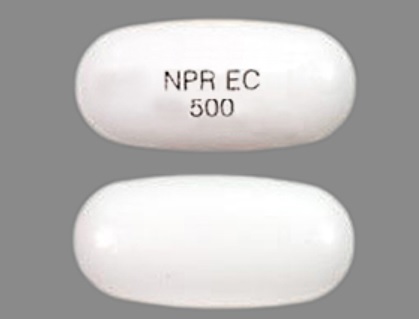
EC Naprosyn (Oral)
Generic name: naproxen [ na-PROX-en ]
Brand names: Aflaxen, Aleve, Aleve Arthritis, Anaprox, Anaprox DS,
... show all 10 brands
Drug class: Nonsteroidal anti-inflammatory drugs
Medically reviewed by Drugs.com. Last updated on Jun 6, 2023.
NSAIDs may cause an increased risk of serious cardiovascular thrombotic events, including myocardial infarction and stroke, which can be fatal. This risk may be increased in patients with cardiovascular disease or risk factors for cardiovascular disease. Naproxen is contraindicated in the setting of CABG surgery. NSAIDs can also cause an increased risk of serious gastrointestinal (GI) adverse events, including bleeding, ulceration, and perforation of the stomach or intestines, which can be fatal. Elderly patients and patients with a history of peptic ulcer disease and/or GI bleeding are at greater risk for serious GI events .
Oral route(Tablet, Extended Release;Tablet)NSAIDs may cause an increased risk of serious cardiovascular thrombotic events, including myocardial infarction and stroke, which can be fatal. This risk may be increased in patients with cardiovascular disease or risk factors for cardiovascular disease. Naproxen sodium is contraindicated in the setting of CABG surgery. NSAIDs can also cause an increased risk of serious gastrointestinal (GI) adverse events, including bleeding, ulceration, and perforation of the stomach or intestines, which can be fatal. Elderly patients and patients with a history of peptic ulcer disease and/or GI bleeding are at greater risk for serious GI events .
Uses for EC Naprosyn
Naproxen is a nonsteroidal anti-inflammatory drug (NSAID) used to relieve symptoms of arthritis (eg, osteoarthritis, rheumatoid arthritis, or juvenile arthritis) such as inflammation, swelling, stiffness, and joint pain. Naproxen also helps relieve symptoms of ankylosing spondylitis, which is a type of arthritis that affects the joints in the spine. However, this medicine does not cure arthritis and will help you only as long as you continue to take it.
This medicine may also be used to treat mild to moderate pain, including acute gout and other painful conditions such as bursitis, tendinitis, or menstrual cramps.
This medicine is available only with your doctor's prescription.
Before using EC Naprosyn
In deciding to use a medicine, the risks of taking the medicine must be weighed against the good it will do. This is a decision you and your doctor will make. For this medicine, the following should be considered:
Allergies
Tell your doctor if you have ever had any unusual or allergic reaction to this medicine or any other medicines. Also tell your health care professional if you have any other types of allergies, such as to foods, dyes, preservatives, or animals. For non-prescription products, read the label or package ingredients carefully.
Pediatric
Appropriate studies have not been performed on the relationship of age to the effects of naproxen controlled-release tablets in the pediatric population. Safety and efficacy have not been established.
Appropriate studies have not been performed on the relationship of age to the effects of naproxen delayed release tablets, suspension, and tablets in children younger than 2 years of age. Safety and efficacy have not been established.
Geriatric
Appropriate studies performed to date have not demonstrated geriatric-specific problems that would limit the usefulness of naproxen in the elderly. However, elderly patients may be more sensitive to the effects of naproxen than younger adults, and are more likely to have age-related kidney or stomach problems, which may require caution and an adjustment in the dose for patients receiving naproxen.
Breast Feeding
There are no adequate studies in women for determining infant risk when using this medication during breastfeeding. Weigh the potential benefits against the potential risks before taking this medication while breastfeeding.
Interactions with Medicines
Although certain medicines should not be used together at all, in other cases two different medicines may be used together even if an interaction might occur. In these cases, your doctor may want to change the dose, or other precautions may be necessary. When you are taking this medicine, it is especially important that your healthcare professional know if you are taking any of the medicines listed below. The following interactions have been selected on the basis of their potential significance and are not necessarily all-inclusive.
Using this medicine with any of the following medicines is not recommended. Your doctor may decide not to treat you with this medication or change some of the other medicines you take.
- Ketorolac
Using this medicine with any of the following medicines is usually not recommended, but may be required in some cases. If both medicines are prescribed together, your doctor may change the dose or how often you use one or both of the medicines.
- Abciximab
- Aceclofenac
- Acemetacin
- Acenocoumarol
- Amiloride
- Amineptine
- Amitriptyline
- Amitriptylinoxide
- Amoxapine
- Amtolmetin Guacil
- Anagrelide
- Apixaban
- Ardeparin
- Argatroban
- Aspirin
- Balsalazide
- Bemetizide
- Bemiparin
- Bendroflumethiazide
- Benzthiazide
- Betamethasone
- Betrixaban
- Bismuth Subsalicylate
- Bivalirudin
- Bromfenac
- Budesonide
- Bufexamac
- Bumetanide
- Cangrelor
- Celecoxib
- Ceritinib
- Certoparin
- Chlorothiazide
- Chlorthalidone
- Choline Magnesium Trisalicylate
- Choline Salicylate
- Cilostazol
- Citalopram
- Clomipramine
- Clonixin
- Clopamide
- Clopidogrel
- Cortisone
- Cyclopenthiazide
- Cyclosporine
- Cyclothiazide
- Dabigatran Etexilate
- Dalteparin
- Danaparoid
- Deflazacort
- Desipramine
- Desirudin
- Desmopressin
- Desvenlafaxine
- Dexamethasone
- Dexibuprofen
- Dexketoprofen
- Diazoxide
- Dibenzepin
- Diclofenac
- Diflunisal
- Digoxin
- Dipyridamole
- Dipyrone
- Dothiepin
- Doxepin
- Droxicam
- Duloxetine
- Edoxaban
- Emtricitabine
- Enoxaparin
- Eplerenone
- Epoprostenol
- Eptifibatide
- Escitalopram
- Ethacrynic Acid
- Etodolac
- Etofenamate
- Etoricoxib
- Etozolin
- Felbinac
- Fenoprofen
- Fepradinol
- Feprazone
- Feverfew
- Floctafenine
- Fluconazole
- Flufenamic Acid
- Fluocortolone
- Fluoxetine
- Flurbiprofen
- Fluvoxamine
- Fondaparinux
- Furosemide
- Ginkgo
- Gossypol
- Heparin
- Hydrochlorothiazide
- Hydrocortisone
- Hydroflumethiazide
- Ibuprofen
- Iloprost
- Imipramine
- Indapamide
- Indomethacin
- Inotersen
- Ketoprofen
- Lepirudin
- Levomilnacipran
- Lithium
- Lofepramine
- Lornoxicam
- Loxoprofen
- Lumiracoxib
- Magnesium Salicylate
- Meadowsweet
- Meclofenamate
- Mefenamic Acid
- Melitracen
- Meloxicam
- Melphalan
- Mesalamine
- Methotrexate
- Methyclothiazide
- Methylprednisolone
- Metolazone
- Milnacipran
- Morniflumate
- Nabumetone
- Nadroparin
- Nefazodone
- Nepafenac
- Niflumic Acid
- Nimesulide
- Nimesulide Beta Cyclodextrin
- Nortriptyline
- Olsalazine
- Opipramol
- Oxaprozin
- Oxyphenbutazone
- Paramethasone
- Parecoxib
- Parnaparin
- Paroxetine
- Pemetrexed
- Pentosan Polysulfate Sodium
- Pentoxifylline
- Phenindione
- Phenprocoumon
- Phenylbutazone
- Phenyl Salicylate
- Piketoprofen
- Piretanide
- Piroxicam
- Pixantrone
- Polythiazide
- Potassium Citrate
- Prasugrel
- Prednisolone
- Prednisone
- Probenecid
- Proglumetacin
- Propyphenazone
- Proquazone
- Protein C
- Protriptyline
- Quinethazone
- Reviparin
- Rivaroxaban
- Rofecoxib
- Salicylamide
- Salicylic Acid
- Salsalate
- Selexipag
- Sertraline
- Sibutramine
- Sodium Salicylate
- Spironolactone
- Sulfasalazine
- Sulfinpyrazone
- Sulindac
- Sulodexide
- Tacrolimus
- Tenofovir Alafenamide
- Tenofovir Disoproxil Fumarate
- Tenoxicam
- Tianeptine
- Tiaprofenic Acid
- Ticagrelor
- Ticlopidine
- Tinzaparin
- Tirofiban
- Tolfenamic Acid
- Tolmetin
- Torsemide
- Trazodone
- Treprostinil
- Triamterene
- Trichlormethiazide
- Trimipramine
- Trolamine Salicylate
- Valdecoxib
- Venlafaxine
- Vilazodone
- Vorapaxar
- Vortioxetine
- Warfarin
- Xipamide
Using this medicine with any of the following medicines may cause an increased risk of certain side effects, but using both drugs may be the best treatment for you. If both medicines are prescribed together, your doctor may change the dose or how often you use one or both of the medicines.
- Acebutolol
- Atenolol
- Azilsartan
- Azilsartan Medoxomil
- Benazepril
- Betaxolol
- Bisoprolol
- Candesartan
- Captopril
- Carteolol
- Carvedilol
- Celiprolol
- Enalapril
- Enalaprilat
- Eprosartan
- Esmolol
- Fosinopril
- Irbesartan
- Labetalol
- Levobunolol
- Lisinopril
- Losartan
- Metipranolol
- Metoprolol
- Moexipril
- Nadolol
- Nebivolol
- Olmesartan
- Oxprenolol
- Penbutolol
- Perindopril
- Pindolol
- Propranolol
- Quinapril
- Ramipril
- Sotalol
- Spirapril
- Telmisartan
- Timolol
- Trandolapril
- Valsartan
Interactions with Food/Tobacco/Alcohol
Certain medicines should not be used at or around the time of eating food or eating certain types of food since interactions may occur. Using alcohol or tobacco with certain medicines may also cause interactions to occur. The following interactions have been selected on the basis of their potential significance and are not necessarily all-inclusive.
Using this medicine with any of the following is usually not recommended, but may be unavoidable in some cases. If used together, your doctor may change the dose or how often you use this medicine, or give you special instructions about the use of food, alcohol, or tobacco.
- Tobacco
Other Medical Problems
The presence of other medical problems may affect the use of this medicine. Make sure you tell your doctor if you have any other medical problems, especially:
- Anemia or
- Bleeding problems or
- Blood clots or
- Edema (fluid retention or body swelling) or
- Heart attack, recent or history of or
- Heart disease (eg, congestive heart failure) or
- Hyperkalemia (high potassium levels in the blood) or
- Hypertension (high blood pressure) or
- Kidney disease or
- Liver disease (eg, hepatitis) or
- Stomach or intestinal ulcers or bleeding, history of or
- Stroke, history of—Use with caution. May make these conditions worse.
- Aspirin-sensitive asthma or
- Aspirin sensitivity, history of or
- Kidney disease, severe—Should not be used in patients with these conditions.
- Dehydration or
- Hypovolemia (low blood volume)—Must be corrected first before using this medicine.
- Heart surgery (eg, coronary artery bypass graft [CABG])—Should not be used to relieve pain right before or after the surgery.
Proper use of EC Naprosyn
For safe and effective use of this medicine, do not take more of it, do not take it more often, and do not take it for a longer time than ordered by your doctor. Taking too much of this medicine may increase the chance of unwanted effects, especially in elderly patients.
This medicine should come with a Medication Guide. Read and follow these instructions carefully. Ask your doctor if you have any questions.
When used for severe or continuing arthritis, this medicine must be taken regularly as ordered by your doctor in order for it to help you. This medicine usually begins to work within one week, but in severe cases up to two weeks or even longer may pass before you begin to feel better. Also, several weeks may pass before you feel the full effects of this medicine.
Check with your doctor first before changing dosage forms (eg, tablets, suspension). These forms are very different from each other.
Swallow the delayed-release tablet whole. Do not crush, break, or chew it.
If you are using the suspension, shake it gently before using it. Use the marked measuring cup included in the package to measure the dose.
Dosing
The dose of this medicine will be different for different patients. Follow your doctor's orders or the directions on the label. The following information includes only the average doses of this medicine. If your dose is different, do not change it unless your doctor tells you to do so.
The amount of medicine that you take depends on the strength of the medicine. Also, the number of doses you take each day, the time allowed between doses, and the length of time you take the medicine depend on the medical problem for which you are using the medicine.
- For naproxen (eg, Naprosyn®) tablet and oral suspension dosage forms:
- For rheumatoid arthritis, osteoarthritis, and ankylosing spondylitis:
- Adults—At first, 250 milligrams (mg) (10 milliliters (mL)/2 teaspoonfuls), 375 mg (15 mL/3 teaspoonfuls), or 500 mg (20 mL/4 teaspoonfuls) 2 times a day, in the morning and evening. Your doctor may adjust your dose as needed. However the dose is usually not more than 1500 mg per day.
- Children 2 years of age and older—Dose is based on body weight and must be determined by your doctor. The dose is usually 5 milligrams (mg) per kilogram (kg) of body weight 2 times a day.
- Children younger than 2 years of age—Use and dose must be determined by your doctor.
- For acute gout:
- Adults—750 milligrams (mg) for the first dose, then 250 mg every 8 hours until the attack is relieved.
- Children—Use and dose must be determined by your doctor.
- For rheumatoid arthritis, osteoarthritis, and ankylosing spondylitis:
- For naproxen controlled-release tablet (eg, Naprelan®) dosage form:
- For rheumatoid arthritis, osteoarthritis, and ankylosing spondylitis:
- Adults—At first, 750 milligrams (mg) (taken as one 750 mg or two 375 mg tablets) or 1000 mg (taken as two 500 mg tablets) once a day. Your doctor may adjust your dose as needed. However the dose is usually not more than 1500 mg (taken as two 750 mg or three 500 mg tablets) per day.
- Children—Use and dose must be determined by your doctor.
- For bursitis, tendinitis, menstrual cramps, and other kinds of pain:
- Adults—At first, 1000 milligrams (mg) (taken as two 500 mg tablets) once a day. Some patients may need 1500 mg (taken as two 750 mg or three 500 mg tablets) per day, for a limited period. However, the dose is usually not more than 1000 mg per day.
- Children—Use and dose must be determined by your doctor.
- For acute gout:
- Adults—1000 to 1500 milligrams (mg) (taken as two to three 500 mg tablets) once a day for the first dose, then 1000 mg (taken as two 500 mg tablets) once a day until the attack is relieved.
- Children—Use and dose must be determined by your doctor.
- For rheumatoid arthritis, osteoarthritis, and ankylosing spondylitis:
- For naproxen delayed-release tablet (eg, EC-Naprosyn®) dosage form:
- For rheumatoid arthritis, osteoarthritis, and ankylosing spondylitis:
- Adults—At first, 375 or 500 milligrams (mg) 2 times a day, in the morning and evening. Your doctor may adjust the dose as needed. However, the dose is usually not more than 1500 mg per day.
- Children—Use and dose must be determined by your doctor.
- For rheumatoid arthritis, osteoarthritis, and ankylosing spondylitis:
- For naproxen sodium (eg, Anaprox®, Anaprox® DS) tablet dosage form:
- For rheumatoid arthritis, osteoarthritis, and ankylosing spondylitis:
- Adults—At first, 275 or 550 milligrams (mg) 2 times a day, in the morning and evening. Your doctor may adjust the dose as needed. However, the dose is usually not more than 1500 mg per day.
- Children—Use and dose must be determined by your doctor.
- For bursitis, tendinitis, menstrual cramps, and other kinds of pain:
- Adults—550 milligrams (mg) for the first dose, then 550 mg every 12 hours or 275 mg every 6 to 8 hours as needed. Your doctor may adjust the dose as needed. However, the dose is usually not more than 1375 mg per day.
- Children—Use and dose must be determined by your doctor.
- For acute gout:
- Adults—825 milligrams (mg) for the first dose, then 275 mg every 8 hours until the attack is relieved.
- Children—Use and dose must be determined by your doctor.
- For rheumatoid arthritis, osteoarthritis, and ankylosing spondylitis:
Missed Dose
If you miss a dose of this medicine, take it as soon as possible. However, if it is almost time for your next dose, skip the missed dose and go back to your regular dosing schedule. Do not double doses.
Storage
Store the medicine in a closed container at room temperature, away from heat, moisture, and direct light. Keep from freezing.
Keep out of the reach of children.
Do not keep outdated medicine or medicine no longer needed.
Ask your healthcare professional how you should dispose of any medicine you do not use.
Precautions while using EC Naprosyn
It is very important that your doctor check your progress at regular visits. This will allow your doctor to see if the medicine is working properly and to decide if you should continue to take it. Blood and urine tests may be needed to check for unwanted effects.
This medicine may raise your risk of having a heart attack or stroke. This is more likely in people who already have heart disease or in people who use this medicine for a longer time.
This medicine may cause bleeding in your stomach or intestines. This problem can happen without warning signs. This is more likely if you have had a stomach ulcer in the past, if you smoke or drink alcohol regularly, if you are over 60 years of age, are in poor health, or are using certain other medicines (eg, steroid medicine, blood thinner).
Check with your doctor right away if you have pain or tenderness in the upper stomach, pale stools, dark urine, loss of appetite, nausea, vomiting, or yellow eyes or skin. These could be symptoms of a serious liver problem.
Serious skin reactions, including exfoliative dermatitis, Stevens-Johnson syndrome, toxic epidermal necrolysis, and drug reaction with eosinophilia and systemic symptoms (DRESS)can occur during treatment with this medicine. Check with your doctor right away if you have black, tarry stools, blistering, peeling, or loosening of the skin, chest pain, chills, cough, diarrhea, fever, itching, joint or muscle pain, painful or difficult urination, red irritated eyes, red skin lesions, sore throat, sores, ulcers, or white spots in the mouth or on the lips, swollen glands, unusual bleeding or bruising, or unusual tiredness or weakness.
Some possible warning signs of some serious side effects that can occur during treatment with this medicine may include swelling of the face, fingers, feet, or lower legs, severe stomach pain, black, tarry stools, or vomiting of blood or material that looks like coffee grounds, unusual weight gain, yellow skin or eyes, decreased urination, unusual bleeding or bruising, or skin rash. Also, signs of serious heart problems could occur including chest pain or tightness fast or irregular heartbeat, unusual flushing or warmth of the skin, weakness, or slurring of speech. Check with your doctor immediately if you notice any of these warning signs.
Check with your doctor right away if you have bloody urine, a decrease in frequency or amount of urine, an increase in blood pressure, increased thirst, loss of appetite, lower back or side pain, nausea, swelling of the face, fingers, or lower legs, trouble breathing, unusual tiredness or weakness, vomiting, or weight gain. These could be symptoms of a serious kidney problem.
Hyperkalemia (high potassium in the blood) may occur while you are using this medicine. Check with your doctor right away if you have stomach pain, confusion, difficulty with breathing, irregular heartbeat, nausea or vomiting, nervousness, numbness or tingling in the hands, feet, or lips, or weakness or heaviness of the legs.
This medicine may also cause serious allergic reaction called anaphylaxis, which can be life-threatening and requires medical attention. Although this is rare, it may occur more often in patients who are allergic to aspirin or to any of the nonsteroidal anti-inflammatory drugs. Anaphylaxis can be life-threatening and requires immediate medical attention. Tell your doctor right away if you have a rash, itching, hoarseness, trouble breathing, trouble swallowing, or any swelling of your hands, face, or mouth after using this medicine.
Using this medicine during the later part of a pregnancy can harm your unborn baby. If you think you have become pregnant while using the medicine, tell your doctor right away.
This medicine may cause a delay in ovulation for women and may affect their ability to have children. If you plan to have children, talk with your doctor before using this medicine.
Check with your doctor immediately if blurred vision, difficulty with reading, or any other change in vision occurs during or after your treatment. Your doctor may want you to have your eyes checked by an ophthalmologist (eye doctor).
Before having any kind of surgery or medical tests, tell your doctor that you are taking this medicine. It may be necessary for you to stop treatment for a while, or to change to a different nonsteroidal anti-inflammatory drug before your procedure.
This medicine may cause some people to become dizzy, lightheaded, drowsy, or less alert than they are normally. Even if taken at bedtime, it may cause some people to feel drowsy or less alert on arising. Make sure you know how you react to this medicine before you drive, use machines, or do anything else that could be dangerous if you are not alert. .
Do not take other medicines unless they have been discussed with your doctor. This includes prescription or nonprescription (over-the-counter [OTC]) medicines and herbal or vitamin supplements.
Side Effects of EC Naprosyn
Along with its needed effects, a medicine may cause some unwanted effects. Although not all of these side effects may occur, if they do occur they may need medical attention.
Check with your doctor immediately if any of the following side effects occur:
More common
- Belching
- bruising
- chest tightness
- difficult or labored breathing
- feeling of indigestion
- headache
- itching skin
- large, flat, blue, or purplish patches in the skin
- pain in the chest below the breastbone
- skin eruptions
- stomach pain
- swelling
Less common
- Bloating
- bloody or black, tarry stools
- blurred or loss of vision
- burning upper stomach pain
- cloudy urine
- constipation
- decrease in urine output or decrease in urine-concentrating ability
- disturbed color perception
- double vision
- fast, irregular, pounding, or racing heartbeat or pulse
- halos around lights
- indigestion
- loss of appetite
- nausea or vomiting
- night blindness
- overbright appearance of lights
- pale skin
- pinpoint red or purple spots on the skin
- severe and continuing nausea
- severe stomach burning, cramping, or pain
- skin rash
- swelling or inflammation of the mouth
- trouble breathing
- tunnel vision
- unusual bleeding or bruising
- unusual tiredness or weakness
- vomiting of material that looks like coffee grounds
- weight loss
Rare
- Anxiety
- back or leg pains
- bleeding gums
- blindness
- blistering, peeling, or loosening of the skin
- blood in the urine or stools
- blue lips and fingernails
- canker sores
- change in the ability to see colors, especially blue or yellow
- chest pain or discomfort
- clay-colored stools
- cold sweats
- coma
- confusion
- cool, pale skin
- cough or hoarseness
- coughing that sometimes produces a pink frothy sputum
- cracks in the skin
- darkened urine
- decreased vision
- depression
- diarrhea
- difficult, burning, or painful urination
- difficult, fast, or noisy breathing
- difficulty with swallowing
- dilated neck veins
- dizziness
- dry cough
- dry mouth
- early appearance of redness, or swelling of the skin
- excess air or gas in the stomach
- eye pain
- fainting
- fever with or without chills
- fluid-filled skin blisters
- flushed, dry skin
- frequent urination
- fruit-like breath odor
- greatly decreased frequency of urination or amount of urine
- hair loss
- high fever
- hives
- increased hunger
- increased sensitivity of the skin to sunlight
- increased sweating
- increased thirst
- increased urination
- increased volume of pale, dilute urine
- irregular breathing
- joint or muscle pain
- large, hive-like swelling on the face, eyelids, lips, tongue, throat, hands, legs, feet, or sex organs
- late appearance of rash with or without weeping blisters that become crusted, especially in sun-exposed areas of skin, may extend to unexposed areas
- light-colored stools
- lightheadedness
- loss of heat from the body
- lower back or side pain
- nervousness
- nightmares
- no blood pressure
- no breathing
- no pulse
- nosebleeds
- numbness or tingling in the hands, feet, or lips
- pain in the ankles or knees
- pain or burning in the throat
- pain or discomfort in the arms, jaw, back, or neck
- painful, red lumps under the skin, mostly on the legs
- pains in the stomach, side, or abdomen, possibly radiating to the back
- pale or blue lips, fingernails, or skin
- pounding in the ears
- puffiness or swelling of the eyelids or around the eyes, face, lips, or tongue
- rapid, shallow breathing
- red, irritated eyes
- red skin lesions, often with a purple center
- red-green color blindness
- redness or other discoloration of the skin
- redness, swelling, or soreness of the tongue
- scaly skin
- seizures
- severe sunburn
- shakiness
- skin thinness
- slurred speech
- sneezing
- sore throat
- sores, ulcers, or white spots on the lips or tongue or inside the mouth
- sores, welting, or blisters
- spots on your skin resembling a blister or pimple
- stiff neck or back
- stomach cramps or tenderness
- stomach upset
- swelling in the legs and ankles
- swelling of the face, fingers, feet, or lower legs
- swollen, painful, or tender lymph glands in the neck, armpit, or groin
- tiny bumps on the inner lining of the eyelid
- unexplained weight loss
- unpleasant breath odor
- watery or bloody diarrhea
- weakness or heaviness of the legs
- weight gain
- yellow eyes or skin
Get emergency help immediately if any of the following symptoms of overdose occur:
Symptoms of overdose
- Bleeding under the skin
- confusion about identity, place, and time
- muscle tremors
- restlessness
- sleepiness
Some side effects may occur that usually do not need medical attention. These side effects may go away during treatment as your body adjusts to the medicine. Also, your health care professional may be able to tell you about ways to prevent or reduce some of these side effects. Check with your health care professional if any of the following side effects continue or are bothersome or if you have any questions about them:
More common
- Continuing ringing or buzzing or other unexplained noise in the ears
- hearing loss
Less common
- Acid or sour stomach
- change in hearing
- feeling of constant movement of self or surroundings
- passing gas
- sensation of spinning
- stomach soreness or discomfort
Rare
- Appetite changes
- burning, crawling, itching, numbness, prickling, "pins and needles", or tingling feelings
- burning, dry, or itching eyes
- difficulty with moving
- discharge, excessive tearing
- general feeling of discomfort or illness
- lack or loss of strength
- menstrual changes
- muscle aching, cramping, stiffness, or weakness
- not able to concentrate
- redness, pain, or swelling of the eye, eyelid, or inner lining of the eyelid
- seeing, hearing, or feeling things that are not there
- shakiness in the legs, arms, hands, or feet
- swollen joints
- trembling or shaking of the hands or feet
- trouble getting pregnant
- trouble performing routine tasks
- trouble sleeping
- unusual drowsiness, dullness, or feeling of sluggishness
Other side effects not listed may also occur in some patients. If you notice any other effects, check with your healthcare professional.
Call your doctor for medical advice about side effects. You may report side effects to the FDA at 1-800-FDA-1088.
Commonly used brand name(s)
In the U.S.
- Aflaxen
- Aleve
- Aleve Arthritis
- Anaprox
- Anaprox DS
- EC Naprosyn
- Naprelan
- Naprelan 500
- Naprelan Dose Card
- Naprosyn
In Canada
- Naxen
Available Dosage Forms:
- Tablet, Enteric Coated
- Tablet
- Suspension
- Tablet, Extended Release
- Capsule, Liquid Filled
Therapeutic Class: Analgesic
Pharmacologic Class: NSAID
Chemical Class: Propionic Acid (class)
Frequently asked questions
- Naproxen vs ibuprofen: What's the difference?
- What is Caridoxen used for?
- Which painkiller should you use?
- How long does naproxen stay in your system?
- Does Feverfew interact with any drugs?
- What is Apronax called in the USA?
- What is the best way to reduce swelling in your face?
- Can NSAIDs be used to treat a COVID-19 fever?
More about EC-Naprosyn (naproxen)
- Check interactions
- Compare alternatives
- Pricing & coupons
- Drug images
- Latest FDA alerts (8)
- Side effects
- Dosage information
- During pregnancy
- Generic availability
- Drug class: Nonsteroidal anti-inflammatory drugs
- Breastfeeding
- En español
Patient resources
Other brands
Aleve, Anaprox, Anaprox-DS, Flanax Pain Reliever, ... +4 more
Professional resources
Other brands
Aleve, Naprelan, All Day Pain Relief, All Day Relief
Other formulations
Related treatment guides
Further information
Always consult your healthcare provider to ensure the information displayed on this page applies to your personal circumstances.