Stomach Cancer
WHAT YOU SHOULD KNOW:
Stomach Cancer (Inpatient Care) Care Guide
- Stomach Cancer
- Stomach Cancer Aftercare Instructions
- Stomach Cancer Discharge Care
- Stomach Cancer Inpatient Care
- En Espanol
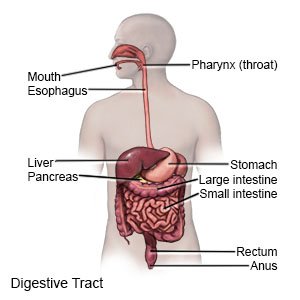
- Stomach cancer is a tumor (lump) in the stomach. It is also called gastric cancer. The stomach is located in the upper side of the abdomen (belly) under the ribs. It is part of the digestive system where the food is broken down.
- There is no known cause of stomach cancer. Having a family history of stomach or colon (large bowel) cancer puts you at higher risk. You may also be at higher risk if you have other stomach diseases or if you often eat preserved foods. Signs and symptoms of stomach cancer may include stomach pain and bloatedness (feeling of being full). Other signs may include unexplained weight loss, or blood in your vomit (throw up) or BM.
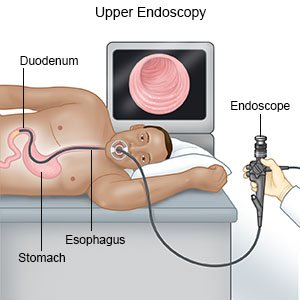
- Stomach cancer is usually diagnosed by endoscopy, stomach x-ray or ultrasound, or computerized tomography (CT) scan. Treatment may include surgery, radiation, or chemotherapy. Ask your caregiver for more information about these tests and treatments. Surviving stomach cancer depends upon how far it has spread when the cancer is found. The chances of curing stomach cancer are better when it is found early.
CARE AGREEMENT:
You have the right to help plan your care. Learn about your health condition and how it may be treated. Discuss treatment options with your caregivers to decide what care you want to receive. You always have the right to refuse treatment.
RISKS:
- Treatment for stomach cancer may cause unpleasant side effects. You could get an infection or bleed too much if the cancer is removed with surgery. Chemotherapy or radiation can cause nausea (upset stomach), vomiting (throwing up), diarrhea (watery bowel movement), and hair loss.
- You may get a blood clot in your leg or arm. This can cause pain and swelling, and it can stop blood from flowing where it needs to go in your body. The blood clot can break loose and travel to your lungs or brain. A blood clot in your lungs can cause chest pain and trouble breathing. A blood clot in your brain can cause a stroke. These problems can be life-threatening.
- Even if you are treated, the cancer may spread but your chances of stopping the cancer are better. Ask your caregiver if you are worried or have questions about your disease, medicine, or care.
WHILE YOU ARE HERE:
Informed consent:
A consent form is a legal document that explains the tests, treatments, or procedures that you may need. Informed consent means you understand what will be done and can make decisions about what you want. You give your permission when you sign the consent form. You can have someone sign this form for you if you are not able to sign it. You have the right to understand your medical care in words you know. Before you sign the consent form, understand the risks and benefits of what will be done. Make sure all your questions are answered.
Diet:
It is important that you get good nutrition when you have cancer. Eat a variety of healthy foods. Eating healthy foods may help you feel better and have more energy. If you have trouble swallowing, you may be given foods that are soft or in liquid form. Ask your caregiver about any extra nutrition you may need, such as nutrition shakes or vitamins. Tell your caregiver if you have problems eating, or if you are getting sick to your stomach.
Medicines:
You may be given the following medicines:
- Antibiotics: This medicine is given to help treat or prevent an infection caused by bacteria.
- Antinausea medicine: This medicine may be given to calm your stomach and prevent vomiting.
- Pain medicine: Caregivers may give you medicine to take away or decrease your pain.
- Do not wait until the pain is severe to ask for your medicine. Tell caregivers if your pain does not decrease. The medicine may not work as well at controlling your pain if you wait too long to take it.
- Pain medicine can make you dizzy or sleepy. Prevent falls by calling a caregiver when you want to get out of bed or if you need help.
- Do not wait until the pain is severe to ask for your medicine. Tell caregivers if your pain does not decrease. The medicine may not work as well at controlling your pain if you wait too long to take it.
Tests:
You may need one or more of the following tests:
- Blood tests: You may need blood taken to give caregivers information about how your body is working. The blood may be taken from your hand, arm, or IV.
- Chest x-ray: This is a picture of your lungs and heart. Caregivers use it to see how your lungs and heart are doing. Caregivers may use the x-ray to look for signs of infection like pneumonia, or to look for collapsed lungs. Chest x-rays may show tumors, broken ribs, or fluid around the heart and lungs.
- Computerized tomography scan: This test is also called a CT or CAT scan. A special x-ray machine uses a computer to take pictures of your chest, abdomen (stomach), and pelvis (hip area). Your caregivers look at the pictures to see if your stomach cancer has spread. Before taking the pictures, you may be given dye through an IV in your vein. The dye helps the cancer show up better in the pictures. People who are allergic to iodine or shellfish (lobster, crab, or shrimp) may be allergic to this dye. Tell your caregiver if you are allergic to any of these.
Treatment options:
Stomach cancer is treatment depends upon the size of the tumor and how far the cancer has spread. You may have one or more of the following treatments:
- Surgery: Caregivers may do surgery to remove a part or all of your stomach. This surgery is called gastrectomy.
- Chemotherapy:
- This medicine, often called chemo, is used to treat cancer. It works by killing tumor cells. Chemotherapy may also be used to shrink lymph nodes that have cancer in them. Once the tumor is smaller, you may need surgery to cut out the rest of the cancer.
- Many different chemotherapy medicines are used to treat cancer. You may need blood tests often. These blood tests show how your body is doing and how much chemotherapy is needed. Chemotherapy can have many side effects. Caregivers will watch you closely and will work with you to decrease side effects. Chemotherapy can cure some cancers. Even if the chemotherapy does not cure your cancer, it may help you feel better or live longer.
- This medicine, often called chemo, is used to treat cancer. It works by killing tumor cells. Chemotherapy may also be used to shrink lymph nodes that have cancer in them. Once the tumor is smaller, you may need surgery to cut out the rest of the cancer.
- Radiation: Radiation shrinks tumors and kills cancer cells with x-rays or gamma rays. Radiation may be given after surgery to kill cancer cells that were not removed. It may also be given alone or with chemotherapy to treat cancer.
Copyright © 2012. Thomson Reuters. All rights reserved. Information is for End User's use only and may not be sold, redistributed or otherwise used for commercial purposes.
The above information is an educational aid only. It is not intended as medical advice for individual conditions or treatments. Talk to your doctor, nurse or pharmacist before following any medical regimen to see if it is safe and effective for you.
Learn more about Stomach Cancer (Inpatient Care)
Micromedex Care Notes:
Related encyclopedia articles:
Symptoms and treatment for: