
Placenta Previa
Medically reviewed by Drugs.com. Last updated on Aug 4, 2025.
Placenta previa is a condition that causes your placenta to grow near or completely over the opening to your cervix. If your placenta grows too near your cervix, it could grow completely over it and block the opening to your vagina. This may cause vaginal bleeding that is harmful to you and your baby.
WHILE YOU ARE HERE:
Informed consent
is a legal document that explains the tests, treatments, or procedures that you may need. Informed consent means you understand what will be done and can make decisions about what you want. You give your permission when you sign the consent form. You can have someone sign this form for you if you are not able to sign it. You have the right to understand your medical care in words you know. Before you sign the consent form, understand the risks and benefits of what will be done. Make sure all your questions are answered.
IV fluids
may be given through an IV if you have lost a large amount of blood. Fluids may be given to keep your blood pressure normal.
A fetal monitor
may be used to check your baby's heartbeat. You may need to keep the monitor on at all times. You may also only need to wear the monitor when your provider feels it is needed.
Vital signs
include blood pressure, heart rate, breathing rate, and temperature. The providers will also ask about your pain.
Related medications
Medicines:
- Medicines to stop contractions are given if your baby is not ready to be born.
- Steroids may be given if you need to deliver your baby earlier than expected. These medicines help your baby's lungs mature and prevent breathing problems after he or she is born.
- Antibiotics may be given to help treat or prevent an infection caused by bacteria. Antibiotics may be needed if you have an infection in your uterus.
- Blood thinners prevent clots from forming in your blood. They may be given if you are at risk for deep vein thrombosis (DVT). DVT is a condition that causes clots to form inside your blood vessels.
Tests:
- An abdominal ultrasound is used to see if you have placenta previa. It is also used to check your baby for any problems during your pregnancy. A small device is moved around your abdomen and takes pictures of your uterus, placenta and baby.
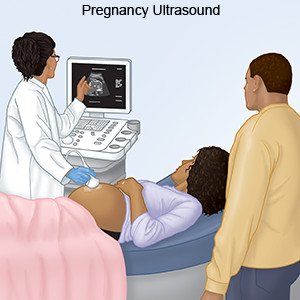
- A transvaginal ultrasound helps your provider judge how much of the cervix is covered by your placenta. A tube is passed through your vagina to get a clearer view of both your unborn baby and your placenta.
- A Doppler ultrasound may be done to check if your placenta has grown into the wall of your uterus.
- MRI pictures show how and where your placenta is growing. You may be given contrast liquid to help your placenta show up better in pictures. Tell your provider if you have ever had an allergic reaction to contrast liquid. Do not enter the MRI room with anything metal. Metal can cause serious injury. Tell the provider if you have any metal in or on your body.
Treatment:
- You may need to be on bedrest until your baby is ready to be born. Ask your healthcare provider which activities you may do while you are on bedrest.
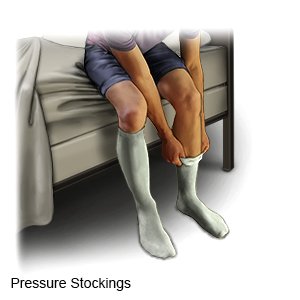
- Pressure stockings may be used to help prevent blood clots if you are on bedrest. Pressure stockings are long, tight stockings that put pressure on your legs. This helps increase blood flow through your legs.
- You may need a blood transfusion if you lose a large amount of blood. During a blood transfusion, you will get donated blood through an IV in your arm. You may need a transfusion while you are still pregnant or after your baby is born.
- Your baby may need to be delivered early. If your due date is close, and your placenta does not cover your cervix, you may be able to give birth vaginally. If your placenta covers most or all of your cervix, a C-section will be done. A C-section may also be done if you have heavy bleeding, or you or your baby is in danger.
Treatment options
The following list of medications are related to or used in the treatment of this condition.
RISKS:
- Your placenta may pull away from your uterus when you have contractions. You may have sudden, large amounts of bleeding. You may need a blood transfusion to replace the blood you have lost. Large amounts of blood loss can be life-threatening. Placenta previa can cause your placenta to attach deep into the wall of your uterus. The deep attachment makes it hard for your placenta to come out after your baby is born.
- Your baby may not grow as he or she should inside your uterus. He or she may be forced into an abnormal birthing position. Your unborn baby may also have problems with his or her heartbeat. Your baby may be born too early and his or her lungs may not be fully developed. He or she may also be very small. This could be life-threatening for your baby.
- After you give birth, you may need surgery to remove your uterus if you have bleeding that cannot be stopped. You may develop a blood clot in your leg or arm. The clot may travel to your heart or brain and cause life-threatening problems, such as a heart attack or stroke.
CARE AGREEMENT:
You have the right to help plan your care. Learn about your health condition and how it may be treated. Discuss treatment options with your healthcare providers to decide what care you want to receive. You always have the right to refuse treatment.© Copyright Merative 2025 Information is for End User's use only and may not be sold, redistributed or otherwise used for commercial purposes.
The above information is an educational aid only. It is not intended as medical advice for individual conditions or treatments. Talk to your doctor, nurse or pharmacist before following any medical regimen to see if it is safe and effective for you.
Learn more about Placenta Previa
Treatment options
Care guides
Further information
Always consult your healthcare provider to ensure the information displayed on this page applies to your personal circumstances.