Open Nephrolithotomy
What you should know
Open Nephrolithotomy (Precare) Care Guide
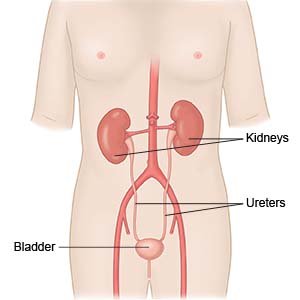
- Open nephrolithotomy (nef-ro-li-THOT-o-me) is surgery to completely remove kidney stones. Kidney stones are rock-like pieces or crystals formed from the urine. These may cause pain, infection, bleeding, and damage to the kidneys. Kidney stones usually form in the kidneys but may also be found in other parts of the urinary tract. The kidneys are two bean-shaped organs located in the back of the abdomen (stomach), at both sides of the spine. They remove unwanted chemicals and waste from the blood in the form of urine. The urine flows from both kidneys through tubes called ureters. The bladder is a hollow, round organ that holds urine. Urine leaves the bladder and goes out of the body through another tube called the urethra.

- Open nephrolithotomy may be done to take out large stones or when other procedures have not worked. This may also be done for people who are obese (very overweight) or those with other health problems. During this surgery, an incision (cut) is made in the flank (side of the abdomen) area. This is done so the affected kidney and many structures lying close to it can be fully seen. The kidney is then opened and the stones are removed. With open nephrolithotomy, symptoms may be treated and more serious health problems prevented.
Care Agreement
You have the right to help plan your care. Learn about your health condition and how it may be treated. Discuss treatment options with your caregivers to decide what care you want to receive. You always have the right to refuse treatment.
Risks
- Problems, such as bleeding that cannot be controlled, may happen during your surgery. You may also feel pain and weakness in your abdominal muscles. Your stomach, intestines, blood vessels, or nerves may also get injured during the surgery. You could also have trouble breathing or get an infection. Even after surgery, kidney stones may form again and cause problems.
- You may get a blood clot in your leg or arm. This can cause pain and swelling, and it can stop blood from flowing where it needs to go in your body. The blood clot can break loose and travel to your lungs. A blood clot in your lungs can cause chest pain and trouble breathing. This problem can be life-threatening.
- If left untreated, you may get a kidney obstruction or infection and not be able to pass urine. These may cause further damage to your urinary tract. If waste products are not removed, you may get sepsis (blood infection) or your kidneys may stop working. This may lead to more serious and often life-threatening problems, such as heart, liver, or brain damage. Ask your caregiver if you are worried or have questions about your condition, medicine, or care.
Getting Ready
The week before your surgery:
- Ask a family member or friend to drive you home after surgery. Do not drive yourself home.
- Ask your caregiver if you need to stop using aspirin or any other prescribed or over-the-counter medicine before your procedure or surgery.
- Bring your medicine bottles or a list of your medicines when you see your caregiver. Tell your caregiver if you are allergic to any medicine. Tell your caregiver if you use any herbs, food supplements, or over-the-counter medicine.
- If you have diabetes, ask your caregiver for special instructions about what you may eat and drink before your surgery. If you use medicine to treat diabetes, your caregiver may have special instructions about using it before surgery. You may need to check your blood sugar more often before and after having surgery.
- Dye may be used during your surgery to help caregivers see the kidney better. People who are allergic to iodine or shellfish (lobster, crab, or shrimp) may also be allergic to this dye. Tell your caregiver if you are allergic to any of these.
- If you are a woman, tell your caregiver if you know or think you might be pregnant.
- You may need to have blood and urine tests, or an ultrasound and x-rays of the urinary tract taken. You may also need a computed tomography (CT) scan or other special tests. Ask your caregiver about other tests that you may need. Write down the date, time, and location of each test.
- You may need a blood transfusion if you lose a large amount of blood during surgery. Some people are worried about getting AIDS, hepatitis, or the West Nile virus from a blood transfusion. The risk of this happening is very low. Blood banks test all donated blood for AIDS, hepatitis, and the West Nile virus. You may be able to donate your own blood before surgery. This is called autologous blood donation. This must be done no later than three days before surgery. You may also ask a family member or friend with the same blood type to donate blood for you. This is called directed blood donation.
The night before your surgery:
- You may be given medicine to help you sleep.
- Ask caregivers about directions for eating and drinking.
The day of your surgery:
- Write down the correct date, time, and location of your surgery.
- What to bring: You may want to bring items such as a toothbrush and bathrobe.
- Do not wear tight-fitting clothes on the day of your procedure or surgery.
- Caregivers may insert an intravenous tube (IV) into your vein. A vein in the arm is usually chosen. Through the IV tube, you may be given liquids and medicine.
- An anesthesiologist may talk to you before your surgery. This caregiver may give you medicine to make you sleepy before your procedure or surgery. Tell your caregiver if you or anyone in your family has had a problem using anesthesia in the past.
- You or a close family member will be asked to sign a legal document called a consent form. It gives caregivers permission to do the procedure or surgery. It also explains the problems that may happen, and your choices. Make sure all your questions are answered before you sign this form.
Treatment
What will happen:
- You may be given medicine to help you relax or make you drowsy. You will be taken on a stretcher to the operating room and then moved onto a special bed. Your abdomen, genital, and flank areas will be cleaned with soap and water. Sheets will be put over you to keep the surgery area clean. Caregivers may give a general anesthesia to keep you asleep during surgery. An endotracheal (ET) tube connected to a breathing machine may be put into your mouth. This goes down the windpipe to keep your airway open and help you breathe during your surgery. A catheter may be inserted to drain your urine.
- During your surgery, an incision will be made on the flank area of the affected kidney. Your caregiver will use special tools to pull the flank muscles to each side. He may use an ultrasound and inject dye to see parts of the kidney, and any stones present. He will then open your kidney and remove the stones inside it. Your caregiver may also remove a small part of the kidney to help the urine drain out better. He may take your whole kidney if it is badly damaged by the stones. X-ray pictures of the kidney will be taken to check if all stones have been removed. Thin rubber tubes will be put near the kidney to drain blood from your incisions. Your incisions will be closed with stitches (threads) or surgical tape and covered with bandages.
After your surgery:
- You may be taken to a recovery room until you are fully awake. The ET tube may be removed after you are awake and can breathe well on your own. The catheter that drains your urine may need to remain for awhile. Caregivers will watch you closely for any problems.
- Do not get out of bed until your caregiver says it is OK. When caregivers see that you are OK, you will be taken back to your hospital room. The bandages used to cover your stitches keep the area clean and dry to prevent infection. A caregiver may remove the bandages soon after your surgery to check your wound or drains. Ask your caregiver for more information about ways to prevent bleeding and take care of your incision.
Waiting area:
This is an area where your family and friends can wait until you are able to have visitors. Ask your visitors to provide a way to reach them if they leave the waiting area.
Contact a caregiver if
- You cannot make it to your appointment on time.
- You have a fever.
- You have a skin infection or an infected wound on or near the area where surgery will be done.
- You have questions or concerns about your surgery.
Seek Care Immediately if
- You have a fever.
- You have more pain or have trouble passing urine.
- Your signs and symptoms are getting worse.
Copyright © 2012. Thomson Reuters. All rights reserved. Information is for End User's use only and may not be sold, redistributed or otherwise used for commercial purposes.
The above information is an educational aid only. It is not intended as medical advice for individual conditions or treatments. Talk to your doctor, nurse or pharmacist before following any medical regimen to see if it is safe and effective for you.