
Open Nephrolithotomy
Medically reviewed by Drugs.com. Last updated on May 6, 2024.
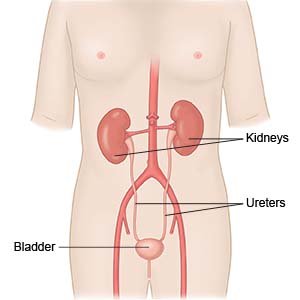
Open nephrolithotomy is surgery to remove kidney stones.
 |
DISCHARGE INSTRUCTIONS:
Call your local emergency number (911 in the US) if:
- You feel lightheaded, short of breath, and have chest pain.
- You cough up blood.
Seek care immediately if:
- Blood soaks through your bandage.
- You have pain in your abdomen, side, or genital area that does not go away or gets worse.
- You have problems urinating or having a bowel movement.
- Your arm or leg feels warm, tender, and painful. It may look swollen and red.
- You have pus or a bad odor coming from your incision.
- You have new or worsening symptoms.
Call your doctor or urologist if:
- You have a fever.
- You have chills, a cough, or feel weak and achy.
- You have dizziness, nausea, or vomiting.
- Your skin is itchy, swollen, or has a rash.
- You have questions or concerns about your condition or care.
Medicines:
You may need any of the following:
- Medicines may be given to prevent more kidney stones from forming. Prevention medicine will be based on the kind of kidney stones you have.
- Antibiotics help prevent or treat an infection caused by bacteria.
- Prescription pain medicine may be given. Ask your healthcare provider how to take this medicine safely. Some prescription pain medicines contain acetaminophen. Do not take other medicines that contain acetaminophen without talking to your healthcare provider. Too much acetaminophen may cause liver damage. Prescription pain medicine may cause constipation. Ask your healthcare provider how to prevent or treat constipation.
- Take your medicine as directed. Contact your healthcare provider if you think your medicine is not helping or if you have side effects. Tell your provider if you are allergic to any medicine. Keep a list of the medicines, vitamins, and herbs you take. Include the amounts, and when and why you take them. Bring the list or the pill bottles to follow-up visits. Carry your medicine list with you in case of an emergency.
Care for the surgery area:
You may need to wash the area with soap and water. Check for signs of infection, such as redness, swelling, or pus. Dry the area and put on new, clean bandages as directed. Change your bandages when they get wet or dirty. Always check your drain when you change your bandages. Do not pull on your drain. Ask for more information about drain care.
Bladder care:
- You may need to insert a catheter. You may need to learn how to insert a catheter if you cannot urinate on your own. A catheter is a soft tube that you put into your urethra to drain your urine. You may also need to do a bladder irrigation. Medicines or a solution is put inside your bladder through your catheter.
- Set regular times each day to urinate. Do not let your bladder become too full before you empty it. Urinate as soon as you feel the need. Ask if you need to strain your urine to look for any pieces of kidney stones.
Self-care:
- Rest. You may feel like resting more after your surgery. Slowly start to do more each day. Rest when you feel it is needed.
- Drink more liquids. You may be asked to drink 13 to 17 cups of liquids each day. Limit the amount of caffeine you drink. Caffeine may be found in coffee, tea, soda, and sports drinks. Ask how much liquid to drink each day and which liquids are best for you.
- Ask if you need to make changes in the foods you eat. You may need to limit certain foods. Examples include nuts, chocolate, coffee, and certain green leafy vegetables. You may also need to limit meat and salt.
Follow up with your doctor or urologist as directed:
Write down your questions so you remember to ask them during your visits.
© Copyright Merative 2024 Information is for End User's use only and may not be sold, redistributed or otherwise used for commercial purposes.
The above information is an educational aid only. It is not intended as medical advice for individual conditions or treatments. Talk to your doctor, nurse or pharmacist before following any medical regimen to see if it is safe and effective for you.
Further information
Always consult your healthcare provider to ensure the information displayed on this page applies to your personal circumstances.
