
Nasal Fracture in Children
Medically reviewed by Drugs.com. Last updated on May 6, 2024.
What is a nasal fracture?
A nasal fracture is a crack or break in your child's nose. Your child may have a break in the upper nose (bridge), the side, or the septum. The septum is in the middle of the nose and divides the nostrils.
What are the signs and symptoms of a nasal fracture?
- Pain and swelling
- Nosebleed
- Deformed nose
- Crackling sound when your child's nose is touched or moves
- Bruising on your child's nose or under his or her eyes
How is a nasal fracture diagnosed?
Your child's healthcare provider will ask you and your child when, where, and how the injury occurred.
- A nasal exam will be done to check your child's injury. Your child will be given pain medicine before his or her healthcare provider touches and looks at the outside and inside of the nose. The provider will remove blood clots and check for large hematomas (collections of blood).
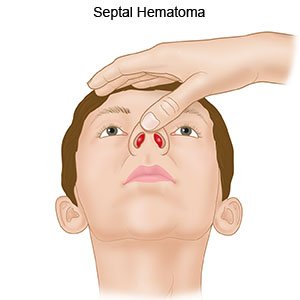
- An x-ray or CT may show the nasal fracture. Your child may be given contrast liquid before the scan. Tell the healthcare provider if your child has ever had an allergic reaction to contrast liquid.
How is a nasal fracture treated?
- Medicine may be given to your child to decrease pain or help prevent a bacterial infection. Ask how to give pain medicine to your child safely. Medicine may also be given to decrease nasal swelling and help make breathing easier for your child.
- Wound care may help stop bleeding. If your child has a hematoma inside his or her nose, it will be drained. Healthcare providers may place packing (gauze or other material) inside the nose to soak up blood.
- Closed reduction may be done to put your child's nasal bones back into the correct position. Local or general anesthesia is used during this procedure. This procedure may be done right away or several days after the injury when the swelling has gone down. Surgery (open reduction) to put your child's bones back into place may be needed for severe fractures.
- A splint or packing may be used to help keep your child's nose in place for 7 to 10 days after reduction. Ask your child's healthcare provider to show you how to care for his or her splint or packing.
How do I care for my child's nasal fracture at home?
- Apply ice on your child's nose for 15 to 20 minutes every hour or as directed. Use an ice pack, or put crushed ice in a plastic bag. Cover it with a towel. Ice helps prevent tissue damage and decreases swelling and pain.
- Keep your child's head elevated when he or she lies down to help decrease swelling. Ask how you can keep your child's head elevated safely. Your child may need to return for tests or closed reduction after the swelling has gone down.
- Protect your child's nose to prevent bleeding, bruising, or another fracture. Your child should avoid bumping his or her head on anything. Ask your child's healthcare provider when he or she can return to physical activities such as sports.
When should I seek immediate care?
- Your child feels like one or both of his or her nasal passages are blocked and he or she has trouble breathing.
- Your child has severe nose pain, even after he or she takes medicine.
- Clear fluid is leaking from your child's nose.
- Your child has double vision or has problems moving his or her eyes.
When should I call my child's doctor?
- Your child has a fever.
- Your child continues to have nosebleeds.
- Your child has a headache that is getting worse, even after he or she takes pain medicine.
- Your child's splint, drain, or packing is loose.
- You have questions or concerns about your child's condition or care.
Care Agreement
You have the right to help plan your child's care. Learn about your child's health condition and how it may be treated. Discuss treatment options with your child's healthcare providers to decide what care you want for your child. The above information is an educational aid only. It is not intended as medical advice for individual conditions or treatments. Talk to your doctor, nurse or pharmacist before following any medical regimen to see if it is safe and effective for you.© Copyright Merative 2024 Information is for End User's use only and may not be sold, redistributed or otherwise used for commercial purposes.
Further information
Always consult your healthcare provider to ensure the information displayed on this page applies to your personal circumstances.
