
Home CareNotes Myasthenia Gravis
Thomson Reuters Micromedex

Myasthenia Gravis

WHAT YOU SHOULD KNOW:

Myasthenia Gravis (Discharge Care) Care Guide

  • Myasthenia gravis, or MG, is a disease of the nerves and muscles. Normally, when impulses (signals) travel down the nerve, the nerve endings release a chemical substance called acetylcholine. With MG, there is a defect in how acetylcholine is received by muscle cells. This results in problems in the movement of muscles. Muscles of the eyes, face, neck, arms and legs are commonly affected by MG. Muscles used in swallowing and breathing may also be affected. MG is most common in young women 20 to 30 years of age, and in men 60 to 70 years of age.

  • MG is caused most commonly by a problem in the immune system, such as an autoimmune disease. The immune system is your body's defense system against infections and disease. Symptoms commonly include drooping of the eyelids, drooping of the facial muscles, slurring of speech, and blurring of vision (eyesight). Symptoms may get worse and cause problems with swallowing and breathing.

  • Tests to diagnose MG include blood tests, a tensilon test, and electromyography (EMG). Treatment includes medicines, plasmapheresis, and surgery to remove your thymus gland. Ask your caregiver for more information about these tests and treatment.

AFTER YOU LEAVE:

Take your medicine as directed:

Call your primary healthcare provider if you think your medicine is not working as expected. Tell him if you are allergic to any medicine. Keep a current list of the medicines, vitamins, and herbs you take. Include the amounts, and when, how, and why you take them. Take the list or the pill bottles to follow-up visits. Carry your medicine list with you in case of an emergency. Throw away old medicine lists.

  • You may be taking anticholinesterase medicines to help your muscles and nerves work better together. This medicine may be taken with steroids to improve your energy, strength, and slow your immune system. Both medicines may help a lot, but may have side effects. Do not stop taking these medicines until your caregiver says it is OK.

  • You may be taking immunosuppressive medicines to slow down the immune system. The immune system protects your body from infections and diseases. But sometimes your immune system sees normal cells as bad. This medicine keeps your immune system from harming you. Sometime you take this medicine with steroids. Do not stop taking these medicines until your caregiver says it is OK.

Ask for information about where and when to go for follow-up visits:

For continuing care, treatments, or home services, ask for more information.

Colds or the flu:

Stay away from people who have colds or the flu. Ask your caregiver if you should get shots to keep from getting the flu and pneumonia. Also try to stay away from large groups of people. This decreases your chance of getting sick.

Wellness tips:

  • Eat a variety of healthy foods: This may help you have more energy and heal faster. Healthy foods include fruit, vegetables, whole-grain breads, low-fat dairy products, beans, lean meat, and fish. Ask if you need to be on a special diet.

  • Drink liquids as directed: Adults should drink between 9 and 13 eight-ounce cups of liquid every day. Ask what amount is best for you. For most people, good liquids to drink are water, juice, and milk.

  • Get plenty of exercise: Talk to your caregiver about the best exercise plan for you. Exercise can decrease your blood pressure and improve your health.

  • Do not smoke: If you smoke, it is never too late to quit. You are more likely to have heart disease, lung disease, cancer, and other health problems if you smoke. Quitting smoking will improve your health and the health of those around you. If you smoke, ask for information about how to stop.

  • Manage stress: Stress may slow healing and cause illness. Learn new ways to relax, such as deep breathing.

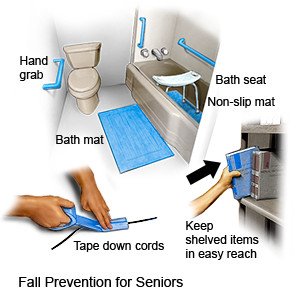
You may feel safer if you use a 4 prong (pointed) cane or a walker when walking. To keep from falling, remove loose carpeting from the floor. Using chairs with side arms and hard cushions will make it easier to get up or out of a chair. Put grab bars on the walls beside toilets and inside showers and bathtubs. These will help you get up after using the toilet or after bathing. Grab bars will also help to keep you from falling in the shower. You may want to put a shower chair inside the shower.
For support and more information:

MG is a life-changing disease for you and your family. Accepting that you have MG is hard. You and those close to you may feel angry, depressed, or frightened. These are normal feelings. Talk to your caregivers, family, or friends about your feelings. You may also want to join a support group. This is a group of people who have MG. Such a group can give you support and information. Call or write one of the following organizations for more information:

  • Myasthenia Gravis Foundation of America
    1821 University Ave W, Ste 5256
    St. Paul , MN 55104
    Phone: 1- 651 - 917-6256
    Phone: 1- 800 - 541-5454
    Web Address: http://www.myasthenia.org
  • National Institute of Neurological Disorders and Stroke
    P.O. Box 5801
    Bethesda , MD 20824
    Phone: 1- 301 - 496-5751
    Phone: 1- 800 - 352-9424
    Web Address: http://www.ninds.nih.gov

CONTACT A CAREGIVER IF:

  • You have a fever.

  • You have diarrhea.

  • You have more weakness than usual.

  • You are having problems swallowing.

  • You are so depressed you feel you cannot cope with your illness.

  • You have questions or concerns about your condition and its treatment.

SEEK CARE IMMEDIATELY IF:

  • You are having severe breathing problems. This may be a sign that you are having a myasthenic crisis. This is an emergency. Call 911 or 0 (operator) for an ambulance to get to the nearest hospital or clinic. Do not drive yourself.

    • Myasthenic crisis occurs when symptoms of MG get so bad that it affects the muscles of your lungs. This is a serious condition and may be caused by any of the following:

      • Certain types of medicines. Always make sure your dentist and other caregivers know that you have MG. Do not take any new medicine until you check with your caregiver first. Not taking enough medicine or not taking your medicine at all may also cause myasthenic crisis.

      • Infections and colds (viruses).

      • Physical activity.

      • Stress caused by pregnancy, surgery, or emotional upset.

      • Times before, during, or after your menstrual cycle.

      • Too cold or too hot temperature changes.


Copyright © 2011. Thomson Reuters. All rights reserved. Information is for End User's use only and may not be sold, redistributed or otherwise used for commercial purposes.

The above information is an educational aid only. It is not intended as medical advice for individual conditions or treatments. Talk to your doctor, nurse or pharmacist before following any medical regimen to see if it is safe and effective for you.

Learn more about Myasthenia Gravis (Discharge Care)

(web4)