
Legionnaires Disease
Medically reviewed by Drugs.com. Last updated on Sep 1, 2024.
What is Legionnaires disease?
Legionnaires disease (LD) is a lung infection caused by Legionella bacteria.
How is LD spread?
Legionella bacteria can be found in many water sources. You can get LD by breathing in steam or water droplets that contain Legionella bacteria. LD cannot be passed from one person to another. LD can occur in outbreaks. Outbreaks happen when 2 or more people in the same place develop LD at almost the same time. Legionella bacteria may be found in any of the following:
- Air-conditioning systems and cooling towers of large buildings
- Hot water tanks
- Humidifiers and mechanical ventilators (breathing machines)
- Lakes, ponds, rivers, streams, and thermal pools
- Large plumbing systems and bathroom shower heads
- Water fountains, ice machines, and vegetable misters
- Whirlpool spas and hot tubs
What increases my risk for LD?
- Age 65 years or older
- Smoking or alcohol abuse
- Heart or lung disease
- Medical conditions that weaken your immune system, such as HIV
What are the signs and symptoms of LD?
LD symptoms usually appear 2 to 10 days after you are exposed to the bacteria. You may have any of the following:
- Dry cough and trouble breathing
- Chills, shaking, or fever
- Headaches and body pain
- Nausea, vomiting, and diarrhea
- Decreased appetite and no energy
- Dark or bloody urine
- Trouble thinking clearly and remembering things
How is LD diagnosed?
Your healthcare provider will ask about your symptoms. He or she may also ask about the places or countries you have visited in the last 2 weeks. He or she may also ask if you visit spas or use hot tubs often. Tell him or her if anyone in your home or workplace has had a recent lung infection. You may need any of the following:
- Blood and urine tests will show if you have an infection.
- A sputum sample is collected in a cup when you cough. The sample is sent to a lab to be tested for the germ that is causing your infection.
- Bronchoscopy is a procedure to look inside your airway and learn the cause of your airway or lung condition. A bronchoscope (thin tube with a light) is inserted into your mouth and moved down your throat to your airway. Tissue and fluid may be collected from your airway or lungs and sent to a lab for tests.
- A chest x-ray may be used to look for signs of pneumonia (lung infection) that can occur with LD.
How is LD treated?
Healthcare providers will give you antibiotics to treat your bacterial infection. The antibiotics may be given through an IV for the first 7 to 10 days. You may also need to continue taking antibiotics by mouth for a period of time.
How can I prevent LD?
You may be able to kill the bacteria that cause LD by regularly cleaning the places they grow. You may need to use a special cleaning fluid to kill the bacteria. Ask your healthcare provider which cleaning fluids you should use.
- Have your air-conditioning system, hot tubs, or water tanks cleaned regularly.
- If you have a humidifier, follow the instructions on how to keep it clean.
- If you use a nebulizer, follow the instructions on how to use and keep your nebulizer clean.
What can I do to prevent the spread of germs?
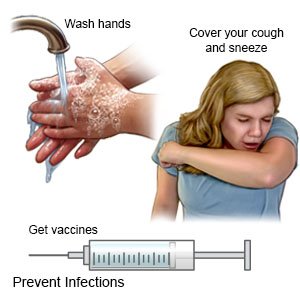 |
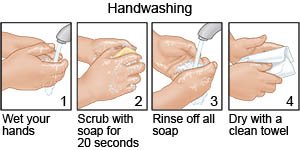
- Wash your hands often. Wash your hands several times each day. Wash after you use the bathroom, change a child's diaper, and before you prepare or eat food. Use soap and water every time. Rub your soapy hands together, lacing your fingers. Wash the front and back of your hands, and in between your fingers. Use the fingers of one hand to scrub under the fingernails of the other hand. Wash for at least 20 seconds. Rinse with warm, running water for several seconds. Then dry your hands with a clean towel or paper towel. Use hand sanitizer that contains alcohol if soap and water are not available. Do not touch your eyes, nose, or mouth without washing your hands first.
- Cover a sneeze or cough. Use a tissue that covers your mouth and nose. Throw the tissue away in a trash can right away. Use the bend of your arm if a tissue is not available. Wash your hands well with soap and water or use a hand sanitizer.
- Stay away from others while you are sick. Avoid crowds as much as possible.
- Ask about vaccines you may need. Talk to your healthcare provider about your vaccine history. He or she will tell you which vaccines you need, and when to get them.
- Get the influenza (flu) vaccine as soon as recommended each year. The flu vaccine is available starting in September or October. Flu viruses change, so it is important to get a flu vaccine every year.
- Get the pneumonia vaccine if recommended. This vaccine is usually recommended every 5 years. Your provider will tell you when to get this vaccine, if needed.
Call your local emergency number (911 in the US) if:
- You cough up blood.
- You have shortness of breath.
- You have sudden chest pain.
When should I call my doctor?
- You feel dizzy, or have problems thinking clearly and remembering things.
- You cannot stop vomiting.
- Your symptoms become worse, even after you take your medicine.
- You have chills, shaking, or fever.
- You have very dry skin, dry mouth and tongue, or feel very thirsty.
- You have questions or concerns about your condition or care.
Care Agreement
You have the right to help plan your care. Learn about your health condition and how it may be treated. Discuss treatment options with your healthcare providers to decide what care you want to receive. You always have the right to refuse treatment. The above information is an educational aid only. It is not intended as medical advice for individual conditions or treatments. Talk to your doctor, nurse or pharmacist before following any medical regimen to see if it is safe and effective for you.© Copyright Merative 2024 Information is for End User's use only and may not be sold, redistributed or otherwise used for commercial purposes.
Learn more about Legionnaires Disease
Treatment options
Care guides
Further information
Always consult your healthcare provider to ensure the information displayed on this page applies to your personal circumstances.