
Lay Person CPR On Newborns
Medically reviewed by Drugs.com. Last updated on May 6, 2024.
What is lay person CPR on newborns?
Lay person cardiopulmonary resuscitation (CPR) is an emergency procedure for a newborn who is up to 1 month old.
PLEASE NOTE - Recommendations for the newborn are different from recommendations for infants. Click here for information on CPR for Infants.
A lay person is anyone who is not a trained healthcare worker . CPR may combine chest compressions with rescue breathing or may be chest compressions only. A chest compression means you put pressure on and off the newborn's chest. Rescue breathing means you give breaths to the newborn through his or her mouth and nose.
What are some important things to remember about CPR on newborns?
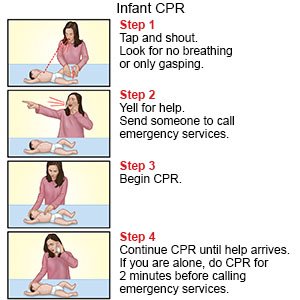
- Start CPR before you call or go for help if you are alone when you find the newborn. Do CPR for 2 minutes. Then call your local emergency number (911 in the US) to get emergency help as quickly as possible. If you are with another person, one person can start CPR and the other can call or go for help.
- Learn the steps used to give CPR to newborns by remembering C-A-B. This stands for chest C ompressions, A irway, and rescue B reathing.
- Do chest compressions even if you cannot give rescue breaths. Chest compressions alone make it more likely that the newborn will live than if you do nothing at all.
 |
What should I do if I find a newborn who is not breathing normally?
- Make sure the area is safe to enter, and approach the newborn. Move him or her only if the area is dangerous, such as in a fire. You may have to move the newborn to a firm surface if he or she is on a soft surface, such as a sofa or mattress. The newborn needs to be on a firm surface for chest compressions to be effective.
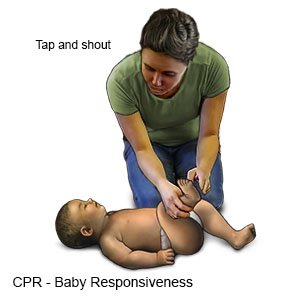
- Kneel beside the newborn. Look to see if his or her head, neck, or back may be hurt. Carefully turn the newborn onto his or her back while you support his or her head and neck. Keep the newborn's body straight as you turn him or her. Try to get the newborn to open his or her eyes. Tap the bottom of the newborn's foot. Speak loudly or shout while you tap the foot.
- Begin CPR if the newborn does not respond to you. Do 30 compressions immediately. Then open the newborn's airway. Hold the airway open and give 2 rescue breaths. A cycle is 30 chest compressions and 2 rescue breaths.
- Call or go for help after 2 minutes of CPR.
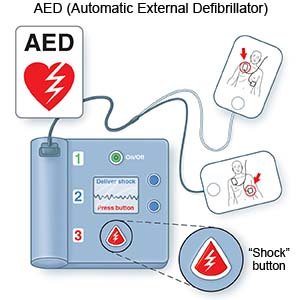
- Continue CPR cycles until the newborn responds, help arrives, or an automated external defibrillator (AED) becomes available. An AED is a device that gives a person's heart a shock if it is needed. AEDs are often kept in public areas and are usually mounted to a wall.
How do I give chest compressions?
Chest compressions press the heart between the spine and sternum (breastbone). This forces blood out of the heart and to the newborn's brain and body.
- Put the pads of your thumbs in the middle of the newborn's chest, between the nipples. This area is called the sternum.
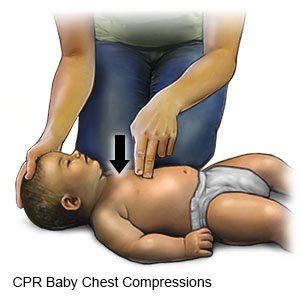
- Press down on the newborn's sternum 1½ inches (4 centimeters). This should be at least ⅓ the depth of the newborn's chest.
- Do not push your hands forward when you press down. Go only up and down. The compressions should be constant and equal. This means that it should take the same amount of time to press down as it does to come back up. Allow the chest to relax completely between compressions. This allows blood to come back into the heart before you compress again. Leave your thumbs on the newborn's chest in the correct hand position between compressions.
- Do 30 chest compressions at a rate of at least 100 to 120 every minute. Push hard and push fast. Hard, fast compressions are more likely to keep the newborn's brain and heart alive. Count the compressions out loud to help you do them at a steady, even speed.
How do I open a newborn's airway?
- Put 1 hand on the newborn's forehead and press firmly backward to tilt his or her head back. Do not place your hand on the back of his or her neck to tilt his or her head.
- Lift the newborn's chin with your other hand. Hold his or her mouth open. Do not press deeply into the soft tissue under his or her chin, because this can close his or her airway.
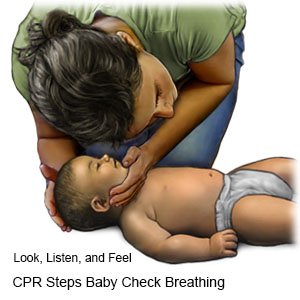
- Look into the newborn's mouth for something that may be blocking the airway. Examples are food and small toys. If you see something that looks easy to get, carefully scoop it out with your finger. Do not put your fingers in the back of the newborn's throat unless you see something to remove.
How do I give rescue breaths?
- Take a breath and put your lips around the newborn's nose and mouth, making an airtight seal. If your mouth is too small to cover both the newborn's mouth and nose, pinch his or her nose closed. Cover his or her mouth with yours. You may also try giving breaths through the newborn's nose only while you hold his or her mouth closed.
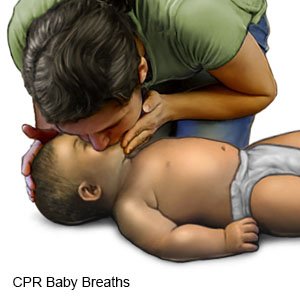
- Give 2 breaths (1 breath every 2 to 3 seconds) into the newborn's mouth. The newborn's chest will rise each time you give a rescue breath if his or her airway is open. Do not give large breaths. Do not breathe hard or fast. Take a normal breath for yourself after each breath that you give.
- Change the newborn's head position to reopen his or her airway, if needed. If you cannot get air in, the airway may be blocked by an object. Look again to see if you find an object you can remove.
What can I do to help prevent respiratory and cardiac arrest in newborns?
- Do not leave a newborn alone in or near water, such as a pool or bathtub.
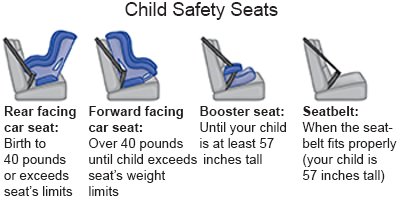
- Keep a newborn secured in a car safety seat. Never leave a newborn in a car alone.
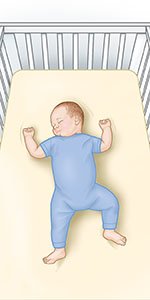
- Lay a newborn on his or her back to sleep. A newborn may be at more risk for sudden infant death syndrome (SIDS) if he or she sleeps on his or her stomach.
- Do not smoke near a newborn.
Where can I find more information about CPR?
- American Heart Association
7272 Greenville Avenue
Dallas , TX 75231-4596
Phone: 1- 800 - 242-8721
Web Address: http://www.heart.org
Care Agreement
You have the right to help plan your baby's care. Learn about your baby's health condition and how it may be treated. Discuss treatment options with your baby's healthcare providers to decide what care you want for your baby. The above information is an educational aid only. It is not intended as medical advice for individual conditions or treatments. Talk to your doctor, nurse or pharmacist before following any medical regimen to see if it is safe and effective for you.© Copyright Merative 2024 Information is for End User's use only and may not be sold, redistributed or otherwise used for commercial purposes.
Learn more about Lay Person CPR On Newborns
Care guides
Further information
Always consult your healthcare provider to ensure the information displayed on this page applies to your personal circumstances.
