
Kidney Transplant
Medically reviewed by Drugs.com. Last updated on May 6, 2024.
WHAT YOU NEED TO KNOW:
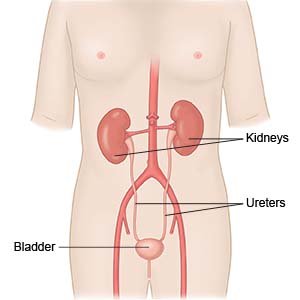
Kidney transplant is surgery to replace a damaged kidney with a new kidney from another person.
 |
HOW TO PREPARE:
Weeks and days before your surgery:
- Your surgeon may suggest that you have counseling about your surgery and condition. He or she may talk to you or your family about your expectations, benefits, and possible outcomes of the surgery.
- Tell your surgeon about all other diseases or health conditions you have. Examples include diabetes, cancer, bleeding disorders, or heart problems. Your surgeon may need to treat any medical condition before your surgery to prevent possible problems. He or she may also start you on dialysis treatment or need you to continue dialysis until your surgery.
- Ask if you should get vaccines to prevent some infections. These should be completed at least 4 weeks before your surgery. Ask your healthcare provider which vaccinations are right for you.
- You may need an EKG, echocardiogram (echo), or stress tests. Tests such as x-rays, CT scan, MRI, ultrasound, or arteriography, may also be done.
- Arrange to have someone drive you home after surgery.
- Tell your surgeon about all medicines you currently take. He or she will tell you if you need to stop any medicine for surgery, and when to stop. He or she will tell you which medicines to take or not take on the day of surgery.
- You may need a blood transfusion if you lose a large amount of blood during surgery. You may be able to donate your own blood before surgery. This is called autologous blood donation. This must be done no later than 3 days before surgery. You may also ask a family member or friend with the same blood type to donate blood for you. This is called directed blood donation.
The night before your surgery:
- You may be told not to eat or drink anything after midnight.
- You will need to clean out your bowel to get ready for this surgery. You may need to use an enema. You may instead be given bowel prep medicine to drink. Your surgeon will tell you if you need to use one or both of these methods.
The day of your surgery:
- You or a close family member will be asked to sign a legal document called a consent form. It gives healthcare providers permission to do the procedure or surgery. It also explains the problems that may happen, and your choices. Make sure all your questions are answered before you sign this form.
- Take only the medicines your surgeon told you to take.
- Do not eat or drink anything on the morning of your surgery. Your bowel needs to be totally empty during your surgery. If you need to take medicines, you may have them the morning of your surgery with few sips of water.
- You may need an additional enema the morning of your surgery.
- You may also be asked to drink 4 to 8 (eight-ounce) cups of bowel prep medicine. This may need to be done if you drank the bowel prep medicine the night before.
- An IV will be placed in a vein. You may be given medicine or liquids through the IV.
- An anesthesiologist will talk to you before your surgery. Tell him or her if you or anyone in your family has had a problem with anesthesia.
WHAT WILL HAPPEN:
What will happen:
- General anesthesia will keep you asleep and free from pain during surgery. Your surgeon will make an incision on your abdomen. He or she will attach your new kidney by stitching the blood vessels of the new kidney to your blood vessels. The ureter of the new kidney will be attached to your bladder. Your damaged kidneys will be left in place unless they are causing problems such as infection or high blood pressure.
- Drains will be put near the kidney to remove blood or fluid from your incisions. Your incisions will be closed with stitches or surgical tape and covered with bandages.
After your surgery:
- You will be taken to the recovery room or an intensive care unit (ICU). Healthcare providers will watch you closely to make sure you are okay. A healthcare provider may remove the bandages soon after your surgery to check your wound and drains.
- You will have several tubes in place, which might make it hard to move. All of these tubes are important to help your healthcare providers know about any problems. The drains are taken out when the incision stops draining. Do not get out of bed until your healthcare provider says it is okay.
CONTACT YOUR HEALTHCARE PROVIDER IF:
- You have a fever.
- You have a skin infection or an infected wound on or near your abdomen.
- You have questions or concerns about your surgery.
Seek Care Immediately if
- You have more pain or have trouble urinating.
- Your signs and symptoms get worse.
Risks
You may bleed more than expected or get an infection. Nerves, blood vessels, muscles, intestines, and other organs may get damaged. You may have problems with your ureter or bladder, which may cause urine to leak. You may develop a life-threatening blood clot in your arm or leg. Your condition may get worse during surgery, and may become life-threatening. Your body may reject the new kidney.
Care Agreement
You have the right to help plan your care. Learn about your health condition and how it may be treated. Discuss treatment options with your healthcare providers to decide what care you want to receive. You always have the right to refuse treatment.© Copyright Merative 2024 Information is for End User's use only and may not be sold, redistributed or otherwise used for commercial purposes.
The above information is an educational aid only. It is not intended as medical advice for individual conditions or treatments. Talk to your doctor, nurse or pharmacist before following any medical regimen to see if it is safe and effective for you.
Learn more about Kidney Transplant
Treatment options
Symptoms and treatments
Further information
Always consult your healthcare provider to ensure the information displayed on this page applies to your personal circumstances.
