Home CareNotes Kidney Transplant
Thomson Reuters Micromedex

Kidney Transplant

WHAT YOU SHOULD KNOW:

Kidney Transplant (Inpatient Care) Care Guide

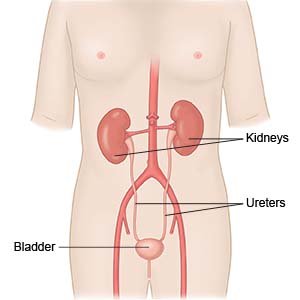
  • Kidney transplant is surgery to replace a damaged kidney with a new kidney from a donor (another person). The kidneys are two bean-shaped organs found under the ribs on each side of the upper abdomen (stomach). The kidneys remove wastes and other unwanted chemicals from the body. These wastes are flushed from the body as urine. When the kidneys are badly damaged, these wastes build-up in the body and cause harm. This may cause seizures (convulsions), trouble breathing, increased blood pressure, body swelling, confusion, fainting, or even death. A new kidney may be needed to replace the damaged kidney to keep the body working.
    Picture of the urinary system


  • The new kidney may come from family members, spouse, close friends, or even someone you do not know. In most cases, surgery is done at the same time between you and your donor. An incision (cut) will be made on your abdomen and your new kidney will be placed. The blood vessels will be connected and the ureter will be attached to your bladder. The ureter is the narrow tube that connects the kidney to the bladder where urine is temporarily stored. Your new kidney should begin to work as soon as blood flows through it. With a kidney transplant, you may resume your usual activities and prevent more serious health problems.

CARE AGREEMENT:

You have the right to help plan your care. Learn about your health condition and how it may be treated. Discuss treatment options with your caregivers to decide what care you want to receive. You always have the right to refuse treatment.

RISKS:

  • There are always risks with surgery. You may bleed more than expected or get an infection. Nerves, blood vessels, muscles, intestines, and other organs may get damaged. You may have problems with your ureter or bladder which may cause urine to leak out. Your body may also reject the new kidney from your donor.

  • You may get a blood clot in your leg or arm. This can cause pain and swelling, and it can stop blood from flowing where it needs to go in your body. The blood clot can break loose and travel to your lungs. A blood clot in your lungs can cause chest pain and trouble breathing. This problem can be life-threatening.

  • There is also a risk that your condition may worsen or you may die during surgery. You will need dialysis for the rest of your life if you do not have a kidney transplant. Ask your caregiver if you have questions about your surgery, condition, medicines, or care.

WHILE YOU ARE HERE:

Before your surgery:

  • Informed consent: A consent form is a legal document that explains the tests, treatments, or procedures that you may need. Informed consent means you understand what will be done and can make decisions about what you want. You give your permission when you sign the consent form. You can have someone sign this form for you if you are not able to sign it. You have the right to understand your medical care in words you know. Before you sign the consent form, understand the risks and benefits of what will be done. Make sure all your questions are answered.

  • Enema: You may need to have an enema before your surgery. This is liquid put into your rectum to help empty its contents.

  • Tubes:

    • IV: An IV (intravenous) is a small tube placed in your vein that is used to give you medicine or liquids.

    • Central line: A central line is an IV catheter or tube. It is put into a large blood vessel near your collarbone, in your neck, or in your groin. The groin is the area where your abdomen meets your upper leg. The central line may be used to give medicines or IV fluids. It may also be hooked up to a monitor to take pressure readings. This information helps caregivers to check how well your heart is working.

  • Pre-op care: You may be given medicine right before your procedure or surgery. This medicine may make you feel relaxed and sleepy. You are taken on a stretcher to the room where your procedure or surgery will be done, and then you are moved to a table or bed.

  • General anesthesia: Caregivers use this medicine to keep you asleep and free from pain during surgery. They give you anesthesia through your IV or as a gas. You may breathe in the gas through a mask or through a breathing tube placed down your throat. The tube may cause you to have a sore throat when you wake up.

  • Monitoring:

    • Heart monitor: This is also called an ECG or EKG. Sticky pads placed on your skin record your heart's electrical activity.

    • Pulse oximeter: A pulse oximeter is a device that measures the amount of oxygen in your blood. A cord with a clip or sticky strip is placed on your finger, ear, or toe. The other end of the cord is hooked to a machine. Never turn the pulse oximeter or alarm off. An alarm will sound if your oxygen level is low or cannot be read.

    • Vital signs: Caregivers will check your blood pressure, heart rate, breathing rate, and temperature. They will also ask about your pain. These vital signs give caregivers information about your current health.

During your surgery:

Your skin is cleaned and then covered with clean sheets. Your caregiver will make an incision on your abdomen. The new kidney will be sewed in place by connecting its blood vessels to your own blood vessels. The ureter of the new kidney will be attached to your bladder. Your damaged kidneys will be left in place unless they are causing problems such as infection or high blood pressure. Thin rubber tubes will be put near the kidney to drain blood from your incisions. Your incisions will be closed with stitches (threads) or surgical tape and covered with bandages.

After your surgery:

  • You may be taken to a recovery room or an intensive care unit (ICU) until you are fully awake. Caregivers will watch you closely for any problems. Do not get out of bed until your caregiver says it is OK. When caregivers see that you are OK, you will be taken back to your hospital room. The bandages used to cover your stitches keep the area clean and dry to prevent infection. A caregiver may remove the bandages soon after your surgery to check your wound or drains. The drains are taken out when the incision stops draining. Ask your caregiver for more information about ways to prevent bleeding and take care of your incision.

  • Activity: You may need to walk around the same day of surgery, or the day after. Movement will help prevent blood clots. You may also be given exercises to do in bed. Do not get out of bed on your own until your caregiver says you can. Talk to caregivers before you get up the first time. They may need to help you stand up safely. When you are able to get up on your own, sit or lie down right away if you feel weak or dizzy. Then press the call light button to let caregivers know you need help.

  • Deep breathing and coughing: This is an exercise to help decrease your risk for a lung infection after surgery. Do the following:

    • Hold a pillow tightly against your incision (cut) when you cough to help decrease pain. Take a deep breath and hold it for as long as you can. Deep breathes help open the airways that lead to your lungs. Let the air out and follow with a strong cough. Spit out any mucus you cough up. Repeat the steps 10 times every hour.

    • You may be given an incentive spirometer to help you take deeper breaths. Put the plastic piece into your mouth and take a very deep breath. Hold your breath as long as you can. Let out your breath and cough. Repeat the steps 10 times every hour.

  • Food and drink after surgery: You will able to drink liquids and eat certain foods once your stomach function returns after surgery. You may be given ice chips at first. Then you will get liquids such as water, broth, juice, and clear soft drinks. If your stomach does not become upset, you may then be given soft foods, such as ice cream and applesauce. Once you can eat soft food easily, you may slowly begin to eat solid foods.

  • Foley catheter: This is a tube caregivers put into your bladder to drain your urine into a bag. Keep the bag below your waist. This will help prevent infection and other problems caused by urine flowing back into your bladder. Do not pull on the catheter, because this may cause pain and bleeding, and the catheter could come out. Keep the catheter tubing free of kinks so your urine will flow into the bag. Caregivers will remove the catheter as soon as possible, to help prevent infection.

  • Medicines: You may be given the following medicines:

    • Antibiotics: This medicine is given to help treat or prevent an infection caused by bacteria.

    • Antinausea medicine: This medicine may be given to calm your stomach and to help prevent vomiting.

    • Antirejection medicine: Your body tries to attack your new organ like it would attack an infection. These medicines are given to help your body accept your new organ and to keep your body from rejecting it. You may need to take this medicine for the rest of your life.

    • Erythropoietin: You may need erythropoietin to prevent anemia (low red blood cell count). Erythropoietin is a natural chemical that helps your body make red blood cells.

    • Pain medicine: Caregivers may give you medicine to take away or decrease your pain.

      • Do not wait until the pain is severe to ask for your medicine. Tell caregivers if your pain does not decrease. The medicine may not work as well at controlling your pain if you wait too long to take it.

      • Pain medicine can make you dizzy or sleepy. Prevent falls by calling a caregiver when you want to get out of bed or if you need help.

    • Vitamins and minerals: Vitamins and minerals, especially vitamin D, calcium or iron, may be needed to improve your health.

    • Others: If you have other conditions or diseases, you may also need medicines to treat them. These may include blood pressure or heart medicines, insulin, or diabetic pills. You may also continue being treated with chemotherapy or radiation therapy if you have cancer. Your caregiver may suggest other medicines to help control other signs and symptoms that may be present.

  • Tests and monitoring: Caregivers will take your vital signs frequently for several hours. The pulses on your legs and feet will also be checked often. This may help the caregiver know if you have any problems with blood flow after your surgery.

    • Blood and urine tests: Samples of your blood and urine are sent to a lab for tests. These tests check how well your new kidney is working.

    • Imaging tests: Angiography, ultrasound, and other imaging tests may be done to check blood flow in your urinary tract.

Copyright © 2011. Thomson Reuters. All rights reserved. Information is for End User's use only and may not be sold, redistributed or otherwise used for commercial purposes.

The above information is an educational aid only. It is not intended as medical advice for individual conditions or treatments. Talk to your doctor, nurse or pharmacist before following any medical regimen to see if it is safe and effective for you.

Learn more about Kidney Transplant (Inpatient Care)

(web4)