
Femoropopliteal Bypass
Medically reviewed by Drugs.com. Last updated on Sep 1, 2024.
Femoropopliteal bypass is surgery to place a graft to go around narrowed arteries in your upper leg. The graft may be from a blood vessel in your arm or leg, or it may be artificial. A femoropopliteal bypass can improve blood flow to your leg and foot, and decrease your symptoms.
DISCHARGE INSTRUCTIONS:
Call your local emergency number (911 in the US) if:
- You have any of the following signs of a heart attack:
- Squeezing, pressure, or pain in your chest
- You may also have any of the following:
- Discomfort or pain in your back, neck, jaw, stomach, or arm
- Shortness of breath
- Nausea or vomiting
- Lightheadedness or a sudden cold sweat
- You cough up blood.
Seek care immediately if:
- Blood soaks through your bandage.
- You are urinating less than usual, or not at all.
- Your toes or foot suddenly become cold, darker in color, or pale.
- Your leg feels warm, tender, and painful. It may look swollen and red.
Call your doctor or surgeon if:
- You have a fever.
- Your surgery area is swollen, warm, red, or has pus coming from it.
- You are not able to eat, you have nausea, or you are vomiting.
- You have diarrhea.
- You have new pain, or your leg or foot pain suddenly gets worse.
- You have new sores on your legs or feet, or an old ulcer is not healing.
- You have questions or concerns about your condition or care.
Medicines:
- Prescription pain medicine may be given. Ask your healthcare provider how to take this medicine safely. Some prescription pain medicines contain acetaminophen. Do not take other medicines that contain acetaminophen without talking to your healthcare provider. Too much acetaminophen may cause liver damage. Prescription pain medicine may cause constipation. Ask your healthcare provider how to prevent or treat constipation.
- Take your medicine as directed. Contact your healthcare provider if you think your medicine is not helping or if you have side effects. Tell your provider if you are allergic to any medicine. Keep a list of the medicines, vitamins, and herbs you take. Include the amounts, and when and why you take them. Bring the list or the pill bottles to follow-up visits. Carry your medicine list with you in case of an emergency.
Care for the surgery area:
Carefully wash the area with soap and water. Dry the area and put on new, clean bandages as directed. Change your bandages when they get wet or dirty.
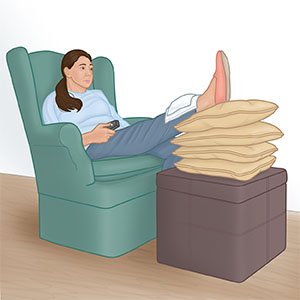
Elevate your leg:
Raise your leg above the level of your heart as often as you can. This will help decrease swelling and pain. Prop your leg on pillows or blankets to keep it elevated comfortably.
 |
Activity:
Ask about the best exercise plan for you. Walking is a low-impact exercise that can help prevent blood clots. Ask when you can return to work or your other daily activities.
 |
Do not smoke:
If you smoke, it is never too late to quit. Nicotine and other chemicals in cigarettes and cigars can increase the risk that your new graft will become blocked. Your risk for heart and lung disease is also increased. Ask your healthcare provider for information if you currently smoke and need help to quit. E-cigarettes or smokeless tobacco still contain nicotine. Talk to your healthcare provider before you use these products.
Follow up with your doctor or surgeon as directed:
You may need to return for blood tests or to have the blood flow in your leg checked. Write down your questions so you remember to ask them during your visits.
© Copyright Merative 2024 Information is for End User's use only and may not be sold, redistributed or otherwise used for commercial purposes.
The above information is an educational aid only. It is not intended as medical advice for individual conditions or treatments. Talk to your doctor, nurse or pharmacist before following any medical regimen to see if it is safe and effective for you.
Further information
Always consult your healthcare provider to ensure the information displayed on this page applies to your personal circumstances.