
Epididymitis
Medically reviewed by Drugs.com. Last updated on Sep 1, 2024.
What is epididymitis?
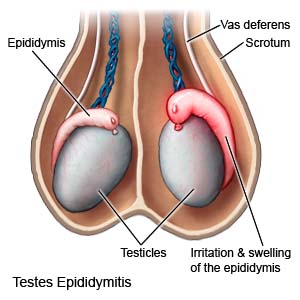
Epididymitis is inflammation of your epididymis. The epididymis is a coiled tube inside your scrotum. It stores and carries sperm from your testicles to your penis. Acute epididymitis lasts for 6 weeks or less. Chronic epididymitis lasts longer than 6 weeks.
 |
What causes epididymitis?
The cause of epididymitis may be unknown. It may be caused by any of the following:
- A urinary tract infection (UTI) that spreads to the epididymis
- Urine that flows backward from your urethra to the epididymitis
- Use of heart medicine called amiodarone
- Sexually transmitted infections (STIs) such as gonorrhea or Chlamydia
What increases my risk of epididymitis?
- Urinary tract conditions that cause frequent UTIs
- Having an indwelling urinary catheter (thin, flexible tube inserted into the bladder and left in place to drain urine)
- Recent surgery of the urinary tract
- Physical strain that puts pressure on the abdomen, such as heavy lifting
- Prostate disorders such as benign prostatic hypertrophy or prostatitis
What are the signs and symptoms of epididymitis?
- Pain or tenderness in your scrotum, abdomen, or groin
- Redness or swelling of your scrotum
- Pain or burning during urination, or frequent urination
- Discharge from your penis or blood in your urine or semen
- Fever
How is epididymitis diagnosed?
Your healthcare provider may examine your penis, prostate, and scrotum. He or she may ask about your symptoms and any health conditions you have. You may need any of the following tests:
- Blood and urine tests may be done to see if you have an infection. If you have discharge, a small amount of this fluid will be tested for bacteria.
- An ultrasound uses sound waves to show pictures of your testicles on a monitor. An ultrasound may be used to check blood flow to your testicles.
- A nuclear scan checks the blood flow in your testicles. A small amount of radioactive material may be injected into your blood. The radioactive material helps your blood vessels show up better.
How is epididymitis treated?
Your treatment depends on the cause of your epididymitis and may include any of the following:
- Antibiotics may be given if epididymitis is caused by a bacterial infection.
- NSAIDs , such as ibuprofen, help decrease swelling, pain, and fever. This medicine is available with or without a doctor's order. NSAIDs can cause stomach bleeding or kidney problems in certain people. If you take blood thinner medicine, always ask if NSAIDs are safe for you. Always read the medicine label and follow directions. Do not give these medicines to children younger than 6 months without direction from a healthcare provider.
- Acetaminophen decreases pain and fever. It is available without a doctor's order. Ask how much to take and how often to take it. Follow directions. Read the labels of all other medicines you are using to see if they also contain acetaminophen, or ask your doctor or pharmacist. Acetaminophen can cause liver damage if not taken correctly.
- Prescription pain medicine may be given. Ask your healthcare provider how to take this medicine safely. Some prescription pain medicines contain acetaminophen. Do not take other medicines that contain acetaminophen without talking to your healthcare provider. Too much acetaminophen may cause liver damage. Prescription pain medicine may cause constipation. Ask your healthcare provider how to prevent or treat constipation.
- Surgery may be needed if your condition gets worse or becomes chronic. Surgery to drain an abscess (collection of pus) may be needed. Surgery to remove part or all of your epididymis or testicle may also be done.
How can I manage epididymitis?
- Apply ice on your testicles for 15 to 20 minutes every hour or as directed. Use an ice pack, or put crushed ice in a plastic bag. Cover it with a towel. Ice helps prevent tissue damage and decreases swelling and pain.
- Rest in bed as directed. Elevate your scrotum when you sit or lie down to help reduce swelling and pain. You may be asked to do this by placing a rolled-up towel under your scrotum.
- Scrotal support may be recommended. An athletic supporter provides scrotal support and may make you more comfortable when you stand. Ask your provider how to use an athletic supporter.
- Do not lift heavy objects. You can make swelling worse if you lift heavy objects or strain.
When should I seek immediate care?
- You have severe pain in your testicles.
- Your symptoms become worse even after you start treatment with medicine.
When should I call my doctor?
- Your symptoms do not get better within 3 days of treatment or come back after treatment.
- You have a hot, red, tender area on your testicles.
- You have questions or concerns about your condition or care.
Care Agreement
You have the right to help plan your care. Learn about your health condition and how it may be treated. Discuss treatment options with your healthcare providers to decide what care you want to receive. You always have the right to refuse treatment. The above information is an educational aid only. It is not intended as medical advice for individual conditions or treatments. Talk to your doctor, nurse or pharmacist before following any medical regimen to see if it is safe and effective for you.© Copyright Merative 2024 Information is for End User's use only and may not be sold, redistributed or otherwise used for commercial purposes.
Learn more about Epididymitis
Treatment options
Care guides
Further information
Always consult your healthcare provider to ensure the information displayed on this page applies to your personal circumstances.