
Corrosive Esophagitis
Medically reviewed by Drugs.com. Last updated on Sep 1, 2024.
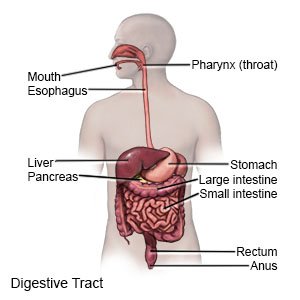
Corrosive esophagitis is damage to your esophagus from harmful substances. The damage may cause inflammation, ulcers, or scarring.
 |
WHILE YOU ARE HERE:
Informed consent
is a legal document that explains the tests, treatments, or procedures that you may need. Informed consent means you understand what will be done and can make decisions about what you want. You give your permission when you sign the consent form. You can have someone sign this form for you if you are not able to sign it. You have the right to understand your medical care in words you know. Before you sign the consent form, understand the risks and benefits of what will be done. Make sure all your questions are answered.
An IV
is a small tube placed in your vein that is used to give you medicine or liquids.
Nutrition:
You may need to eat bland, low-acid foods. You may also need any of the following:
- You may need to eat foods that are soft and easy to swallow. Some examples are applesauce, bananas, cooked cereal, cottage cheese, eggs, and yogurt.
- Tube feedings may be used if you have trouble swallowing soft foods. The feeding tube will be carefully inserted through your nose down into your stomach. Liquid nutrition will be put through the end of the feeding tube and will flow into your stomach.
- Total parenteral nutrition (TPN) may be used if you have problems digesting food. TPN provides your body with nutrition through your IV.
Medicines:
- Antibiotics help treat or prevent a bacterial infection in your esophagus.
- Steroids help decrease inflammation.
- Stomach acid medicine helps decrease irritation from stomach acids.
- Antiulcer medicine helps decrease irritation from stomach acids. They may help increase the protective lining of the esophagus to help it heal.
Tests:
- A barium swallow is used to take pictures of your abdomen. You will need to swallow a thick liquid called barium that helps the intestines show up better on x-ray.
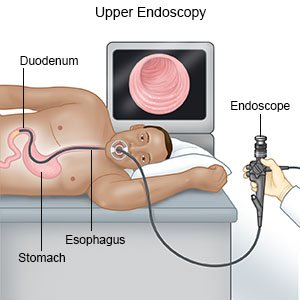
- Endoscopy is a procedure used to see the inside of your esophagus and stomach. A flexible tube with a small light and camera on the end are used. Your healthcare provider will look for any bleeding, lumps, narrowing, scars, tears, or pill pieces. He or she may take a small amount of tissue from your esophagus to be tested.
Treatment:
- Dilatation is a procedure to place a small balloon, dilator, or stent in your esophagus to widen it.
- Surgery may be needed to remove an area of your esophagus. It may be replaced with a portion of your stomach or colon.
RISKS:
Without treatment, you may continue to feel pain and have trouble swallowing food and liquids. You may not be able to eat enough, and you may lose weight and feel weak. Sometimes, food, liquids, or vomit may get in your lungs. You may choke, get an infection in your lungs, or have trouble breathing. Too much damage in your esophagus can cause bleeding that does not stop. These conditions may be life-threatening.
CARE AGREEMENT:
You have the right to help plan your care. Learn about your health condition and how it may be treated. Discuss treatment options with your healthcare providers to decide what care you want to receive. You always have the right to refuse treatment.© Copyright Merative 2024 Information is for End User's use only and may not be sold, redistributed or otherwise used for commercial purposes.
The above information is an educational aid only. It is not intended as medical advice for individual conditions or treatments. Talk to your doctor, nurse or pharmacist before following any medical regimen to see if it is safe and effective for you.
Learn more about Corrosive Esophagitis
Treatment options
Care guides
Symptoms and treatments
Further information
Always consult your healthcare provider to ensure the information displayed on this page applies to your personal circumstances.