
Bunion
Medically reviewed by Drugs.com. Last updated on Sep 1, 2024.
What is a bunion?
A bunion is a bony lump at the base of your big toe. As it grows, it sticks out from the side of your foot and may move your toe out of place.
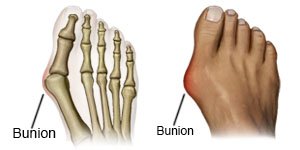 |
What causes a bunion?
Shoes that are too tight, too small, or have high heels are the most common cause of bunions. Arthritis can also cause bunions. Repeated stress on the toes or the front of the foot from sports or other activities can also cause bunions.
What are the signs and symptoms of a bunion?
- Foot pain and stiffness
- Big toe is turned inward and may overlap other toes
- A callus (thickened skin) at the base of the big toe that may have fluid under it
How is a bunion diagnosed?
Your healthcare provider examine your foot. He or she may ask you to move your toe to see how well you can move it. You may need an x-ray to measure the bunion and see how your other toes are affected.
How is a bunion treated?
- Acetaminophen decreases pain and fever. It is available without a doctor's order. Ask how much to take and how often to take it. Follow directions. Read the labels of all other medicines you are using to see if they also contain acetaminophen, or ask your doctor or pharmacist. Acetaminophen can cause liver damage if not taken correctly.
- NSAIDs , such as ibuprofen, help decrease swelling, pain, and fever. This medicine is available with or without a doctor's order. NSAIDs can cause stomach bleeding or kidney problems in certain people. If you take blood thinner medicine, always ask your healthcare provider if NSAIDs are safe for you. Always read the medicine label and follow directions.
- A bunionectomy is surgery to remove the bunion. You may need surgery if other treatments do not work.
How can I manage my symptoms?
- Use a bunion pad. Wear a thick, ring-shaped pad around and over the bunion to cushion it.
- Wear shoes that fit well. Wear wide, low-heeled shoes that have plenty of room for your toes. Do not wear tight shoes or heels that are higher than 2 inches.
- Wear shoe inserts or arch supports. These will decrease pressure on the bunion.
- Separate your big toe at night. Separate the big toe from the others with a foam pad while you sleep. Use a light elastic bandage to keep the pad in place.
- Stretch your foot each day. This will help decrease pressure and increase foot strength. Ask what foot exercises are best for you.
- Apply ice on your toe for 15 to 20 minutes every hour or as directed. Use an ice pack or put crushed ice in a plastic bag. Cover it with a towel. Ice helps prevent tissue damage and decreases swelling and pain.
- Go to physical therapy if directed. A physical therapist teaches you exercises to help improve movement and strength, and to decrease pain.
When should I seek immediate care?
- You have severe pain in your toe.
- You cannot put weight on your foot.
When should I call my doctor?
- You cannot do your daily activities because of the pain.
- You have questions or concerns about your condition or care.
Care Agreement
You have the right to help plan your care. Learn about your health condition and how it may be treated. Discuss treatment options with your healthcare providers to decide what care you want to receive. You always have the right to refuse treatment. The above information is an educational aid only. It is not intended as medical advice for individual conditions or treatments. Talk to your doctor, nurse or pharmacist before following any medical regimen to see if it is safe and effective for you.© Copyright Merative 2024 Information is for End User's use only and may not be sold, redistributed or otherwise used for commercial purposes.
Further information
Always consult your healthcare provider to ensure the information displayed on this page applies to your personal circumstances.