
Bladder Cancer
Medically reviewed by Drugs.com. Last updated on Apr 2, 2024.
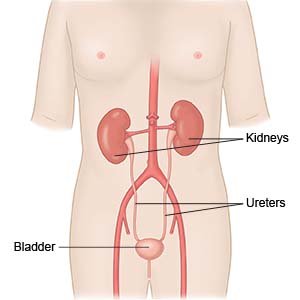
Bladder cancer starts in the cells that line your bladder.
 |
WHILE YOU ARE HERE:
Informed consent
is a legal document that explains the tests, treatments, or procedures that you may need. Informed consent means you understand what will be done and can make decisions about what you want. You give your permission when you sign the consent form. You can have someone sign this form for you if you are not able to sign it. You have the right to understand your medical care in words you know. Before you sign the consent form, understand the risks and benefits of what will be done. Make sure all your questions are answered.
Intake and output:
Healthcare providers may need to keep track of the amount of liquid you are getting. They also may need to know how much you urinate. Ask how much liquid you should drink each day. Ask a healthcare provider if they need to measure or collect your urine.
Medicines:
- Antibiotics treat or prevent an infection caused by bacteria.
- Pain medicine may be given. Do not wait until the pain is severe before you ask for more medicine.
Tests:
- A urine sample is checked for blood, an infection, or cancer cells.
- X-ray, ultrasound, CT, or MRI pictures may show the tumor size and location. The pictures may also show if the cancer has spread to other places in your body. You may be given contrast liquid to help the bladder, kidneys, and ureters show up better in pictures. Tell the healthcare provider if you have ever had an allergic reaction to contrast liquid. Do not enter the MRI room with anything metal. Metal can cause serious injury. Tell the healthcare provider if you have any metal in or on your body.
- Cystoscopy is a procedure used to look inside the bladder. A thin tube with a camera on the end will be inserted through your urethra and into your bladder.
- A biopsy is a procedure to remove a small piece of tissue from your bladder. The tissue is sent to the lab and tested for cancer.
Treatment:
- Transurethral resection of bladder tumor (TURBT) is a procedure used to remove the tumor. Bladder muscle near the tumor may also be removed. This procedure is done by inserting tools through your urethra and into your bladder.
- Immunotherapy is medicine given to help your immune system kill cancer cells. It is injected into your vein or directly into your bladder.
- Chemotherapy is medicine given to kill cancer cells. It may be given to you as a pill or an injection into your vein or muscle. It may also be injected directly into your bladder. This is called intravesical chemo. Intravesical chemo is placed into the bladder through a catheter. The chemo usually stays in the bladder for 2 hours. The chemo is then drained from the bladder and the catheter is removed.
- Radiation therapy uses high-energy x-ray beams to kill cancer cells.
- Targeted therapy is medicine given to kill cancer cells without harming healthy cells.
- Surgery may be needed to remove your bladder. Surrounding organs and lymph nodes may also be removed. Surgery may be needed if the cancer has spread to the muscle layer of the bladder. You may need surgery if the cancer has spread to other places in your body.
Treatment options
The following list of medications are related to or used in the treatment of this condition.
RISKS:
Cancer may return or spread. You may get a blood clot in your leg or arm. This may become life-threatening.
CARE AGREEMENT:
You have the right to help plan your care. Learn about your health condition and how it may be treated. Discuss treatment options with your healthcare providers to decide what care you want to receive. You always have the right to refuse treatment.© Copyright Merative 2024 Information is for End User's use only and may not be sold, redistributed or otherwise used for commercial purposes.
The above information is an educational aid only. It is not intended as medical advice for individual conditions or treatments. Talk to your doctor, nurse or pharmacist before following any medical regimen to see if it is safe and effective for you.
Learn more about Bladder Cancer
Treatment options
Care guides
Symptoms and treatments
Medicine.com guides (external)
Further information
Always consult your healthcare provider to ensure the information displayed on this page applies to your personal circumstances.
