
Barrier Methods of Contraception
Medically reviewed by Drugs.com. Last updated on Sep 1, 2024.
Barrier methods of contraception are objects or medicines that block the sperm and help prevent pregnancy. Some barrier methods can also help prevent the spread of sexually transmitted infections (STIs).
DISCHARGE INSTRUCTIONS:
Contact your healthcare provider if:
- You have pain or burning when you urinate.
- You have pain, itching, or burning during or after sex.
- You have questions or concerns about barrier method of contraception.
Types of barrier methods:
- Male condoms are the most common barrier method. They are made of latex, polyurethane, or lamb skin. They may be coated with silicone, water-based gel, or spermicide. Condoms fit over the penis and block semen from getting into the vagina. Male condoms help reduce the spread of STIs.
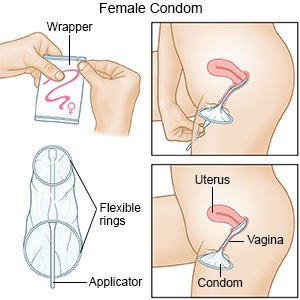
- A female condom is a thin insert that is placed inside of the vagina 8 hours before sex. It should not be used with a male condom. Female condoms help prevent the spread of STIs.
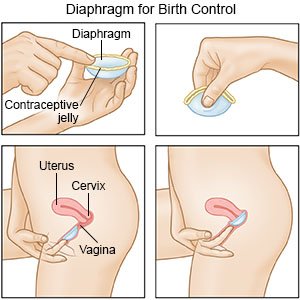
- A diaphragm is a soft latex rubber dome that covers the cervix and helps prevent sperm from reaching it. You will need to see your healthcare provider to be fitted for a diaphragm. It is left in place during sex and for at least 6 hours afterward. You can have sex more than one time with the diaphragm left in place. The diaphragm should be removed within 24 hours after you have sex. The diaphragm helps reduce the spread of STIs.
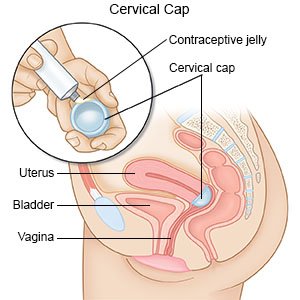
- A cervical cap is a small rubber cap that covers the cervix and blocks sperm from entering the uterus. You will need to see your healthcare provider to get a prescription for a cervical cap. The cap is left in place during sex and for up to 6 to 8 hours afterward. You can have sex more than one time with the cap left in place. It should be removed within 48 hours after you have sex.
- A contraceptive sponge is a small, round sponge that is placed in the vagina near the cervix before sex. It helps to block sperm from reaching the cervix. It can also kill sperm because it has spermicide in it. You can have sex more than one time before the sponge needs to be taken out. The sponge can be left in for up to 24 hours.
- Vaginal spermicides kill sperm or keep it from reaching an egg. It may be in the form of a cream, jelly, foam, tablet, or vaginal suppository. Suppositories and tablets must be put in about 30 minutes before sex. Creams, jellies, and foams are put into the vagina right before sex. Spermicides can be used alone or with other barrier methods. Spermicides may take up to 15 minutes to start working. They provide a barrier for only 60 minutes.
Risks of barrier methods:
Barrier methods may not prevent pregnancy, even if they are used as directed. You may still get an STD. You have a higher risk of a urinary tract infection when you use barrier methods. The products may cause itching, redness, swelling, or pain inside or around your vagina. You may have pain when you urinate. Your cap, sponge, or diaphragm may not fit correctly if your weight changes by 10 pounds or more. You may also need a different size if you get pregnant, have a baby, or have pelvic surgery. The rubber of the cap or diaphragm can be damaged if you use oil-based products, such as certain creams or baby oil.
Follow up with your doctor as directed:
Write down your questions so you remember to ask them during your visits.
© Copyright Merative 2024 Information is for End User's use only and may not be sold, redistributed or otherwise used for commercial purposes.
The above information is an educational aid only. It is not intended as medical advice for individual conditions or treatments. Talk to your doctor, nurse or pharmacist before following any medical regimen to see if it is safe and effective for you.
Further information
Always consult your healthcare provider to ensure the information displayed on this page applies to your personal circumstances.